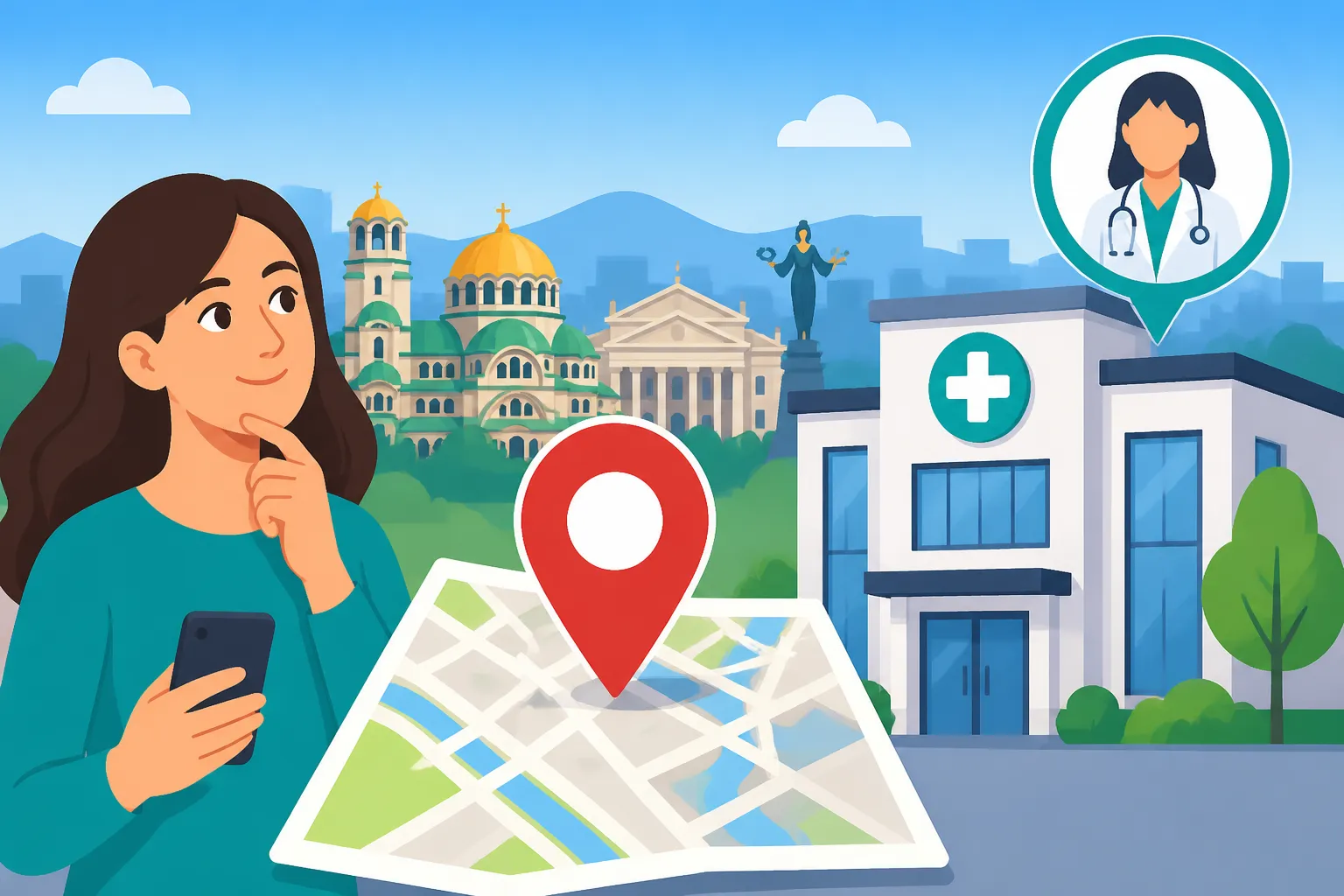
Where Is the Nearest Clinic to Me in Sofia?
The moment you feel a tickle in your throat, a sudden ache, or a dodgy stomach in a new country, a tiny panic sets in. Where do you go? Who do you call? It's not like back home where you know your doctor and the local clinic like the back of your hand. Navigating the healthcare system in Sofia, Bulgaria, especially when you're just getting your bearings, can feel like a daunting task. This guide is here to cut through the confusion and help you pinpoint the nearest and most appropriate clinic to you in Sofia, ensuring you get the care you need without the added stress.
Navigating Sofia's Healthcare Landscape as an Expat
When you first land in Sofia, the medical system can seem like a bit of a maze. It’s a mix of familiar concepts and uniquely Bulgarian quirks. Understanding this landscape is your first step to feeling more secure, because knowing where to go when you need medical attention is a huge relief.
Understanding the Public vs. Private Divide
Bulgaria, like many European countries, operates on a dual healthcare system: public and private. The public system is primarily managed by the National Health Insurance Fund (NHIF), known locally as НЗОК (NZOK). If you're legally residing and working in Bulgaria, or are an EU citizen with an EHIC, you'll likely be part of this system. Public clinics and hospitals are usually affiliated with the NHIF, and services rendered by doctors who have a contract with the NHIF are often covered, though co-payments may apply. However, this system often comes with language barriers, potentially longer wait times, and sometimes older facilities.
On the other hand, private healthcare in Sofia is thriving. You'll find a plethora of private clinics and hospitals that offer state-of-the-art facilities, English-speaking staff, and more immediate appointments. This is often the preferred choice for many expats, especially those who prioritize convenience and communication. While it means out-of-pocket expenses, many expats opt for private health insurance to cover these costs. Whether you're dealing with a sudden illness or looking for routine check-ups, knowing the difference between these two streams will significantly influence where you decide to seek care. It’s not uncommon to use both, for instance, having a public GP but accessing specialists through private facilities for faster service.
The Importance of Your GP (Личен Лекар)
If you plan on living in Sofia for any length of time and are contributing to the NHIF, registering with a General Practitioner, or Личен Лекар (Lichen Lekar), is not just a good idea, it's essentially mandatory for accessing public healthcare. Your GP is your primary point of contact for routine check-ups, minor illnesses, chronic condition management, and, crucially, for referrals to specialists within the NHIF system. Think of them as your healthcare gatekeeper. Without a referral from your GP, seeing a specialist under NHIF coverage is generally not possible, or you'll have to pay the full private fee.
Finding a GP who speaks English can sometimes be a challenge, particularly outside the more central or expat-dense areas of Sofia. It requires a bit of research and often relies on recommendations from other expats. Many expats initially struggle with this step, but it’s a foundational part of settling into the Bulgarian healthcare scene. We have a dedicated guide to help you navigate this specific hurdle: How to Choose and Register with a GP (Личен Лекар) in Bulgaria. Even if you plan on using private clinics for most things, having a registered GP can be beneficial for official medical notes or general administrative purposes.
Practical Ways to Find a Clinic Near You in Sofia
When you're not feeling well, the last thing you want is a treasure hunt for a doctor. Luckily, Sofia offers several straightforward methods for locating medical help, whether you need a quick consultation or more specialized care.
Online Search Tools and Directories
In this digital age, your phone or computer is your best friend when searching for a clinic in Sofia. The most intuitive starting point is usually Google Maps. Simply typing "klinika Sofia" (клиника София) or "доктор София" (doctor Sofia) into the search bar will bring up numerous options. For even more precise results, try using Cyrillic if you can, or specify the type of clinic you need, like "частна клиника София" (private clinic Sofia). You can also add your current neighborhood, such as "klinika Lozenets" or "doctor Center," to narrow down the geographic results significantly.
Beyond general search engines, several Bulgarian online platforms are specifically designed for booking medical appointments and finding doctors. Superdoc.bg is one of the most popular and user-friendly options. It allows you to filter by medical specialty, location, whether a doctor accepts NHIF, and crucially, if they speak English. You can often see doctor profiles, read reviews, and even book appointments directly through the platform. This saves you the hassle of calling multiple places and dealing with potential language barriers. These platforms have truly revolutionized how expats can access medical care, providing transparency and convenience that wasn't available just a few years ago.
Expat Networks and Recommendations
Sometimes, the best information doesn't come from a website, but from another person who has already walked a mile in your shoes. Expat communities in Sofia are incredibly active and supportive, making them an invaluable resource for medical recommendations. Facebook groups like "Expats in Sofia" or "Bulgaria Expats" are buzzing with discussions. If you post a query asking for an "English-speaking dermatologist near me in Sofia" or a "child-friendly pediatrician in Studentski Grad," you're likely to receive a flurry of helpful suggestions and personal experiences. People often share not just clinic names, but specific doctor recommendations, which can be golden.
Another trusted source can be your country's embassy or consulate in Sofia. Many maintain lists of English-speaking medical professionals and facilities that they recommend to their citizens. While these lists might not be exhaustive, they are usually vetted and can be a good starting point, especially if you're new to the city. And of course, never underestimate the power of word-of-mouth. Ask colleagues, friends who are also expats, or even trusted Bulgarian acquaintances. A personal recommendation often carries more weight than any online review, giving you peace of mind that you're heading to a reliable place.
Types of Clinics and What to Expect
Sofia's medical landscape is diverse, offering a range of facilities from small local practices to large, modern hospitals. Knowing the different types of clinics available and what they typically offer will help you choose the right one for your needs.
Polyclinics (Поликлиники) and Medical Centers (Медицински Центрове)
Polyclinics (Поликлиники) and Medical Centers (Медицински Центрове) are multi-specialty facilities that are very common in Sofia. These are essentially outpatient clinics that house a variety of doctors under one roof. You’ll often find several GPs, along with specialists like dermatologists, cardiologists, gynecologists, and even dentists. Some polyclinics are publicly funded and operate under the NHIF system, meaning you'll need a referral from your registered GP for specialist visits to be covered. Others are entirely private.
Prominent examples in Sofia include the large medical centers attached to major hospitals, or independent centers like МЦ "Св. Иван Рилски" (Medical Center "St. Ivan Rilski") which offers a wide array of services. Expect standard operating hours, usually from morning to early evening on weekdays. Appointments are almost always required, although some might offer walk-in options for very minor issues or for specific services like blood tests. The environment can vary; older public polyclinics might feel a bit dated, while newer private medical centers are often bright, modern, and efficient. The key advantage here is convenience – you can often see multiple specialists or get various tests done in one location.
Private Clinics and Hospitals for Comprehensive Care
For many expats, private clinics and hospitals become their primary point of contact for healthcare in Sofia. The draw is undeniable: English-speaking staff, cutting-edge medical technology, generally shorter wait times, and a higher standard of patient comfort and service. These facilities cater to an international clientele, and their administrative processes are often streamlined and foreigner-friendly.
Sofia boasts several excellent private hospitals that also incorporate extensive outpatient clinic services. Acibadem City Clinic Tokuda Hospital, for instance, is one of the largest private hospitals in the country, offering a full spectrum of medical services from general practice to highly specialized surgeries, all within a modern setting. Other reputable options include Hill Clinic, known for specific specialties, and Vita Hospital, which is also very popular with expats for its comprehensive care. For families, Nadezhda Hospital is renowned for its maternity and fertility services. When considering your options for private care, it's a good idea to research which ones align best with your specific medical needs. Many of these larger private institutions are accustomed to working with international health insurance providers, and some, like SafetyWing, are well-recognized. Delving into the nuances of these facilities is crucial for anyone considering their healthcare options, which we explore further in How to Use Major Hospitals and Clinics in Sofia. For a deeper dive into the system as a whole, consider reading [Understanding Public and Private Healthcare in Bulgaria].
Emergency Situations and Urgent Care
It's vital to differentiate between a true medical emergency and an urgent but not life-threatening condition. For life-threatening emergencies – think severe accidents, heart attacks, strokes – always call 112, Bulgaria’s universal emergency number. Ambulances will transport you to the nearest public emergency department (Спешно Отделение), such as the renowned Pirogov Hospital, which is the largest emergency hospital in the country. Be prepared that language barriers can be more pronounced in public emergency rooms, and wait times can be extensive, especially for less critical cases.
For urgent but non-life-threatening issues, such as a high fever, a nasty cut, or a sudden ear infection, you have a few options. Your first port of call should ideally be your registered GP, but if it’s outside their working hours or you need more immediate attention, some private clinics in Sofia offer urgent care services or same-day appointments, often for an additional fee. These can be a much more comfortable and efficient alternative to a public ER for non-critical issues. Always call ahead to confirm availability and whether they can accommodate walk-ins. If you have international health insurance like SafetyWing, it's always wise to understand their procedures for urgent and emergency care before you actually need it, as they might have preferred providers or specific protocols to follow for claims. It's truly comforting to know what to do in these high-stress moments, and our guide on Emergency Medical Care in Bulgaria: What Every Expat Needs to Know provides even more detailed advice.
Key Considerations for Expats When Choosing a Clinic
Choosing a clinic in Sofia isn't just about finding the nearest one; it's about finding the right one for your specific needs as an expat. Several factors can significantly impact your experience and the quality of care you receive.
Language Barrier and English-Speaking Staff
This is, hands down, one of the biggest concerns for most expats seeking medical care anywhere abroad. Trying to describe complex symptoms or understand medical instructions in a foreign language, especially when you're feeling vulnerable, can be incredibly stressful and even dangerous. While many younger medical professionals in Sofia have a decent grasp of English, it’s not guaranteed.
When you're searching for a clinic, always prioritize facilities that explicitly advertise English-speaking staff or where you can confirm this during the booking process. Private clinics are far more likely to have English-speaking doctors and administrative personnel than public ones. Don't be shy about asking when you call to make an appointment; it's a completely valid and necessary question. Some expats even opt for clinics that primarily cater to foreigners, as they are specifically designed to bridge this communication gap. This ensures you feel heard, understood, and can make informed decisions about your health.
Health Insurance Acceptance
Understanding how your health insurance works in Bulgaria is paramount. If you're contributing to the NHIF, your public GP visits and certain specialist referrals will be covered, often with small co-payments. However, if you opt for private clinics and hospitals, which many expats do for convenience and language, your NHIF coverage likely won't apply. This is where private health insurance comes into play.
Many international private health insurance plans, such as those offered by SafetyWing, are widely accepted at the larger private clinics and hospitals in Sofia. However, the process isn't always direct billing. You might need to pay upfront for services and then submit a claim for reimbursement from your insurance provider. It's crucial to clarify this before your appointment. Always call your insurance company and the clinic beforehand to understand their specific payment and reimbursement procedures. Keep all receipts, medical reports, and any other documentation to ensure a smooth claims process. This proactive approach will save you headaches down the line and ensure you're not hit with unexpected bills. Our comprehensive guide on Health Insurance in Bulgaria: NHIF, Private and International Options Explained can provide much more detail, and for specific reimbursement steps, check out How to Claim Reimbursement from Private Insurance in Bulgaria.
Location, Accessibility, and Transport
While "nearest" is in your query, accessibility goes beyond just distance. Sofia has a decent public transport network, including a metro, trams, and buses. When choosing a clinic, consider its proximity to a metro station or a convenient bus/tram stop, especially if you won't be driving. Navigating Sofia's traffic and finding parking can be a nightmare, particularly in the central areas.
If you’re feeling under the weather, a short, straightforward journey is preferable. Use online maps not just to see the distance, but also to check public transport routes. Consider if the area is easily reachable by taxi or ride-sharing services if you anticipate needing one. For instance, clinics located in neighborhoods like Lozenets or Izgrev are often quite accessible by metro, while those in more residential areas might require a bus or tram connection. Think about your usual commute and daily routine to pick a location that integrates well, rather than adds extra stress.
Here’s a quick overview of clinic types and what they generally offer in Sofia:
| Clinic Type | Primary Services | English-Speaking Staff Probability | NHIF Coverage | Private Insurance Acceptance | Pros | Cons |
|---|---|---|---|---|---|---|
| Public Polyclinic/GP | Routine care, referrals, basic diagnostics | Low to Medium | Yes | No (usually) | Low cost, integrated with public system (if registered) | Language barrier, older facilities, longer waits, less flexibility |
| Private Medical Center | General practice, specialists, diagnostics | High | Seldom | High | Modern facilities, varied specialists, faster appointments | Higher cost, often requires private insurance or OOP |
| Private Hospital (Outpatient) | Specialists, diagnostics, comprehensive care | High | Seldom | High | State-of-the-art, excellent service, international focus | Most expensive, often requires private insurance or OOP |
| Emergency Department (Public Hospital) | Life-saving care for severe emergencies | Low to Medium | Yes | Limited | Essential for critical situations | Long waits for non-critical, language barrier, chaotic |
| Urgent Care (Private Clinic) | Non-life-threatening urgent issues | High | No | High | Quick access for urgent but minor issues, comfortable | Higher cost than GP, limited scope |
Useful Bulgarian Medical Terms and Phrases
Even if you aim for English-speaking doctors, knowing a few key Bulgarian phrases can be incredibly helpful for navigating the system, asking for directions, or understanding basic signs.
- Къде е най-близката клиника? (Kude e nay-blizkata klinika?) – Where is the nearest clinic?
- Личен лекар (Lichen lekar) – GP / Personal Doctor
- Частна клиника (Chastna klinika) – Private clinic
- Спешно отделение (Speshno otdelenie) – Emergency department
- Записване за час (Zapisvane za chas) – Booking an appointment
- Имам час при доктор (Imam chas pri doktor) – I have an appointment with the doctor
- Английски говорещ доктор (Angliyski govoresht doktor) – English-speaking doctor
- Болница (Bolnitsa) – Hospital
- Зъболекар (Zubolekar) – Dentist
- Аптека (Apteka) – Pharmacy
- Вътрешни болести (Vutreshni bolesti) – Internal medicine (this is often the department where GPs are located in larger polyclinics)
- НЗОК (NZOK) – NHIF (National Health Insurance Fund)
- Симптоми (Simptomi) – Symptoms
- Боли ме (Boli me) – I have pain / It hurts
- Глава (Glava) – Head
- Стомах (Stomah) – Stomach
- Температура (Temperatura) – Fever
Keeping these phrases handy, perhaps on a note in your phone, can provide a little extra confidence when you need it most.
Navigating healthcare in a foreign country is rarely straightforward, and Sofia is no exception. However, with a bit of proactive research, understanding the local system, and leveraging expat networks, finding the nearest and most suitable clinic is entirely manageable. Remember to establish your healthcare plan before you're feeling unwell, secure your insurance, and know your options. This approach will bring immense peace of mind, allowing you to focus on enjoying your life in beautiful Bulgaria.
Disclaimer
The information provided in this guide is for general informational purposes only and does not constitute medical or legal advice. Healthcare systems and regulations can change, and individual situations vary. Always consult with a qualified medical professional for health concerns and a legal or insurance expert for specific advice regarding your healthcare coverage and rights in Bulgaria.