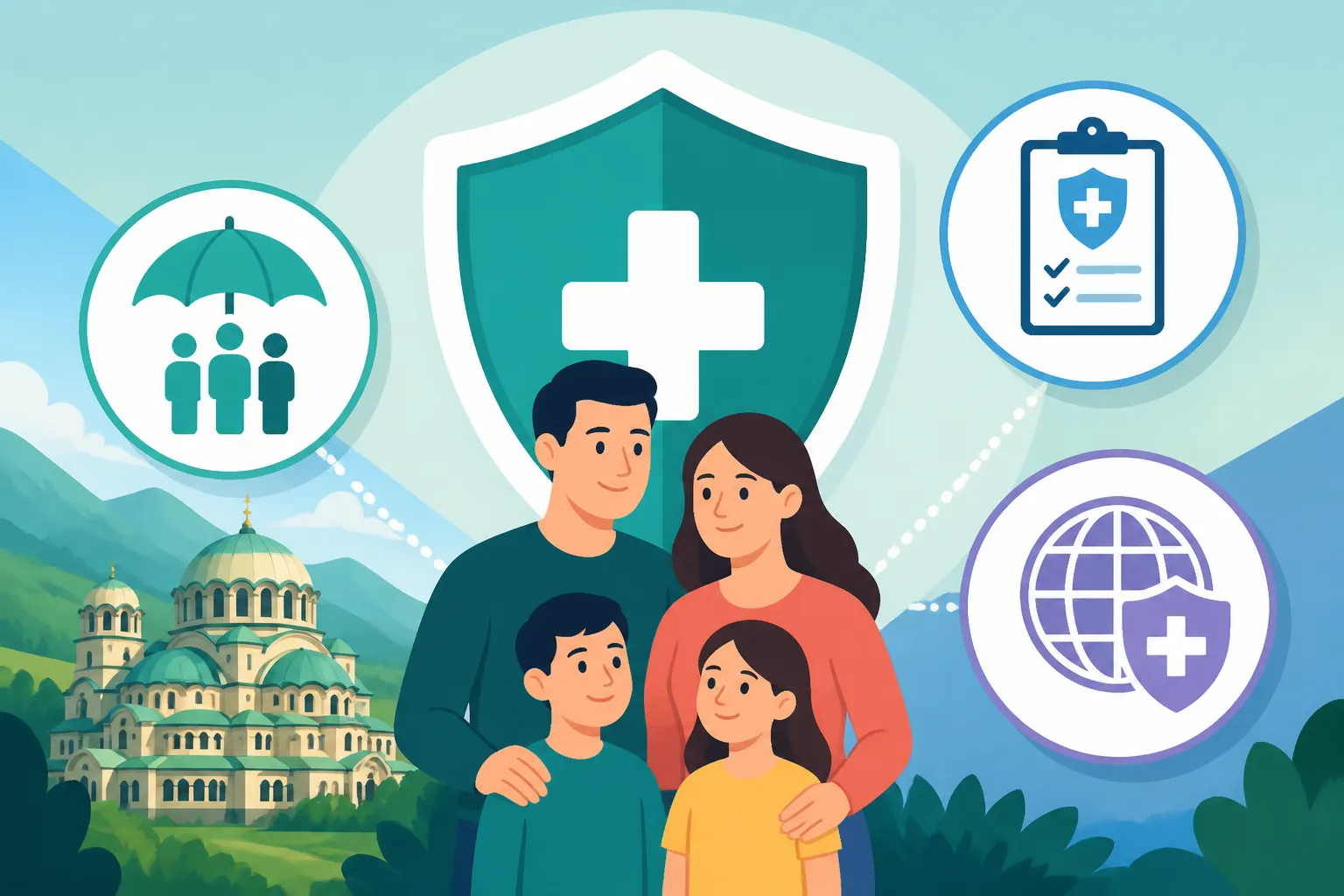
Health Insurance in Bulgaria: NHIF, Private and International Options Explained
Trying to make sense of health insurance in a new country like Bulgaria can feel like trying to solve a Rubik's Cube blindfolded. You’re bombarded with acronyms like NHIF, whispers of private clinics, and the endless debate of whether to go local or international. It's a genuinely confusing landscape, and many of us expats have been there, wrestling with forms and wondering if we've made the right choice. This guide will walk you through the NHIF, local private insurance, and international options available, helping you understand what’s right for your specific situation in Bulgaria.
Understanding the Bulgarian Healthcare System's Foundation
Let's be honest, the Bulgarian healthcare system isn't always the easiest to navigate, especially when you're fresh off the plane. It's a mix of publicly funded services, primarily managed by the National Health Insurance Fund (NHIF), and a growing private sector. While the public system offers basic care, many expats find themselves supplementing it with private options for comfort, access, and language reasons. It's crucial to grasp this duality because your health insurance choices will directly reflect how you interact with both. For a deeper dive, you can always check out our guide on how Bulgaria's Health System Works: The NHIF and Private Care Explained (2026).
The Dual System: Public vs. Private
Bulgaria operates on a two-tier healthcare model. On one side, you have the public system, funded by mandatory contributions to the NHIF. This system aims to provide universal access to primary care, specialist consultations (with referrals), hospital stays, and some prescription subsidies. It's the baseline, the safety net, and for many, it's their primary mode of accessing medical care once they're properly registered.
Then, there's the private sector. This includes private clinics, hospitals, and individual practitioners who operate outside the NHIF framework. They are often chosen for shorter wait times, access to English-speaking doctors, more modern facilities, and a general higher standard of comfort and service. This is where private health insurance really shines, bridging the gaps that the public system might present for an expat. You’ll find many expats opting for a blend, using the NHIF for routine things but relying on private insurance for anything more serious or for a better patient experience.
Mandatory Contributions and Eligibility
So, who exactly needs to contribute to the NHIF? Generally, if you are legally employed in Bulgaria, self-employed, or a resident registered with the local authorities, you are obliged to pay monthly health insurance contributions. These contributions are a percentage of your income, deducted directly if you're employed, or paid independently if you're self-employed. If you're an EU citizen, your situation might be slightly different, often involving an S1 form or similar arrangements from your home country, but generally, long-term residents will fall under the Bulgarian system. Understanding mandatory health insurance contributions in Bulgaria is key, as non-payment can lead to issues with accessing public healthcare.
If you're not employed – perhaps you're a retiree, a student, or a financially independent person – you still need to ensure you have valid health insurance for your residence permit. In these cases, you’ll typically make monthly contributions directly to the NHIF as a self-insured person, or you’ll need comprehensive private health insurance, especially for your initial residence permit application. The eligibility rules are tied to your residence status and employment, so it's not a one-size-fits-all scenario, and it's something the immigration authorities scrutinize quite closely during your visa and residence permit processes. Our article on how your Residence Status Affects NHIF Enrolment in Bulgaria delves into this more specifically.
The National Health Insurance Fund NHIF Coverage
Once you’re in the NHIF system, you’re connected to the public healthcare network. This is the cornerstone of Bulgarian healthcare for residents, and understanding what it covers – and, importantly, what it doesn't – is vital for managing your expectations and making informed decisions about additional insurance. It’s not perfect, but it does offer significant benefits for those who learn to navigate it. The process starts with selecting a GP, or lichen lekar, which is a foundational step for almost all public healthcare access.
What the NHIF Covers
The NHIF offers a fairly comprehensive package of basic medical services. This typically includes visits to your chosen General Practitioner (GP) for common ailments, referrals to specialists when deemed necessary by your GP, diagnostic tests like blood work and X-rays (again, usually with a GP referral), and hospital treatment for emergencies or planned procedures. It also covers some prescription medications, though you’ll often pay a co-payment or a percentage of the cost, depending on the drug. Many standard treatments and conditions are covered, including maternity care, chronic disease management, and child vaccinations.
For example, if you wake up with a nasty flu, your first port of call would be your GP. They would examine you, prescribe medication (which you'd then take to a pharmacy with your NHIF card and a nominal co-payment), and if necessary, refer you to a pulmonologist if they suspect something more serious. This system means you can't just walk into a specialist's office; you need that gateway referral from your GP. This gatekeeper system is common in many European countries but can feel restrictive if you're used to direct access to specialists.
Limitations and Co-payments
However, the NHIF coverage isn't limitless, and this is where many expats find themselves a little frustrated. While hospital stays are largely covered, you might find that certain modern treatments, specific high-end diagnostic imaging (like some MRI or CT scans), or a private room in a public hospital are not fully covered or require significant out-of-pocket payments. Furthermore, dental care is only minimally covered, usually limited to basic check-ups, extractions, and some fillings, leaving most extensive dental work to be paid privately. You can find more details in our guide on understanding dental care costs and NHIF coverage in Bulgaria.
Co-payments are a standard feature of the NHIF system. For each GP visit, specialist consultation, or hospital day, there's a small fee you'll need to pay out of your pocket. While these fees are generally low, they add up, and if you require frequent care, you'll feel it. Additionally, wait times for specialist appointments can sometimes be long in the public system, particularly for popular specialties. For example, getting an appointment with a public orthopedist in Sofia might take weeks, whereas a private clinic could offer one within days. This is a common reason why many opt for private insurance, to bypass these delays and access care quicker. For more information on these costs, refer to our article on understanding out-of-pocket healthcare costs and co-payments in Bulgaria.
Registering with the NHIF and a GP
The actual process of registering with the NHIF and selecting a GP is one of those administrative hurdles that can test your patience. If you're employed, your employer should handle your initial NHIF registration. However, you are responsible for choosing and registering with a GP. This involves finding a doctor who is accepting new patients and then physically going to their practice with your Bulgarian ID (лична карта), residence permit, and proof of NHIF contributions. It's often easier if you speak some Bulgarian or have a Bulgarian friend assist you, as not all GP offices will have English-speaking staff.
If you are self-insured or registering independently, you'll first need to make your initial NHIF contributions at the National Revenue Agency (NRA), or through their online portal if you have an electronic signature. Once those payments are showing in the system, you can then proceed to find a GP. This selection process is crucial, as your GP acts as your gatekeeper to the rest of the public health system. Take your time, ask for recommendations from other expats, and don't be afraid to visit a few practices before committing. Our guide, How to Register with the NHIF and a GP in Bulgaria (2026), offers a step-by-step walkthrough to make this process less daunting.
Private Health Insurance in Bulgaria: Local Options
For many expats, the NHIF provides a safety net, but local private health insurance offers a significant upgrade in terms of comfort, convenience, and access. It’s not just about bypassing wait times; it’s about having a choice, often receiving care in modern facilities, and communicating in a language you understand. Bulgaria has a number of reputable local insurance providers, and understanding their offerings is crucial for making the right decision for your needs.
Benefits of Local Private Plans
The primary benefit of a local private health insurance plan is the enhanced access it provides. You get quicker appointments, often with English-speaking specialists, and the ability to choose your doctor and clinic from a wider network of private providers. Many local private plans cover consultations, diagnostic tests, minor procedures, and even some therapies without the need for an NHIF referral, offering a much more direct route to care. You can often choose higher-tier plans that include dental coverage beyond what the NHIF offers, optical benefits, and even preventative health checks.
Consider a scenario where you suspect you have a skin issue. With the NHIF, you'd book an appointment with your GP, wait for it, then potentially wait again for a referral to a dermatologist. With a local private plan, you could directly book an appointment with a dermatologist at a private clinic like Acibadem City Clinic Tokuda Hospital in Sofia or Vita Hospital, often within a day or two, and receive immediate attention. The paperwork is typically much smoother too, with many private clinics handling direct billing with major local insurers, reducing your out-of-pocket expenses to just your deductible or co-insurance.
Key Local Providers and Policy Types
Bulgaria has several well-established local insurance companies that offer comprehensive health plans tailored for residents, including foreigners. Companies like Uniqa, Allianz Bulgaria, and Generali are prominent players in the market. They typically offer a range of plans, from basic outpatient and emergency coverage to more extensive plans that include inpatient hospitalisation, surgery, physiotherapy, and even international emergency evacuation.
When evaluating policies, you'll notice different tiers:
- Basic Plans: Often cover outpatient visits, basic diagnostics, and emergency hospitalisation. Good for those who want quick access to private GPs but are comfortable with NHIF for major issues.
- Medium Plans: Expand on basic coverage to include a wider range of specialist visits, more extensive diagnostic tests, and perhaps some dental or optical benefits.
- Comprehensive Plans: Offer the most extensive coverage, often including inpatient and outpatient care, surgery, rehabilitation, mental health support, and robust dental/optical packages. These are ideal for those who want to rely almost entirely on the private sector.
It's vital to read the fine print regarding network hospitals, co-payments, deductibles, and exclusions. Some plans might have limits on certain procedures or waiting periods for pre-existing conditions. For more detailed insights, our article on understanding Private Health Insurance Plans in Bulgaria provides a thorough overview.
Cost Considerations for Local Private Plans
The cost of local private health insurance in Bulgaria can vary significantly depending on several factors: your age, the level of coverage you choose, whether it includes family members, and any pre-existing conditions. Generally, a basic plan for a young, healthy individual might start from around 300-500 BGN per year, while a comprehensive plan for an older individual or a family could easily go into the thousands of BGN annually.
For example, a healthy 35-year-old expat might pay around 600-900 BGN per year for a mid-range plan that offers good private GP access, specialist referrals, and basic hospitalisation. If that same individual wanted extensive dental work covered and opted for a top-tier plan, their premium could jump to 1,500 BGN or more. Always get multiple quotes and compare not just the price, but the actual benefits and network of providers. It’s an investment, but one that offers peace of mind and access to a higher standard of care. Our guide, How Much Does Private Health Insurance Cost in Bulgaria in 2026?, gives a good breakdown of typical expenses.
International Health Insurance for Expats
For many expats, especially those with an international lifestyle, digital nomads, or individuals who plan to move around Europe, international health insurance is often the preferred choice. It offers a level of flexibility and comprehensive global coverage that local plans, and certainly the NHIF, simply cannot match. This option truly shines when you're looking for seamless healthcare no matter where your travels take you.
Global Coverage and Flexibility
The biggest draw of international health insurance is its global reach. Unlike local plans that are primarily designed for use within Bulgaria, international policies provide coverage across multiple countries, often including your home country, other EU nations, and even worldwide (excluding certain high-cost areas like the USA, depending on your plan). This is invaluable for expats who travel frequently, have family abroad, or might eventually relocate to another country.
Imagine you're an expat living in Sofia but frequently visit family in Germany and plan a holiday in Italy. With a robust international plan, you're covered for medical emergencies or treatments in all these locations, without needing to worry about the specific nuances of each country's public health system or purchasing separate travel insurance for every trip. This peace of mind, knowing your health is covered regardless of your geographical location, is a huge advantage for globally-minded individuals.
Key International Providers and Unique Features
There are many reputable international health insurance providers that cater specifically to the expat community. Companies like Cigna Global, Bupa Global, and Aetna International are well-known for their comprehensive offerings. For those in a more transient or digital nomad lifestyle, providers like SafetyWing offer plans that combine medical and travel insurance, ideal for bridging gaps or for individuals who aren't yet settled into a long-term residence. SafetyWing, for instance, is a popular choice among digital nomads because it’s designed for remote workers and offers continuous health insurance for those outside their home country, which can be incredibly useful when you’re just starting out in Bulgaria and haven't fully settled into the local system yet.
International plans often come with unique features that local plans don't, such as:
- Direct Billing: Many international insurers have networks of hospitals and clinics worldwide where they can directly bill, reducing your upfront costs.
- English-speaking Support: 24/7 helplines with multilingual staff are standard, making it easier to navigate emergencies or administrative questions from abroad.
- Repatriation and Evacuation: Coverage for medical evacuation back to your home country or to a higher-standard medical facility if necessary.
- Choice of Doctors and Hospitals: A greater degree of freedom to choose your preferred medical providers.
For someone who hasn't yet committed to long-term residency or is frequently moving, having a flexible plan like those offered by SafetyWing can be a lifesaver, ensuring you have continuous coverage even before you've fully registered with the NHIF or a local private insurer.
When International Insurance is the Best Fit
International health insurance is particularly well-suited for several expat profiles in Bulgaria:
- Digital Nomads and Remote Workers: Those without a fixed employment contract in Bulgaria who might travel frequently and need continuous, flexible coverage. SafetyWing's Nomad Insurance is often cited as a prime example here, specifically catering to this demographic.
- Frequent Travelers: Expats who regularly cross borders for business or leisure and want consistent medical coverage without purchasing separate travel policies.
- Individuals Seeking High-End Care: Those who prioritize access to the very best medical facilities and specialists, potentially even outside Bulgaria, for complex treatments.
- Families with Global Ties: Families who want the assurance that their loved ones are covered wherever they are in the world, facilitating medical treatment back in their home country if preferred.
- New Arrivals: When you first arrive in Bulgaria and are navigating the residence permit process, an international plan can provide essential coverage before you're eligible for the NHIF or have chosen a local private plan. It bridges that crucial gap.
While generally more expensive than local private plans, the enhanced flexibility, global reach, and often superior customer service make international health insurance a worthwhile investment for those whose lives extend beyond Bulgaria’s borders. For newcomers to the country, it's often the simplest way to ensure you meet the mandatory health insurance requirement for your visa and residence permit application. Our guide on how to Buy Private Health Insurance as a Newcomer in Bulgaria touches on this necessity.
Choosing the Right Health Insurance for Your Situation
Deciding on the best health insurance in Bulgaria isn't a snap decision; it requires careful consideration of your personal circumstances, financial situation, health needs, and future plans. It’s about weighing the pros and cons of the NHIF, local private options, and international coverage, and sometimes, even combining them for optimal protection.
Factors to Consider: Age, Health, Budget
Several crucial factors should guide your decision-making process:
- Your Age and Health: Younger, healthier individuals might find basic NHIF coverage sufficient, perhaps topped up with a budget-friendly local private plan for quick access to private GPs. Older expats, or those with pre-existing conditions, will need more robust coverage, which will naturally come at a higher cost. Be upfront about pre-existing conditions when applying for private insurance, as non-disclosure can invalidate your policy later.
- Your Budget: Cost is always a significant factor. The NHIF, funded by contributions, offers the most cost-effective baseline. Local private plans offer a good balance of cost and enhanced access, while international plans are typically the most expensive but provide unparalleled flexibility. You need to honestly assess what you can afford versus the level of risk you're willing to take.
- Lifestyle and Travel Habits: If you're a digital nomad or someone who travels frequently outside Bulgaria, an international plan that covers you globally (perhaps from a provider like SafetyWing for its expat-friendly terms) makes far more sense than a local plan. If you plan to settle down for good and rarely leave the country, a combination of NHIF and a local private top-up might be more practical and cost-efficient.
- Family Needs: If you have dependents, their needs will also influence your choice. Family plans can be more complex, and you'll need to consider how well each option covers children's healthcare, vaccinations, and maternity services if applicable. Our article on understanding Maternity and Prenatal Care in Bulgaria might be helpful here.
Combining NHIF with Private Coverage
Many expats find that the sweet spot lies in a hybrid approach: using the NHIF for their mandatory contributions and basic coverage, and supplementing it with a local private health insurance plan. This strategy offers the best of both worlds. You fulfill your legal obligation to contribute to the public system, ensuring access to primary care and emergency services, while your private plan gives you access to the comforts and efficiency of private clinics, English-speaking doctors, and often broader coverage for specific needs like dental or optical care.
For example, you might use your NHIF-registered GP for routine check-ups and common illnesses, but for any serious concerns, diagnostic imaging, or specialist consultations, you'd turn to your private insurance. This way, you avoid the longer wait times and co-payments of the public system for more critical needs, while still benefitting from its foundational coverage. It's a pragmatic approach that many long-term residents in Bulgaria adopt. This blending strategy allows you to effectively navigate the complexities of Public vs Private Healthcare in Bulgaria: What Expats Need to Know.
Long-Term vs. Short-Term Needs
Your duration of stay in Bulgaria also plays a significant role in your insurance decision.
- Short-Term (up to 1 year): If you're only planning to be in Bulgaria for a relatively short period, perhaps for a specific project or as a temporary digital nomad, an international travel health insurance plan might be your best bet. These plans are designed for temporary stays abroad and can be more flexible than trying to integrate into the NHIF system, especially if you won't be employed locally. Some even offer the option to extend coverage while you're still abroad, which is convenient. SafetyWing is often mentioned in these scenarios due to its flexibility for short to medium-term global coverage for digital nomads.
- Medium-Term (1-5 years): For stays of a few years, you'll likely want to integrate into the NHIF system, especially if you're employed. Supplementing this with a local private plan offers a good balance. This ensures you're legally compliant for residence permits and have access to private amenities.
- Long-Term (5+ years / Permanent Residence): If you envision yourself living in Bulgaria indefinitely, fully engaging with the NHIF system and potentially having a comprehensive local private plan becomes the most sensible approach. You'll be a fully integrated resident, and having both layers of protection makes sense for long-term peace of mind. Over time, you'll also understand the nuances of the system better and build relationships with trusted doctors.
Navigating Claims and Payments
Once you've settled on your health insurance, the next hurdle is understanding how to actually use it – specifically, how to make claims and handle payments. This can be one of the most frustrating aspects of healthcare in any foreign country, and Bulgaria is no exception. Knowing the process beforehand can save you a lot of headaches when you're feeling under the weather.
With the NHIF System
For NHIF-covered services, the process usually involves presenting your personal ID (лична карта), your residence permit, and your valid NHIF card or proof of contributions to your GP or the medical facility. Your GP will handle the initial administrative steps, and for referrals to specialists, they will issue a referral slip. You will pay a small co-payment directly to the doctor or clinic at the time of service. For prescription medications, you'll take the prescription to a pharmacy, present your NHIF card, and pay the subsidized portion.
The key here is documentation. Always keep your receipts for co-payments and prescriptions. While direct reimbursement isn't common for NHIF services, having a clear record of your healthcare interactions is wise. If you're enrolled in the public system, always ensure your monthly contributions are up-to-date, as lapsed payments can lead to your NHIF card being invalid, leaving you to pay out of pocket for services that should have been covered. Our guide on How to Register with the National Health Insurance Fund in Bulgaria goes into more detail about ensuring your enrolment is current.
With Private Health Insurance
Using your private health insurance, whether local or international, generally offers a more streamlined process. Many private clinics and hospitals in Bulgaria, especially in larger cities like Sofia, Plovdiv, and Varna, have established relationships with major insurance providers.
- Direct Billing: In many cases, particularly for larger private clinics and hospitals, they can directly bill your insurance company. This means you only pay your deductible or co-insurance at the time of service, and the insurance company handles the rest. Always inform the clinic at the time of booking that you have private insurance and confirm if they offer direct billing with your specific provider.
- Pay and Claim: For smaller clinics, independent practitioners, or certain services, you might need to pay upfront and then submit a claim for reimbursement. This is a common scenario with both local and international plans.
- Keep Everything: This is paramount. Get detailed invoices, medical reports, and receipts for all services and medications. Make sure the diagnosis and treatment codes are clearly stated.
- Translation: Depending on your insurance provider, you might need to provide translated documents if they are not in English or the language of your insurer. Many clinics will provide invoices in English upon request.
- Submission: Follow your insurer’s specific claims procedure. This usually involves filling out a claim form and submitting it with all supporting documents, often through an online portal or via email.
It's a good idea to familiarise yourself with your specific policy's claims procedure before you need it. Knowing your deductible, what requires pre-authorisation (e.g., surgeries, certain advanced diagnostics), and the typical reimbursement timeline will save you considerable stress. Remember, even providers like SafetyWing, while offering flexibility, have specific claims processes that need to be followed diligently.
Common Pitfalls and How to Avoid Them
Navigating health insurance as an expat in Bulgaria is rarely without its bumps. I've heard countless stories, and experienced a few myself, of misunderstandings, unexpected costs, and bureaucratic hurdles. Being aware of these common pitfalls can help you avoid them and make your healthcare journey smoother.
Misunderstanding Coverage and Exclusions
One of the most frequent issues expats face is a misunderstanding of what their policy actually covers. This applies to NHIF, local private, and international plans alike. People often assume something is covered, only to find out it's an exclusion or requires a different process. For example, the NHIF's dental coverage is very basic, but some expats expect full dental care. Similarly, private plans might have waiting periods for pre-existing conditions or exclude specific types of alternative therapies.
How to avoid: Read your policy documents thoroughly. And I mean thoroughly. Don't just skim the highlights. Pay close attention to sections on exclusions, limitations, co-payments, deductibles, and waiting periods. If anything is unclear, call your insurance provider and ask for clarification in writing if possible. For NHIF, familiarize yourself with the official NHIF website (though be prepared for some translation challenges) or consult with your GP. When considering a plan, especially an international one like those from SafetyWing, check their terms for digital nomads carefully, as they sometimes have specific conditions.
Language Barriers at Clinics and Hospitals
Bulgaria's medical professionals are highly trained, but not all speak English, especially outside of major cities or in smaller public clinics. This can lead to serious misunderstandings regarding symptoms, diagnoses, and treatment plans, which can be incredibly frightening when you're feeling vulnerable.
How to avoid:
- Find English-Speaking Providers: If you have private insurance, utilize their network of English-speaking doctors and clinics. Many private hospitals like Acibadem City Clinic Tokuda Hospital, Vita Hospital, or Sofiamed Hospital in Sofia have international departments or a good number of English-speaking staff. You can also explore our guide on How to Find an English-Speaking Doctor in Bulgaria.
- Google Translate (Carefully!): For simple terms, a translation app can help, but avoid relying on it for complex medical discussions.
- Bring a Translator: If you're going to a public hospital or a smaller clinic, consider bringing a Bulgarian friend or hiring a professional medical translator, especially for significant appointments.
- Write Down Questions/Symptoms: Prepare a list of your symptoms and questions in advance, and try to have them translated if possible. This helps ensure you cover everything important.
The Bureaucracy Headache
Bulgaria, like many countries, has its fair share of bureaucracy, and the healthcare system is no exception. Registering with the NHIF, getting referrals, dealing with various government offices, and even submitting claims can involve multiple forms, stamps, and visits. This can be time-consuming and frustrating, especially if you're not used to it.
How to avoid:
- Patience and Persistence: This is probably the most important advice. Don't expect things to be quick or always logical.
- Ask for Help: Don't be afraid to ask for help from local friends, colleagues, or expat groups. Chances are, someone else has navigated the same path.
- Get Organized: Keep all your documents – ID, residence permit, insurance cards, receipts, medical records – meticulously organised. Make copies of everything.
- Utilise Online Portals: Where available (e.g., for some NHIF contributions or private insurance claims), use online portals to reduce physical visits.
- Understand Referrals: For the NHIF, always remember that your GP is the gatekeeper for specialist access. Don't try to bypass this, as it will likely result in you paying out of pocket. Our article on How Specialist and Hospital Referrals Work in Bulgaria can guide you further.
By being proactive and informed, you can significantly reduce the stress associated with healthcare and insurance in Bulgaria.
Specific Scenarios: Tailoring Your Coverage
Health insurance isn't a one-size-fits-all solution, and different expat profiles will have distinct needs and considerations. What works for a young digital nomad might not be suitable for a retiree or a family with children. Let's break down some common scenarios.
Digital Nomads and Remote Workers
Ah, the digital nomad life in Bulgaria! It’s fantastic, but it comes with its own set of health insurance considerations. You’re often working for a foreign company, possibly moving between countries, and might not be formally employed in Bulgaria, which changes your NHIF obligations.
- Initial Period: For your initial residence permit application as a digital nomad, you will almost certainly need comprehensive private health insurance. This is a mandatory requirement, and the policy must provide coverage equivalent to the Bulgarian NHIF.
- Flexibility is Key: Many digital nomads don't want to be tied to a specific local system. This is where international providers really shine. Companies like SafetyWing are specifically designed for this lifestyle, offering robust medical and travel insurance for remote workers and nomads. Their policies are often pay-as-you-go or monthly, and they cover you in multiple countries, which is perfect if Bulgaria is just one stop on your journey. It often provides a great solution for "How Do I Apply as a Digital Nomad in Bulgaria?" when it comes to the insurance requirement.
- NHIF Integration: If you plan to settle in Bulgaria for an extended period (e.g., more than a year or two on a digital nomad visa that might lead to longer-term residency), you might eventually opt to become a self-insured person with the NHIF, making direct contributions. You could then combine this with a local private top-up for enhanced private clinic access. This dual approach offers stability for your permit and flexible private care.
The takeaway for digital nomads is to prioritize flexibility and global coverage, especially in the initial stages, and then re-evaluate as your plans solidify.
Retirees in Bulgaria
Bulgaria has become a popular retirement destination due to its lower cost of living and pleasant climate. However, healthcare for retirees requires careful planning, especially if you're over 65.
- EU/EEA/Swiss Citizens: If you are an EU/EEA/Swiss citizen and receive a state pension from your home country, you might be eligible for healthcare in Bulgaria via an S1 form. This form effectively transfers your healthcare entitlement from your home country to Bulgaria, meaning you can register with the NHIF and a GP just like a Bulgarian citizen. This is a significant benefit and can simplify things immensely.
- Non-EU Citizens: For non-EU retirees, or those who aren't eligible for an S1 form, comprehensive private health insurance is generally mandatory for your residence permit. Given that older individuals often have more health needs, this private policy will likely be more expensive but is essential. Look for plans that have good inpatient coverage, chronic disease management, and a wide network of reputable private hospitals.
- NHIF as Self-Insured: Many non-EU retirees also choose to make voluntary contributions to the NHIF as self-insured individuals, either to fulfill residency requirements or to have access to the public system alongside their private coverage. This might be a good idea for routine care, while private insurance handles the bigger issues. Our article "Understanding Social Security, Pensions and Retirement in Bulgaria (2026)" can shed more light on related aspects.
Retirees should thoroughly research their options and ensure their chosen plan covers their specific health needs comprehensively.
Families with Children
Bringing your family to Bulgaria introduces a whole new layer of health insurance considerations. Children, especially young ones, have unique healthcare needs, including regular check-ups, vaccinations, and unexpected illnesses.
- NHIF is Strong for Kids: The Bulgarian NHIF system actually provides good coverage for children, including free vaccinations according to the national schedule, paediatric GP visits, and hospital care. If you are registered with the NHIF, you can add your children as dependents, and they will receive full public healthcare access. This can be a huge relief for expat parents. Our guide on "Understanding Childhood Vaccination Schedules in Bulgaria" is a good reference.
- Private Paediatricians: Even with NHIF coverage, many expat families opt for private paediatricians. This is often due to language barriers, shorter wait times, and the desire for a more personalised experience. Many private clinics offer excellent paediatric departments.
- Comprehensive Family Plans: If you opt for private health insurance, ensure your plan has robust family coverage. This means not only covering children's medical needs but also maternity care if you plan to expand your family in Bulgaria. Look into options for adding dependents to your health coverage in Bulgaria.
- Dental and Optical: Check if dental and optical care for children is included in your private policy, as these are areas where the NHIF has significant limitations.
Balancing the cost-effectiveness of the NHIF for children's basic needs with the convenience and quality of private paediatric care is often the best approach for expat families.
Health Insurance Comparison Table
To help you get a clearer picture, here's a quick comparison of the three main health insurance avenues in Bulgaria:
| Feature | NHIF (Public System) | Local Private Insurance (e.g., Uniqa, Allianz) | International Health Insurance (e.g., Cigna, SafetyWing) |
|---|---|---|---|
| Eligibility | Employed, self-employed, self-insured residents, EU S1 holders | Any resident (often required for non-EU residence permits) | Any individual, often popular with digital nomads/frequent travelers |
| Funding | Mandatory monthly contributions | Monthly/annual premiums | Monthly/annual premiums (often higher) |
| Coverage Scope | Basic medical care, GP, specialists (with referral), hospital, some prescriptions | Enhanced access to private clinics, specialists (direct access), diagnostics, hospital. Varies by plan. | Global coverage (often excluding USA), direct access, repatriation, high limits. Varies by plan. |
| Cost | Percentage of income (lower direct cost per service) | Moderate premiums (e.g., 300-2000+ BGN/year) | Higher premiums (e.g., 1000-5000+ EUR/year) |
| Wait Times | Can be long for specialists in public system | Generally shorter for appointments | Usually shortest, often immediate access to private network |
| Language | Primarily Bulgarian | Often English-speaking options, especially in major cities | Multilingual support, English-speaking doctors |
| Key Benefit | Universal access, mandatory for residents | Comfort, convenience, faster access to private care | Global flexibility, comprehensive international coverage |
| Limitations | Limited dental/optical, co-payments, bureaucracy | Specific exclusions, network limits, less flexible for global travel | Higher cost, potential for deductibles, often for larger medical issues |
Disclaimer
The information provided in this guide is intended for general informational purposes only and does not constitute legal, financial, or medical advice. While we strive to keep the information accurate and up-to-date, healthcare laws, insurance policies, and administrative procedures in Bulgaria can change. Always consult with a qualified insurance broker, legal professional, or the relevant authorities (such as the NHIF or Migration Directorate) for advice tailored to your specific situation. We are not responsible for any actions taken based on the information presented herein.