How Do I Transition from Student to Working Professional in Bulgaria?
Graduating students in Bulgaria learn how to transition into working professionals by navigating job markets, visa changes, and local taxes.
Build your next chapter.
Insights on schools, language study, job searching, workplace norms, contracts, and career admin.

Graduating students in Bulgaria learn how to transition into working professionals by navigating job markets, visa changes, and local taxes.

Software developer salaries in Sofia range from BGN 2,000 monthly for entry-level professionals up to BGN 12,000 for senior positions.

Bulgarian vocational school applications require translated secondary education documents, language proof, and health certificates for enrollment.

Bulgarian employment law allows remote work agreements that explicitly outline specific locations, employer-provided equipment, and standard working hours.

Bulgaria’s technology sector offers employment opportunities across Sofia, Plovdiv, and Varna for foreign professionals with strong programming skills.

Financial realities for international students in Bulgaria involve monthly living expenses, accommodation options, utility bills, and part-time earnings.

Foreign degree recognition in Bulgaria requires submitting documents and transcripts through NACID for official academic equivalence.

Bulgarian unemployment benefits require legal employment, social contributions, National Employment Agency registration, and proper documentation.

Bulgarian exchange programmes require applying through Erasmus+ or bilateral agreements, choosing a university, submitting documents, and arranging visas.
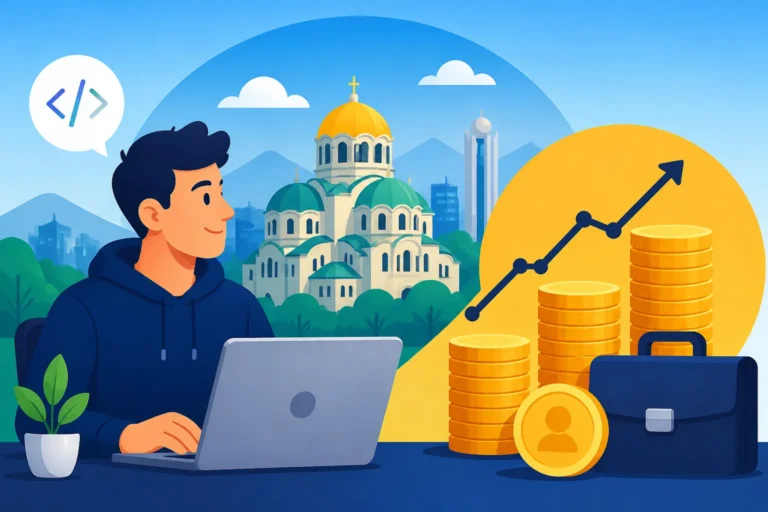
Average monthly IT salaries in Sofia range between 2,000 and 15,000 gross Bulgarian lev based on experience and specialization.