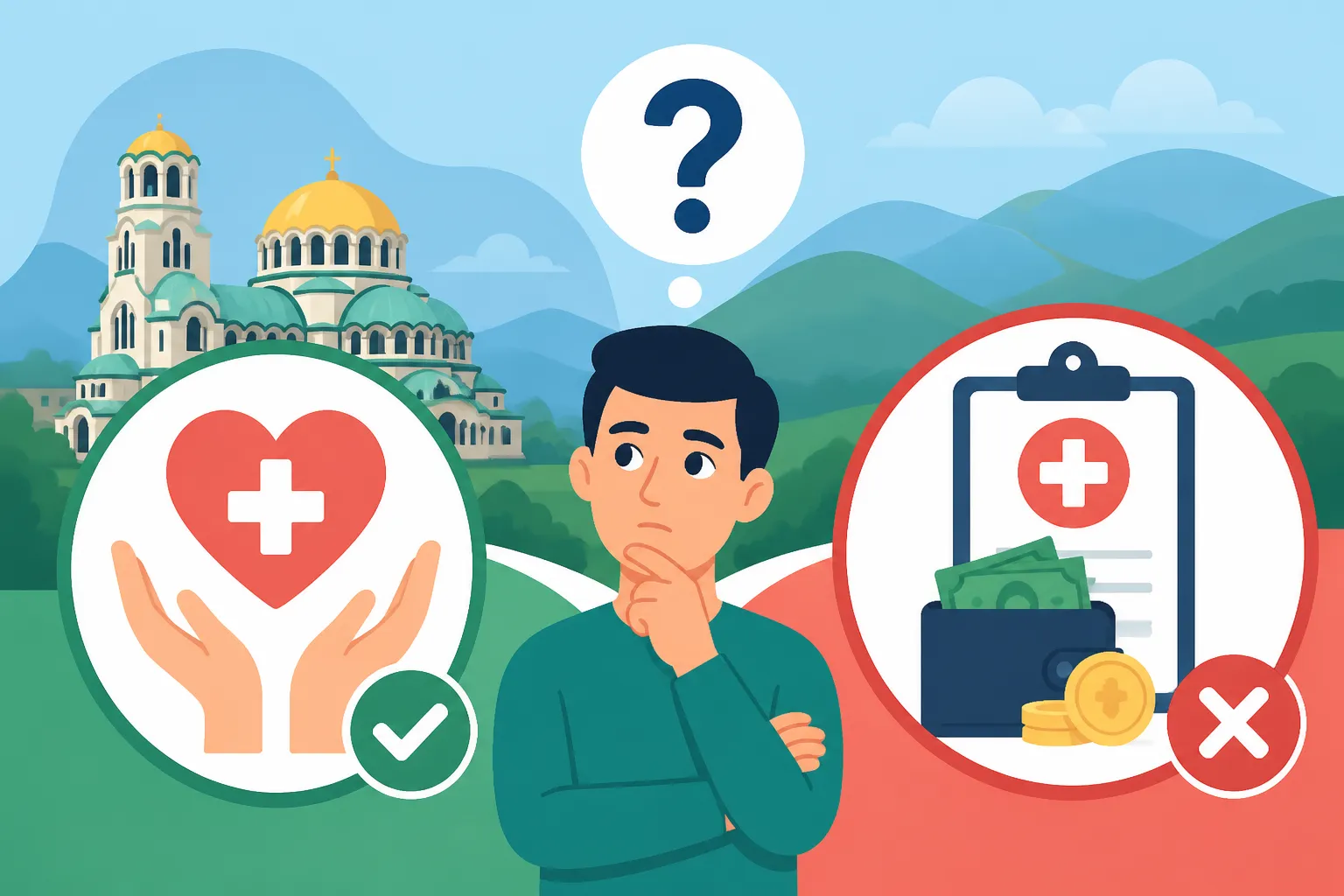
Is Healthcare Free in Bulgaria for Residents?
One of the biggest questions that often pops into an expat's mind when considering a move to Bulgaria is whether healthcare is "free" once you're officially a resident. The reality is a bit more nuanced than a simple yes or no, and understanding it is crucial for your peace of mind and wallet. This guide will meticulously break down how the healthcare system operates for residents in Bulgaria, clarifying what you can expect to pay for, what's covered, and how to navigate the system effectively.
Understanding the Bulgarian Healthcare System: Not Quite "Free"
Let's get this straight from the start: while Bulgaria's healthcare system is largely state-funded and accessible through mandatory contributions, it's not "free" in the sense that you just walk into a clinic without having paid into the system, or without encountering additional costs. This is a common misconception, especially for those coming from countries with truly universal, tax-funded healthcare models where direct contributions aren't always visible. In Bulgaria, your contributions are tied to your employment status, self-employment, or other specific categories.
Many expats arrive here expecting a system akin to the NHS in the UK or similar models, only to find that it operates quite differently. The state provides a baseline of care through the National Health Insurance Fund (NHIF), known locally as the "NZOK" (Национална здравноосигурителна каса). This fund is designed to cover essential medical services, but it's vital to understand its limitations and your responsibilities as a resident contributor. Think of it more as a heavily subsidised system rather than a completely free one, similar to How Bulgaria's Health System Works: The NHIF and Private Care Explained (2027) describes it.
The initial shock for many is realising that even with mandatory contributions, there are still out-of-pocket expenses, co-payments, and often a strong inclination towards private care for quicker access or a wider choice of doctors. It's a system that takes some getting used to, and being informed is your best defence against unexpected bills and frustration.
The Core Principle: Mandatory Contributions
The bedrock of Bulgaria's public healthcare system is the principle of mandatory health insurance contributions. If you are legally employed in Bulgaria, you, along with your employer, contribute a percentage of your gross salary to the NHIF. If you're self-employed, an entrepreneur, or a freelancer, you are personally responsible for making these contributions monthly. This is not optional; it's a legal requirement for anyone considered a resident for health insurance purposes.
These contributions pool together to fund the public healthcare services provided by doctors, clinics, and hospitals that have contracts with the NHIF. Without these contributions, you generally won't be eligible for state-funded medical care, except in genuine life-threatening emergencies. So, if you're working here, those deductions on your payslip aren't just taxes; a significant portion goes directly towards keeping the healthcare system afloat and ensuring you have access when you need it. This aspect is crucial for foreigners to grasp, as detailed in Understanding Mandatory Health Insurance Contributions in Bulgaria.
It’s important to note that these contributions also cover a portion of prescription medications, although you'll still pay a part of the cost, and for dental care, though this is usually very limited. The system is designed to provide basic, essential coverage, not an all-inclusive medical buffet.
Who is a "Resident" in Healthcare Terms?
This is where it can get a little tricky, and it’s a question that plagues many newcomers. Generally speaking, if you have obtained a Bulgarian residence permit (Type D visa followed by a temporary residence permit) and are legally working, studying, or otherwise residing long-term in the country, you are considered a resident for health insurance purposes.
For EU citizens, the process is slightly different. If you move to Bulgaria and plan to reside here for more than three months, you must register your address with the Migration Directorate. Once registered, if you are employed or self-employed, you become a health-insured person in Bulgaria. If you are not working, but are a student, pensioner, or simply "economically inactive," you might need to register for health insurance based on your situation, sometimes linking to your home country's social security or making voluntary contributions. However, many EU citizens often use their European Health Insurance Card (EHIC) for initial access, but this is not a substitute for long-term residency and mandatory health insurance once you're settled. This nuances of this status are elaborated in How Your Residence Status Affects NHIF Enrolment in Bulgaria.
Non-EU citizens on a Type D visa usually need to demonstrate private health insurance coverage for their initial visa application and then during the temporary residence permit application. Once they are legally employed in Bulgaria, they transition to the mandatory NHIF contributions system. The key takeaway is: "resident" doesn't just mean living here; it means having the correct legal status and making the required contributions to the NHIF. You can learn more about this in The Complete Guide to Healthcare in Bulgaria for Expats (2027).
Mandatory Health Insurance Contributions: Your Responsibility
Let's dive deeper into those mandatory contributions. This isn't just a bureaucratic hurdle; it's the financial backbone of your access to public healthcare in Bulgaria. Ignoring it or misunderstanding it can lead to significant headaches and unexpected medical bills. For many expats, especially those used to systems where healthcare contributions are less transparent, this can be a steep learning curve. The National Health Insurance Fund (NHIF) is the public body responsible for managing these funds and providing health insurance coverage.
Every month, a portion of your income, or a fixed amount if you're self-employed, is directed to the NHIF. This ensures that you are "health-insured" – здравноосигурен (zdravnoosiguren) – which is a term you'll hear often. Without being zdravnoosiguren, your access to non-emergency public medical care is severely limited, and you will be expected to pay the full cost of any consultation or treatment out of pocket. Many expats find this particular aspect of the Bulgarian system quite frustrating, especially when they're first trying to get set up and might have gaps in their coverage. The information in Do Expats Have to Pay Health Insurance Contributions in Bulgaria? is particularly relevant here.
How Contributions Work for Employees and Self-Employed
If you're an employee in Bulgaria, congratulations! Your employer handles most of the heavy lifting. They are legally obliged to register you with the National Revenue Agency (NRA) and deduct your social and health insurance contributions directly from your gross salary each month, remitting them to the relevant funds. The current total health insurance rate is typically 8% of your gross salary, split between the employer (4.8%) and the employee (3.2%). This makes it relatively straightforward for salaried workers, as the process is largely automated.
However, if you're self-employed, run your own business (like an EOOD or OOD), or work as a freelancer (свободна професия), the responsibility falls entirely on your shoulders. You must register as a self-insured person with the NRA and pay fixed monthly health insurance contributions. These amounts are generally based on a minimum contributory income set by the state for self-employed individuals, which is adjusted periodically. For example, for 2024, the minimum monthly income on which health contributions are calculated for self-insured persons is 780 BGN. The health insurance rate of 8% is applied to this amount, meaning you'd pay 62.40 BGN per month. These payments need to be made by the 25th of the following month. For a deeper dive into this, you'll find How Do Health Insurance Contributions Work in Bulgaria? incredibly useful.
It’s absolutely critical to stay on top of these payments if you’re self-employed. Missing contributions can lead to your health insurance status being suspended, meaning you’ll have to pay back any arrears before you can access state-funded care again.
The NHIF: What it Covers and What it Doesn't
Once you're regularly contributing to the NHIF, you gain access to a range of public healthcare services. This includes:
- Primary care: Consultations with your chosen General Practitioner (GP), known as a lichen lekar (личен лекар). Your GP acts as your gatekeeper to the rest of the system, providing initial diagnoses, basic treatments, and crucially, referrals.
- Specialist care: Access to specialists (e.g., dermatologists, cardiologists, ophthalmologists) if referred by your GP. However, waiting times can vary significantly for popular specialists.
- Hospital care: If you require hospitalisation, the costs associated with your stay, necessary surgeries, and medical procedures are largely covered.
- Emergency care: Life-threatening emergencies are generally covered, regardless of your insurance status, but follow-up care will require active NHIF coverage.
- Maternity care: Essential prenatal care, childbirth, and postnatal care are covered.
- Prescription medications: A portion of the cost of certain prescribed medications is reimbursed or subsidised, though you will still pay a percentage out of pocket.
- Limited dental care: Very basic dental procedures, such as extractions for children and some basic check-ups, might be covered. Don't expect comprehensive dental treatment under the NHIF.
What the NHIF typically doesn't cover, or covers very minimally, includes:
- Elective procedures or cosmetic treatments.
- Many common dental procedures for adults (fillings, crowns, orthodontics).
- Psychotherapy or extensive mental health services beyond initial GP consultation or acute psychiatric care.
- Glasses or contact lenses.
- Some advanced diagnostic tests or treatments that might only be available privately or require a very long wait in the public system.
- "Comfort" factors: Such as private rooms in hospitals, English-speaking doctors (unless you find one in the public system, which is rare outside major cities), or highly personalised care.
It's a foundational safety net, but it's far from all-encompassing, especially by Western European standards. For a detailed breakdown, see What Is Covered by the NHIF in Bulgaria?.
Beyond the NHIF: Costs You'll Still Face
So, you're health-insured with the NHIF, making your regular contributions. That's a huge step! But as I mentioned, it doesn't mean everything is suddenly "free." There are several layers of costs and services that the NHIF simply doesn't cover, or only covers partially, and these are the areas where many expats choose to invest further to ensure comprehensive care and peace of mind. Navigating these additional costs is a reality of living in Bulgaria, and it’s wise to budget for them.
One of the biggest frustrations for expats is the realisation that even with state insurance, certain highly necessary treatments or doctor visits still incur charges. This can feel counter-intuitive, especially when you're diligently contributing every month. However, it's a common feature of many European healthcare systems where public insurance forms a base layer, and private options or co-payments fill the gaps. Understanding this early can save you a lot of grief later on.
Co-payments, Private Care, and Specialist Referrals
Even with NHIF coverage, you'll encounter co-payments, known as потребителска такса (potrebitelska taksa) or "user fee." This is a small, symbolic fee you pay directly to your GP or specialist for each visit. As of early 2024, this fee is typically around 2.90 BGN for a GP visit and a bit more for a specialist. While small, it's a direct cost you will incur regularly. When admitted to a hospital, there's also a daily hospitalisation fee for the first 10 days of your stay, which is also a modest amount.
Where things get significantly more expensive is when you opt for private care. Many expats, and even Bulgarians, choose to use private clinics and hospitals for several reasons:
- Reduced wait times: Getting an appointment with a specialist in the public system can sometimes take weeks or even months, especially for highly sought-after doctors. Private clinics offer much quicker access.
- English-speaking staff: While not guaranteed, private clinics are far more likely to have administrative staff or doctors who speak English, which is a huge relief when you're trying to explain symptoms or understand complex medical information.
- Modern facilities and comfort: Private facilities often boast newer equipment, more comfortable waiting areas, and a higher standard of patient amenities.
- Direct access to specialists: In the public system, you almost always need a referral from your GP to see a specialist. In the private system, you can often book an appointment directly, bypassing the GP entirely. This flexibility is a major draw.
A private consultation with a GP or specialist can range from 50 BGN to 150 BGN or more, depending on the doctor and clinic. Procedures, diagnostics, and private hospital stays can quickly escalate into hundreds or thousands of leva. This is where many expats realise that while the NHIF is a safety net, it might not provide the level of convenience or service they desire. For more on this, check out Understanding Out-of-Pocket Healthcare Costs and Co-Payments in Bulgaria.
The Role of Private Health Insurance for Expats
Given the limitations of the NHIF, private health insurance becomes a very attractive, and often essential, option for many expats. It acts as a supplementary layer of coverage, bridging the gaps left by the public system. It’s particularly useful for those who value quicker access to specialists, modern facilities, and English-speaking medical professionals.
Private health insurance plans in Bulgaria can cover a variety of things not fully covered by the NHIF, such as:
- Full cost of private consultations with GPs and specialists.
- Private hospital stays and surgeries in private facilities.
- Broader dental coverage including fillings, crowns, and preventative care.
- Optical care (glasses, contact lenses, eye exams).
- Psychotherapy and mental health services.
- Evacuation or repatriation in case of severe illness or injury, which is a huge relief for many international residents.
There are various local and international private insurance providers. For newcomers who might not yet be eligible for the NHIF, international options like SafetyWing can be a lifesaver, providing comprehensive travel and medical insurance that covers you globally, including in Bulgaria, until you're properly integrated into the local system. This kind of insurance can cover unexpected illnesses or accidents during your initial setup phase when you're not yet part of the NHIF. Later on, even if you are covered by NHIF, many expats choose to maintain a private plan for the additional benefits and peace of mind.
Choosing whether to get private health insurance depends on your personal preferences, health needs, and budget. However, I strongly recommend at least considering it, especially if you anticipate needing regular specialist care or simply want the best possible access and comfort. The advice in Do I Need Private Health Insurance in Bulgaria? and Understanding Private Health Insurance Plans in Bulgaria really hits home here.
Here’s a quick overview of what you can expect from the NHIF versus what private insurance typically covers:
| Feature | NHIF (Public System) | Private Health Insurance (Supplementary) |
|---|---|---|
| Mandatory Contribution | Yes (for residents, employees, self-employed) | No (optional, but highly recommended) |
| GP Visits | Covered (with small co-payment) | Fully covered (often no co-payment) |
| Specialist Consultations | Covered with GP referral (wait times possible) | Fully covered (direct access, shorter wait times) |
| Hospitalisation | Covered for necessary procedures (daily co-payment) | Fully covered (often includes private rooms) |
| Emergency Care | Covered | Covered (may include evacuation/repatriation) |
| Prescription Medication | Partially covered/subsidised | Often fully covered or higher reimbursement |
| Dental Care | Very limited (basic extractions, some children's care) | Comprehensive (fillings, crowns, hygiene, etc.) |
| Optical Care | Generally not covered | Often covered (glasses, contact lenses, exams) |
| Mental Health Services | Limited, mostly acute psychiatric care | Broader coverage for therapy and counselling |
| English-Speaking Doctors | Rare in public system (outside major city centres) | More common, especially in international clinics |
| Cost | Monthly contributions + co-payments | Monthly/annual premiums + potential deductibles/excesses |
Practical Steps: Registering and Managing Your Healthcare
Navigating the Bulgarian healthcare system can feel like deciphering an ancient scroll, especially in the beginning. But once you understand the basic steps and requirements, it becomes much more manageable. The key is to be proactive and ensure your status is always in order. This isn't just about avoiding fines; it's about safeguarding your health and financial well-being.
The administrative processes can be slow, and communication barriers can sometimes feel insurmountable. But don't despair! Many expats have successfully navigated this path before you, and local support groups or even professional services can offer invaluable assistance. Remember, patience is a virtue when dealing with bureaucracy here.
Navigating Registration with the NHIF and a GP
The first crucial step once you're officially residing and working in Bulgaria is ensuring you're registered with the NHIF.
-
For Employees: Your employer should handle your registration with the National Revenue Agency (NRA) and, by extension, your health insurance contributions to the NHIF. It's wise to double-check with your employer that this is indeed happening. You can verify your health insurance status online through the NRA portal if you have a Personal Identification Code (PIC) from the NRA, or in person at an NRA office.
-
For Self-Employed/Freelancers: You need to proactively register as a self-insured person with the NRA. This involves visiting an NRA office, filling out a declaration, and ensuring you start making your monthly contributions.
Once your NHIF contributions are active, the next step is to choose and register with a General Practitioner (GP) – your lichen lekar. This is arguably the most important step for day-to-day healthcare access. Your GP is your first point of contact for non-emergency medical issues, referrals to specialists, and obtaining prescriptions.
- Finding a GP: Ask for recommendations from other expats, colleagues, or local friends. Look for clinics in your neighbourhood. In larger cities like Sofia, Plovdiv, or Varna, you might find GPs with some English language skills, especially in more expat-friendly areas. Don't be afraid to "interview" a few before committing.
- Registration Process: Once you've chosen a GP, you'll need to visit their practice. You'll typically fill out a registration form, present your personal identification document (e.g., residence permit, passport), and proof of your NHIF status. This is a crucial step detailed in How to Register with the NHIF and a GP in Bulgaria (2027). The GP will then officially add you to their patient list.
It’s worth noting that you can change your GP twice a year (usually in June and December) if you're not happy with your current one.
What to Do If You're Not Yet Covered
This is a scenario many new arrivals find themselves in: you've just moved, your residence permit is pending, or you haven't started working yet, and you need medical attention.
-
Emergencies: In a genuine life-threatening emergency, call 112 (the European emergency number, which works in Bulgaria). Ambulances and emergency rooms in public hospitals are legally obliged to provide care regardless of your insurance status. However, once the emergency is stabilised, you will be expected to pay for any subsequent treatment or hospitalisation if you don't have valid health insurance.
-
Non-Emergencies with No NHIF Coverage: If you're not yet covered by the NHIF, you will be considered a "private patient" for any non-emergency medical care. This means you'll pay the full cost of consultations, diagnostics, and treatments out of your own pocket.
- Private Clinics: Your best bet is to go directly to a private clinic. They are set up to handle private patients, and many will have English-speaking staff. They will issue you a bill, which you pay directly. Keep all receipts if you have private international insurance like SafetyWing, as you may be able to claim reimbursement.
- "Voluntary" Payments to Public GPs: Some public GPs might accept you as a private patient and charge you a fee if you're not NHIF-insured, but it's often simpler to head to a dedicated private clinic for ease of communication and streamlined service.
-
Travel Insurance / International Private Insurance: This is absolutely critical for your initial period in Bulgaria, especially if you're a non-EU citizen applying for a Type D visa, as it's a mandatory requirement. Even for EU citizens, having comprehensive travel or international private insurance (like SafetyWing) for your first few months provides a vital safety net before you're fully integrated into the NHIF system. This insurance can cover unexpected medical costs, giving you peace of mind while you navigate the local bureaucracy. This is especially useful for understanding The Cost of Healthcare in Bulgaria: A Complete Breakdown for Foreigners (2026).
The key is never to leave yourself uninsured, even for a short period. The Bulgarian system, while offering a public option, relies on active contributions. Plan ahead, understand your status, and always have a backup plan for unexpected medical needs.
Disclaimer
The information provided in this guide is intended for general informational purposes only and does not constitute legal, medical, or financial advice. While we strive to keep the information up-to-date and accurate, regulations and procedures in Bulgaria can change. Always consult with official government sources, legal professionals, tax advisors, or healthcare providers for advice tailored to your specific situation. Reliance on any information in this guide is solely at your own risk.