How Do Health Insurance Contributions Work in Bulgaria?
Moving to a new country like Bulgaria often comes with a whirlwind of excitement, but let's be honest, the administrative side of things, especially healthcare, can feel like trying to solve a Rubik's Cube blindfolded. One of the biggest head-scratchers for many expats is figuring out how health insurance contributions actually work here. This guide is going to walk you through the ins and outs, clarifying who pays what, when, and why, so you can navigate the system with confidence and ensure you're covered when you need it most.
Understanding the Bulgarian Healthcare System's Foundation
First things first, let's peel back the layers of how healthcare is generally structured here in Bulgaria. It's not a free-for-all, nor is it purely private like in some countries. Bulgaria operates on a mixed system, heavily reliant on the National Health Insurance Fund (NHIF), or Natsionalna zdravnoosiguritelna kasa (NZOK), as it's known locally. This fund is primarily sustained by mandatory health insurance contributions from residents, whether they're employed, self-employed, or otherwise economically active.
The NHIF is the backbone of the public healthcare system. When you contribute, you gain access to a range of services, including GP visits, specialist referrals, hospital care, and some prescription reimbursements. However, unlike some systems where everything is covered, in Bulgaria, there are often co-payments for certain services, and you might find yourself paying out of pocket for things not fully covered by the NHIF. Understanding this basic premise is crucial before diving into the nitty-gritty of contributions. For a more comprehensive overview, you might want to read The Complete Guide to Healthcare in Bulgaria for Expats (2027).
The Role of the National Health Insurance Fund (NHIF)
The NHIF is essentially the single-payer for most public healthcare services in Bulgaria. Think of it as the central pot where everyone's mandatory contributions go, and from which doctors, hospitals, and pharmacies are paid for the services they provide to insured individuals. It’s designed to ensure universal access to a defined package of medical care. However, it's not always a seamless experience for expats. There can be language barriers, varying standards of care, and sometimes long wait times for specialist appointments, especially in smaller towns.
Your contributions to the NHIF are non-negotiable if you are a legal resident and are economically active. These payments are what grant you a "health insurance status." Without this status, you are essentially treated as a private patient, meaning you pay the full cost for everything, even in public facilities, unless it's a life-threatening emergency. The NHIF is a complex beast, but understanding its fundamental role is the first step in making sense of your contributions. If you're wondering how exactly this system functions day-to-day, check out How Bulgaria's Health System Works: The NHIF and Private Care Explained (2027).
Who is Obligated to Contribute?
This is where many expats get tripped up. The general rule is: if you are a resident in Bulgaria and have an income or are otherwise deemed economically active, you are expected to contribute to the NHIF. This includes:
- Employees: If you're working for a Bulgarian employer, your contributions are primarily handled by them.
- Self-Employed Individuals/Freelancers: If you're working for yourself, you are personally responsible for calculating and paying your contributions.
- Pensioners: If you are receiving a Bulgarian pension, contributions are typically deducted automatically. If you're a pensioner from another EU country, there are specific rules about how your healthcare is covered, often through your home country's scheme (e.g., S1 form).
- Unemployed Individuals: Even if you're unemployed, if you're registered with the unemployment agency and receiving benefits, your contributions might be covered. If you're unemployed and not receiving benefits, you are still obligated to pay minimum contributions to maintain your health insurance status.
- Individuals with no income/dependents: If you're a spouse or dependent of someone who is actively contributing, you might be covered under their plan, but this isn't always automatic and requires registration. For those without income or who don't fit into the above categories, you'll likely need to pay the minimum monthly contribution to remain insured.
The key takeaway is that having legal residence usually comes with the obligation to contribute, regardless of whether you feel like you'll use the public system. It’s part of the social security framework here.
Mandatory Health Contributions for Employed Individuals
If you've landed a job with a Bulgarian employer, congratulations! You've successfully navigated one of the hurdles. When it comes to health insurance contributions, things are generally more straightforward for you, as much of the heavy lifting is done by your employer. However, it's still vital to understand how it all works, so you can check your payslips and ensure everything is above board.
Employer and Employee Shares
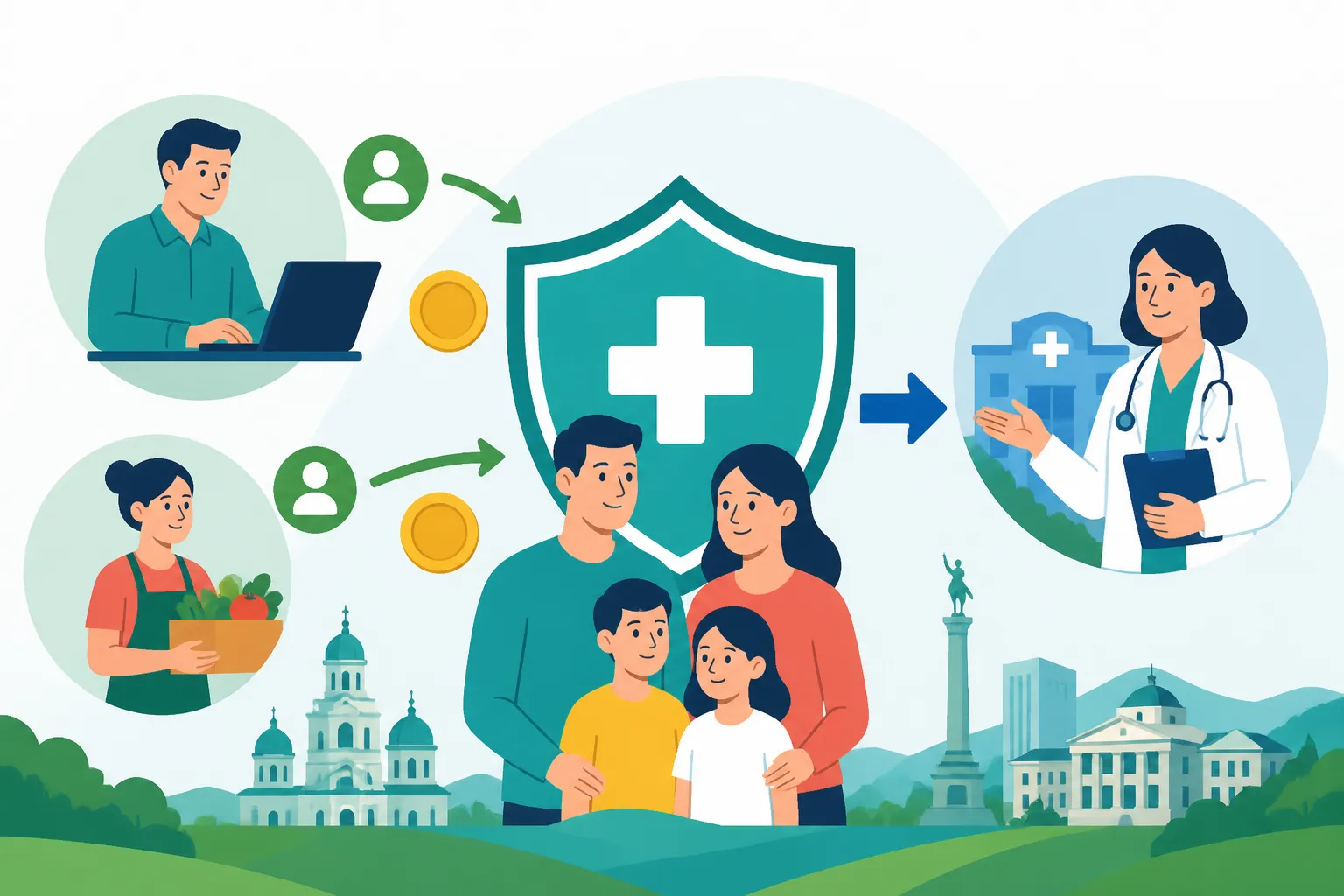
In Bulgaria, health insurance contributions for employed individuals are a shared responsibility between you and your employer. It’s a percentage of your gross salary, subject to a minimum and maximum threshold. Your employer deducts your share directly from your salary along with other social security contributions and income tax, and then remits the total amount (both your share and their own) to the National Revenue Agency (NRA).
Currently, the total health insurance contribution rate is 8% of your gross income. This 8% is split as follows:
- Employee Share: 3.2% (deducted from your gross salary)
- Employer Share: 4.8% (paid by your employer on top of your gross salary)
So, for every 100 BGN you earn Gross, your employer pays 4.80 BGN and you contribute 3.20 BGN, totaling 8 BGN for health insurance. This is separate from pension contributions, unemployment contributions, and personal income tax, which is a flat 10% in Bulgaria. It’s crucial that your employer registers you properly with the NRA and the NHIF, otherwise, you won't have health insurance status. You can learn more about this process in How to Register with the National Health Insurance Fund in Bulgaria.
Let’s look at a hypothetical scenario. Imagine your gross monthly salary is 2,000 BGN.
- Your health insurance contribution (employee share): 2,000 BGN * 3.2% = 64 BGN
- Your employer’s health insurance contribution: 2,000 BGN * 4.8% = 96 BGN
- Total monthly health insurance contribution for your employment: 160 BGN
This system ensures that if you are legally employed, your access to public healthcare is maintained. It's one of the perks of a formal employment contract in Bulgaria.
Minimum and Maximum Contribution Thresholds
While the 8% rate is standard, there are important caps and floors to consider. The Bulgarian social security system, including health insurance, operates with minimum and maximum monthly contributory incomes.
- Minimum Monthly Contributory Income: This threshold is determined annually based on economic factors and varies by sector. For instance, even if you are employed part-time and earn less than this minimum, your health contributions will be calculated based on the minimum amount for your position/sector. This protects against individuals paying very little and ensures a baseline contribution. As of 2024, the minimum monthly contributory income for most self-employed persons and those without other insurance is 780 BGN (though this can change). For employees, it varies by economic activity.
- Maximum Monthly Contributory Income: There's also a ceiling to how much you contribute. Currently, the maximum monthly contributory income is 3,751 BGN. This means that if your gross monthly salary is, say, 5,000 BGN, your health contributions (and other social security contributions) will only be calculated on the first 3,751 BGN. Anything above that amount is not subject to further contributions. This benefits higher earners, as their percentage contribution effectively decreases for income above the cap.
So, if you earn 5,000 BGN gross:
- Your health insurance contributions would be based on 3,751 BGN, not 5,000 BGN.
- Employee share: 3,751 BGN * 3.2% = 120.03 BGN
- Employer share: 3,751 BGN * 4.8% = 180.05 BGN
- Total: 300.08 BGN
These thresholds are updated regularly by the National Assembly, so it's always a good idea to check the most current figures, especially at the start of a new year. Your employer should be aware of these limits and apply them correctly.
Navigating Contributions as a Self-Employed Person or Freelancer
For many expats, the allure of Bulgaria lies in the flexibility it offers for self-employment or freelancing. But this freedom comes with the added responsibility of managing your own social security and health insurance contributions. It's a bit more hands-on than being employed, but entirely manageable once you understand the system.
Registering and Declaring Income
Before you can even think about contributions, you need to be properly registered. If you’re operating as a sole trader (ET – ednolichen turgovets) or a freelancer (svobodna profesiya), you’ll need to register with the National Revenue Agency (NRA) and obtain a BULSTAT number. This essentially makes you a recognized economic entity. For a deep dive into this, check out How to Register as a Freelancer (Свободна Професия) in Bulgaria or How Do I Register with the National Revenue Agency in Bulgaria?.
Once registered, you are then responsible for:
- Declaring your income: This is usually done quarterly or annually, depending on your specific registration type and income levels, through tax returns submitted to the NRA.
- Calculating your contributions: As a self-employed individual, you are responsible for paying the entire 8% health insurance contribution, not just the employee share.
- Making payments: These payments are made monthly, usually by the 25th of the following month.
The basis for your health contributions as a self-employed person is typically the average monthly insurance income declared for the previous year, or the minimum contributory income for the current year, whichever is higher. This can sound confusing, but the NRA website has detailed guides, and many expats opt to use an accountant for this part, which is often a wise investment to ensure compliance.
Calculating and Paying Your Contributions
Let's break down the calculation for self-employed individuals and freelancers. You, as the individual, are responsible for the full 8% contribution rate. This is calculated on a monthly basis, based on a declared insurance income.
- Minimum basis: You must contribute on at least the minimum monthly contributory income established by law for self-employed individuals. As of 2024, this minimum for most self-employed is 780 BGN.
- Actual basis: If your actual average monthly income from the previous year was higher than this minimum, you generally contribute based on that higher amount, up to the maximum contributory income (3,751 BGN).
So, if you're a freelancer and decide to contribute on the minimum basis (780 BGN per month):
- Your monthly health insurance contribution would be: 780 BGN * 8% = 62.40 BGN.
These payments are made directly to the NRA via bank transfer. You’ll need the correct bank account details for the NRA, specific payment codes for health insurance, and your BULSTAT number. This is where an accountant really shines, as they can ensure all the codes and amounts are correct.
It's absolutely essential to stay on top of these payments. Missing contributions can lead to a lapse in your health insurance status, meaning you lose access to NHIF-covered services and will have to pay back any missed contributions with interest. This can quickly add up and cause a lot of stress. For a detailed guide on your obligations, refer to Understanding Health Coverage for the Self-Employed in Bulgaria.
What About Digital Nomads or Remote Workers?
The rise of digital nomadism has added another layer of complexity. If you are working remotely for a company outside Bulgaria, but reside here, your health insurance obligations depend on your legal status.
- EU/EEA/Switzerland Citizens: If you're from an EU/EEA country or Switzerland and are covered by your home country's social security system (e.g., through an A1 portable document), you might be exempt from Bulgarian contributions for a period, with your home country covering your healthcare via the EHIC (European Health Insurance Card) or by registering an S1 form. However, if you become a tax resident and spend more than 183 days here, you may still be obligated to contribute in Bulgaria, depending on your income source and bilateral agreements. Always check with the NHIF and a local expert.
- Non-EU Citizens: If you are a non-EU citizen working remotely for a non-Bulgarian company, you generally will need to pay health insurance contributions in Bulgaria, often by registering as a self-employed person (even if your only client is abroad). You might need to prove sufficient funds or register as an entrepreneur to get your residence permit, and part of that financial proof often involves showing you can meet social security obligations.
In both cases, it's not uncommon for digital nomads to opt for international private health insurance plans in parallel, especially during the initial setup phase or if they travel frequently. Providers like SafetyWing offer flexible, travel-friendly options that can bridge gaps or complement local coverage, providing peace of mind while you figure out the local system or for emergencies when you're outside Bulgaria. These plans can be incredibly useful for unforeseen circumstances or for accessing private facilities with English-speaking staff.
Health Coverage for Non-Working Expats and Dependents
Not everyone comes to Bulgaria to work. Some are retirees, students, or family members dependent on another expat. Even in these scenarios, maintaining health insurance status is crucial. The rules here can be particularly perplexing, so let’s untangle them.
Non-Working Residents (Students, Retirees, Unemployed)
If you are a resident in Bulgaria but not actively employed or self-employed, you still have an obligation to contribute to the NHIF to maintain your health insurance status.
- Students: If you are a student, especially from a non-EU country, obtaining a residence permit usually requires proof of health insurance. Once you are a legal resident, you may need to contribute a minimum monthly amount to the NHIF, unless specific agreements or student packages apply. Many international students initially rely on private student health insurance until they clarify their NHIF obligations.
- Retirees: For retirees from EU/EEA countries or Switzerland, if you are receiving a pension from your home country, you might be covered under the S1 form system. This means your home country's health insurance institution covers your healthcare costs in Bulgaria, and you are exempt from Bulgarian NHIF contributions. You'll need to register your S1 form with the NHIF here. If you are a non-EU retiree, you typically need to demonstrate sufficient funds and usually pay the minimum monthly health contributions to the NHIF, similar to self-employed individuals on the minimum basis.
- Unemployed Residents (not receiving benefits): If you are a resident, not working, and not receiving unemployment benefits (or your benefits have run out), you are personally responsible for paying the minimum monthly health insurance contribution to the NHIF. This is paid directly to the NRA. Failing to do so will result in a lapse in your health insurance status.
The minimum monthly contribution for these categories is typically based on the minimum monthly contributory income for the self-employed (e.g., 780 BGN). So, your contribution would be 8% of this amount. Again, it's about 62.40 BGN per month as of current figures. This is how you ensure you have access to general medical care through the public system even without active employment.
Adding Dependents to Your Health Coverage
Bringing your family along? This is a common concern for expat families. Fortunately, in many cases, if you are actively contributing to the NHIF, you can add your non-working spouse and children as dependents.
- Children: Children under 18 (or up to 26 if they are full-time students) are generally covered under the NHIF if one parent is an active contributor. You'll need to register them with your General Practitioner (GP) and the NHIF, providing their birth certificates and your health insurance documents. This process is usually straightforward. You can also explore How to Add Dependents to Your Health Coverage in Bulgaria.
- Spouses: A non-working spouse can typically be registered as a dependent on your NHIF coverage, provided they are legally residing in Bulgaria and do not have their own income or other insurance basis. This involves an application process with the NHIF, where you provide proof of marriage and your active health insurance status.
However, it's important to remember that 'dependent' status doesn't always automatically grant full access to everything. Sometimes, getting a specific appointment or service for a dependent might require a referral from your GP, just as it would for the main contributor. It's also worth noting that if your dependent spouse starts working, they will then be obligated to make their own contributions.
A table summarizing the contribution types can be helpful:
| Category | Health Contribution Rate | Who Pays What | Payment Frequency | Basis for Contribution |
|---|---|---|---|---|
| Employed | 8% | Employee: 3.2%, Employer: 4.8% | Monthly | Gross salary (min. to max. thresholds apply) |
| Self-Employed / Freelancer | 8% | Individual: 8% | Monthly | Declared insurance income (min. to max. thresholds apply) |
| Non-Working Resident | 8% | Individual: 8% | Monthly | Minimum monthly contributory income (e.g., 780 BGN) |
| EU Retiree (S1 Form) | N/A | Home country health insurance institution | N/A | Covered by home country |
| Dependents (Children, Non-Working Spouse) | N/A | Covered under the main contributor's NHIF status (with registration) | N/A | Main contributor's income |
Common Pitfalls and How to Avoid Them
The Bulgarian healthcare contribution system, while seemingly structured, has its quirks. Expats often stumble over a few recurring issues. Being aware of these can save you a lot of grief and unexpected costs.
Lapses in Health Insurance Status
This is probably the most common and most serious pitfall. If you stop making your mandatory health insurance contributions, your "health insurance status" lapses. This means you are no longer considered insured by the NHIF.
What happens when your status lapses?
- No public healthcare: You lose access to NHIF-covered services. You'll have to pay the full cost for GP visits, specialists, hospital stays, and prescriptions, even in public facilities.
- Back payments and interest: To regain your status, you'll need to pay all missed contributions, plus interest and penalties. These can accumulate quickly and become a significant financial burden.
- Residency issues: For non-EU citizens, maintaining valid health insurance (either through the NHIF or private means) is often a condition of your residence permit. A lapse could even put your residency at risk.
How to avoid it:
- Stay vigilant if self-employed: If you're freelancing or self-employed, set up reminders for your monthly payments. Consider an accountant to handle this for you.
- Check your status regularly: You can check your health insurance status online through the NHIF portal (if you have an electronic signature) or by visiting a local NHIF office with your ID. It's like checking your credit score – do it periodically.
- Understand transition periods: If you change jobs, move from employed to self-employed, or become unemployed, there can be transition periods. Ensure you understand who is responsible for your contributions during these times and whether you need to make individual payments. For those in transition, particularly new arrivals, having a robust international health insurance plan like SafetyWing can provide a critical safety net. It covers you immediately, often worldwide, and can bridge the gap while you navigate the local bureaucracy.
Navigating the Language Barrier
Let's be real: bureaucracy in any new country is tough, but when it's in a language you're still learning, it's a whole new level of frustration. The NHIF offices, the NRA, and many doctors' offices might not have English-speaking staff. This can make understanding complex contribution rules, filling out forms, or even just explaining your situation incredibly difficult.
How to navigate it:
- Bring a Bulgarian speaker: When dealing with official institutions, always try to bring a trusted Bulgarian friend, colleague, or a professional translator. They can clarify questions, ensure you understand instructions, and help fill out forms correctly.
- Hire an accountant: For self-employed individuals, an accountant is almost indispensable. They understand the language, the laws, and the payment codes, saving you endless headaches.
- Use online translation tools with caution: While helpful for understanding general information, don't rely solely on them for critical legal or financial documents. Misinterpretations can be costly.
Keeping Track of Documents
Bulgaria loves paperwork, and your health insurance status is no exception. You’ll need to keep records of your contributions, registration documents, and any correspondence with the NHIF or NRA. Losing these can complicate things if there's ever a dispute or a need to prove your status.
How to stay organized:
- Create a dedicated folder: Keep all health-related documents – payslips showing deductions, proof of self-payments, NHIF registration papers, GP registration confirmation – in one secure place, both physically and digitally.
- Scan everything: Have digital copies of all important documents. Cloud storage can be a lifesaver if physical documents are lost or damaged.
- Request receipts: Always get receipts or payment confirmations for any manual payments you make.
The Role of Private Health Insurance
Given the nuances of the NHIF system, many expats, regardless of their employment status, choose to invest in private health insurance. It’s not just an optional extra; for many, it becomes a crucial part of their healthcare strategy in Bulgaria.
Complementary vs. Primary Coverage
It's important to understand how private health insurance fits into the picture here.
- Complementary Coverage: For most expats who are also contributing to the NHIF, private health insurance acts as a complementary layer. It doesn't replace your public contributions (unless you're exempt via an S1 form or similar), but rather enhances your access to healthcare. This often means faster access to specialists, choice of doctors and hospitals (including international clinics with English-speaking staff), coverage for services not fully covered by the NHIF (like comprehensive dental or optical care), and sometimes shorter wait times for procedures.
- Primary Coverage (for specific groups): In some cases, private health insurance might be your primary form of coverage. This is often true for new arrivals who haven't yet established NHIF status, tourists, or certain non-EU residents whose visa requirements mandate private insurance upon entry. Digital nomads, for example, often find that a global private plan like SafetyWing offers the seamless coverage they need across borders, especially before they've committed to a specific long-term residence and associated public health contributions in Bulgaria.
The decision to get private insurance usually boils down to personal preference, budget, and the level of comfort you desire. While the NHIF provides essential coverage, private plans can offer a more familiar and often higher standard of service, particularly if you're accustomed to robust private systems in your home country. You can explore options for How to Buy Private Health Insurance as a Newcomer in Bulgaria.
Benefits of Private Health Insurance for Expats
There are several compelling reasons why private health insurance is popular among the expat community in Bulgaria:
- Access to English-Speaking Doctors and Clinics: This is a huge one. While there are English-speaking doctors within the public system, they can be harder to find. Private clinics in major cities like Sofia, Plovdiv, or Varna often cater specifically to international patients, offering multi-lingual staff and a more streamlined experience. Finding an English-Speaking Doctor in Bulgaria can be a major relief during a stressful time.
- Shorter Wait Times: Public healthcare can sometimes involve long waits for specialist appointments or certain procedures. Private insurance often allows you to bypass these queues and get seen more quickly.
- Broader Range of Services: Private plans typically cover a wider array of services that might have limited or no coverage under the NHIF, such as extensive dental work, optical care, physiotherapy, and mental health services.
- Choice of Providers: You get more control over who treats you and where. This means you can choose a specific private hospital or specialist based on reputation or personal recommendation, rather than being limited by the NHIF network.
- International Coverage: Many private plans, especially international ones like those from SafetyWing, offer coverage not just in Bulgaria but also when you travel to other countries, which is invaluable for expats who frequently cross borders. This means you’re covered whether you’re on a weekend trip to Greece or visiting family back home.
- Comfort and Familiarity: For many, the familiarity of a private system, with clear appointments, modern facilities, and often better communication, reduces the stress associated with navigating a new healthcare landscape.
When choosing a private plan, carefully consider what you need. Think about your family's health history, how often you travel, and your budget. Compare different providers and read the fine print. While the NHIF is your fundamental safety net, private insurance can truly elevate your healthcare experience in Bulgaria, making it far less daunting and much more comfortable.
Disclaimer
The information provided in this guide is intended for general informational purposes only and does not constitute legal, financial, or medical advice. Health insurance regulations and contribution rates in Bulgaria are subject to change by the authorities. While we strive to keep the information accurate and up-to-date, we recommend consulting with a qualified Bulgarian legal or financial professional, or directly with the National Revenue Agency (NRA) and the National Health Insurance Fund (NHIF), for advice tailored to your specific situation.