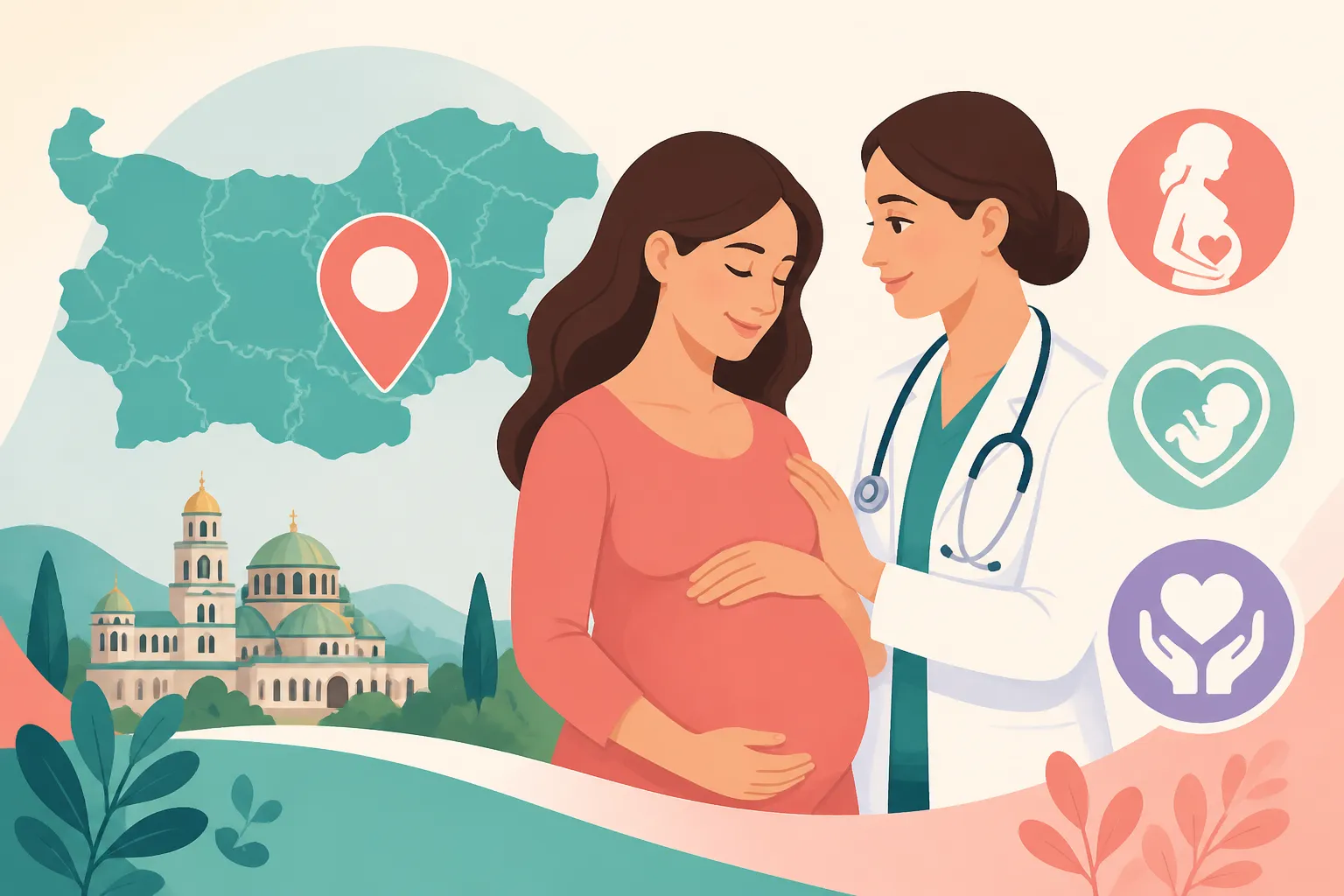
Understanding Maternity and Prenatal Care in Bulgaria
Finding out you're expecting in a new country can bring a whirlwind of emotions – excitement, joy, and let's be honest, a fair bit of anxiety about navigating a foreign healthcare system during such a crucial time. From confirming your pregnancy to welcoming your little one and managing those first few weeks, understanding maternity and prenatal care in Bulgaria is key. This guide aims to demystify the process, offering a realistic, empathetic walkthrough of what you can expect as an expat.
Initial Steps: Confirming Pregnancy and First Consultations
So, you've taken a home test, and it's positive. Congratulations! Now what? The first step is to officially confirm your pregnancy with a medical professional and start building your support network here in Bulgaria. This initial phase can feel a bit daunting, especially if you're not fully comfortable with the language or the local system, but I promise, it's manageable.
Confirming Your Pregnancy: Home Tests and First Doctor Visit
Just like anywhere else, the journey typically begins with a home pregnancy test. Once you have that positive result, your next move should be to schedule an appointment with a doctor to get an official confirmation. In Bulgaria, you have a couple of options: you can either visit a general practitioner (GP) or go straight to an obstetrician-gynaecologist (OB-GYN).
Many expats initially opt for a GP, especially if they already have one registered with the National Health Insurance Fund (NHIF). Your GP can perform a blood test to confirm the pregnancy more definitively and then refer you to an OB-GYN. However, it's also perfectly acceptable to bypass the GP and directly book an appointment with an OB-GYN, particularly if you have private insurance or plan to pay out-of-pocket for private care. When you're making that first appointment, be upfront about being an expat and if you have a specific language preference. Many clinics, especially in larger cities like Sofia, Plovdiv, or Varna, will have English-speaking staff or doctors, which can be a huge relief.
Choosing Your GP or OB-GYN Early On
Choosing your primary care provider for your pregnancy is one of the most important decisions you'll make. This person will be your guide through the next nine months, so finding someone you trust and feel comfortable with is paramount. If you're going the public health route, you'll need to be registered with a GP to benefit from NHIF coverage. If you haven't yet, now is the time to figure out how to register with the NHIF and a GP in Bulgaria (2026). Your GP can provide a referral to an OB-GYN who works with the NHIF, which will cover a portion of your costs.
However, many expats, myself included, often prefer to find a private OB-GYN from the start. This often means more flexibility with appointments, potentially shorter wait times, and direct communication in English without needing a translator. Word-of-mouth recommendations from other expat mums are invaluable here, so don't hesitate to ask around in expat forums or local groups. It's not uncommon to "interview" a few doctors before settling on the one that feels right for you and your family. Remember, this is your pregnancy, and you deserve a doctor who aligns with your preferences and provides the level of care and communication you need.
Public vs. Private Prenatal Care Options
One of the biggest dilemmas for expectant expat parents in Bulgaria is deciding between the public and private healthcare systems for their prenatal care. Both have their advantages and disadvantages, and what's best for one person might not be for another. Understanding these differences will help you make an informed choice that suits your needs and budget. For a broader overview, consider reading Public vs Private Healthcare in Bulgaria: What Expats Need to Know.
The Public Healthcare Route: NHIF Coverage and GP Referrals
If you're legally working and contributing to the National Health Insurance Fund (NHIF) in Bulgaria, you are entitled to certain free or subsidised maternity and prenatal care services. This is the public healthcare route. To access this, you typically need to be registered with a GP who will then provide you with a referral to an OB-GYN. The NHIF covers a specific number of prenatal check-ups, ultrasounds, and laboratory tests throughout your pregnancy.
The key benefit here is cost-effectiveness. Your mandatory health insurance contributions mean you won't pay the full price for these services, and for some, they may be entirely covered. However, there can be drawbacks. Public clinics and hospitals might have longer waiting times for appointments, and you might not have as much choice over your specific doctor or the level of personalised care. Language barriers can also be more prevalent in the public system, though this isn't universally true. It's also worth noting that while basic care is covered, anything considered "extra" or outside the standard protocol might still incur out-of-pocket costs. For more detail, you can check How Bulgaria's Health System Works: The NHIF and Private Care Explained (2027).
Exploring Private Clinics and Hospitals for a Personal Touch
Many expats lean towards private prenatal care, even if they contribute to the NHIF. The reasons are varied: often, it's about better communication, more personalised attention, shorter wait times, and a wider choice of English-speaking doctors. Private clinics, particularly in Sofia like Tokuda Hospital, Acibadem City Clinic, or Nadezhda Hospital, offer comprehensive maternity packages that cover all your prenatal appointments, tests, ultrasounds, and even antenatal classes.
While significantly more expensive than the public option, private care often provides a more reassuring experience for expats. You typically have the same doctor throughout your pregnancy, ensuring continuity of care and a strong doctor-patient relationship. You might also find more modern facilities and amenities. If you have private health insurance that covers maternity, this is often the most straightforward route. Even if you don't, some expats opt to pay for private prenatal care and then utilise the public system for certain tests or for the birth itself, trying to strike a balance between quality and cost. For those considering private options, exploring Understanding Private Health Insurance Plans in Bulgaria can provide useful insights.
Understanding the Hybrid Approach
The beauty of the Bulgarian system, for some, is the flexibility to combine both public and private services. You might choose to have your regular check-ups with a private OB-GYN for continuity and language comfort, while relying on the NHIF for routine blood tests or standard ultrasounds, especially if these can be done through a GP referral with minimal fuss. This can significantly reduce your overall costs while still ensuring you feel well-supported.
For example, you could have your primary OB-GYN appointments at a private clinic, paying out-of-pocket or using private insurance, but then get your NHIF-covered referral from your GP for a specific, more expensive scan at a public facility. This requires a bit of coordination and understanding of the system, but it's a popular strategy among savvy expats. It's all about navigating the system in a way that maximises your comfort and minimises financial strain. Don't be afraid to ask your private doctor how they recommend you integrate public services if that's a path you're considering.
Navigating Prenatal Consultations and Tests
Once you've chosen your path, whether public, private, or a mix, the real journey of prenatal care begins. This involves a series of regular check-ups, screenings, and ultrasounds designed to monitor both your health and your baby's development. It can feel like a lot, especially with the added layer of being in a foreign country, but each step is crucial.
Regular Check-ups and Monitoring Throughout Pregnancy
Throughout your pregnancy in Bulgaria, you'll have scheduled appointments, typically once a month during the first two trimesters, increasing in frequency as you get closer to your due date. During these visits, your OB-GYN will monitor your weight, blood pressure, and urine, and listen to the baby's heartbeat. They’ll also measure your fundal height (the distance from your pubic bone to the top of your uterus) to track the baby’s growth.
These appointments are your chance to ask any questions you have, no matter how small they seem. Don't hesitate to write down your questions beforehand, especially if you're dealing with a language barrier. A good doctor will take the time to address your concerns. In a private setting, these appointments often feel more relaxed and less rushed, allowing for deeper discussions. If you're in the public system, try to book early and be prepared for a potentially quicker consultation, so having your key questions ready is even more important. This is a journey of monitoring and making sure everything progresses as it should.
Essential Screening Tests and Ultrasounds
Bulgaria follows pretty standard international guidelines for prenatal screening tests and ultrasounds. You'll typically have at least three major ultrasounds: one in the first trimester (around weeks 11-13) for dating and Nuchal Translucency (NT) screening, a detailed anatomy scan in the second trimester (around weeks 18-22), and another in the third trimester (around weeks 30-34) to check growth and position. Additional ultrasounds might be recommended based on your specific circumstances or doctor's discretion.
Blood tests are also a regular part of prenatal care, checking for things like blood type, Rh factor, anaemia, gestational diabetes, and various infections. While many of these are covered by the NHIF, some advanced genetic screenings, like Non-Invasive Prenatal Testing (NIPT), are typically not and would be an additional out-of-pocket cost if you choose to have them done privately. Your doctor will explain all recommended tests and discuss the results with you. This can be a lot of information to take in, so don't be afraid to ask for clarity if anything is unclear.
Preparing for Delivery: Antenatal Classes and Birth Plans
As your due date approaches, the focus shifts to preparing for delivery. Antenatal or childbirth classes are available in Bulgaria, primarily in larger cities and often offered by private clinics or independent organisations. These classes can be invaluable for understanding the stages of labour, pain management options, and what to expect during and after birth. Some are specifically geared towards expats and conducted in English.
While the concept of a detailed "birth plan" in the Western sense might not be as common or rigidly adhered to in Bulgarian hospitals, especially in the public sector, it's still a good idea to discuss your preferences with your chosen OB-GYN. They can advise you on what's generally possible and what might be more challenging to implement. For instance, while epidurals are available, natural birth without intervention is also common. It's about finding a balance between your ideal scenario and the practicalities of the local medical environment. Having these conversations early can help manage expectations and ensure you feel more prepared when the big day arrives.
Childbirth in Bulgaria: What to Expect
The moment of childbirth is arguably the most significant part of your maternity journey. What can you truly expect when it comes to labour and delivery in Bulgaria? It's a mix of modern medical practices and sometimes more traditional approaches, especially when compared to Western European or North American standards.
Choosing Your Birth Location: Hospitals and Maternity Wards
In Bulgaria, almost all births take place in hospitals, either within dedicated maternity wards in general hospitals or in specialised maternity hospitals (like Maichin Dom in Sofia, which means 'Mother's Home'). Home births are extremely rare and not widely supported by the medical system, nor are they typically covered by insurance. When choosing your hospital, consider factors like the hospital's reputation, the availability of English-speaking staff, the facilities, and of course, your doctor's affiliation.
Many private OB-GYNs work with specific private hospitals or have privileges at certain public hospitals where they can attend your birth. If you've been seeing a private doctor, they will usually guide you on where they prefer to deliver. If you're going through the public system, your GP or NHIF-assigned OB-GYN will direct you to a hospital. It's highly recommended to take a tour of the maternity ward if possible, especially if you're feeling apprehensive. This can help you get a feel for the environment and alleviate some anxiety. For information on choosing a hospital, you might find Understanding How to Choose a Hospital in Bulgaria helpful.
Labour and Delivery: Medical Interventions and Support
During labour, you'll generally be admitted to a delivery room. While some hospitals, especially private ones, offer more spacious and private birthing suites, expect a fairly clinical environment. Monitoring of both mother and baby is standard. Pain relief options, such as epidurals, are available but might need to be explicitly requested and sometimes come with an additional charge, even in public hospitals. The availability of midwives for continuous support can vary; often, nurses are the primary support during labour, with the doctor arriving closer to delivery.
Medical intervention rates, including C-sections, can be higher in Bulgaria compared to some other European countries, but this largely depends on the specific hospital and doctor. Again, discussing your preferences and concerns with your OB-GYN beforehand is crucial. While a birth plan might not always be followed to the letter, a good doctor will try to respect your wishes where medically appropriate. Most Bulgarian hospitals do not routinely offer water births or other alternative birthing methods. The focus is generally on a safe delivery for both mother and baby.
Registering Your Newborn
Once your baby has arrived, congratulations are in order! The hospital will typically issue a birth certificate (удостоверение за раждане) which you will then need to take to the local municipality (община) to officially register the birth and obtain the baby's Bulgarian birth certificate (акт за раждане). This process usually needs to be completed within a short timeframe, often within a week or two.
If you and your partner are both foreign nationals, you'll also need to follow the procedures for registering your child's birth with your respective embassies or consulates to obtain their passport and nationality. The hospital staff can usually provide guidance on the initial paperwork. For more on this, check out How Do I Register My Newborn for Healthcare in Bulgaria?. It's a busy time, but getting this administrative step sorted quickly will save you headaches later.
Postnatal Care for Mother and Baby
The weeks and months after birth, known as the postnatal period, are a time of immense change and adjustment. In Bulgaria, postnatal care focuses on the recovery of the mother and the health and development of the newborn, though the extent and nature of support can differ from what expats might be used to.
Maternal Recovery and Follow-up Appointments
After delivery, you'll typically stay in the hospital for a few days – usually 2-3 days for a vaginal birth and 4-5 days for a C-section. During this time, nurses will monitor your recovery, provide basic wound care (if applicable), and offer initial guidance on breastfeeding and newborn care. Hospital food might be simple, so having a partner or friend bring in some comfort food can be a real morale booster.
Once home, you'll have a follow-up appointment with your OB-GYN, usually within a few weeks, to check on your physical recovery. This is also an opportunity to discuss contraception. Unlike some countries where midwives or health visitors make home visits, this is not a standard practice in Bulgaria. If you require further support, you'll need to proactively seek it out, perhaps through a private lactation consultant or a women's health physiotherapist if available in your area.
Newborn Screening and Paediatric Care
Your newborn will undergo initial screenings in the hospital, including checks for metabolic disorders (e.g., PKU, congenital hypothyroidism) and a hearing test. Before discharge, the baby will also receive their first vaccinations, typically for Hepatitis B and BCG (for tuberculosis). The hospital will provide you with the baby's vaccination record (имунизационен паспорт), which is a vital document.
After discharge, it's crucial to register your baby with a paediatrician (детски лекар) as soon as possible. This paediatrician will be responsible for all your baby's regular check-ups, vaccinations, and any health concerns. You can choose a paediatrician who works with the NHIF, or opt for a private one. Again, finding an English-speaking paediatrician is a common priority for expat parents. Regular well-baby visits are scheduled for monitoring growth and development and administering subsequent vaccinations. You can refer to What Vaccinations Are Required for Children in Bulgaria? for more details.
Mental Health Support and Adjusting to Motherhood
Adjusting to motherhood in a foreign country, away from your usual support network, can be particularly challenging. Postnatal depression and anxiety are real, and it's vital to seek help if you're struggling. While mental health services in Bulgaria are growing, English-speaking professionals specialising in perinatal mental health might be harder to find, especially outside of major cities.
However, many private clinics do offer psychological support, and there are often expat communities and online groups where you can connect with other new mums who understand what you're going through. Don't underestimate the power of peer support. Open communication with your partner, friends, and even your doctor about how you're feeling is incredibly important. Prioritise self-care, even in small ways, and remember that it's okay not to be okay.
Financial Aspects and Insurance Coverage
Let's talk money, because honestly, whether you're welcoming a baby or just navigating a new healthcare system, the financial side of things can be a huge stressor. Understanding the costs and how health insurance works for maternity and prenatal care in Bulgaria is essential for any expat. For a complete picture of general healthcare costs, see The Cost of Healthcare in Bulgaria: A Complete Breakdown for Foreigners (2026).
NHIF Coverage: What's Included and What's Not
If you're legally employed in Bulgaria and contribute to the National Health Insurance Fund (NHIF), you are entitled to a certain package of maternity and prenatal care. This typically includes a set number of prenatal consultations with an OB-GYN (around 8-10 for an uncomplicated pregnancy), specific blood tests, and a few ultrasounds. The cost of a normal delivery in a public hospital is also largely covered by the NHIF, meaning you won't face exorbitant fees.
However, "free" doesn't always mean everything is free. You might still encounter co-payments for certain services, or for any tests or procedures that fall outside the standard NHIF protocol. For instance, if your doctor recommends a specialized scan or a non-invasive prenatal test (NIPT), these would likely be out-of-pocket expenses. Also, while the birth itself is covered, things like choosing a specific doctor to attend your delivery in a public hospital, opting for a private room, or receiving enhanced postnatal care might incur additional charges. It’s crucial to ask for a detailed breakdown of costs from your chosen public hospital well in advance. For more on contributions, check Understanding Mandatory Health Insurance Contributions in Bulgaria.
Private Health Insurance for Maternity: Is It Worth It?
For many expats, especially those who prefer the continuity and comfort of private care, private health insurance that covers maternity is a lifeline. However, there's a big catch: most private health insurance policies have a waiting period for maternity coverage, typically 10-12 months. This means you usually need to have the policy in place before you become pregnant for maternity benefits to kick in. If you're planning a pregnancy, it's wise to sort out your insurance well in advance. For instance, while a travel health policy like SafetyWing offers great medical coverage for emergencies and travel, it might not cover planned maternity care due to these waiting periods for non-emergency situations, so always check the specific terms and conditions carefully regarding maternity.
If you already have a comprehensive private policy with maternity coverage, it can significantly reduce your financial burden in private clinics. These policies often cover the full cost of prenatal packages, delivery, and postnatal care, including access to English-speaking doctors and more comfortable facilities. Some expats might even find that certain international health insurance providers, especially those catering to long-term expatriates, offer excellent maternity benefits without the typical waiting periods for those already covered under a previous plan. Always read the fine print and clarify what exactly is included. For a deeper dive into options, consider Health Insurance in Bulgaria: NHIF, Private and International Options Explained.
Out-of-Pocket Costs and Budgeting for Baby
Even with NHIF coverage or private insurance, there will likely be some out-of-pocket expenses. This could range from small co-payments for consultations and tests, to the full cost of specialised screenings not covered by insurance, or the entire bill for private prenatal packages if you're paying upfront. A typical private prenatal package (excluding delivery) in Sofia can range from 1,500 BGN to 3,000 BGN, depending on the clinic and what's included. A normal delivery in a private hospital might cost anywhere from 2,500 BGN to 5,000 BGN, with C-sections often being higher.
| Service Category | NHIF Coverage (approx.) | Private Clinic (Out-of-pocket, approx.) | Notes |
|---|---|---|---|
| Prenatal Consultations | 8-10 visits (GP referral needed) | 50-100 BGN per visit, or 1500-3000 BGN for package | NHIF covers standard; private offers more flexibility/doctor choice. |
| Standard Ultrasounds | 3-4 (first, anatomy, third trimester) | 80-150 BGN per scan, often in package | NHIF covers standard ones; private clinics may offer higher resolution or more frequent scans. |
| Blood Tests | Routine screenings (anaemia, infections, etc.) | 50-200 BGN per set, often in package | NHIF covers basics; advanced genetic tests (NIPT) typically private (500-1000 BGN). |
| Normal Delivery | Largely covered in public hospitals | 2500-5000 BGN+ | NHIF covers medical procedure; private covers comfort, private room, choice of doctor. |
| C-Section | Largely covered (if medically necessary) in public | 3500-7000 BGN+ | Higher costs reflect surgical procedure, longer hospital stay, and private amenities. |
| Antenatal Classes | Not typically covered | 100-300 BGN for a course | Often offered by private clinics or independent organisations, sometimes in English. |
| Newborn Paediatrician | Covered by NHIF (after registration) | 60-120 BGN per visit | Essential for postnatal care; choose carefully. |
Beyond medical costs, remember to budget for all the other baby essentials: nursery furniture, clothes, nappies, formula (if needed), and other equipment. While Bulgaria offers a generally lower cost of living compared to Western Europe, having a baby still brings significant expenses. Planning ahead, researching costs, and understanding your insurance coverage (or lack thereof) will help ensure a smoother, less stressful experience as you prepare to welcome your newest family member to Bulgaria. You can also explore options like SafetyWing for international medical coverage for future travel with your newborn, but always confirm maternity specifics directly with them if planning to use for birth.
Disclaimer
The information provided in this guide is intended for general informational purposes only and does not constitute medical, legal, or financial advice. While we strive to keep the information accurate and up-to-date, healthcare regulations, insurance policies, and costs in Bulgaria can change. Expats are strongly advised to consult with relevant professionals, such as medical doctors, insurance providers, legal counsel, and financial advisors, for advice tailored to their individual circumstances. Always verify current policies and procedures with the Bulgarian National Health Insurance Fund (NHIF) or your chosen private healthcare provider.