How Do I Choose a Good School Area in Bulgaria?
Finding the perfect school area for your children in a new country like Bulgaria can feel like trying to solve a Rubik's Cube blindfolded. It's not just about the school itself; it's about the whole ecosystem: the neighbourhood, the commute, the community, and whether it truly fits your family's unique rhythm. This guide will walk you through the process, helping you untangle those choices and pinpoint the best school area in Bulgaria for your expat family.
Understanding Your Family's Priorities Beyond Just Schools
Before you even start looking at school websites or property listings, take a moment to really think about what your family needs. It's easy to get swept up in the idea of "the best school," but a great school in an area that doesn't suit your lifestyle will quickly lead to frustration for everyone. I've seen it happen countless times with expat friends who focused solely on the academics, only to realize their daily life outside school was a constant struggle.
Lifestyle and Community Vibe
What kind of daily life are you dreaming of for your family in Bulgaria? Do you envision leisurely strolls in green parks after school, or quick trips to modern shopping malls? Perhaps you're after a tight-knit expat community where your children can easily connect with others from similar backgrounds, or maybe you prefer a more integrated local experience. Sofia, for instance, offers a huge variety. Neighbourhoods like Lozenets or Izgrev are often bustling, with many amenities, cafes, and easy access to cultural sites, attracting a diverse crowd including many expat families. They tend to have a more urban feel, but with plenty of smaller parks sprinkled throughout. If you're looking for something greener and more spread out, areas like Boyana or Dragalevtsi, nestled at the foot of Vitosha Mountain, offer larger homes, fresh air, and a quieter, almost suburban atmosphere, but they come with different logistical challenges.
Outside of Sofia, cities like Plovdiv offer a more relaxed pace of life. Its historic Kapana district and Old Town are charming, and the residential areas tend to be more affordable and less frenetic than the capital. Varna, on the Black Sea coast, provides a unique blend of city life and beach access, which is incredibly appealing to families who love the outdoors, especially during the warmer months. Consider whether proximity to cultural institutions, sports facilities, or nature parks is high on your list. A truly "good" school area supports not just academic growth, but also the overall well-being and happiness of your entire family.
Commute and Logistics
Bulgaria's infrastructure has improved dramatically, but traffic, especially in Sofia, can still be a beast. A short distance on a map can easily translate into an hour-long commute during peak hours. You absolutely need to factor in how your children will get to school, how you’ll get to work (if applicable), and how practical it will be to manage extracurricular activities. Are you relying on school buses, public transport, or will you be driving daily? If your preferred school is in Boyana, but your work is downtown Sofia, that's a significant daily trek. Similarly, if your kids are likely to have after-school activities, how accessible are those from the school and your potential home?
Many international schools, especially in Sofia, are located on the outskirts of the city, requiring dedicated transport. The Anglo-American School of Sofia, for example, is outside the city centre, making a school bus or a private car a necessity for most families. On the other hand, many private Bulgarian schools and public schools are more centrally located or easily accessible by Sofia's metro system, trams, and buses. You'll want to dig deep into the specifics of Driving in Bulgaria: Licences, Registration and Rules for Expats (2027) if you plan on driving, or understand The Expat Guide to Public Transport in Bulgaria if you're relying on public transport. The reality of daily logistics can make or break your expat experience, so don't underestimate this critical aspect.
Budget and Cost of Living
Let's be real, your budget is going to play a massive role in shaping your options. International schools in Bulgaria, while more affordable than in many Western European countries, still represent a significant investment. Their locations often correlate with more affluent neighbourhoods, which naturally means higher rental or property purchase prices. You need a clear understanding of How Much Are International School Fees in Sofia? before you start seriously considering these options.
Beyond tuition, think about the general cost of living in the area. What's the average rent for a family-sized apartment? You can check out guides like How Much Does It Cost to Rent an Apartment in Sofia in 2026? to get a realistic picture. Are there affordable supermarkets, local markets, and family-friendly restaurants nearby, or will you be relying on more expensive import stores and dining options? Sometimes, saving a bit on rent by living further out might be negated by increased transportation costs or higher prices for daily necessities in a less central location. It's all about balancing the scales to find a sustainable solution for your family.
Navigating Bulgaria's School System as an Expat
Understanding the educational landscape in Bulgaria is absolutely essential when choosing a school area. It's quite different from what many expats are used to, and knowing your options will help you narrow down suitable locations. If you're completely new to this, a great starting point is Schools and Education in Bulgaria: A Complete Guide for Expat Families.
Public, Private, and International Schools
Bulgaria offers a tripartite system, each with distinct characteristics:
- Public Schools (Държавни училища): These are free, state-run schools where instruction is primarily in Bulgarian. They follow the Bulgarian national curriculum. While they offer an authentic immersion experience, the language barrier can be a significant hurdle for expat children, especially if they are older. However, for younger children or families committed to learning Bulgarian, this can be a viable and cost-effective option. Generally, public schools are found in every neighbourhood across the country.
- Private Bulgarian Schools (Частни училища): These schools also follow the Bulgarian curriculum but are privately funded. They often boast smaller class sizes, better facilities, and a wider range of extracurricular activities. Some may offer enhanced English language teaching or bilingual programs, which could be a bridge for expat children. These are increasingly popular and can be found in various cities, though Sofia and Plovdiv have the highest concentration.
- International Schools (Международни училища): These are typically the go-to for many expat families. They offer internationally recognized curricula (like IB, British, or American), with instruction predominantly in English. They cater specifically to a diverse student body, often providing support for non-native English speakers. They are, however, the most expensive option. Sofia is the clear leader in this category, with institutions like the Anglo-American School of Sofia, The British School of Sofia, and the American College of Sofia. Plovdiv has a couple of emerging options, but generally, outside Sofia, international school choices become very limited.
When considering a public or private Bulgarian school, proximity to the school is often paramount, as children typically attend schools within their residential district. For international schools, the catchment area can be wider, often covered by school bus routes, but your daily commute might still depend on how close you are to those routes or the school itself.
Language of Instruction
This is perhaps the most critical factor for many expat parents. If your children are not fluent in Bulgarian, their adjustment to a public or even a predominantly Bulgarian private school will be challenging. While children are incredibly adaptable, particularly at younger ages, throwing them into a fully Bulgarian-speaking environment can be overwhelming. International schools mitigate this with English instruction and often offer English as an Additional Language (EAL) support.
However, if you're keen on your children learning Bulgarian and integrating fully into the local culture, a Bulgarian school might be right for you. Many families with very young children choose this path, as toddlers and preschoolers pick up languages with astonishing speed. For older children, the transition can be tougher, impacting their academic performance and social life initially. Always investigate the language support available at any school you consider, even if it's an international school, as some offer more robust EAL programs than others.
Curriculum Considerations
What curriculum best suits your child's academic needs and your family's long-term plans? If you anticipate moving again to another international setting, a globally recognized curriculum like the International Baccalaureate (IB) or the British curriculum (IGCSE/A-Levels) might offer smoother transitions. Many international schools in Sofia, such as the Anglo-American School of Sofia or the British School of Sofia, offer these, preparing students for universities worldwide.
If you plan to stay long-term in Bulgaria or want your children to eventually attend Bulgarian universities, the Bulgarian national curriculum, offered by public and private Bulgarian schools, would be the most direct path. The American College of Sofia, a unique blend, offers an American-style curriculum culminating in a Bulgarian diploma and an American high school diploma, making it a strong option for those seeking both international exposure and local recognition. Your choice of curriculum will heavily influence which schools are suitable, and by extension, which areas make sense for your family. For more on the different systems, you can also look into Understanding the School System Public, Private, International in Bulgaria.
Key Cities and Their Schooling Landscapes
Bulgaria isn't just Sofia! While the capital offers the most variety, other cities are developing their own unique educational ecosystems that might be a perfect fit, depending on what you're looking for.
Sofia: The Hub for International Options
Sofia is, without a doubt, the epicentre for international education in Bulgaria. This is where you'll find the widest range of options and the most developed expat communities, making the search for family-friendly neighbourhoods in Sofia a key step.
- Boyana/Dragalevtsi/Bistritsa: These upscale neighbourhoods, nestled against Vitosha Mountain, are home to some of Sofia's most prominent international schools, including the Anglo-American School of Sofia. Living here often means larger properties, cleaner air, and a quieter environment. However, they are further from the city centre, making commutes to other parts of Sofia potentially long. While school buses often serve these areas, a car is generally considered essential for daily life. The communities here are often very international, with many families choosing these areas specifically for school proximity.
- Lozenets/Izgrev/Geo Milev: These central-eastern districts are popular with both locals and expats. They offer a good balance of urban amenities, parks, and proximity to several private Bulgarian schools and some international centres. The British School of Sofia has a campus in Dragalevtsi, but its primary school campus is more centrally located. The American College of Sofia is also somewhat centrally located, though still requires a commute for many. These areas tend to be more vibrant, with excellent public transport links (including metro stations) and a plethora of shops, cafes, and restaurants.
- Studentski Grad/Mladost: While known for student dorms, parts of Mladost (especially Mladost 1, 2, 3, 4) are growing residential areas with many new apartment blocks. They are well-connected by metro and offer more affordable housing options than Lozenets or Boyana. You'll find a mix of public and private Bulgarian schools here, and the International School of Sofia is also located in Mladost. These areas might appeal to families looking for a more modern, slightly more budget-friendly option without being too far from the city amenities.
For families prioritizing English-language education and a diverse expat community, Sofia is likely where you'll focus your search.
Plovdiv: A Growing Alternative
Plovdiv, Bulgaria's second-largest city and a European Capital of Culture, offers a significantly different vibe from Sofia. It's more laid-back, steeped in history, and generally more affordable. As the city grows in popularity with expats, so do its educational offerings.
- Central Plovdiv: Many of Plovdiv's public and private Bulgarian schools are located centrally. For expats looking for local immersion, living near the city centre provides easy access to schools and cultural life. The city is very walkable, and traffic is less intense than in Sofia.
- Residential Neighbourhoods: Areas like Karshiyaka or Trakia offer modern apartment living with good infrastructure and a range of local schools. While dedicated international schools are fewer, the demand is growing. Plovdiv does have a British School of Plovdiv, which offers an international curriculum, usually catering to families living in the city and surrounding areas.
Choosing a school area in Plovdiv often means prioritizing a slower pace of life and a more authentic Bulgarian experience, potentially with slightly less diverse international schooling options than Sofia. However, the lower cost of living in Bulgaria for expats (2026) in Plovdiv can make it a very attractive option.
Varna and Burgas: Coastal Living with School Choices
For families who dream of living by the sea, Varna and Burgas on the Black Sea coast present intriguing possibilities. While their international school options are more limited than Sofia's, they offer a high quality of life, especially for those who love beach activities and a warmer climate.
- Varna: As Bulgaria's maritime capital, Varna has a strong educational tradition. It hosts several reputable private Bulgarian schools and a few options with enhanced English programs. The Varna International School (VIS) provides an international curriculum for families seeking English-language instruction. Residential areas like Chayka or Briz are popular, offering sea views and proximity to parks and amenities.
- Burgas: Burgas, a port city, is also developing. It has public and private Bulgarian schools, and like Varna, is seeing increasing interest in international education. While a full-fledged international school might be harder to find compared to Varna or Sofia, local private schools are adapting to meet expat needs. Neighbourhoods around Lazur Park or the Sea Garden are highly sought after for their family-friendly atmosphere.
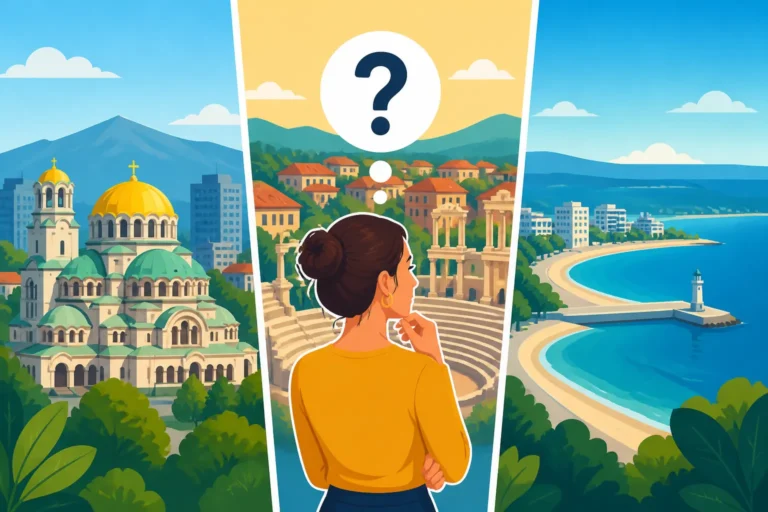
Living in these coastal cities offers a unique lifestyle that blends urban convenience with natural beauty. While the range of international school curricula might be narrower, the overall quality of life and the chance to integrate into a different part of Bulgarian culture can be a huge draw. If you're weighing your options between cities, take a look at How to Choose Between Sofia, Plovdiv and Varna to Live In?.
Practical Steps for Researching and Deciding
Alright, you've got a clearer picture of your priorities and the general landscape. Now, it’s time to roll up your sleeves and get into the nitty-gritty of research and decision-making. Don't rush this part; it's an investment in your family's future in Bulgaria.
Online Research and Expat Forums
The internet is your first port of call. Start by researching specific schools that interest you. Look at their websites, read reviews, and check their accreditations. A crucial aspect often overlooked is the school's admissions process and waiting lists. Some popular international schools can have long waiting lists, especially for certain year groups, so apply early!
Beyond school websites, dive into expat forums and social media groups dedicated to expats in Bulgaria, especially those focused on families. Search for "expats in Sofia with kids" or "Plovdiv expat families." These communities are invaluable. You'll find firsthand accounts, honest opinions, and practical advice that you won't get from official brochures. People share their experiences with specific schools, teachers, and even the challenges of daily life in different neighbourhoods. This is also where you might get recommendations for areas that are particularly strong for specific age groups or types of family activities. And while you're doing all this research on the go, making sure you have reliable internet, perhaps with an eSIM from Airalo, can be a real lifesaver. No one wants to be caught without data when trying to look up directions to a school!
Visiting and Experiencing Neighbourhoods
Nothing beats boots on the ground. Once you've narrowed down a few potential schools and areas, plan visits to Bulgaria if you can. Spend time in those neighbourhoods. Walk around during school drop-off and pick-up times to get a feel for the traffic, the vibe, and how other families are managing. Are there playgrounds, parks, or community centres nearby? Are the streets safe and pedestrian-friendly?
Consider renting short-term accommodation in a few different areas to truly experience daily life there. This allows you to test out the commute, explore local amenities, and see if the community feel aligns with your family's expectations. What might look good on paper, or even on a quick visit, can feel very different after a week of living there. Don't be afraid to linger in a café, chat with locals (if you feel comfortable, or find English speakers), and observe the rhythm of life.
Connecting with Other Expat Parents
This is where the real gold is. Seek out opportunities to connect with other expat parents who are already living in Bulgaria and have children in local schools. That’s why those expat forums and groups I mentioned earlier are so vital. Ask them about their experiences, the pros and cons of their chosen school areas, and any challenges they faced. Their insights can be incredibly valuable, highlighting aspects you might not have considered.
Often, expat communities organize informal meet-ups or events. Attending these can provide a relaxed setting to gather information and build your network. You might discover that the perfect school area isn't necessarily the one with the most international schools, but rather a place where your children can easily make friends, and your family can thrive in a supportive environment. Remember, the expat journey is often about shared experiences, and tapping into that collective wisdom will serve you well. Once you've zeroed in on the perfect school area and secured a place, the next big step is the actual move. Services like Sirelo can help you compare moving companies, ensuring a smoother transition for your entire family to your new Bulgarian home.
Comparison of Popular Bulgarian Cities for Expat Families and Schools
| City | International School Options (Examples) | Local School Options (Language) | Cost of Living (Rent & Daily Expenses) | Expat Community Size | Lifestyle/Vibe |
|---|---|---|---|---|---|
| Sofia | Anglo-American School, British School, American College | Public & Private (Bulgarian) | Highest | Very Large & Diverse | Dynamic, Urban, Fast-Paced, Cultural Hub |
| Plovdiv | British School of Plovdiv, limited other options | Public & Private (Bulgarian) | Moderate | Growing | Historic, Artsy, More Relaxed, Walkable |
| Varna | Varna International School (VIS), limited others | Public & Private (Bulgarian) | Moderate to High (seasonal) | Medium | Coastal, Relaxed, Touristy (summer), Outdoors |
| Burgas | Limited dedicated international schools | Public & Private (Bulgarian) | Moderate | Smaller | Coastal, Industrial, Developing, Family-Friendly |
Disclaimer
The information provided in this guide is for general informational purposes only and does not constitute professional advice. While we strive to provide accurate and up-to-date information, circumstances can change rapidly in Bulgaria. Always verify details with official sources, educational institutions, and legal or relocation professionals before making any decisions.