How Much Are International School Fees in Sofia?
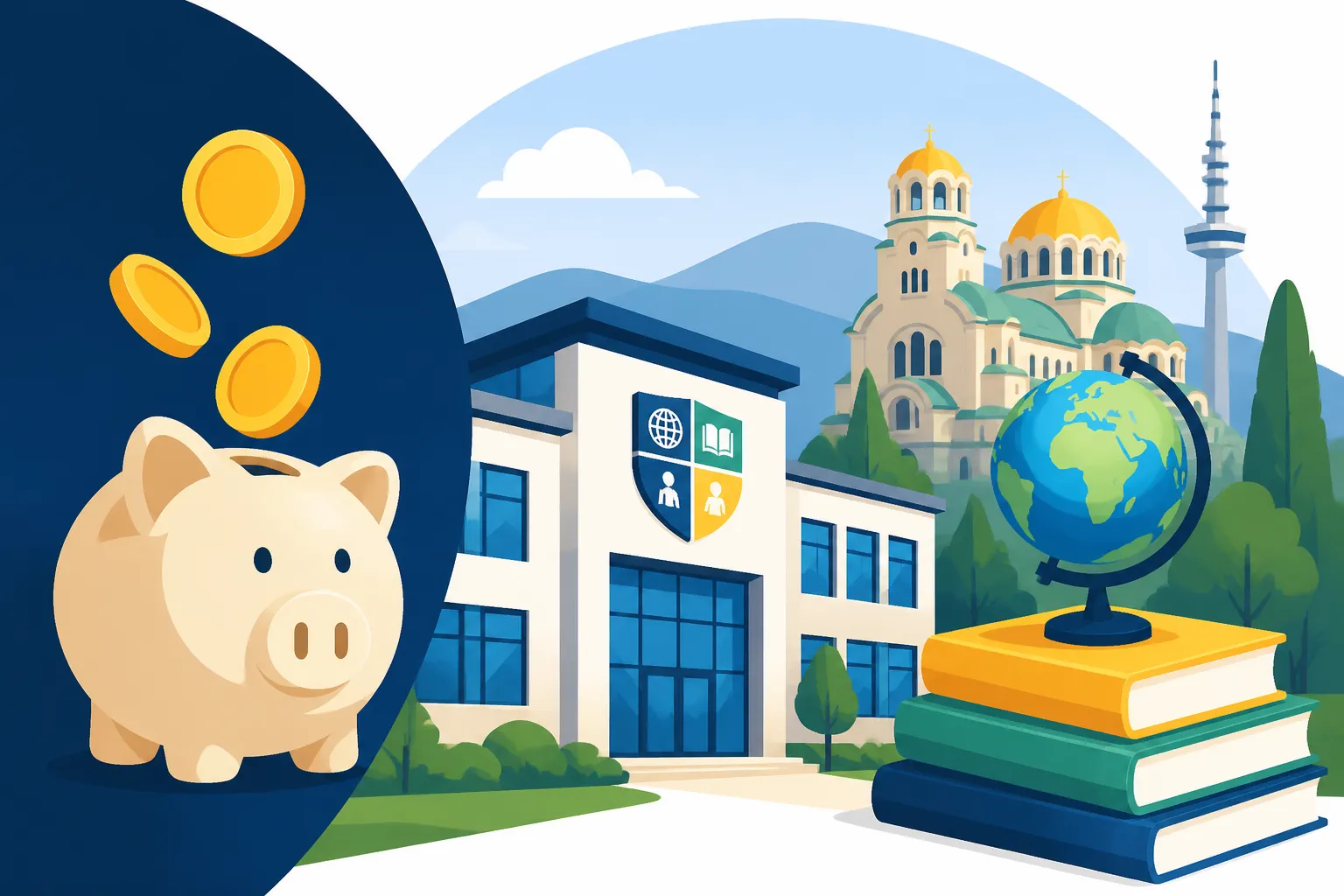
Oh, the joy of moving to a new country! You've navigated the tricky waters of residence permits, found a place to live, and now comes the next big hurdle for many expat families: figuring out where your kids will go to school, and more importantly, how much it’s all going to cost. It’s no secret that international schools in Sofia, like anywhere else in the world, come with a hefty price tag, and trying to decipher those fee schedules can feel like solving a particularly complicated math problem in a foreign language. But don’t worry, you’re not alone. Many expat parents grapple with these decisions, and this guide is here to break down the reality of international school fees in Sofia, so you can plan your family’s educational journey with confidence.
Decoding the Sticker Shock: Why Sofia's International Schools Come with a Price Tag
Let’s be honest, the moment you look at the fee structure for an international school, your eyes might just pop out a little. It’s a significant investment, often dwarfing other living expenses in Bulgaria. But there's a reason for that, and understanding what you're actually paying for can help put things into perspective, even if it doesn't make the numbers any smaller!
The Value Proposition: What You're Really Paying For
When you enrol your child in an international school in Sofia, you're not just buying an education; you're buying into a whole system designed to cater specifically to expat families and globally-minded locals. The curriculum is often the first major draw. Many schools offer globally recognized frameworks like the International Baccalaureate (IB) Programme – covering Primary Years (PYP), Middle Years (MYP), and Diploma Programme (DP) – or follow established national curricula like the British (IGCSE, A-Levels) or American systems. These aren't just fancy names; they represent rigorous academic standards and provide a continuity of education that’s crucial for children moving between countries. Imagine your teenager seamlessly transitioning from a British curriculum school in Dubai to the British School of Sofia, without missing a beat on their IGCSEs – that’s the kind of value these schools provide.
Beyond the curriculum, the teaching staff often comprises highly qualified educators from around the world. These teachers bring diverse experiences, often with advanced degrees and years of international teaching experience, which translates into a rich learning environment. They are also adept at supporting children who might be learning English as an additional language or are simply adjusting to a new cultural context. Furthermore, international schools pride themselves on smaller class sizes, allowing for more individualized attention, and offering a broader range of extracurricular activities than you’d typically find in local schools. Think state-of-the-art sports facilities, art studios, science labs, and vibrant drama programs. It all contributes to a holistic educational experience that prepares students for universities worldwide.
The Core Components of International School Fees
Navigating the various fees listed on an international school’s website can be bewildering. It's not just one lump sum, but a collection of charges that add up. Let’s break down the common categories you’ll encounter when looking at schools like the Anglo-American School of Sofia or the British School of Sofia.
First, almost every international school starts with an Application Fee. This is usually a non-refundable charge you pay just to have your child's application reviewed. It's typically a few hundred Euros and serves as the initial financial commitment. Don't confuse this with securing a place; it merely gets your foot in the door for assessment and consideration.
Next, if your child is accepted, you’ll be hit with a substantial Enrolment Fee or Admission Fee. This is a one-time, often non-refundable, payment that secures your child's spot in the school. These fees can range from a couple of thousand Euros to upwards of €5,000 or more, depending on the school's prestige and demand. It’s a significant upfront cost that you need to be prepared for, often due shortly after acceptance.
Then comes the big one: Tuition Fees. This is the annual cost of education itself and varies dramatically by grade level, with early years usually being the least expensive and secondary school (high school) being the most. Tuition typically covers the core academic program, teacher salaries, and general operating costs. These fees are often paid in annual, semi-annual, or quarterly installments. For instance, a primary school student’s annual tuition might be €10,000-€15,000, while a high school student’s could easily climb to €20,000-€25,000 or more at the top-tier institutions. When you're making your initial enquiries, always ask for a full breakdown for your child's specific age group.
Finally, many international schools also charge a Capital Levy or Development Fund contribution. This fee, sometimes annual and sometimes a one-time charge, helps fund improvements to the school's facilities, technology upgrades, or new building projects. It's another way the school ensures it can maintain its high standards and competitive edge. These can range from a few hundred to a few thousand Euros per year or as a single payment upon enrolment. As you can see, it's a multi-layered financial commitment, so make sure you understand each component before you commit.
A Practical Look at Sofia's Leading International Schools and Their Costs
Now that we've covered the general categories, let's zoom in on some of Sofia's most prominent international schools and give you a more concrete idea of what to expect financially. Remember, these figures are estimates and can change annually, so always confirm directly with the schools for the most current information.
Spotlight on Key Institutions and Their Fee Ranges
Sofia is home to several well-regarded international schools, each with its unique curriculum, ethos, and corresponding fee structure. These schools cater to a diverse expat community, and their costs reflect the quality of education and facilities they provide.
The Anglo-American School of Sofia (AASS) is often considered the pinnacle of international education in Bulgaria, and its fees reflect this. Offering the full International Baccalaureate (IB) programme from early childhood through the Diploma Programme, AASS boasts excellent facilities, highly experienced international staff, and a strong academic reputation that prepares students for top universities globally. As of recent years, annual tuition for early childhood (ages 3-5) might start around €15,000-€18,000, while elementary school (grades K-5) could be in the range of €20,000-€23,000. For middle and high school (grades 6-12), you're looking at potentially €24,000-€27,000 per year, sometimes even higher. On top of this, expect a significant one-time capital levy that can be several thousand Euros. It’s a truly comprehensive educational package, but it comes at a premium.
Another popular choice is the British School of Sofia (BSS), which follows the English National Curriculum, leading to IGCSEs and A-levels. BSS provides a strong academic program with a focus on British educational traditions. Their fees are generally a notch below AASS but still substantial. For instance, annual tuition for primary students might fall within the €10,000-€13,000 range, while secondary school students could expect to pay between €14,000-€17,000 annually. There are also application, registration, and potentially a building fund fee to factor in. BSS is well-regarded for its modern facilities and a clear pathway to UK universities, making it a very attractive option for many expat families.
The French School of Sofia "Victor Hugo" (Lycée Français Victor Hugo – LFVH) offers a French curriculum that is accredited by the French Ministry of National Education. This school often attracts both French nationals and other expats who value a bilingual or trilingual education, with a strong emphasis on French language and culture. Fee structures here can sometimes differ for French nationals (subsidized by the French government) versus other nationalities, so it’s crucial to clarify this directly with the school. For non-French nationals, annual tuition could range from €7,000 for early years to €10,000-€12,000 for primary and €12,000-€15,000 for secondary, plus various administrative and extracurricular fees. It provides an excellent pathway for those considering higher education in France or other French-speaking countries.
Then there's the German School of Sofia (Deutsche Schule Sofia), which provides a German-language curriculum, attracting German-speaking expat families and those interested in a German-style education. Like the French School, their fee structure might have nuances based on nationality or agreements with the German government. Tuition could similarly range from €7,000-€13,000 annually, with additional fees for application and registration. Each of these schools offers a distinct educational experience, and their fee structures reflect their specific offerings, accreditations, and target demographics.
Beyond Tuition: Budgeting for the Extras
While tuition, application, and enrolment fees are the main events, the true cost of international schooling extends far beyond these headline figures. Many "hidden" costs can quickly add up and catch you off guard if you haven't budgeted for them.
Let's start with uniforms. Most international schools in Sofia require a uniform, and while it might seem like a small cost, purchasing a full set of seasonal uniforms, including PE kits and specific branded items, can easily run into several hundred Euros per child. And kids, being kids, grow out of things, or mysteriously lose them, so you'll be replacing items regularly.
Transportation is another significant consideration. While some schools offer bus services, these are almost always an additional charge. A school bus service can cost anywhere from €1,000 to €2,000 or more per year, depending on your location and the route. If you opt for private transportation, factor in petrol, parking, and your time. Speaking of logistics, during those first few frantic weeks of school visits and settling in, a reliable eSIM from a provider like Airalo can be an absolute lifesaver, keeping you connected without the hassle of a local SIM just yet, which is perfect for coordinating with schools.
Lunch programs are also usually extra. While some schools might include a basic lunch in their fees, many offer optional paid meal plans. Expect to pay €500-€1,000 per year per child for a healthy school lunch plan. If you choose to pack lunches, the cost shifts to your grocery bill and your precious morning time.
Then there are textbooks, materials, and technology fees. While many schools are moving towards digital resources, there are often still costs associated with specific textbooks, workbooks, art supplies, or specialized software. Some schools might also require students to have their own laptops or tablets, and while you might already own these, factor in potential repairs or replacements. Don't forget field trips, whether local excursions to historical sites or international trips for competitions or cultural exchange, which almost always incur additional costs ranging from dozens to thousands of Euros. Even seemingly small things like club fees, music lessons, or additional language support can add up.
Here's a simplified table comparing estimated annual tuition ranges for primary and secondary levels at some of Sofia's international schools. Please note that these are approximate figures for illustrative purposes and do not include application, enrolment, capital levies, or other additional costs. Always consult the official school websites for the most current and detailed fee schedules.
| School Name | Primary (Approx. Annual Tuition) | Secondary (Approx. Annual Tuition) | Curriculum |
|---|---|---|---|
| Anglo-American School of Sofia | €20,000 – €23,000 | €24,000 – €27,000 | International Baccalaureate (IB) |
| British School of Sofia | €10,000 – €13,000 | €14,000 – €17,000 | English National, IGCSE, A-levels |
| French School of Sofia (LFVH) | €10,000 – €12,000 | €12,000 – €15,000 | French Ministry of Education (Bilingual) |
| German School of Sofia | €7,000 – €10,000 | €11,000 – €13,000 | German Ministry of Education |
| St. George International School | €7,000 – €9,000 | €9,000 – €12,000 | English National, Cambridge (Local Private) |
Note: These ranges are estimates for non-subsidized fees and are subject to change. Always verify with the individual schools.
For a broader context on educational options, you might find our guide on Schools and Education in Bulgaria: A Complete Guide for Expat Families helpful.
Smart Strategies for Funding International Education in Sofia
Facing these numbers can feel daunting, especially if you have multiple children. But there are strategies and alternatives you can explore to make international education in Sofia more manageable, or at least to understand all your options.
Navigating Financial Aid and Corporate Support
One of the most common ways expat families manage high international school fees is through corporate relocation packages. If you or your spouse are moving to Bulgaria for a senior role with an international company, there's a good chance your employment contract will include provisions for school fees, sometimes covering a significant portion or even the entirety of the cost. This is a massive benefit, so ensure you thoroughly review and negotiate this aspect of your employment package before you sign on the dotted line. Don't assume anything; clarify exactly what is covered, for how many children, and for how long.
For those not backed by corporate giants, scholarships and bursaries might be an option, though they are often highly competitive and vary by school. Some international schools offer a limited number of academic scholarships for exceptional students, or needs-based bursaries for families who demonstrate financial hardship. These typically require a separate application process, rigorous academic performance, and often an interview. It's worth checking each school's website for their specific policies and application deadlines, as these can be a lifesaver for families committed to a particular school but facing financial constraints.
When you're first making the move, the sheer logistics can be overwhelming, and school fees are just one piece of the puzzle. Services like Sirelo can help you compare removal companies, making at least one aspect of your relocation a bit smoother, allowing you to focus more on those crucial school decisions and fee negotiations.
Alternative Educational Paths and Cost-Saving Considerations
If the cost of top-tier international schools feels out of reach, don't despair! Sofia offers several credible alternatives that can still provide a high-quality education, often at a more palatable price point.
Local private schools with English-language streams are a fantastic middle-ground. Schools like St. George International School & Preschool or Private English Language School "St. Sofia" follow the Bulgarian curriculum but offer extensive English language instruction and often run international programmes like Cambridge IGCSE alongside. These schools typically have lower tuition fees compared to the purely international schools, perhaps in the range of €7,000-€12,000 per year, making them significantly more affordable. The trade-off might be slightly less diverse student body, or facilities that aren't quite as expansive as AASS, but they still provide a robust, internationally-recognized education. Plus, your children will get a stronger immersion into Bulgarian culture and language, which can be a huge bonus for long-term expats.
Another option to consider, especially for budget-conscious families or those with unique learning needs, is homeschooling or enrolling in online international schools. Homeschooling in Bulgaria is legally permissible, though it requires careful planning and a commitment to providing a structured curriculum. There are various online schools that offer accredited international curricula (like the British or American system) taught remotely by qualified teachers. While you'll still pay tuition for these online programs, it's generally much lower than brick-and-mortar international schools, and you save significantly on uniforms, transport, and other associated costs. However, it requires a high degree of parental involvement and might mean missing out on the social aspects of a traditional school environment. It's a trade-off, but one that many expat families successfully navigate. For tips on setting up connectivity for online learning, our guide on How to Set Up Internet and Mobile Service in Bulgaria could be quite useful.
Ultimately, the choice comes down to balancing your budget with your educational priorities. Do you prioritize a specific curriculum, a highly diverse student body, or comprehensive facilities? Or is a strong English-language academic environment with good integration into local culture more important? Knowing your family’s non-negotiables will guide you through the process. Finding a family-friendly neighbourhood in Sofia that also offers good access to your chosen school will also save a lot of headaches in the long run.
Deciding on your child’s education and managing the associated costs is undeniably one of the biggest decisions you’ll make as an expat parent in Sofia. The fees for international schools here are substantial, but they do often reflect a high standard of education, international accreditation, and a supportive environment for children navigating life abroad. By understanding the different fee components, researching the specific schools in detail, and exploring all available financial aid or alternative educational paths, you can make an informed choice that best suits your family’s needs and budget. Remember to budget for all those "hidden" extras, and don't be afraid to ask schools for clarity on their fee structures. With careful planning, you can ensure your children thrive in their new Bulgarian adventure!
Disclaimer
The information provided in this guide is intended for general informational purposes only and does not constitute financial, legal, or educational advice. School fees, policies, and availability are subject to change without notice. While every effort has been made to ensure accuracy, readers should independently verify all information with the respective schools and relevant authorities in Bulgaria. This guide does not endorse any specific educational institution or financial product.