Understanding the EHIC and Cross-Border Healthcare from Bulgaria
Alright, let's talk about something that makes every expat's heart skip a beat: getting sick or needing medical care while you're outside Bulgaria. It's one thing to figure out the Bulgarian healthcare system when you're here, but what about when you're off on a weekend trip to Greece, or a longer visit back home? This guide is going to walk you through the ins and outs of the European Health Insurance Card (EHIC) and how cross-border healthcare actually functions from Bulgaria, hopefully easing some of that worry.
What Exactly is the EHIC and How Does It Work in Bulgaria?
Ah, the EHIC. It sounds like a magic card, doesn't it? Something that will solve all your healthcare woes across Europe. And while it's incredibly useful, it's not quite a magic wand. Understanding its purpose and limitations, especially as an expat residing in Bulgaria, is absolutely crucial.
Demystifying the European Health Insurance Card EHIC
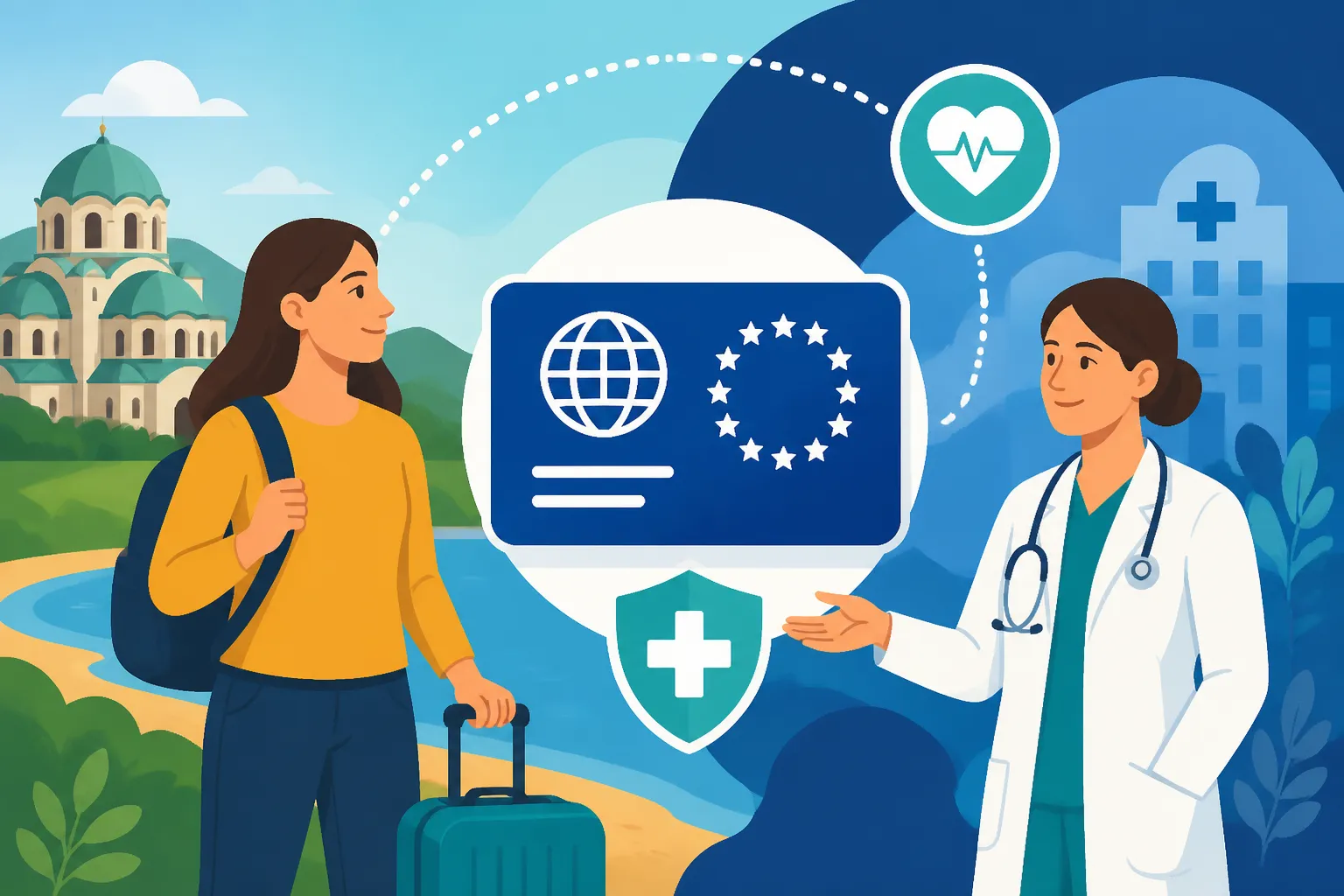
At its heart, the EHIC is a reciprocal agreement between EU, EEA, and Swiss member states. Its purpose is elegantly simple: to give you access to medically necessary state-provided healthcare during a temporary stay in any of these countries, on the same terms and at the same cost as a local resident. This means if a Bulgarian needs emergency care in Germany, they use their Bulgarian EHIC. If a German, temporarily visiting Spain, needs treatment, they use their German EHIC. The key phrase here is "medically necessary" – this isn't about planned procedures or elective treatments. It's for unforeseen circumstances like a sudden illness, an accident, or an unexpected flare-up of a chronic condition.
Now, who is eligible? Generally, it's for citizens of EU/EEA countries and Switzerland, and their dependants, provided they are legally insured within one of these participating countries. As an expat living in Bulgaria, if you're an EU/EEA/Swiss citizen and you're properly registered with the National Health Insurance Fund (NHIF) here and consistently paying your contributions, then Bulgaria becomes your "home" health insurance country for the purpose of the EHIC. This is a common point of confusion: many think it's tied to their passport nationality, but it's actually tied to where your mandatory health insurance contributions are being paid. Even Bulgarian citizens, just like expats, apply for and receive their EHIC from the NHIF here.
It's vital to grasp that the EHIC isn't a replacement for comprehensive travel insurance. It doesn't cover private medical care, repatriation costs if you need to be flown home, or non-urgent planned treatment. It’s about getting you out of a sticky medical situation with access to the state system, similar to how locals would access it. Any co-payments or user fees that a local citizen would pay, you will also be expected to pay.
Obtaining and Using Your EHIC as an Expat in Bulgaria
So, you've established yourself here, you're registered with the NHIF, and you're paying your dues. Congratulations, you're entitled to a Bulgarian EHIC! The process itself, like many things administrative in Bulgaria, requires a bit of patience and knowing where to go. You’ll need to apply for it directly at a regional NHIF office (Районна Здравноосигурителна Каса or РЗОК).
When you head to the РЗОК, make sure you have all your ducks in a row. You'll generally need:
- Your Bulgarian ID card (лична карта) or your valid residence permit (if you're a non-EU citizen who has joined the Bulgarian NHIF system).
- Proof of your NHIF registration.
- Evidence that you've been regularly paying your health insurance contributions. Sometimes they can check this electronically, but it's always good to have a recent statement or payment receipts on hand.
Once you submit your application, it typically takes a few weeks for the card to be issued. They'll usually notify you when it's ready for collection, or sometimes it can even be sent by post. It's definitely a good idea to apply well in advance of any planned travel.
Now, for using it abroad. The idea is simple: you present your Bulgarian EHIC at any state-provided medical facility in an EU/EEA/Switzerland country when you need "medically necessary" care. This could be a local GP, a hospital emergency room, or a specialist, depending on the severity and type of care needed. However, here’s where the "reality check" kicks in. While the principle is clear, the practice can sometimes be a bit bumpy. Language barriers are a common hurdle, and unfortunately, sometimes foreign medical staff aren't fully familiar with how EHIC from every member state works. You might encounter situations where you're asked to pay upfront and seek reimbursement later from the Bulgarian NHIF, which is a process in itself. It's frustrating, I know, but it’s a reality to be prepared for. Always keep copies of your EHIC and any receipts, just in case. For more details on how the system here works, you might want to read our guide on How Bulgaria's Health System Works: The NHIF and Private Care Explained.
Navigating Cross-Border Healthcare within the EU/EEA from Bulgaria
Beyond just spontaneous emergencies with the EHIC, the EU has also established frameworks for planned cross-border healthcare. This is a bit more complex, and often requires prior authorisation, but it's an important option for expats who might need specific treatments not readily available or with long wait times in Bulgaria.
Planned vs. Unplanned Cross-Border Treatment
Let's clarify the difference here. "Unplanned" cross-border treatment is essentially what the EHIC is for: you're on holiday, you break your leg, you get a nasty infection, and you need immediate care. You use your EHIC, access the state system, and pay what a local would pay. It’s relatively straightforward, at least in theory.
"Planned" cross-border treatment, on the other hand, is when you consciously decide to travel to another EU/EEA country specifically to receive medical treatment. Maybe you need a particular surgery, or a highly specialized diagnostic procedure, and for whatever reason – be it shorter wait times, specific expertise, or personal preference – you want to get it done outside Bulgaria.
If you are insured by the Bulgarian NHIF and wish to seek planned treatment in another EU/EEA country, you might be eligible for something called an S2 form (formerly E112). This form effectively acts as a guarantee of payment from your "home" NHIF (Bulgaria) to the healthcare provider in the other country. Getting an S2 form from the Bulgarian NHIF is no mean feat. It's usually reserved for cases where the treatment genuinely isn't available in Bulgaria, or cannot be provided within a medically justifiable timeframe. You'll need to go through a rigorous application process, often involving medical assessments and approvals from specialist NHIF committees. They will want to know exactly why you need the treatment abroad and why it can't be done here. This is not a fast track to getting a cosmetic procedure done somewhere else; it’s strictly for essential medical care. The bureaucracy involved can be daunting, but for serious conditions, it’s a pathway worth exploring.
The Directive on Cross-Border Healthcare 2011/24/EU
Beyond the S2 form, there's another mechanism for planned cross-border care: the EU Directive on Cross-Border Healthcare (Directive 2011/24/EU). This directive essentially states that if you're an EU/EEA citizen, you have the right to seek healthcare in any other member state and then be reimbursed for the costs by your home country's healthcare system.
Sounds fantastic, right? And it is, but with a crucial catch. Your reimbursement from the Bulgarian NHIF will only be up to the cost that would have been incurred in Bulgaria for the same treatment. Let that sink in. If a particular surgery costs €10,000 in Germany but only €2,000 in Bulgaria, the NHIF will only reimburse you up to €2,000. You'd be on the hook for the remaining €8,000. This is a significant financial consideration, especially if you're eyeing countries with much higher healthcare costs.
Furthermore, for certain types of treatments – especially those involving hospitalisation or highly specialised care that might involve significant costs or risks – the Bulgarian NHIF can still require prior authorisation. This is to ensure that the treatment is genuinely necessary and that the reimbursement principles are adhered to.
For expats residing in Bulgaria, navigating this directive means being prepared for a few practical challenges. Firstly, you will almost certainly have to pay for the treatment upfront in the other country. Reimbursement requests are then submitted to the Bulgarian NHIF after the treatment is completed. This requires having significant funds available. Secondly, finding compliant providers in other EU countries can be a task, and language barriers, as always, can complicate communication regarding billing and medical records. It’s a route that requires careful planning, deep pockets, and a good understanding of both Bulgarian and the destination country's healthcare systems. If you're pondering whether to rely on public or private options here, our article Public vs Private Healthcare in Bulgaria: What Expats Need to Know offers more insights.
What the EHIC and Cross-Border Directive Don't Cover
This is where many expats get tripped up, and it's essential to set realistic expectations. The EHIC and the Cross-Border Healthcare Directive are valuable tools, but they have distinct boundaries. Assuming they cover everything you might need is a recipe for a very expensive surprise.
Limitations and Common Misconceptions
Let's cut right to it: the EHIC is not a substitute for comprehensive travel insurance. This is probably the biggest misconception out there. People often think "I have my EHIC, I'm covered for my trip!" And while you might be covered for medically necessary state healthcare, that's where it often ends.
- No Repatriation: If you fall seriously ill or get injured and need to be flown home, the EHIC won't cover the cost of a medical escort or an air ambulance. These costs can easily run into tens of thousands of Euros.
- No Private Healthcare: This is a huge one. The EHIC only gives you access to the state-provided healthcare system. If you prefer or require treatment in a private clinic or hospital abroad, your EHIC is effectively useless. You'll be paying out of pocket.
- No Planned Medical Tourism: It's not for "healthcare holidays" where you go abroad specifically for elective surgery or a routine check-up that could easily be done in Bulgaria.
- No Guarantee of Free Care: As mentioned before, you’ll be treated "on the same terms as a local." This means if local residents have co-payments, nominal fees, or charges for certain services (like prescription medications or a consultation fee), you will too. It’s not a free pass.
- Geographic Limitations: The EHIC is strictly for EU, EEA, and Switzerland. If you're heading to Turkey, the UK (post-Brexit, rules are different and more complex), or any other non-EU country, your EHIC from Bulgaria holds no sway.
Understanding these limitations is paramount. Relying solely on your EHIC for international travel, especially outside the strictest definition of "medically necessary state care," is a gamble you probably don't want to take. Many a hopeful expat has found this out the hard way, stranded with a massive bill because they didn't understand the nuances. For a broader overview of how health insurance works here, check out Health Insurance in Bulgaria: NHIF, Private and International Options Explained.
Why Private Travel Insurance is Still Essential
Given the substantial gaps left by the EHIC, it becomes incredibly clear why private travel insurance remains an absolute essential, even if you're an EU citizen with a Bulgarian EHIC. It’s not just "nice to have"; it's a critical safety net.
Think about it:
- Private Hospital Access: If you prefer private healthcare abroad or if the state system in your destination has long waits or isn't up to scratch, private travel insurance can be your golden ticket. It allows you to choose private facilities and doctors, giving you more control and comfort.
- Medical Evacuation and Repatriation: This is perhaps the most crucial aspect. If you have a serious accident on a skiing trip in Austria and need to be air-lifted to a more advanced facility or flown back to Bulgaria for ongoing care, travel insurance covers those astronomical costs. The EHIC simply won't.
- Broader Coverage: Beyond medical emergencies, good travel insurance often covers other travel-related mishaps like lost luggage, trip cancellation, or personal liability, adding an extra layer of peace of mind.
- Global Reach: For non-EU destinations, private travel insurance is your only medical coverage. If you're planning a trip to Thailand or the USA, your Bulgarian EHIC is entirely irrelevant.
For those of us who live a more transient lifestyle, perhaps as digital nomads or frequent travellers, an international health insurance provider that caters to this demographic is often the best solution. Companies like SafetyWing, for instance, are designed for exactly this kind of flexible, global coverage. They understand that traditional health insurance doesn't always cut it when your "home" can change or when you're constantly on the move. They offer plans that cover you both in your country of residence (Bulgaria, in this case) and when you're travelling, including those critical repatriation and evacuation benefits that the EHIC lacks. This type of insurance can also cover the financial difference between what Bulgaria’s NHIF would reimburse you for planned cross-border treatment and the actual, higher costs in another country, essentially topping up your coverage.
Before any trip, seriously consider purchasing a comprehensive private travel insurance policy. It's a small expense compared to the potentially crippling costs of a major medical emergency abroad.
Healthcare for Non-EU/EEA Expats Travelling from Bulgaria
If you're reading this and you're a non-EU/EEA citizen living in Bulgaria – perhaps from the UK, the US, Canada, Australia, or anywhere else beyond the EU/EEA/Swiss borders – then your situation regarding cross-border healthcare is fundamentally different. And, I'm not going to sugarcoat it: you need to be even more vigilant.
The Reality for Third-Country Nationals
For non-EU/EEA/Swiss expats in Bulgaria, the European Health Insurance Card (EHIC) is completely out of the picture. It holds absolutely no relevance for you. This means that when you travel outside Bulgaria, your Bulgarian health insurance – whether it's through the NHIF (if you're a long-term resident contributing) or a private Bulgarian health insurance plan – will, in almost all cases, only provide coverage within the borders of Bulgaria.
This is a stark reality that often catches non-EU expats off guard. While you might be comfortably insured for your daily life here in Bulgaria, the moment you step foot into another country, you are essentially uninsured from a medical perspective, unless you have made separate arrangements. This can be a huge source of anxiety, and rightly so. Imagine being on holiday in Italy, falling ill, and realizing you have no coverage whatsoever. The bills would be astronomical.
Therefore, for non-EU citizens, the absolute necessity of robust travel insurance for any travel outside Bulgaria cannot be overstated. It's not a recommendation; it's a mandatory safeguard. This is where options like SafetyWing become particularly appealing. Their travel medical insurance plans are specifically designed for the international lifestyle, offering coverage for medical emergencies and other unforeseen events while you're abroad, filling the massive gap that exists for third-country nationals.
Planning for International Travel: Beyond the EHIC
Since the EHIC is not an option for non-EU expats, your international travel planning needs to be meticulous, focusing on alternative solutions. You simply cannot afford to leave your medical coverage to chance.
Here are crucial planning steps to undertake before you travel:
- Research Visa and Entry Requirements: Always, always check the visa and entry requirements for your destination country well in advance. Some countries may even require proof of travel medical insurance as part of their visa application process.
- Investigate Local Healthcare Systems: It's wise to have a basic understanding of the healthcare system in your destination. Are there state hospitals? Are private clinics common? What are the typical costs? This helps you know what to expect if you need care.
- Comprehensive Travel Medical Insurance: This is your number one priority. Purchase a policy that covers medical emergencies, hospitalisation, doctor visits, and, critically, emergency medical evacuation and repatriation. Ensure the coverage limits are high enough to realistically cover costs in your destination (e.g., healthcare in the US is incredibly expensive). Look at the policy's fine print: does it cover pre-existing conditions? What are the exclusions? Providers like SafetyWing are often designed with global travel in mind, making them a strong contender for non-EU expats.
- Understand Your Policy: Don't just buy a policy; read it! Know how to contact your insurer in an emergency, what the claims process is, and what documents you'll need.
- Financial Preparedness: Even with insurance, you might need to pay upfront for minor consultations or medications. Have access to funds or a credit card with a sufficient limit.
- Medical Records: Carry essential medical information with you – a list of medications you take, known allergies, and any chronic conditions. A doctor's letter translated into English (and perhaps the local language if you're feeling ambitious) can be incredibly helpful.
Should you need medical care in a non-EU country, the process will typically involve either direct payment and subsequent reimbursement from your travel insurer, or your insurer might be able to arrange for direct billing with certain providers, especially for hospitalisation. Always contact your insurance provider as soon as it's safe to do so. They can guide you through the process, recommend facilities, and initiate guarantees of payment if necessary. For those considering long-term plans, you might also want to look into Can I Use International Health Insurance at Bulgarian Hospitals?.
Practical Tips and What to Do in an Emergency Abroad
Facing a medical emergency in a foreign country is stressful, no matter how prepared you are. But with a solid plan and knowledge of what to do, you can significantly reduce the chaos and ensure you get the care you need.
Before You Go: A Checklist for Expats
Preparation is key when it comes to healthcare abroad. Before you even pack your toothbrush, run through this checklist:
- Carry Your EHIC (if eligible) and Insurance Details: If you’re an EU citizen, always have your physical Bulgarian EHIC card with you. For everyone, carry a copy of your private travel insurance policy, including the policy number and the 24/7 emergency contact number. Store digital copies on your phone and in the cloud too.
- Know Emergency Numbers: Learn the emergency services number for your destination. It's often 112 across the EU, but verify this for non-EU countries. For emergencies in Bulgaria, it's 112 as well, as covered in Understanding Emergency Numbers (112) and Ambulance Care in Bulgaria.
- Financial Back-up: Ensure you have access to funds (cash, credit card) that can cover initial medical expenses or co-payments before any insurance kicks in.
- Medical Translation: If you have chronic conditions or allergies, consider getting a small card with key medical terms translated into the language of your destination. This can be invaluable in an emergency.
- Inform Your GP: If you're undertaking planned treatment abroad, make sure your GP in Bulgaria is aware and can provide any necessary medical records or letters.
- Consider Global Coverage: For those who travel frequently, a global travel medical insurance provider like SafetyWing offers flexible plans that cover you wherever you are, giving you consistent peace of mind without needing to buy a new policy for every trip.
- Check Your Residence Permit Validity: If you're a non-EU expat, ensure your Bulgarian residence permit is valid. This can sometimes be a requirement for specific types of care or insurance policies, even when abroad.
- Pharmacy Knowledge: Understand how pharmacies work in your destination. Can you get common medications easily? Are prescriptions required for everything? This ties in with our guide on Prescription Medications and Pharmacies in Bulgaria: The Complete Guide if you want to compare.
When the Unexpected Happens: Steps to Take
Okay, so despite all your careful planning, you find yourself in a medical pickle abroad. Don't panic. Here’s a step-by-step approach to navigate the situation:
- Assess the Emergency: For life-threatening situations, call the local emergency number immediately (e.g., 112 in the EU). Get to the nearest state hospital or medical facility. For less urgent matters, a local pharmacy or a walk-in clinic might be appropriate.
- Contact Your Insurance Provider: As soon as it's safe to do so, call the 24/7 emergency assistance number on your travel insurance policy. This is critical. They can guide you, advise on the best local hospitals or doctors, and sometimes even arrange direct billing with the medical facility, saving you from having to pay upfront. They are your best ally in a foreign medical system.
- Present Your EHIC (if eligible): If you're in an EU/EEA/Swiss country and eligible, present your Bulgarian EHIC. Be prepared that they might still ask for upfront payment, in which case you'll need to claim reimbursement from the Bulgarian NHIF later.
- Keep ALL Documentation: This cannot be stressed enough. Every single piece of paper – hospital reports, doctor's notes, prescription receipts, payment confirmations – keep them meticulously. You will need these for any reimbursement claims with either the Bulgarian NHIF or your private travel insurance. Take photos of everything on your phone as a backup.
- Understand Costs: Always ask about costs and coverage upfront, if possible. Don't assume anything is free. Be prepared to use your funds or credit card.
- Language Barrier: Use translation apps, or if your insurance provider has multilingual support, they might be able to help. Try to find someone who speaks English if possible.
- Follow-Up: Once the immediate crisis is over, follow up with your insurance provider on the claims process. If you paid upfront and used your EHIC, you'll need to contact the Bulgarian NHIF for reimbursement, providing all original documentation. This process can be lengthy, so patience is a virtue.
By taking these steps, you give yourself the best possible chance of navigating a medical emergency abroad with minimal stress and financial fallout. Remember, your peace of mind is worth the extra planning and the cost of good insurance. For those wanting to understand more about costs in Bulgaria itself, we have a detailed guide on The Cost of Healthcare in Bulgaria: A Complete Breakdown for Foreigners.
Here's a quick comparison of your options:
| Feature | EHIC (Bulgarian issued) | Private Travel Insurance | Comprehensive International Health Insurance |
|---|---|---|---|
| Coverage Scope | Medically necessary state healthcare during temporary stays in EU/EEA/CH. | Emergency medical care, repatriation, trip cancellation, luggage, etc. | Wide range: annual check-ups, specialist visits, hospital stays, emergencies, global coverage. |
| Eligibility | EU/EEA/Swiss citizens legally insured in Bulgaria. | Anyone, regardless of nationality. | Anyone, regardless of nationality. |
| Cost | Included with mandatory NHIF contributions in Bulgaria. | Varies, usually affordable for short trips. | Significant, ongoing premium. |
| Coverage Area | EU/EEA/Switzerland only. | Specific regions/worldwide, excluding home country. | Global or specific regions, often including country of residence. |
| Main Purpose | Access to state medical care "like a local" abroad. | Financial protection against travel/medical mishaps abroad. | Primary health coverage for expats living & travelling internationally. |
| Private Healthcare | No. | Yes, often covers private facilities. | Yes, typically designed for private care. |
| Repatriation/Evacuation | No. | Yes, usually a key feature. | Yes, often included or available as an add-on. |
| Planned Treatment Abroad | Limited (via S2 form/Cross-Border Directive, with prior authorisation/reimbursement limits). | No (not its primary purpose). | Yes, depending on the plan. |
Disclaimer
The information provided in this guide is for general informational purposes only and does not constitute medical, legal, or financial advice. While we strive to provide accurate and up-to-date information, rules and regulations regarding healthcare, insurance, and international travel can change rapidly. It is always recommended to consult with relevant official authorities, such as the National Health Insurance Fund (NHIF) in Bulgaria, your insurance provider, or legal professionals, for advice tailored to your specific situation before making any decisions related to your healthcare or travel plans.