Understanding Sick Leave Entitlements Under Bulgarian Labour Law
Trying to figure out sick leave, or "bolnichen" as it's known here, when you're an expat in Bulgaria can feel like deciphering ancient hieroglyphs while walking through a dense fog. It’s one of those administrative hurdles that often catches us off guard, especially when you're feeling unwell and just want to rest. This comprehensive guide is here to untangle the complexities of sick leave entitlements under Bulgarian Labour Law, giving you the clarity and confidence to navigate the system when you need it most.
The Basics of Sick Leave in Bulgaria: A Primer for Expats
Let's be honest, falling ill when you're far from home is never ideal. Add to that the stress of understanding a new country's bureaucratic system, and it can feel overwhelming. But take a deep breath; Bulgaria's system, while different, is designed to protect employees. The key is understanding how it works, what your rights are, and who is responsible for what. It's not just a nice-to-have benefit; it's a fundamental right rooted in the country's social security framework.
What is "Bolnichen" (Sick Note)?
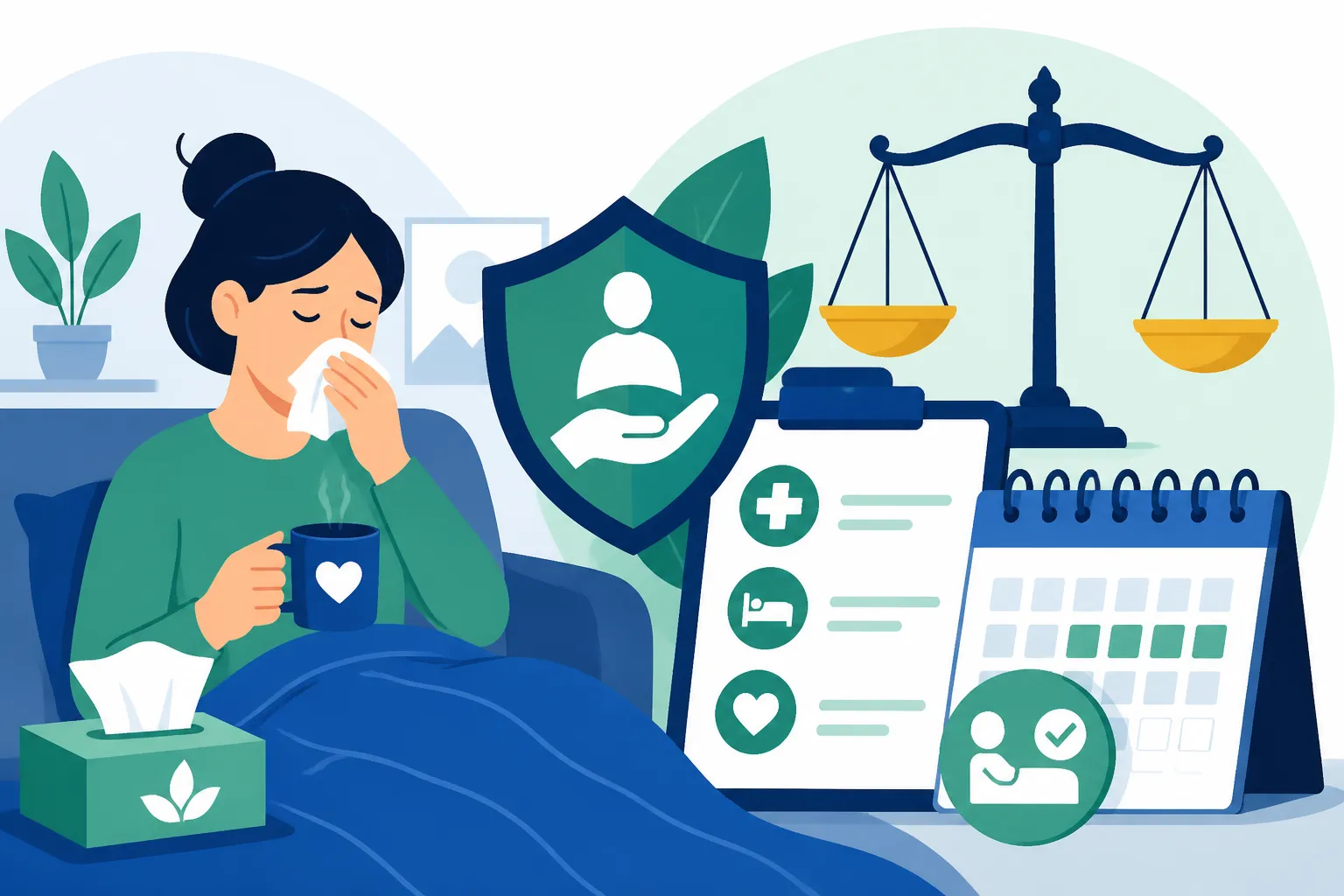
In Bulgaria, when you're unable to work due to illness or injury, you need a "bolnichen" (болничен лист), which literally translates to "hospital sheet" but is effectively your sick note or certificate. This isn't just a casual doctor's note; it's an official document issued by a medical professional (your GP, a specialist, or a hospital) that certifies your incapacity to work for a specific period. Without this official document, any absence from work, even due to genuine illness, might be considered unauthorised leave, potentially leading to disciplinary action or unpaid days.
The "bolnichen" is crucial because it serves as the official proof for your employer and, more importantly, for the National Social Security Institute (NSSI or НОИ – Национален осигурителен институт) which is responsible for paying your sick leave benefits after the initial few days. It details the start and end dates of your incapacity, the diagnosis (sometimes coded), and the doctor's signature and stamp. Losing this document or failing to submit it on time can cause significant headaches, so treat it like gold.
Who is Eligible for Paid Sick Leave?
Generally, if you're officially employed in Bulgaria with an employment contract and are making social security contributions, you are eligible for paid sick leave. This includes most expats working for Bulgarian companies, as well as those working for international companies that have registered as employers in Bulgaria. The system is designed to cover those who are actively contributing to the social security fund.
Eligibility extends to various types of workers, including those on indefinite contracts, fixed-term contracts, and even some temporary agency workers. However, there are nuances. For instance, if you're a freelancer (often registered as a "свободна професия") or a sole trader (ET), your sick leave entitlements might differ depending on how you've chosen to contribute to the social security system. If you're self-employed, you usually have the option to pay higher contributions to ensure sick leave coverage, but this is an elective choice, not always automatic. It's a bit like opting for comprehensive insurance versus basic coverage. For a deeper dive into your employment status, you might want to read our guide on Understanding Mandatory Health Insurance Contributions in Bulgaria.
Understanding the Legal Framework: Labour Code
The backbone of sick leave entitlements in Bulgaria is the Labour Code (Кодекс на труда). This comprehensive piece of legislation outlines everything from working hours to termination and, of course, sick leave. It specifies the conditions under which sick leave is granted, the duration, and the payment structure. For expats, understanding these provisions is vital because they set the standard for what you can expect and what your employer must provide.
The Labour Code mandates that employers cannot dismiss an employee who is on approved sick leave, providing a crucial layer of job security during a vulnerable time. It also details the initial period of sick leave payment that is the employer's responsibility before the NSSI takes over. These laws are not just suggestions; they are legally binding and designed to protect employees from financial hardship due to illness or injury. For a broader understanding of your rights, check out Understanding Bulgarian Labour Law and Worker Rights (2027). It's definitely worth a read to familiarise yourself with the wider employment landscape here.
Navigating the Sick Leave Process: From Doctor to Employer
So, you've woken up with a fever, or maybe you've had an accident. What now? The process might seem daunting at first, but once you understand the steps, it becomes much clearer. The most critical thing is to act promptly and ensure all documents are properly issued and submitted. Ignoring the administrative side will only add stress to your recovery.
Getting Your Doctor's Note (Медицинско свидетелство)
The very first step is to see a doctor. This is non-negotiable. Whether it's your assigned GP (личен лекар), a specialist you've been referred to, or a doctor in an emergency room, they are the only ones authorised to issue an official "bolnichen" (sick note). If you haven't registered with a GP yet, this is the time when you'll truly feel the pinch. Generally, your GP is your first point of contact for all medical needs, including sick leave. They are the ones who will assess your condition and determine the appropriate duration of your sick leave.
When you see the doctor, explain your symptoms clearly. They will conduct an examination and, if they deem you unfit for work, will issue the "bolnichen." Make sure all your personal details, including your ЕГН (EGN – Bulgarian Personal Identification Number) or ЛНЧ (LNCH – Foreigner's Personal Number), are correct on the document. The "bolnichen" is typically issued electronically, but you will usually receive a paper copy for your records, or at least a confirmation of its issuance. It’s always good practice to ask for a printed copy, just in case. If you're wondering how to even find a doctor, our guide on How to Find and Register with a Clinic or Doctor in Bulgaria can be a lifesaver.
Notifying Your Employer and Submitting Documents
Once you have your "bolnichen" or confirmation that it has been issued, you need to inform your employer immediately. Bulgarian Labour Law usually requires you to notify your employer on the first day of your absence, or as soon as practically possible. Don't wait until you're back at work to tell them you were sick; this can cause issues. A phone call, email, or message, followed by the formal submission of the sick note, is usually sufficient.
The employer is legally obligated to submit the "bolnichen" to the NSSI within a specified timeframe (typically by the 10th day of the following month after the sick leave commenced). Even if your employer doesn't require a physical copy because the doctor issued it electronically, it's still good practice to ensure they have all the necessary information and that they confirm receiving it. Always keep a copy of your "bolnichen" for your own records, whether it's a physical paper or a digital screenshot of the electronic confirmation. This is your proof, and you might need it for future reference or if there are any discrepancies in payment.
Common Pitfalls and How to Avoid Them
The process, while straightforward in theory, has its tricky parts. One common pitfall is delayed notification to your employer. If you don't inform them in a timely manner, they might not process your sick leave correctly, potentially impacting your pay. Another issue is errors on the "bolnichen" itself – incorrect dates, wrong EGN, or missing stamps. Always double-check the document before you leave the doctor's office.
A significant challenge for new expats can be finding an English-speaking doctor who understands the nuances of issuing sick notes, especially outside major cities like Sofia or Plovdiv. While many doctors in bigger cities, particularly in private clinics, speak English, it's not guaranteed everywhere. This is where your registered GP becomes invaluable; they are your primary guide through the local healthcare labyrinth. If you're still looking for one, our guide on How to Find an English-Speaking Doctor in Bulgaria can point you in the right direction. Additionally, be aware that sick leave benefits are usually calculated based on your social security contributions, so any gaps in contributions could affect your entitlement.
Understanding Financial Entitlements and Payments
Now for the part everyone wants to know about: who pays you when you're on sick leave, and how much? The Bulgarian system divides the financial responsibility between your employer and the National Social Security Institute (NSSI). This split ensures that neither party bears the full burden and that employees receive continued income during their recovery.
Who Pays for Your Sick Leave? Employer vs. NSSI
The payment structure for sick leave in Bulgaria is pretty clear-cut, once you understand the split.
- First 3 days: For the first three calendar days of your sick leave, your employer is responsible for paying your benefits. This is a direct payment from your company.
- From the 4th day onwards: From the fourth day until your "bolnichen" period ends, the National Social Security Institute (NSSI) takes over the payment. This is where your social security contributions come into play. The NSSI is a state institution, so these payments are disbursed directly by them.
It's important to understand that this split applies to a single, continuous period of sick leave. If you go back to work for a day and then fall sick again with a new "bolnichen," the count for the employer's responsibility usually restarts. This system is designed to provide quick, initial support from your employer while the state system handles longer-term benefits. For a deeper look into how the entire health system works, you might find our article on How Bulgaria's Health System Works: The NHIF and Private Care Explained (2027) very helpful.
Calculating Your Sick Leave Pay
Calculating your sick leave pay isn't as simple as getting your full salary. Both the employer and the NSSI pay a percentage of your gross salary, based on a specific calculation.
- Employer's portion (first 3 days): During the first three days, your employer pays you 70% of your average gross daily remuneration for the month in which the sick leave began. This average is usually based on your income from the last month or the previous month if the current month isn't over.
- NSSI's portion (from day 4): From the fourth day onwards, the NSSI pays 80% of your average gross daily remuneration for which you have paid social security contributions for the last 18 calendar months preceding the month of the sick leave. There are minimum and maximum thresholds for these payments, linked to the national minimum and maximum social security contribution bases.
Let's illustrate with an example: If your average gross daily remuneration over the past 18 months was 100 BGN, then for the first three days, your employer would pay you 70 BGN per day. From day four, the NSSI would pay you 80 BGN per day. It’s never 100% of your wage, so always factor this into your financial planning. This is especially relevant if you are only covered by the public system. Some private health insurance plans, like those offered by companies such as SafetyWing, might offer some form of income protection or supplemental benefits, but this is usually an added feature and not part of the standard Bulgarian sick leave framework. Always check the specifics of any additional insurance you have.
Payment Timelines and What to Expect
While your employer's portion for the first three days should ideally be paid with your regular salary or shortly thereafter, the NSSI payments can take a bit longer. Once your employer submits the "bolnichen" to the NSSI (typically by the 10th of the month following your sick leave), the NSSI has its own processing times.
You can usually expect NSSI payments to arrive within 10-15 working days after they have received all correct documentation from your employer. However, delays can occur, especially if there are errors in the paperwork or if it's a busy period for the NSSI. Payments are typically made via bank transfer to the bank account you have provided for your salary or social security contributions. If you notice a significant delay, it's best to first contact your employer's HR or accounting department to ensure they submitted everything correctly, and then, if necessary, inquire directly with the NSSI. Keeping track of your submission dates and payments is crucial.
| Aspect | First 3 Days (Employer Paid) | From Day 4 Onwards (NSSI Paid) |
|---|---|---|
| Payer | Your Employer | National Social Security Institute (NSSI) |
| Benefit Rate | 70% of average gross daily remuneration | 80% of average gross daily remuneration |
| Calculation Basis | Gross daily remuneration in the month sick leave started | Average gross daily remuneration over the past 18 calendar months |
| Maximum Duration | Varies per sick leave period | Up to 18 months continuously (with medical review for extensions) |
| Payment Method | Usually with regular salary | Direct bank transfer (within 10-15 working days post-submission) |
| Required Documents | Valid "Bolnichen" (sick note) from a doctor | Valid "Bolnichen" (sick note) from a doctor, submitted by employer |
| Key Point | Quick initial support | Longer-term state support based on social security contributions |
Special Cases and Extended Sick Leave
While a few days off for a cold is common, what happens if you're dealing with something more serious or a situation that extends beyond a typical illness? Bulgaria's Labour Law accounts for these scenarios, providing frameworks for prolonged illness, maternity, and even specific childcare needs.
Long-Term Illness and Disability
If your illness or injury extends beyond a few weeks, the "bolnichen" system continues. Your doctor can issue consecutive sick notes, covering periods as needed. For truly long-term conditions, the NSSI will eventually refer you to a Territorial Expert Medical Commission (TELK – Териториална експертна лекарска комисия). The TELK is a panel of medical experts who assess your health condition, determine the extent of your temporary or permanent incapacity to work, and can issue a decision for extended sick leave or even a disability rating. This process is designed to ensure that those with severe or chronic conditions receive appropriate support and benefits.
This process can be lengthy and requires significant medical documentation, so it's vital to cooperate fully with your GP and any specialists. The TELK decision is critical because it can lead to long-term sickness benefits or disability pensions, which are separate from standard sick leave pay. It's a complex administrative process, and having a good, proactive GP is crucial here. They will guide you through the necessary tests and appointments.
Maternity and Childcare-Related Sick Leave
Bulgaria has some of the most generous maternity and parental leave policies in the EU, and sick leave plays a part in this. Maternity leave itself is not strictly "sick leave" but is also handled by the NSSI. However, if a pregnant woman experiences complications and needs to stop working before the official maternity leave begins, she can be issued a "bolnichen" for temporary incapacity to work. This sick leave would be paid under the standard NSSI rules.
Beyond maternity leave, parents can also receive sick leave benefits if they need to care for a sick child. The rules are specific: a "bolnichen" can be issued to a parent (or guardian) to care for a sick child up to a certain age (usually 18 for serious conditions, but more commonly up to age 7 for general illness) for a limited number of days per year, typically 60 days. The NSSI covers these benefits at 80% of the average daily gross remuneration. It’s a huge relief for expat parents here, ensuring they don't have to choose between their job and caring for their little ones. Understanding Maternity and Parental Leave in Bulgaria can shed more light on these provisions.
Returning to Work After Extended Leave
When you're returning to work after a long period of sick leave, there are often considerations. If your sick leave was short, you simply resume your duties. However, after extended periods, especially those involving TELK decisions, your employer might need to make reasonable adjustments to your work environment or duties, in consultation with you and medical professionals. The Labour Code protects your right to return to your previous position or an equivalent one.
If the TELK has determined you have a permanent reduction in working capacity, your employer cannot simply dismiss you. They must explore possibilities to reassign you to suitable work. This is a crucial protection that often surprises expats from countries with less robust worker protections. It underscores the social protections embedded in Bulgarian labour law.
Your Rights and Responsibilities as an Employee
As an expat, knowing your rights is empowering, and understanding your responsibilities helps you navigate the system smoothly. Sick leave isn't a free pass; it comes with expectations from both sides.
Protecting Your Job While on Sick Leave
One of the most significant protections under the Bulgarian Labour Code is that an employee on approved sick leave cannot be dismissed. This provision offers immense peace of mind during a period of vulnerability. Your employment contract remains active, and your position is protected. This protection extends for the entire duration of your sick leave, even if it’s prolonged for many months and ratified by the TELK.
This means you shouldn't worry about losing your job if you genuinely fall ill. However, this protection is specifically against dismissal due to your illness. It does not protect you from dismissal for other valid reasons that are unrelated to your sick leave and were already in motion or became apparent before or after your sick leave (e.g., severe disciplinary breaches or company restructuring, though specific rules apply). This robust protection is a cornerstone of The Complete Guide to Working in Bulgaria as a Foreigner (2027) and is something expats should definitely appreciate.
What If Your Employer Disagrees?
While rare, it's possible for an employer to dispute a sick leave claim or payment. This could happen if they believe the "bolnichen" is not valid, if there are discrepancies in dates, or if they suspect abuse of the system. In such cases, the employer cannot unilaterally deny your sick leave. They would typically have to refer the matter to the relevant authorities, such as the Labour Inspectorate (Главна инспекция по труда) or the NSSI, for investigation.
If you find yourself in such a situation, gather all your documentation: copies of your "bolnichen," communication with your doctor, and any correspondence with your employer. Seek advice from a labour lawyer or contact the Labour Inspectorate yourself. Their role is to ensure that employers adhere to the Labour Code. It's a formal process, but having your paperwork in order will be your strongest defence.
Appealing Decisions and Seeking Assistance
If a decision regarding your sick leave benefits, whether from your employer or the NSSI, seems incorrect or unfair, you have the right to appeal. For NSSI decisions, there’s usually a specific appeals process that involves submitting a written complaint or appeal to the relevant NSSI office within a set timeframe. This is why keeping meticulous records of all communications and documents is so important.
For general advice and support, trade unions (if you are a member) can be a valuable resource. They often have legal experts who can help you understand your rights and guide you through appeal processes. The Labour Inspectorate is another key resource for any disputes related to labour law, including sick leave. Don't feel you have to navigate these complex situations alone; there are avenues for support and redress.
Health Insurance and Sick Leave: The Expat Connection
Your health insurance status is intricately linked to your sick leave entitlements in Bulgaria. It’s not just about covering your doctor's visits; it’s about establishing your eligibility for social security benefits.
The Role of NHIF in Sick Leave Benefits
For most employed expats in Bulgaria, your primary health insurance is through the National Health Insurance Fund (NHIF or НЗОК – Национална здравноосигурителна каса). When you are employed, your employer typically registers you with the NHIF and makes mandatory health insurance contributions on your behalf. These contributions, alongside social security contributions, are what qualify you for sick leave benefits from the NSSI. Simply put, if you're contributing to the social security system, you're building up your entitlement to sick leave pay.
It's a common misconception that NHIF pays sick leave. No, the NHIF manages your healthcare access – doctor visits, prescriptions, hospital stays – while the NSSI manages and pays out your social benefits, including sick leave. But your contributions to the NHIF are part of the overall social security umbrella that validates your status as a contributing worker eligible for NSSI benefits. Our article on How to Register with the NHIF and a GP in Bulgaria (2027) explains this crucial step for newcomers.
Private Health Insurance and Complementary Coverage
Many expats choose to supplement their NHIF coverage with private health insurance. Companies like SafetyWing offer international travel medical insurance that can be particularly useful for digital nomads or those who frequently travel, ensuring you're covered for medical emergencies both in Bulgaria and abroad. While private health insurance doesn't directly pay your Bulgarian sick leave entitlements – those come from your employer and the NSSI – it can offer other valuable benefits.
For example, a robust private plan might cover costs not fully reimbursed by the NHIF, offer access to a wider network of private clinics (where English-speaking staff are more common), or even provide income protection benefits for self-employed individuals who might not have opted for full NSSI coverage. Some plans, including certain SafetyWing options, are designed with the expat lifestyle in mind, covering unforeseen medical events that could disrupt your work. It's not a replacement for the mandatory state social security contributions, but a valuable addition for comprehensive peace of mind. To understand the various options, take a look at Understanding Private Health Insurance Plans in Bulgaria.
What Happens If You're Not Insured?
This is where things get tricky, and frankly, risky. If you are not properly employed and contributing to the social security system in Bulgaria, you are generally not entitled to paid sick leave benefits from the NSSI. This includes tourists, individuals on certain types of visas without work rights, or those working informally.
If you fall ill and don't have proper social security contributions, any time off work would likely be unpaid, and your job security might not be protected by the Labour Code in the same way. This is a critical point for anyone contemplating moving to Bulgaria or working here; ensure your employment status is fully compliant and that all mandatory social and health contributions are being made. Otherwise, a simple illness could lead to significant financial stress. This applies even if you have private travel insurance like SafetyWing; while it will cover your medical treatment, it won't replace your income for sick leave in the way the Bulgarian social security system does for legal employees. So, while private insurance is great for medical costs, it's no substitute for proper employment and social security enrolment for sick leave income replacement. For a complete picture of everything related to health, our The Complete Guide to Healthcare in Bulgaria for Expats (2027) is an essential read.
Disclaimer
The information provided in this guide is for general informational purposes only and does not constitute legal, medical, or financial advice. While we strive to provide accurate and up-to-date information based on current Bulgarian Labour Law and social security regulations, laws and interpretations can change. We strongly recommend consulting with a qualified Bulgarian labour lawyer, HR professional, or the National Social Security Institute (NSSI) directly for advice pertaining to your specific situation.