What Is the VAT Rate in Bulgaria in 2026?
Oh, the joy of moving to a new country and discovering a whole new world of taxes! If you're anything like I was when I first arrived in Bulgaria, your head is probably spinning with questions about everything from income tax to social security. And then there's VAT, or DDS as it's known here. It's on almost everything, and trying to figure out the rates and when it applies can feel like deciphering an ancient scroll. This guide is going to break down exactly what the VAT rate in Bulgaria is, explain how it impacts your daily life and potential business ventures, and hopefully, give you some clarity on this often-confusing topic.
Understanding the Basics of VAT in Bulgaria
Value Added Tax, or VAT, is a consumption tax that you'll encounter constantly in Bulgaria, whether you're buying a loaf of bread, paying for a haircut, or commissioning a service. For us expats, understanding how this works is fundamental to managing our finances and even planning a business here. It’s not just a number; it’s a significant part of the economic landscape.
What Exactly is VAT (DDS) and How Does it Work?
In Bulgaria, VAT is officially known as Данък върху добавената стойност, which is shortened to DDS (pronounced "day-day-es"). It's a general, proportional tax on consumption that is applied to most goods and services at each stage of production and distribution. Essentially, businesses collect it on behalf of the state from their customers. When you buy something, the price you see generally includes the VAT already, unless explicitly stated otherwise, which is rare in consumer-facing situations.
The core idea is that VAT is charged by a vendor, and that vendor then deducts any VAT they paid on their own purchases (input VAT) from the VAT they collected from customers (output VAT). The difference is what they remit to the National Revenue Agency (NRA). This system ensures that only the 'value added' at each stage is taxed, and ultimately, the end consumer bears the full cost of the tax. For us, the consumers, it just means that prices for almost everything from groceries to electricity have this tax baked right in. It's a system designed to be largely invisible in terms of direct payment, but it certainly impacts the final price tag you see.
The Standard VAT Rate in Bulgaria for 2026
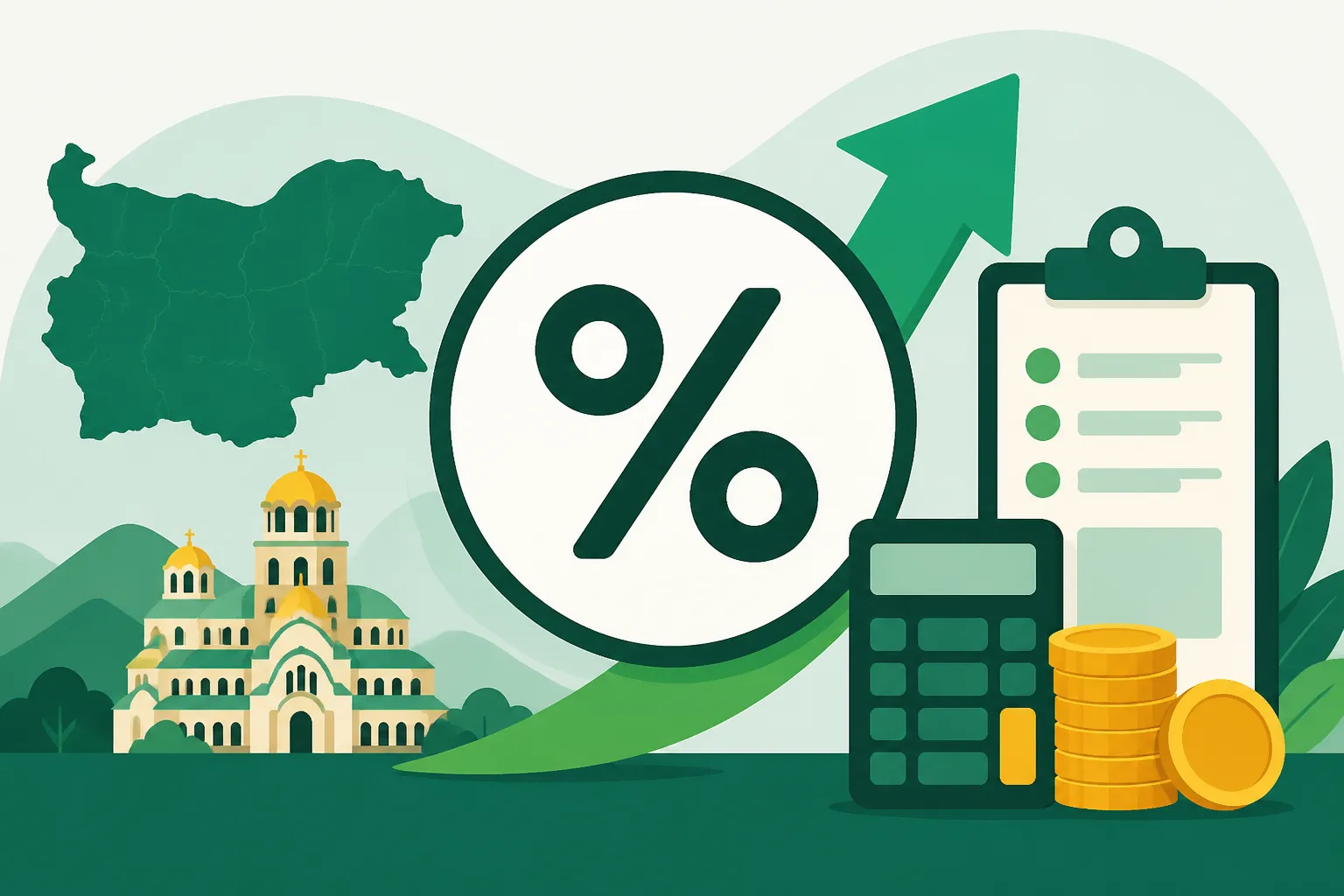
Alright, let's get straight to it: the standard VAT rate in Bulgaria for 2026 remains at 20%. This rate applies to the vast majority of goods and services sold within the country. So, when you're buying anything from a new washing machine to a coffee at your favourite local café, you can expect that 20% of the price you're paying goes towards VAT. This is a pretty consistent rate across many European Union countries, so if you've lived elsewhere in the EU, it might feel familiar.
This standard rate covers an incredibly broad spectrum. Think about your monthly grocery shop: the fresh produce, the packaged goods, toiletries, household cleaning supplies – all subject to the 20% DDS. When you pay for services like car repairs, a visit to a private clinic, legal advice, or even your internet and mobile phone bill, that 20% is right there. It’s the default, the rate you assume unless you know there’s a specific exception. Understanding this base rate is your first step in gauging the overall cost of living here, as it touches nearly every transaction you make. If you’re trying to budget, remember that your initial calculations for most expenses should factor in this 20% uplift from the base price.
Reduced VAT Rates and Exceptions
While 20% is the norm, Bulgaria does have a few exceptions where a reduced VAT rate applies, or in some specific cases, a 0% rate. These are typically implemented to support certain sectors or make essential services more affordable.
The most prominent reduced rate is 9%. This rate primarily applies to specific tourism-related services and restaurant/catering services. So, if you're booking a hotel room for a weekend getaway in Bansko, or enjoying a meal at a lovely restaurant in Plovdiv, you'll benefit from this lower VAT rate. This measure was introduced to bolster the hospitality sector, particularly after challenging economic times, and has been maintained. It's a nice little bonus for both locals and tourists enjoying Bulgaria's vibrant culinary scene and beautiful resorts.
Beyond that, you'll find a 0% VAT rate applied to certain specific transactions, most notably intra-Community supplies of goods (when goods are supplied from Bulgaria to a VAT-registered business in another EU member state) and international transport of passengers and goods. Essentially, these are transactions designed to be taxed in the country of destination or are exempt under international agreements. For the everyday expat consumer, these 0% rates aren't something you'll directly interact with, but they're vital for businesses engaged in international trade within the EU. It’s all part of the complex puzzle that is the EU single market. For a deeper dive into the broader tax landscape, you might want to explore topics like The Complete Guide to Taxes in Bulgaria for Expats (2027) which covers all these nuances.
It's also worth noting that certain services are entirely exempt from VAT without the right to deduct input VAT. These often include specific financial and insurance services, educational services by accredited institutions, healthcare services (like those provided by hospitals under the National Health Insurance Fund), and some cultural activities. These exemptions mean that the providers of these services do not charge VAT, nor can they claim back VAT on their purchases related to these services. This is important to remember as it can affect how you budget for things like private health insurance or educational courses.
Navigating VAT for Expats and Businesses in Bulgaria
As an expat, VAT impacts you whether you're just living here and consuming goods, or if you're taking the entrepreneurial plunge and starting your own business. It's not just a business tax; it's a part of your financial reality here.
VAT on Goods and Services You Consume
For most expats, VAT is an invisible force affecting the prices they pay. When you head to Lidl or Billa for your weekly groceries, the price tag on that jar of lutenitsa already has the 20% DDS factored in. The same goes for your utility bills – electricity from EVN or CEZ, water from Sofiyska Voda, and gas from Overgas – all of these services will have the standard 20% VAT applied. It’s part of the base cost of living. Even small indulgences, like buying a new book or getting your hair cut, will implicitly include VAT.
This means that while the sticker price might seem appealing compared to some Western European nations, remember that 20% of that price is tax. This applies across the board, from buying a new laptop to getting your car serviced. For instance, if you're looking at a car repair bill for 500 leva, 100 leva of that is VAT. Being aware of this helps you properly understand the total cost of any purchase or service you make. If you're comparing costs, remember that services offered under the public healthcare system, for example, are generally VAT exempt, which contributes to why The Cost of Healthcare in Bulgaria: A Complete Breakdown for Foreigners (2026) can sometimes look surprisingly low on paper compared to private options.
One thing to note for tourists, which might occasionally apply if you’re a non-EU resident making significant purchases before securing residency, is the VAT refund scheme. Tourists who are non-EU residents can sometimes claim back the VAT on purchases over a certain amount when they leave the EU. However, once you become a resident, this option is no longer available to you as you are considered a consumer within the EU tax system. So, while it's a perk for visitors, it's not something you'll deal with long-term.
VAT Registration for Self-Employed and Businesses
Now, this is where it gets a bit more complex, especially for those of us who are self-employed or running our own ventures. If you're a freelancer, a digital nomad with a local company, or have set up an EOOD (single-person limited liability company), you need to be aware of Bulgaria's VAT registration thresholds.
The general rule is that businesses must register for VAT if their taxable turnover exceeds 50,000 BGN within any 12 consecutive months. This threshold applies to most goods and services supplied within Bulgaria. So, if your sales to Bulgarian customers hit that 50,000 BGN mark, you are legally obliged to register with the National Revenue Agency (NRA) within 14 days of reaching that threshold. Once registered, you then start charging 20% VAT on your invoices to clients (unless a reduced rate or exemption applies), and you can also deduct the VAT you've paid on your business expenses.
However, there's a crucial nuance for services provided across borders. If you provide services to VAT-registered businesses in other EU member states, you might need to register for VAT even if you haven't hit the 50,000 BGN threshold, under what's known as "intra-Community supply of services" rules. This often involves registering under the reverse-charge mechanism, where the recipient business in another EU country accounts for the VAT. Similarly, if you receive services from a VAT-registered entity in another EU country, you might also have to self-charge VAT.
Navigating these rules can be a real headache, particularly with the language barrier and the intricacies of European tax law. This is where professional help becomes invaluable. Services like Taxes for Expats specialize in helping foreigners understand and comply with these complex regulations, ensuring you don't miss any deadlines or make costly mistakes. Getting your tax identification in order, whether it's a BULSTAT number for freelancers or registering your company, is step one. You can read more about it in How to Register as a Freelancer (Свободна Професия) in Bulgaria or How to Register a Company (EOOD/OOD) as a Foreigner in Bulgaria.
Importing Goods and Cross-Border Transactions
In our increasingly globalized world, it’s common to buy things online from outside Bulgaria or even work with international clients. This brings us to how VAT applies to imported goods and services from abroad.
If you order goods from outside the European Union – say, a gadget from China or a specific clothing item from the US – these items will generally be subject to Bulgarian VAT (20%) upon entry into the EU, in addition to any customs duties. This VAT is usually collected by the postal service or courier company when the item arrives, sometimes along with a handling fee. Many expats have been caught off guard by these additional costs, thinking the price they paid online was the final one. Always factor in potential VAT and customs when ordering internationally.
For services, especially if you're a business owner, the situation can get even more convoluted. If you, as a Bulgarian VAT-registered entity (or even an unregistered one in some cases), receive services from a supplier in another EU country, or from outside the EU, the "reverse charge" mechanism often applies. This means you, the recipient, are responsible for accounting for the VAT, effectively charging yourself VAT and then, if applicable, deducting it. It's a way for the tax authorities to ensure VAT is properly accounted for in cross-border transactions without chasing foreign suppliers. This area can be particularly tricky, as it requires you to understand your supplier's VAT status and your own obligations. For more comprehensive guidance on this, topics such as The Complete Guide to VAT and Business Tax in Bulgaria (2027) are excellent resources.
For those running businesses and dealing with international transactions, managing payments and receiving funds can also be complex. If you need to send or receive money across borders for business or personal reasons, especially if it involves different currencies, using platforms like Wise can make the process significantly smoother and often more cost-effective than traditional banking methods, helping you manage your international finances more efficiently, especially when factoring in those tricky VAT implications.
Practical Considerations and Compliance for VAT in Bulgaria
Living and working in Bulgaria means you'll regularly encounter VAT, both as a consumer and potentially as a business owner. Understanding its practical implications and ensuring compliance is key to a smooth financial life here.
How VAT Affects Your Budget and Daily Life
The 20% standard VAT rate (or 9% for certain hospitality services) means that a significant portion of your disposable income goes towards this consumption tax. For example, if your monthly spending on goods and services that include VAT is 1,000 BGN, roughly 166 BGN of that is VAT. While Bulgaria boasts a lower cost of living compared to many Western countries, this pervasive tax means that expenses can add up faster than you might initially anticipate, especially if you're not used to calculating taxes into your budget.
When you compare prices for items, whether it's a new appliance for your home or a weekend trip, always remember that the displayed price is the final price including VAT. This is generally helpful for consumers as there are no surprises at the checkout, unlike in some countries where tax is added after the sticker price. However, it also means that the "base" cost of living is always intrinsically higher than the raw price of goods and services might suggest. For example, your electricity bill, typically paid monthly, will have a line item for DDS, adding to the final amount you need to pay. Always factor this into your financial planning. Knowing How Much Does It Cost to Rent an Apartment in Sofia in 2026? is one thing, but then you'll also have to budget for the VAT on your utilities, groceries, and more.
Filing VAT Returns and Payments
For businesses and self-employed individuals registered for VAT, compliance involves regularly filing VAT returns and making payments to the National Revenue Agency (NRA). The standard reporting period for VAT is monthly. This means that by the 14th day of the month following the reporting period, you must submit your VAT return and make any payment due. For example, for the month of January, your VAT return would be due by February 14th.
This regular cycle requires diligent record-keeping of all your sales (output VAT) and purchases (input VAT). You'll need to issue proper VAT invoices for your sales and collect valid tax documents for your expenses. The process is largely electronic, utilizing the NRA's online portal. It's not something to take lightly, as errors or late submissions can lead to penalties. If you're a VAT-registered entity, understanding How to File Your Annual Tax Return in Bulgaria (2026) is critical, but monthly VAT filing is an additional, distinct obligation.
Here's a quick summary of the main VAT rates:
| Category | VAT Rate (2026) | Applies To |
|---|---|---|
| Standard Rate | 20% | Most goods and services (e.g., groceries, electronics, clothing, utilities, general services) |
| Reduced Rate | 9% | Accommodation services (hotels, guesthouses), restaurant and catering services, books, baby food and nappies. |
| Zero Rate | 0% | Intra-Community supplies of goods (EU B2B), international transport, specific financial transactions. |
| Exempt from VAT (No Deduction) | N/A | Certain financial, insurance, healthcare, educational, and cultural services. |
Getting Professional Help with Bulgarian VAT
Let’s be honest, dealing with tax systems in a foreign country can be intimidating, even for seasoned expats. The Bulgarian VAT system, with its various rates, thresholds, and cross-border intricacies, is no exception. While this guide gives you a solid overview, it's really just the tip of the iceberg.
If you are running a business, are self-employed, or have complex financial situations (like owning property that you rent out commercially), it is highly advisable to seek professional assistance. Local accountants and tax consultants who specialize in expat services can be an absolute godsend. They can help you:
- Determine if and when you need to register for VAT.
- Guide you through the registration process with the NRA.
- Ensure your invoices are compliant with Bulgarian VAT law.
- Prepare and file your monthly VAT returns accurately and on time.
- Advise on specific situations, such as importing goods or providing services internationally.
- Help you understand the implications of different business structures on your tax obligations, including topics like Understanding the Flat 10% Personal Income Tax in Bulgaria.
Don't underestimate the value of having an expert in your corner. Trying to navigate this alone, especially if you're not fluent in Bulgarian and unfamiliar with local administrative practices, can lead to costly mistakes and unnecessary stress. Many expat groups online can recommend reliable English-speaking accountants who can take this burden off your shoulders. Remember, investing in good professional advice can save you a significant amount of money and trouble in the long run. If you're managing complex finances, whether for your business or personal assets, you might also find resources on How to Choose the Best Bank for Expats in Bulgaria helpful for setting up your local financial infrastructure.
Disclaimer
The information provided in this guide is intended for general informational purposes only and does not constitute professional tax, legal, or financial advice. While we strive to keep the information up-to-date and accurate, tax laws and regulations in Bulgaria can change and may vary based on individual circumstances. We strongly recommend consulting with a qualified Bulgarian tax professional or accountant for advice tailored to your specific situation before making any financial decisions or taking any actions related to VAT or other taxes in Bulgaria.