Can I Open a Bulgarian Bank Account as a Non-Resident?
Let's be real for a moment: one of the first bureaucratic headaches you'll likely face when you land in Bulgaria, especially if you haven't secured your long-term residency yet, is trying to open a simple bank account. It used to be a breeze, but times have changed drastically. This guide will cut through the noise, explaining exactly why it's become so tough for non-residents, what few options might exist, and how you can realistically manage your finances here without pulling your hair out.
The Evolving Landscape of Non-Resident Banking in Bulgaria
Ah, the good old days! Not so long ago, you could practically walk into any bank in Bulgaria with your passport and a prayer, and walk out with an account. Things have tightened up considerably, and if you’re trying to open a Bulgarian bank account as a non-resident, prepare for some serious head-scratching and, quite possibly, outright rejection. This isn't just Bulgaria being difficult; it's a global trend driven by stricter anti-money laundering (AML) and know-your-customer (KYC) regulations. Banks everywhere are under immense pressure to prevent illicit financial activities, and as a result, they've become incredibly risk-averse, especially when dealing with individuals who don't have a clear, established link to the country.
For many of us who remember the simpler times, this shift can be incredibly frustrating. You're here, you're spending money, you want to integrate, but the fundamental tool for doing so – a bank account – feels perpetually out of reach. Banks like DSK, UniCredit Bulbank, Postbank, and Raiffeisenbank, while pillars of the Bulgarian financial system, now adhere to very strict internal policies that often go beyond the basic legal requirements. They need to understand why you need an account here if you don't reside here, what your source of funds is, and how you'll be using the account. Simply wanting one for convenience or to "test the waters" often isn't enough anymore.
Even if you are an EU citizen, merely having a passport from another EU country doesn't automatically grant you the right to open an account without a clear Bulgarian connection. The concept of a "basic payment account" which exists in other EU countries, often feels theoretical here for true non-residents. The expectation is that you have demonstrable ties to Bulgaria, whether through employment, property ownership, or, most importantly, a valid Bulgarian residence permit. Without one, you'll be swimming against a very strong current.
What Banks Might Consider for Non-Residents and the Hurdles
So, you've decided to brave the banks. What exactly might they consider, and what are the almost guaranteed hurdles you'll face? Let's delve into the nitty-gritty.
Limited Scenarios for Account Opening
Generally speaking, a Bulgarian bank will only consider opening an account for a non-resident under very specific circumstances, and even then, it's often at the discretion of the branch manager and subject to rigorous scrutiny.
- Property Ownership: If you own property in Bulgaria, particularly if you have utilities registered in your name, this can sometimes be a foot in the door. You might be able to argue that you need an account to pay your electricity, water, and building maintenance fees efficiently. However, they will still likely want to see proof of your income source abroad and possibly your tax residency certificate from your home country. This scenario makes a compelling case for a "need" for local banking, as it ties directly to financial obligations within Bulgaria.
- Existing Business Ties: If you've established a company in Bulgaria as a non-resident (an EOOD or OOD), then opening a corporate bank account for that entity is a different matter. However, this is for the company's operations, not your personal finances. Even then, the person designated as the company's manager or representative, if a non-resident, will still face scrutiny.
- Future Residency Intent (with strong proof): This is the trickiest one. If you are in the process of obtaining a D-visa and a residence permit (and can show substantial evidence, like a work contract, study acceptance letter, or property deed), some banks might be willing to open a very basic account. However, this is increasingly rare and relies heavily on the specific bank, branch, and even the individual banker you speak to. They want to see that your non-resident status is temporary and that you will soon become a resident. You need to show commitment and a clear pathway to obtaining your How to Apply for a Temporary Residence Permit in Bulgaria.
Common Hurdles and Documentation Demands
Even if you fall into one of the above categories, be prepared for a gauntlet of questions and document requests.
- Proof of Funds Origin: This is paramount. Banks want to know where your money comes from. Expect to provide bank statements from your home country, employment contracts, business registration documents, or pension statements. They need to ensure you're not trying to funnel undeclared money into the Bulgarian system.
- Tax Residency Certificate: Many banks will ask for a certificate of tax residency from your current country, especially if you intend to send money regularly. This helps them understand your global financial footprint and comply with international tax reporting standards. In some cases, mentioning services like Taxes for Expats could be relevant if you need professional advice on clarifying your tax situation.
- BULSTAT Number: While not strictly required for a personal bank account, having a BULSTAT number (a unique identification code for foreigners involved in certain activities or owning property) can sometimes help demonstrate a deeper connection to Bulgaria. For those looking at How Do I Get a Tax ID Number BULSTAT in Bulgaria?, it shows you've already taken steps to register yourself in the Bulgarian system.
- Physical Address in Bulgaria: Even if you're a non-resident, many banks will still demand a local address. This could be your rental agreement or a property deed, but a temporary hotel booking won't cut it. This is another layer of KYC, linking you physically to the country.
- Language Barrier: While many younger bank employees speak English, you might encounter situations where vital information is lost in translation. Bringing a Bulgarian speaker with you is highly advisable, not just for translation but to understand the nuances of the conversation.
- The "Why": Be prepared to articulate why you absolutely need a Bulgarian bank account as a non-resident. "Because it's convenient" is not a strong enough answer. You need a concrete reason tied to a local financial obligation or a clear path to residency.
It's a frustrating dance, often involving multiple visits, different branches, and a lot of patience. Don't be surprised if you get conflicting information; that's unfortunately part of the experience.
Practical Alternatives to a Traditional Bulgarian Bank Account
Given the significant hurdles, many expats and non-residents wisely turn to alternatives. These options often provide much-needed flexibility and can bridge the gap until you secure full residency or decide on a permanent banking solution.
Fintech Solutions and Neobanks
This is where digital-first platforms truly shine. Companies like Wise (formerly TransferWise) have revolutionized how expats manage international finances. They offer multi-currency accounts that allow you to hold, send, and receive money in various currencies, including Bulgarian Lev (BGN), with excellent exchange rates and low fees. You get local bank details in several countries, effectively allowing you to operate almost as if you had a local account in some respects.
How Wise and similar platforms work:
- Multi-currency Accounts: You can open an account online relatively quickly, often without needing proof of Bulgarian residency (though proof of residency in some country is always required for KYC).
- Local Bank Details: While you won't get Bulgarian IBANs directly, you might get EUR IBANs (as Bulgaria is in the EU, though not yet the Eurozone) that can be used for SEPA transfers. This means you can easily receive payments from EU sources.
- Debit Cards: They provide debit cards that work just like any other Visa or Mastercard, allowing you to withdraw cash from ATMs and make purchases in Bulgaria. The conversion happens automatically at competitive rates.
- Easy Transfers: Sending money to a Bulgarian bank account (if you need to pay a landlord, for example) or receiving money from abroad is straightforward and often much cheaper than traditional bank transfers. This is incredibly useful for covering your The Complete Guide to Cost of Living in Bulgaria for Expats (2026).
Other options like Revolut or N26 (though N26 is more focused on Eurozone countries) offer similar benefits. These services are often perfect for How to Transfer Money Into and Out of Bulgaria as an Expat without needing a full-blown Bulgarian bank account.
Relying on Your Home Country Bank
For short-term stays or initial periods, simply relying on your bank account from your home country is a viable strategy.
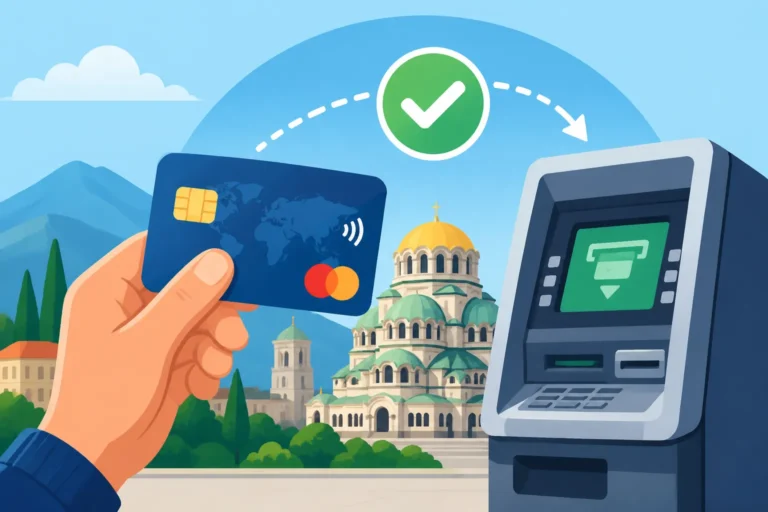
- International Debit/Credit Cards: Most international Visa and Mastercard debit and credit cards work seamlessly in Bulgaria for payments and ATM withdrawals. Just be mindful of foreign transaction fees your home bank might charge.
- Online Banking for Payments: You can continue to use your existing online banking for international transfers to pay for things like rent or bills, though you'll need the recipient's Bulgarian IBAN and BIC. Again, watch out for transfer fees and exchange rates.
- Cash is Still King (in some places): Especially outside major cities, cash remains vital. Having a reliable way to withdraw cash from ATMs (which are widely available) is crucial. However, withdrawing large sums can be costly due to fees and daily limits.
Getting Help from a Resident Friend or Employer
While not a long-term solution, in a pinch, if you have a trusted friend or family member who is a Bulgarian resident, they might be able to help you temporarily. For instance, they could receive an urgent payment on your behalf, or help you with a specific bill payment. Similarly, if you're coming to Bulgaria for work, your employer might have mechanisms to assist with initial financial needs or guide you through opening an account once your work permit is secured. This often goes hand-in-hand with Understanding Mandatory Health Insurance Contributions in Bulgaria and other salary-related deductions once you're employed.
Navigating the Bank Branch: What to Expect and How to Prepare
Alright, so you’ve decided to try your luck at a traditional bank, perhaps because you meet one of the limited scenarios, or you just want to see for yourself. Here's a practical guide on how to approach it and what to prepare for.
Before You Go: Research and Preparation
- Choose Your Bank Wisely: While the big players (DSK Bank, UniCredit Bulbank, Postbank, Raiffeisenbank) have broad networks and generally good English-speaking staff in larger cities, their non-resident policies are stringent. Sometimes smaller, more locally focused banks might be slightly more flexible, but don't count on it. However, if you are looking for How to Choose the Best Bank for Expats in Bulgaria for when you do become a resident, these big names are usually the top contenders.
- Gather All Possible Documents: This isn't just about what they ask for; it's about having everything and anything that proves your identity, your source of funds, and your connection to Bulgaria.
- Passport (validity far into the future)
- Any Bulgarian ID (e.g., BULSTAT card if you have one, or a property deed with your name on it)
- Proof of Address (utility bill in your name, rental contract, property deed)
- Proof of Income (employment contract from abroad, recent payslips, bank statements from your home country for the last 3-6 months showing consistent income)
- Tax Residency Certificate from your home country
- Documents related to your reason for needing the account (e.g., property deed, business registration documents, visa application receipt)
- Your D-visa (if applicable and issued)
- Marriage certificate (if trying to open a joint account with a Bulgarian spouse)
- Learn Some Basic Bulgarian Phrases: Even if the staff speaks English, a little effort goes a long way. "Dobro utro" (Good morning), "az iskam da otvorya bankova smetka" (I want to open a bank account), "blagodarya" (thank you) will be appreciated.
- Consider an Appointment: For complex matters like non-resident accounts, it's often better to call ahead and schedule an appointment, explaining your situation briefly. This can save you waiting time and ensures you speak with someone who might be more experienced with such cases.
During Your Visit: Patience and Persistence
- Dress Respectably: This might sound old-fashioned, but presenting yourself professionally can sometimes influence how seriously you're taken, especially in more traditional institutions.
- Clearly State Your Purpose and Reason: Don't just say "I want to open an account." Explain why you need it. "I own a property in Varna and need to pay my utility bills," or "I am waiting for my residence permit to be approved for work and need a local account for my salary."
- Be Prepared for Questions: As mentioned, expect questions about your source of funds, your tax residency, your plans in Bulgaria, and the expected transaction volume. Answer truthfully and calmly. If you’re unsure, it’s better to say so than to invent details.
- Don't Get Discouraged by the First "No": If one branch or bank says no, it doesn't mean all will. Policies can sometimes vary even between branches of the same bank, or you might simply have encountered an overly cautious employee. Take a deep breath, gather your documents, and try another branch or a different bank.
- Ask for Specific Requirements: If they decline, politely ask why and what specific documents or conditions would allow you to open an account. Sometimes, they might tell you that once you have your How Your Residence Status Affects NHIF Enrolment in Bulgaria in hand, it becomes much easier.
- Be Aware of Potential Fees: If you do manage to open an account, inquire about monthly maintenance fees, transfer fees, and ATM withdrawal fees for non-resident accounts. They can sometimes be higher.
Navigating the Bulgarian banking system as a non-resident is undeniably a challenge. It requires patience, thorough preparation, and a realistic understanding of the current regulatory environment. While it might seem impossible at times, a clear purpose, comprehensive documentation, and an open mind to alternative financial services can make the journey significantly smoother.
Disclaimer
The information provided in this article is for general guidance only and does not constitute legal or financial advice. Banking regulations and requirements in Bulgaria can change frequently. It is highly recommended to consult directly with Bulgarian banks or a legal/financial professional for advice tailored to your specific situation before making any financial decisions.