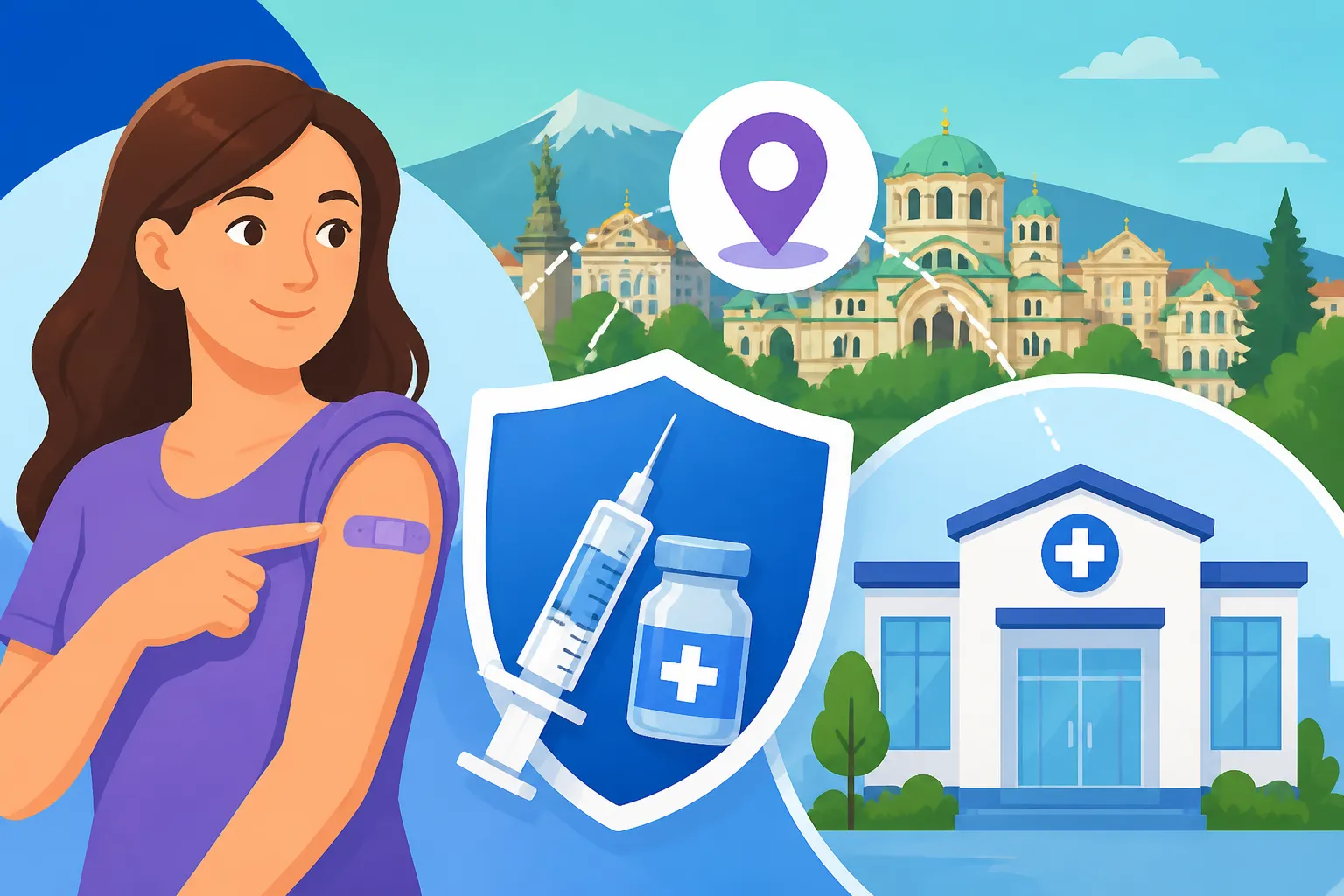
Where Can I Get a Flu Shot in Sofia?
Navigating healthcare in a new country, even for something as seemingly straightforward as a flu shot, can feel like a daunting task. You've just settled into the rhythm of Sofia, maybe you’re enjoying the vibrant city life, and suddenly, winter’s chill arrives, bringing with it the annual worry of the flu. Trying to figure out where to go, who to ask, and what paperwork you need for a simple jab can be incredibly frustrating when you’re not yet fluent in Bulgarian and the system is unfamiliar. This comprehensive guide is here to demystify the process, walking you through exactly where you can get your flu shot in Sofia and what to expect along the way, helping you stay healthy and prepared for the colder months.
Why Prioritise a Flu Shot in Bulgaria?
Alright, let's be real for a moment. Nobody enjoys getting sick, especially when you're an expat far from your usual comfort zone. The Bulgarian winter, while often beautiful with its snowy landscapes, can also be a breeding ground for various viruses. Flu season here is no joke, typically kicking off in late autumn and lasting well into spring. Public transport is packed, offices are buzzing, and schools are full of little germ factories – it’s a perfect storm for catching the dreaded "gripp," as it’s commonly called here.
Getting your annual flu shot isn't just about protecting yourself; it's about protecting the community around you. You might be young and feel invincible, but carrying the virus can put older neighbours, young children, or those with compromised immune systems at risk. Plus, who wants to spend precious time in Bulgaria battling fever, chills, and muscle aches? Trust me, you'd rather be exploring Vitosha mountain or enjoying a warm bowl of shkembe chorba than stuck in bed. Many expats find themselves more susceptible in their first few years as their immune systems adjust to new local strains, so it’s a wise preventative measure to take seriously.
Your Go-To Spots for a Flu Shot in Sofia
When it comes to actually getting the jab in Sofia, you’ve got a few main avenues. Each has its own quirks, so let’s break them down.
Pharmacies (Аптеки)
This is often the first place expats think of, and for good reason – pharmacies are ubiquitous in Sofia. You’ll see them on nearly every corner, often with a green cross lit up. However, the process isn't as simple as walking in and asking for a shot like it might be in some Western countries.
In Bulgaria, pharmacists are highly trained but typically cannot administer injections directly without a doctor's prescription and, in many cases, a nurse to perform the injection. What you can do at a pharmacy is purchase the vaccine itself. Flu vaccines usually become available in pharmacies around September or October. You’ll typically need a prescription from a doctor (a GP or a private clinic doctor) to purchase it. Once you have the vaccine, which comes in a small, refrigerated box, you then need to take it to a medical professional to have it administered. Some larger pharmacies might have an affiliated nurse or medical consultation room where they can administer it if you have the prescription and bought the vaccine there, but this isn't standard practice everywhere. Always ask explicitly, "Мога ли да си направя ваксина тук?" (Can I get vaccinated here?) and be prepared for a 'no' or a referral.
The cost of the vaccine itself varies, but generally, it's quite affordable, ranging from 20 to 40 BGN depending on the brand and availability for the year. Just remember to keep it refrigerated if you buy it and need to transport it to a clinic!
Private Clinics and Hospitals
For many expats, especially those who prioritize convenience, English-speaking staff, and a smoother process, private clinics and hospitals are often the easiest and most stress-free option for getting a flu shot. These facilities cater more directly to international clients and typically have an integrated system where you can get a consultation, prescription, and administration all in one visit.
Institutions like Acibadem City Clinic Tokuda Hospital, Hill Clinic, Vita Hospital, or Doverie Hospital in Sofia are well-regarded and frequently used by the expat community. Many of these hospitals and clinics have dedicated departments or at least several doctors who are fluent in English. You can usually call ahead, explain you’d like a flu shot, and book an appointment. They will likely schedule you for a brief consultation with a doctor who will write the prescription, and then a nurse will administer the vaccine on the spot. This streamlined approach minimizes back-and-forth between pharmacies and doctors.
While certainly more expensive than just buying the vaccine at a pharmacy, the convenience and peace of mind are often worth the extra cost. A consultation, vaccine, and administration at a private clinic can range from 60 BGN to 120 BGN or more, depending on the clinic and any additional services. This is a great option if you don't yet have a registered GP or prefer not to navigate the public system. For those who are still settling in or are here on a temporary basis, and might only have emergency travel insurance like SafetyWing (which typically doesn't cover routine vaccinations but provides a crucial safety net for unexpected serious medical events), private clinics offer straightforward access to preventative care. If you're looking into specific options for private care, take a look at our guide on Public vs Private Healthcare in Bulgaria: What Expats Need to Know.
Your General Practitioner (GP) – Личен Лекар
If you are a resident in Bulgaria and registered with the National Health Insurance Fund (NHIF), then your GP, or Личен Лекар (lichеn lekar), is your primary point of contact for healthcare, including preventative measures like flu shots. This is the most common route for long-term residents.
Your GP will assess your health, determine if a flu shot is advisable for you, and write a prescription. Under the NHIF system, the flu vaccine itself is generally not covered for everyone; it's usually only free for certain at-risk groups (e.g., elderly, those with chronic illnesses). For the general population, you’ll typically pay for the vaccine out of pocket at a pharmacy, as described above. Once you have the vaccine, you’ll bring it back to your GP's office or a designated nurse at the polyclinic (medical center) where your GP practices, and they will administer it. The administration fee by the GP or nurse is usually covered by your NHIF contributions, or it might be a small nominal fee.
The main advantage here is that your GP already has your medical history, and it’s part of your regular healthcare channel. The challenge, however, can be the language barrier if your GP doesn't speak English well, and the potential for a two-step process (getting the prescription, then buying the vaccine, then going back for the shot). It's always a good idea to confirm directly with your GP’s office about their specific procedure for flu shots. If you haven't yet registered with a GP, our guide on How to Choose and Register with a GP (Личен Лекар) in Bulgaria can walk you through the steps.
Occupational Health Services
For some expats working for larger international companies in Sofia, your employer might arrange for onsite flu vaccinations or have a partnership with a private clinic that provides them for employees. This is definitely the easiest route if available, as everything is usually organized for you. Check with your HR department to see if this is an option.
The Practicalities: What to Expect When Getting Your Flu Shot
Alright, let's talk brass tacks. What should you actually anticipate when you head out to get your flu shot in Sofia?
NHIF vs. Private: The Cost and Coverage
Understanding the financial side is key.
- NHIF Route (through your GP): As mentioned, if you're covered by the NHIF, the administration of the flu shot by your GP or a nurse is generally included in your contributions. However, the vaccine itself usually needs to be purchased by you, unless you fall into a high-risk group that qualifies for a free vaccine (this varies year to year based on state programs). Expect to pay 20-40 BGN for the vaccine. This is usually the most budget-friendly option for long-term residents. Our article on Understanding Out-of-Pocket Healthcare Costs and Co-Payments in Bulgaria delves deeper into these kinds of costs.
- Private Route (clinics/hospitals): This is typically an all-inclusive service. You pay a fee that covers the doctor’s consultation, the vaccine, and its administration. This can range from 60 BGN to 120 BGN, sometimes more depending on the facility. While pricier, it's often more straightforward and time-efficient, particularly if you don't want to deal with buying the vaccine separately. If you have comprehensive private health insurance, it’s worth checking your policy to see if preventative care like flu shots are covered. Many robust private plans do include this.
Documents and Language Barriers
What do you need to bring along?
- Identification: Always have your personal identification – passport, Bulgarian ID card, or residence permit.
- NHIF Card (if applicable): If you’re going through your GP, your NHIF card (or personal identification number, ЕГН) is essential.
- Health Insurance Information: If you have private health insurance, bring your policy details and card.
- Prescription: If you’ve obtained a prescription from a doctor, bring that along. If you’ve already purchased the vaccine, bring it with you to the appointment.
The language barrier can be a real hurdle. In private clinics catering to expats, you'll likely find English-speaking staff. However, in smaller pharmacies or public polyclinics, English proficiency might be limited. Don't be shy about using Google Translate on your phone, or if possible, bring a Bulgarian-speaking friend along for support. A simple phrase like "Искам да си направя ваксина против грип" (I want to get a flu vaccine) can go a long way. If you are specifically looking for English-speaking medical professionals, check out our guide on How to Find an English-Speaking Doctor in Bulgaria.
The Appointment Itself
Regardless of where you go, the process of getting the shot is quick. You’ll have a brief chat with the doctor or nurse to confirm you're feeling well and have no contraindications. They'll clean a small area on your upper arm, administer the injection, and that’s it. You might be asked to wait for 10-15 minutes afterwards to ensure there’s no immediate adverse reaction, which is standard procedure everywhere. Most people experience only mild soreness at the injection site, or perhaps a slight fever, but nothing compared to the actual flu!
Important Considerations and Expat Tips
Beyond the mechanics of getting the shot, there are a few other things for expats in Sofia to keep in mind.
Timing is Everything
Flu season typically begins in the autumn, so the best time to get vaccinated is usually September through November. It takes about two weeks for the vaccine to become fully effective, so getting it early in the season ensures you’re protected before the peak flu activity hits. Don’t wait until everyone around you is coughing and sneezing – by then, it might be too late. Keep an eye on local news or health authority announcements, though these are often in Bulgarian. Your best bet is to check with pharmacies or private clinics in early autumn.
Understanding Your Health Coverage
For those who are just arriving or still navigating the complexities of Bulgarian bureaucracy, your health insurance situation might be in flux.
- NHIF (National Health Insurance Fund): This is the public system. If you are working or legally residing and contributing to social security, you'll be covered. Refer to How Bulgaria's Health System Works: The NHIF and Private Care Explained (2027) for a deeper dive.
- Private Health Insurance: Many expats opt for private health insurance to supplement or completely cover their medical needs. These plans often provide access to private clinics, English-speaking doctors, and may cover preventative care like flu shots. If you're a newcomer, learning How to Buy Private Health Insurance as a Newcomer in Bulgaria is a crucial step.
- Travel Insurance: If you're visiting for a short period or are a digital nomad on a temporary stay, you might have travel medical insurance. It's crucial to understand that most travel insurance policies, while excellent for unexpected emergencies, typically do not cover routine preventative care like flu shots. Brands like SafetyWing are fantastic for international travel medical emergencies, but you shouldn't rely on them for annual vaccinations. Always check your specific policy details for clarity.
Beyond the Shot: General Wellness
While the flu shot is a fantastic defense, don't forget the other pillars of staying healthy during the colder months.
- Hygiene: Regular hand washing, especially after public transport or before eating, is paramount. Carry hand sanitizer for when soap and water aren't available.
- Nutrition and Vitamins: Eating a balanced diet rich in fruits and vegetables, and considering supplements like Vitamin C and D, can bolster your immune system.
- Rest: Getting adequate sleep is often overlooked but plays a huge role in your body's ability to fight off illness.
- Stay Hydrated: Drink plenty of water and warm fluids.
Navigating healthcare in Bulgaria requires a bit of patience and proactive research, but with the right information, getting your flu shot in Sofia can be a smooth process. Whether you opt for the convenience of a private clinic or the familiarity of your GP, taking this small step can make a big difference in enjoying a healthier Bulgarian winter.
| Option | Pros | Cons | Typical Cost (BGN) | Who It's Best For |
|---|---|---|---|---|
| Pharmacies (Само Аптека) | Affordable vaccine cost, widely available | Requires doctor's prescription, need to find separate administration | 20-40 (vaccine only) | Budget-conscious, those with a registered GP |
| Private Clinics/Hospitals | English-speaking staff, streamlined process, convenience | Higher cost, may not be covered by basic NHIF | 60-120+ (all-inclusive) | Expats prioritizing convenience, English, private insurance holders |
| GP (Личен Лекар) | Part of routine care, administration covered by NHIF | Vaccine often not free for all, potential language barrier | 20-40 (vaccine) + minimal/no admin fee | Long-term residents registered with NHIF |
This table provides a quick overview, but remember that prices and procedures can always vary slightly from year to year and between specific providers. It's always best to call ahead and confirm. For a broader overview of the healthcare landscape, consider reading The Complete Guide to Healthcare in Bulgaria for Expats (2027) or our roadmap for Navigating the Bulgarian Healthcare System: An Expat's Roadmap (2027).
Disclaimer
The information provided in this guide is for general informational purposes only and does not constitute medical or legal advice. Healthcare policies, prices, and availability can change, and individual medical situations vary. Always consult with a qualified medical professional or healthcare provider for any health concerns or before making any decisions related to your health or treatment. We recommend verifying current procedures and costs directly with clinics, pharmacies, or your general practitioner in Bulgaria.