Can I Import My Car to Bulgaria?
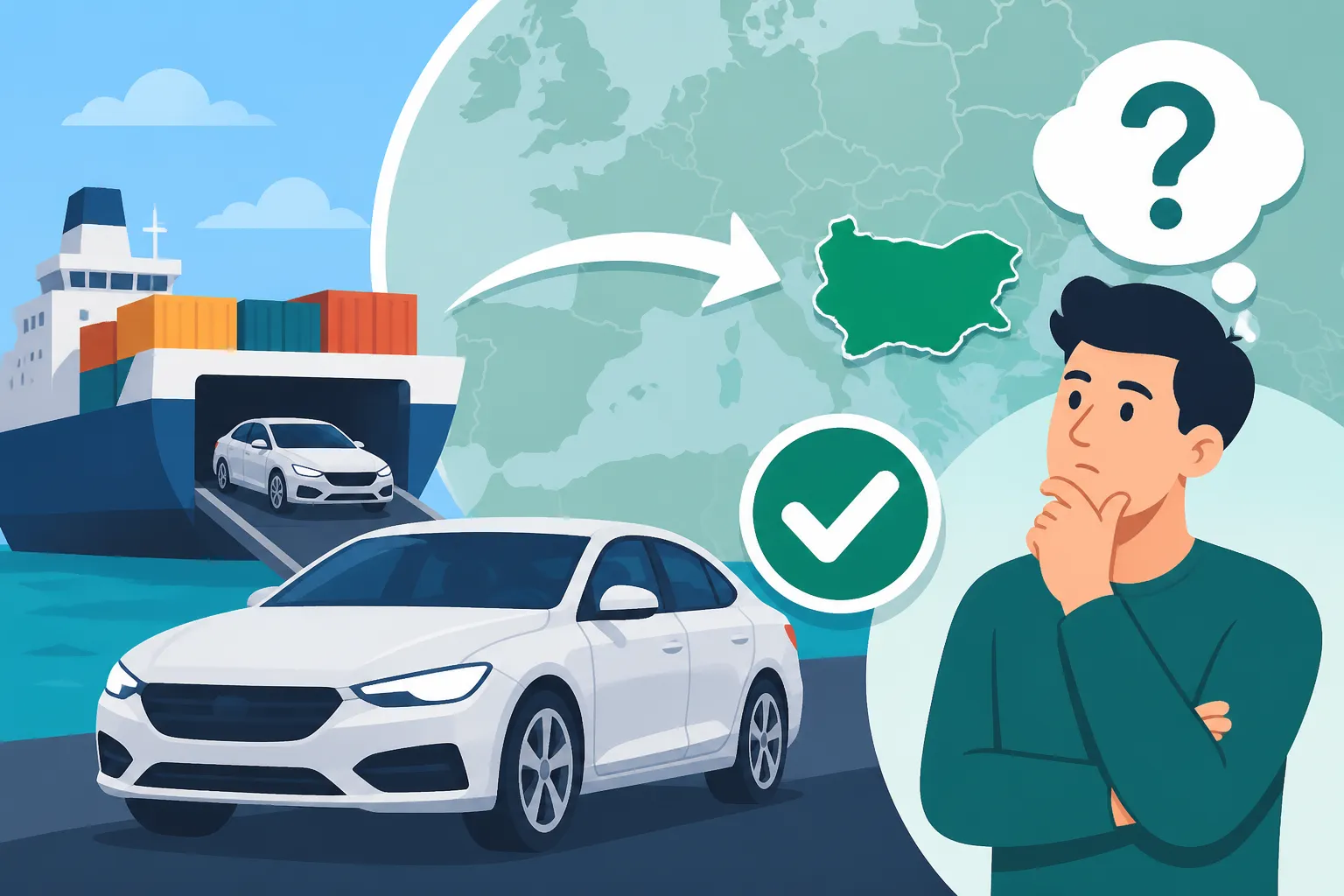
Ah, the age-old expat dilemma: you've finally decided to make Bulgaria your home, and now you're looking at your trusty car, wondering if it can join you on this new adventure. It’s not just a car; it’s your car, filled with memories and familiar quirks. But the thought of importing it can feel like staring down a bureaucratic beast. Don't worry, you're not alone in feeling overwhelmed. This guide is here to untangle the convoluted process of bringing your car to Bulgaria, outlining exactly what you need to do, what it'll cost, and whether it's truly worth the effort.
The Initial Question: Is Importing Your Car to Bulgaria Even Worth It?
Let's be brutally honest from the get-go: bringing your car over to Bulgaria can be a real headache, especially if you're coming from outside the EU or if your vehicle is older. While the emotional attachment to your car is completely understandable – believe me, I've been there – it's crucial to weigh that against the practical realities of time, cost, and sheer administrative willpower. Bulgaria’s roads, parking situations, and even maintenance facilities might not be kind to every type of vehicle, particularly if it's a luxury model with complex parts that are hard to source locally.
EU vs. Non-EU Vehicle Imports: A World of Difference
This is perhaps the single biggest factor influencing whether importing your car is a simple task or a Sisyphean labour.
If you’re moving from another EU country, the process is significantly smoother. You're primarily dealing with registration and some local taxes, as the vehicle is already in free circulation within the EU. The good news is, you won't typically pay customs duties or VAT again, assuming these were already settled in the original EU country of purchase. You'll still need a technical inspection, local registration, and a Bulgarian insurance policy, but the heavy lifting of customs clearance is largely absent. It feels more like moving house than bringing a foreign object into a new country.
However, if your car is coming from outside the European Union, brace yourself. This is where the real challenges begin. You're looking at customs duties, VAT, and a much more rigorous technical inspection to ensure your vehicle meets EU standards, known as "homologation." This can be a very expensive and time-consuming process, sometimes involving modifications to your vehicle. Think headlights, emissions systems, and even safety features. For many non-EU cars, especially older models, the cost of these modifications and the associated import taxes can easily exceed the value of the car itself. It's not uncommon for expats to lament spending thousands on import fees only to find their car’s market value in Bulgaria is a fraction of what it was elsewhere.
Factors to Consider Before You Ship
Before you even think about getting quotes for international shipping, pause and consider these points:
- Vehicle Age and Value: Is your car particularly old? The older it is, the more likely it is to fail the technical inspection without significant and costly modifications. If its market value is low, the import costs might quickly make it economically unfeasible.
- Emissions Standards: Bulgaria, like other EU countries, adheres to strict emissions standards. If your car is from a country with laxer regulations, it might not pass. Upgrading catalytic converters or other components can be expensive.
- Spare Parts and Servicing: Is your car a common model in Bulgaria? If it's a niche brand or model, finding spare parts and qualified mechanics can become a nightmare. Local mechanics generally specialise in more common European and Japanese brands.
- Cost of Import vs. Local Purchase: Get solid estimates for shipping, customs, VAT, homologation, and registration fees. Compare this to the cost of purchasing a similar vehicle in Bulgaria. Websites like Mobile.bg or Cars.bg can give you a good idea of local market prices. Often, you'll find that buying a car locally is surprisingly more affordable and significantly less stressful. For those moving their entire household, getting a quote from a reputable international mover like Sirelo can sometimes include car transport, but make sure to clarify all the associated Bulgarian import costs with them. They'll handle the logistics of getting it here, but the local bureaucracy is still on you.
- Insurance Costs: Insurance premiums in Bulgaria can vary wildly. Newer, more powerful, or less common vehicles might incur higher premiums.
- Language Barrier and Bureaucracy: The process is entirely in Bulgarian. Unless your Bulgarian is fluent, you'll need a reliable translator or an agent to help you navigate the various institutions: customs, technical inspection centres, and the traffic police (KAT). This adds another layer of cost and potential frustration.
Ultimately, the decision often boils down to a balance between sentimentality and practicality. For many, the hassle and expense just aren't worth it.
The Step-by-Step Gauntlet: Importing Your Car to Bulgaria
Alright, so you've weighed the pros and cons, gritted your teeth, and decided your car is coming with you. Fantastic! Now, let's break down the journey your vehicle will take from port to pavement in Bulgaria. This isn't a race; it's a marathon, often with many unexpected detours.
Step 1: Shipping and Customs Clearance
The first hurdle is getting your car into the country and through customs. This typically involves several key stages:
- Choosing a Shipper: Select a reputable international shipping company. They will handle the actual transport from your origin country to a Bulgarian port (usually Varna or Burgas) or a border crossing. Be sure to get a clear quote that outlines what is and isn't included, such as port fees, terminal handling charges, and local delivery. If you're using a moving service for your entire household goods, ask if they offer vehicle transport, as mentioned, companies like Sirelo often provide such comprehensive services.
- Arrival and Temporary Storage: Once your car arrives in Bulgaria, it will be held at a customs warehouse or designated customs area. This is where the clock starts ticking for customs procedures.
- Customs Declaration and Documentation: You (or your appointed customs agent, which is highly recommended) will need to file a customs declaration. The documents required are extensive and precise:
- Original vehicle registration document (title/V5C).
- Proof of ownership (bill of sale/invoice).
- Your passport and Bulgarian residence permit. (How to Get a Residence Permit in Bulgaria (2026))
- Shipping documents (Bill of Lading).
- Proof of customs exemption (if applicable, e.g., if you're importing under a 'relocation of personal effects' allowance, which has strict criteria and deadlines).
- Power of attorney for your customs agent.
- Paying Duties and VAT (for Non-EU Cars): This is often the most painful part.
- Customs Duties: Typically a percentage of the vehicle's customs value (value + shipping + insurance). The exact percentage depends on the type of vehicle and its origin. For passenger cars, it's often around 10%.
- VAT (Value Added Tax): Currently 20% in Bulgaria, applied to the customs value plus the customs duty. Yes, you pay VAT on the duty itself, which stings a bit.
- Example: If your car's customs value is €10,000, customs duty at 10% is €1,000. VAT at 20% is then applied to €11,000 (€10,000 + €1,000), meaning €2,200 in VAT. Total import taxes just for this example: €3,200, before any other fees or registration costs.
- Customs Clearance: Once all documents are processed and duties/VAT paid, customs will issue a release document. You can then collect your car. Keep all receipts and declarations safe; you'll need them for registration.
Step 2: Technical Inspection (Homologation)
This step is critical, especially for non-EU vehicles. Every car brought into Bulgaria must undergo a technical inspection at a certified facility to ensure it complies with Bulgarian and EU technical and environmental standards.
- The Certificate of Conformity (CoC): For EU-spec cars, you might already have a CoC from the manufacturer. This document certifies that your vehicle meets all relevant EU standards. If you don't have one, you might need to request it from the manufacturer, or a local testing centre might issue one after inspection.
- Individual Approval (for Non-EU Cars): This is where it gets tricky for vehicles from outside the EU. They generally require an individual approval (индивидуално одобряване) from the Executive Agency "Automobile Administration" (Изпълнителна агенция "Автомобилна администрация" – IAAA). This involves a comprehensive technical check, which can include:
- Emissions Testing: Your car must meet Euro standards (e.g., Euro 4, 5, 6). Older non-EU cars often fall short here.
- Lighting: Headlights often need adjustment or replacement to comply with EU standards (e.g., beam pattern).
- Safety Features: Seatbelts, airbags, braking systems are checked.
- Speedometer: Must display in kilometres per hour (km/h).
- VIN Plate: Verification of the Vehicle Identification Number.
- Potential Modifications: If your car doesn't pass, you'll be required to make the necessary modifications. This could be anything from replacing headlights to overhauling exhaust systems. These modifications must be carried out by certified workshops and then re-inspected. The costs can quickly add up and are often the biggest hidden expense of importing a non-EU car.
This entire technical inspection and homologation process can take weeks, sometimes months, and requires immense patience and persistence.
Navigating the Bulgarian Vehicle Registration Maze
With customs cleared and your car technically approved, you're now ready for the final, but equally daunting, stage: official registration with the Bulgarian traffic police, known as KAT (КАТ). This is where your car gets its Bulgarian license plates and a shiny new registration document.
Step 3: Getting Your Vehicle Insured
Before KAT will even look at your vehicle, you must have valid Bulgarian car insurance. This usually means obtaining two types of insurance:
- Civil Liability (Гражданска Отговорност): This is mandatory third-party liability insurance, covering damages you might cause to other vehicles or property in an accident. You cannot register a car without it. The cost varies based on vehicle type, engine size, your age, and driving history. You can compare quotes from various Bulgarian insurers like Lev Ins, Bulstrad, or Armeec. Remember, foreign insurance policies are not valid for permanent registration.
- Casco (Каско): This is comprehensive insurance (similar to collision/full coverage) and is optional but highly recommended, especially for newer or more valuable vehicles. It covers damage to your own car, theft, and other incidents.
You’ll need to show proof of active civil liability insurance when you go to KAT.
Step 4: The KAT Registration Process
Now for the grand finale: the trip to KAT. Prepare for queues, possibly some confusion, and definitely bring all your documents. It's advisable to go with a Bulgarian speaker if you're not confident in the language.
- Required Documents for KAT:
- Your passport and valid Bulgarian residence permit card. Your residency status is paramount for this process. Without a valid permit, you won't be able to register the car. For details on how to get yours, check out our guide on How Your Residence Status Affects NHIF Enrolment in Bulgaria.
- The customs declaration and release document (for non-EU cars).
- The Certificate of Conformity (CoC) or Individual Approval document from the IAAA.
- Original vehicle registration document (title/V5C) from your home country.
- Proof of ownership (bill of sale/invoice).
- Proof of paid road tax (see below).
- Proof of valid civil liability insurance.
- Your Bulgarian driver's licence or your foreign licence if you are still within the grace period for exchange. For more info on this, see How to Exchange or Use a Foreign Driver's Licence in Bulgaria.
- A completed application form (available at KAT).
- Road Tax (Пътен Данък): Before registering, you need to pay the annual road tax at your local municipal tax office. This tax varies based on the vehicle's engine size, power, and environmental category. You'll need the customs documents or proof of origin to calculate this.
- Vehicle Inspection at KAT: Your car will undergo a brief physical inspection by KAT officials. They'll check the VIN, engine number, and general condition to match it against your documents. Make sure your car is clean and accessible for inspection.
- Fees: There are several fees to pay at KAT for registration, new license plates, and issuing the new registration document. These are typically paid on the spot.
- Receiving Plates and Documents: If all checks out and fees are paid, you'll be issued new Bulgarian license plates and a "Малък талон" (small talon) – the vehicle registration certificate, and a "Голям талон" (large talon) – a technical certificate. Keep these safe!
The entire KAT process, from arriving to leaving with your new plates, can take several hours, even a full day, depending on the location and time. It's a test of patience, but a significant milestone when you finally have those Bulgarian plates in hand. For a broader understanding of vehicle rules, you might find our guide on Driving in Bulgaria: Licences, Registration and Rules for Expats (2027) very helpful.
Table: Importing vs. Buying a Car in Bulgaria
To help you make an informed decision, here's a quick comparison of the two main routes for getting a car in Bulgaria:
| Feature | Importing Your Car (Non-EU) | Buying a Car Locally in Bulgaria (Used) |
|---|---|---|
| Initial Cost | Shipping, customs duties (10%), VAT (20%), homologation/modification costs, registration fees. | Purchase price, transfer fees, initial registration/inspection fee (if re-registering). |
| Timeframe | Weeks to several months. | Days to a couple of weeks. |
| Paperwork | Extensive: shipping docs, customs declarations, CoC/individual approval, ownership, residence permit, insurance, tax. | Less: bill of sale, existing registration, residence permit, insurance, tax. |
| Hassle Factor | High: multiple agencies, potential modifications, language barrier, unpredictable delays. | Low to moderate: mainly KAT and insurance, generally straightforward. |
| Vehicle Choice | You keep your specific car. | Limited to what's available on the local market. |
| Suitability | May require costly modifications to meet EU standards. | Already compliant with local standards. |
| Hidden Costs | Unexpected modification costs, agent fees, storage fees, re-inspections. | Potential for unforeseen repairs after purchase (as with any used car). |
| Recommendation | Generally not recommended for non-EU cars unless highly sentimental or unique. | Recommended for most expats seeking a practical solution. |
This table should clearly illustrate why many expats opt to leave their foreign car behind.
Alternatives to Importing: Buying Local or Leasing
Given the gauntlet of importing a car, it's no wonder many expats throw up their hands and look for simpler options. Luckily, Bulgaria offers viable alternatives that can save you significant time, money, and stress.
Buying a Used Car in Bulgaria
This is by far the most common route for expats. The used car market in Bulgaria is vibrant and offers a wide range of vehicles at relatively affordable prices compared to Western Europe. You'll find everything from budget-friendly city cars to more robust SUVs.
- Where to Look:
- Online Platforms: Mobile.bg and Cars.bg are the dominant online marketplaces for used cars. You can filter by make, model, price, region, and various features.
- Dealerships: There are numerous used car dealerships, especially in larger cities like Sofia, Plovdiv, and Varna. Some offer warranties or certified used vehicles, providing a bit more peace of mind.
- Private Sellers: You can find private sellers through online ads or word-of-mouth. While often cheaper, this comes with more risk and requires careful inspection.
- Key Considerations When Buying Used:
- Technical Inspection: Always, always get an independent mechanic to inspect any used car you're considering. It's a small investment that can save you from major headaches and costly repairs down the line.
- Documentation: Ensure all documents are in order. The seller must have the "Малък талон" and "Голям талон" in their name. Check the service history if available.
- Mileage Rollback: Unfortunately, odometer tampering is not unheard of. A thorough mechanic's inspection can sometimes reveal inconsistencies.
- Ownership Transfer: The transfer of ownership involves a notary public. Both buyer and seller must be present. The notary will draft the contract and certify the signatures. There's a local transfer tax (similar to stamp duty) and notary fees, usually a percentage of the car's declared value. For more on this, our guide on How to Buy a Car as a Foreigner in Bulgaria has all the details.
- Registration at KAT: Once purchased, you'll need to register the car in your name at KAT within a specific timeframe (usually 14 days). This involves taking the car for an inspection, providing the notarised sale contract, your ID, and residence permit.
- Insurance: You'll need to get your own civil liability insurance immediately upon purchase.
Buying locally avoids all the import duties, homologation stress, and lengthy customs procedures. It's a clean slate, and you're dealing with a vehicle that's already compliant with Bulgarian regulations.
Leasing a Car in Bulgaria
Leasing is another option, particularly if you prefer newer vehicles, don't want the hassle of ownership, or anticipate a shorter stay in Bulgaria.
- Operational Lease: This is essentially a long-term rental where you pay a monthly fee for the use of a car. The leasing company retains ownership and is usually responsible for maintenance, insurance, and road tax. At the end of the term, you return the car.
- Financial Lease: This is more akin to a loan. You pay monthly instalments, and at the end of the term, you have the option to buy the car for a residual value.
- Pros of Leasing:
- Newer Vehicles: Access to brand-new cars with the latest features and safety standards.
- Predictable Costs: Monthly payments typically cover most expenses, simplifying budgeting.
- No Depreciation Worries: You're not responsible for the car's resale value (with operational leases).
- Maintenance Included: Often, servicing and repairs are covered by the leasing company.
- Cons of Leasing:
- Higher Monthly Costs: Generally more expensive than owning a used car outright.
- Strict Terms: Lease agreements often have mileage limits and penalties for excessive wear and tear.
- Eligibility: As an expat, you might face stricter requirements, such as a longer residence permit or a higher upfront deposit, as leasing companies assess your creditworthiness in Bulgaria.
Several banks and specialized companies in Bulgaria offer leasing services. It's worth exploring if you value convenience and don't mind not owning the vehicle.
Ultimately, while the thought of bringing your familiar car to Bulgaria is comforting, the reality of the import process often steers expats towards local solutions. The money saved on import duties, shipping, and potential modifications can easily go towards a reliable vehicle already registered and ready to roll on Bulgarian roads. Before making any big decisions, it's always smart to compare costs thoroughly, perhaps even consulting with a local lawyer or customs agent to get the most accurate, up-to-date estimates for your specific situation. This way, you can cruise around Bulgaria without that lingering bureaucratic headache!
Disclaimer
The information provided in this guide is for general informational purposes only and does not constitute legal, financial, or professional advice. While we strive to keep the information accurate and up-to-date, regulations and procedures in Bulgaria can change without notice. We strongly recommend consulting with a qualified immigration lawyer, customs agent, or other relevant professionals in Bulgaria for advice tailored to your specific circumstances before making any decisions related to car import or purchase.