How to Set Up Streaming and TV Service in Bulgaria
Moving to Bulgaria, settling into a new home, and finally finding that comfortable spot on the sofa only to realize you have no idea how to access your favorite shows or even local news channels can be a real moment of panic. It’s a common frustration, believe me, I’ve been there – juggling new paperwork, new language, and then trying to figure out if your Netflix will even work. This guide is here to untangle the spaghetti mess of Bulgarian TV and streaming options, ensuring you can relax and enjoy your downtime.
Understanding Your TV and Streaming Landscape in Bulgaria
When you first arrive in Bulgaria, the television and streaming landscape can feel a bit like a foreign language, which, of course, it often is literally! But beyond the language barrier, there are different systems, providers, and a whole host of regulations that can make simply watching your favorite program feel like an administrative hurdle. Understanding the basic lay of the land is the first step to getting settled and entertained.
Public vs. Private Television Channels
Just like in many other countries, Bulgaria operates with a mix of public and private television broadcasters. The public broadcaster is Bulgarian National Television (BNT), which offers several channels like BNT 1, BNT 2, and BNT 3, covering news, culture, sports, and entertainment. While primarily in Bulgarian, BNT does offer some international content, often with Bulgarian subtitles or dubbing. You might not watch it for your daily dose of English-language sitcoms, but it's an excellent way to immerse yourself in local culture and stay informed about national events.
On the private side, you have big players like bTV and Nova TV, which are incredibly popular and offer a wide range of programming, from local reality shows and dramas to international films and series, again, usually with Bulgarian voiceovers or subtitles. These channels are often included in basic cable or satellite packages and are a cornerstone of Bulgarian household entertainment. For expats, getting familiar with these main channels can provide a window into daily Bulgarian life and even help with language acquisition, if you're feeling ambitious!
The Rise of Streaming Services
The global shift towards on-demand content hasn't bypassed Bulgaria. Just like back home, streaming services have exploded in popularity here, offering an alternative, often more flexible, way to consume media. Services like Netflix, HBO Max, and Disney+ are all readily available, providing a vast library of international movies and TV shows. This is usually the go-to for many expats looking for familiar content in their native language, or at least with original audio options.
Beyond the international giants, you'll also find local streaming platforms. These often focus on Bulgarian films, series, and live TV options. Sometimes these are tied into specific cable provider subscriptions, giving you an online portal to access your subscribed channels. The convenience of streaming is undeniable, allowing you to watch what you want, when you want, often across multiple devices. However, this flexibility usually relies on a solid internet connection, which we’ll dive into a bit later.
Geo-Restrictions and VPNs: A Reality Check
Here's where things can get a little tricky for expats, and it’s a source of endless frustration, believe me. Geo-restrictions are a digital border control system, preventing you from accessing content that's licensed only for specific regions. This means your beloved BBC iPlayer, Hulu, or even certain regional libraries on Netflix might not be accessible when you try to log in from Bulgaria. It’s a real bummer when you’re craving a show from home!
This is where a Virtual Private Network (VPN) becomes your best friend. A VPN allows you to route your internet traffic through a server in another country, effectively making it appear as if you're browsing from that location. Want to watch something only available in the UK? Connect to a UK server. Need access to US-specific content? Find a US server. While not foolproof, as some streaming services are getting savvier at detecting VPNs, a good quality, paid VPN service can often bypass these restrictions, opening up a world of content. Be aware that the legality and terms of service regarding VPN use for geo-restriction bypass can be a grey area depending on the service, so always do your research and proceed with caution.
Setting Up Traditional Cable and Satellite TV
For many, especially those who prefer a more structured viewing experience or enjoy local programming, traditional cable or satellite TV remains a popular choice in Bulgaria. The good news is that there are several well-established providers, though navigating their packages and contracts can feel like a mini-adventure in bureaucracy.
Key Providers and Their Offerings
Bulgaria has a few major players when it comes to cable and satellite TV, and often, these companies are also your internet and mobile service providers, offering enticing bundles. The big names you'll hear are A1, Vivacom, and Yettel. Each offers a range of packages that include various channels, some basic, some premium, and often sports or movie add-ons.
- A1 is a strong contender, offering extensive cable TV packages, digital TV, and even satellite options. They often have attractive bundles that include internet and mobile services, which can simplify your monthly bills and sometimes save you money. Their coverage is generally excellent across the country.
- Vivacom is another major telecommunications company, providing a full suite of services including fixed-line telephone, internet, and both cable and satellite TV. They pride themselves on good network coverage and competitive pricing, especially when you combine multiple services.
- Yettel (formerly Telenor) primarily focuses on mobile services but also offers home internet and TV packages, often through partnerships or its own infrastructure in certain areas. While perhaps not as historically dominant in fixed-line TV as A1 or Vivacom, they are expanding their offerings.
When you're comparing providers, pay close attention to the channel lists. Some packages might have a huge number of channels, but many could be foreign-language or niche channels you'll never watch. Look for packages that include English-language news channels (like CNN, BBC), movie channels (HBO, Cinemax), or sports channels if that's your thing. Don't be shy about asking if they have specific international channel packs.
Installation Process and Contract Considerations
Once you've picked a provider and a package, the installation process usually involves a technician coming to your home. This can be scheduled fairly quickly, often within a few days to a week. They'll run cables, set up the necessary equipment (like a receiver box or satellite dish), and activate your service. It’s always best to be present during installation to ensure everything is working correctly and to ask any immediate questions. If your Bulgarian isn't up to par, try to have a Bulgarian friend or colleague help you communicate with the technician.
Now, for the contracts. This is often where expats run into the most stress. Contracts in Bulgaria are usually for a fixed term, typically 12 or 24 months. Read the fine print carefully, or better yet, have a Bulgarian speaker review it with you. Look out for:
- Early termination fees: What happens if you need to cancel your contract before the term is up? These can be substantial.
- Promotional periods: Often, the attractive price you're quoted is only for the first few months, after which it increases. Understand the full price after any introductory offers expire.
- Equipment rental/purchase: Are you renting the set-top box or buying it outright? What are the terms for returning it when you leave?
- Hidden fees: Ask about any activation fees, maintenance fees, or other charges that aren't clearly part of the monthly rate.
It’s worth noting that if you’re also setting up your internet at the same time, bundling these services can sometimes streamline the contract process, but also tie you into a longer overall commitment. Remember to also check out our guide on How to Set Up Internet and Mobile Service in Bulgaria for a deep dive into that side of things.
Common Challenges and What to Expect
Let's be realistic: setting up utilities in a new country rarely goes off without a hitch. You might encounter a few common challenges. Language can be a significant barrier. While customer service agents are increasingly multilingual, especially in larger cities like Sofia or Plovdiv, don't expect everyone to speak fluent English. It's prudent to have a translation app handy or, as mentioned, a Bulgarian friend to assist with phone calls or in-person visits to provider offices.
Another challenge can be understanding the various package options. Sales representatives might be eager to sign you up for the most expensive package, so be clear about your needs. If you only want basic channels and don't care for obscure sports packages, stand your ground. Also, sometimes the advertised speeds or channel counts don't quite match the real-world experience, though this is less common with established providers.
Finally, bureaucracy can slow things down. Be patient, bring all necessary documents (passport, residence permit, proof of address, etc.), and expect to fill out forms. Remember, this is all part of the expat experience, and once it's done, you'll be enjoying Bulgarian TV in no time, or at least have access to the familiar international channels.
Navigating Streaming Services as an Expat
For many expats, streaming services are the bread and butter of their entertainment. They offer familiarity, often in your native language, and incredible flexibility. But even with global giants, there are nuances to understand when you're accessing them from Bulgaria.
International Streaming Giants: Netflix, Disney+, HBO Max
The good news is that the biggest international streaming platforms have a strong presence in Bulgaria. You can easily subscribe to services like Netflix, HBO Max, and Disney+ directly from Bulgaria. The content libraries will be tailored to the Bulgarian region, meaning you’ll get a selection of international films and series, usually with original audio options, Bulgarian subtitles, and often Bulgarian dubbing.
- Netflix: You'll find a wide array of content, much of which you'll recognize from back home. The Bulgarian library is quite robust. You can sign up using a Bulgarian payment method, and the interface is available in English.
- HBO Max: This platform is also popular and offers a fantastic selection of HBO originals, Warner Bros. films, and other licensed content. Like Netflix, it's easily accessible with a Bulgarian subscription.
- Disney+: If you're a fan of Disney, Pixar, Marvel, Star Wars, or National Geographic, Disney+ is available and works seamlessly.
Signing up for these services is usually straightforward, requiring an email address and a valid Bulgarian credit/debit card. Most platforms offer a free trial period, allowing you to explore the content before committing to a subscription. It's usually very similar to signing up in your home country.
Local Bulgarian Streaming Options
Beyond the global players, Bulgaria also has its own streaming ecosystem. These platforms are often tied to major broadcasters or telecom companies. For example, some local providers, like A1 and Vivacom, offer their own streaming apps or web platforms where you can access the channels included in your cable package on your mobile devices or smart TV. This means you can catch up on local news or a Bulgarian series even when you’re away from your main TV.
There are also dedicated platforms that specialize in Bulgarian film and television. While these might not be high on an expat's priority list initially, they offer a fantastic way to engage with Bulgarian culture, cinema, and language learning. Exploring these options can give you a deeper connection to your new home. Keep an eye out for apps or services that allow you to watch live Bulgarian TV channels over the internet, which can sometimes be a more flexible alternative to traditional cable.
The VPN Solution: How to Access Your Home Content
As we touched upon earlier, geo-restrictions are a pain. If you're longing for content from your home country that isn't available on Bulgarian streaming libraries, a VPN is your best bet. A VPN encrypts your internet connection and allows you to choose a server location, making it appear as if you're browsing from that country. For example, if you want to watch a show exclusive to a UK-based streaming service, you'd connect to a VPN server in the UK.
There are many reputable VPN providers out there, both free and paid. While free VPNs might seem tempting, they often come with limitations on speed, data, and server locations, and sometimes compromise your privacy. For reliable streaming, a paid VPN service is almost always worth the investment. Services like ExpressVPN, NordVPN, or Surfshark are popular choices among expats for their speed, wide server networks, and ability to bypass many geo-blocks.
However, it's a constant cat-and-mouse game between streaming services and VPNs. What works one day might not work the next. It's advisable to choose a VPN with good customer support and a money-back guarantee, allowing you to test its effectiveness with your preferred streaming platforms. Remember, you'll need a decent internet connection in Bulgaria for the VPN to work effectively without buffering issues. And speaking of internet…
Internet Requirements for Seamless Streaming
Streaming and modern TV experiences are utterly reliant on a stable and fast internet connection. In Bulgaria, you generally have good access to high-speed internet, especially in urban areas. However, understanding the nuances of providers, speeds, and how to optimize your home network is crucial for an uninterrupted entertainment experience.
Choosing the Right Internet Provider
Just like with TV, the main internet providers in Bulgaria are A1, Vivacom, and Yettel. These companies offer fiber optic and cable internet connections with varying speeds. In most major cities like Sofia, Plovdiv, Varna, and Burgas, you'll find excellent fiber-to-the-home (FTTH) options, delivering very fast and reliable internet. Even in smaller towns and rural areas, ADSL or wireless internet options are available, though speeds might be lower.
When choosing a provider, consider:
- Speed: Don't just look at the "up to" speed. Think about how many devices will be streaming simultaneously in your household. For a single person streaming in HD, 50-100 Mbps might be enough. For a family with multiple 4K streams, online gaming, and video calls, aim for 200 Mbps or more.
- Reliability: Ask around in expat groups or check online reviews for local insights on provider reliability in your specific area. A company might be great in one district but patchy in another.
- Customer Service: How easy is it to get help if something goes wrong? Do they have English-speaking support?
- Bundles: As mentioned, combining internet with TV and mobile services can lead to discounts. This is often an attractive option for expats.
Make sure you also read our detailed guide on How to Choose a Mobile and Internet Provider in Bulgaria for even more tips and comparisons.
Understanding Speeds and Data Caps
When reviewing internet packages, you'll see speeds advertised in Mbps (megabits per second). This refers to both download speed (how fast content comes to your device) and upload speed (how fast content goes from your device, important for video calls or uploading large files). For most streaming, download speed is the critical factor.
- HD Streaming: Requires typically 5-8 Mbps per stream.
- 4K/UHD Streaming: Requires 20-25 Mbps per stream.
If you have multiple people watching different things in 4K, you can see how quickly those bandwidth requirements add up. Most internet plans in Bulgaria do not have data caps for fixed-line home internet, meaning you can stream as much as you like without worrying about exceeding a monthly limit. However, always double-check your contract, especially if you opt for a cheaper or wireless package, as some mobile data plans or certain home packages might have fair usage policies or caps.
For those initial days or if you're living a more nomadic lifestyle, consider mobile data options. Brands like Airalo offer eSIMs for international travel, which can be a lifesaver for getting connected quickly without needing a physical SIM card, allowing you to stream on the go or bridge the gap until your home internet is installed.
Optimising Your Home Network for Streaming
Having a fast internet connection is only half the battle; your home network also needs to be up to snuff. Here are a few tips to optimize your setup:
- Router Placement: Place your Wi-Fi router in a central location, away from obstructions and other electronics that might cause interference.
- Ethernet Connection: For critical devices like your main smart TV or streaming box, use an Ethernet cable instead of Wi-Fi. A wired connection is always faster and more stable, reducing buffering and latency.
- Router Quality: The router provided by your internet provider might be basic. If you have a large home or many devices, consider investing in a high-quality, modern Wi-Fi router (e.g., Wi-Fi 6 or Wi-Fi 7) for better coverage and performance.
- Mesh Wi-Fi Systems: For larger homes with Wi-Fi dead zones, a mesh Wi-Fi system can significantly improve coverage and consistent speeds across your entire living space.
- Software Updates: Ensure your router firmware, smart TV apps, and streaming device software are always up to date. Updates often include performance improvements and bug fixes.
By paying attention to your internet speed and home network setup, you can ensure your streaming experience in Bulgaria is as smooth and enjoyable as possible, letting you kick back and truly relax after a long day of navigating Bulgarian life.
Alternative Viewing Options and Smart TVs
Beyond the traditional cable subscriptions and mainstream streaming services, Bulgaria offers a rich tapestry of other ways to consume visual media. From internet-based television to leveraging the capabilities of your smart TV, there are plenty of avenues for expats to explore to find their perfect entertainment setup.
IPTV and Internet-Based TV Packages
IPTV, or Internet Protocol Television, is essentially TV delivered over the internet, rather than through traditional cable or satellite. Many Bulgarian telecom providers now offer IPTV packages as a core part of their service. This means you get a set-top box that connects to your internet router, and your channels are delivered via your broadband connection. The benefit here is often a more stable signal than traditional antenna, and sometimes more interactive features or on-demand content accessible through the box itself.
These packages can be particularly appealing if you're already getting your internet from one of the major providers like A1 or Vivacom, as it simplifies billing and support. IPTV often allows for more flexibility in terms of channel packages, and some even offer catch-up TV services, letting you watch programs that aired in the last 72 hours. While not always marketed specifically as "IPTV," if your TV box plugs into your internet router, you're likely using an IPTV-based service. It’s an increasingly common and reliable way to get your local channels.
Leveraging Smart TV Features and Apps
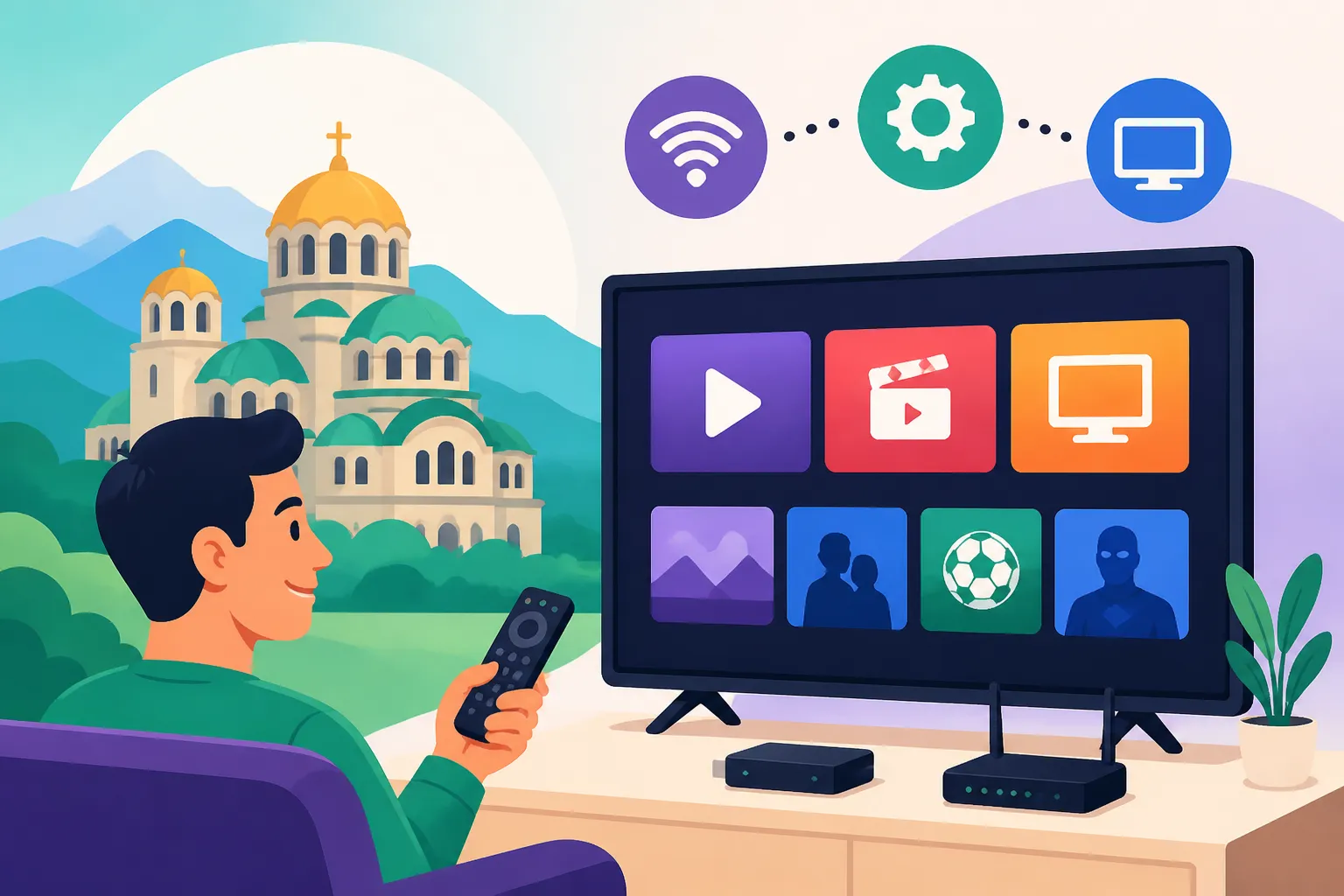
If you own a modern Smart TV, you're already halfway there! Smart TVs come with built-in operating systems (like Android TV, WebOS, Tizen) that allow you to download and run various apps directly on your television. This is where most international streaming services shine. You can simply download the Netflix, HBO Max, Disney+, or YouTube apps, log in, and start watching without any additional external devices.
Many Smart TVs also come with built-in web browsers, though these are often clunky and not ideal for heavy browsing. However, they can be useful for quickly accessing certain websites or web-based streaming services that might not have a dedicated app. Some Bulgarian broadcasters also have their own Smart TV apps, allowing you to watch their live streams or on-demand content directly. It's always worth exploring your TV's app store to see what's available locally. Just ensure your Smart TV is connected to a stable internet connection, preferably via an Ethernet cable, for the best performance.
Free-to-Air Channels and Digital Antennas
Before the internet became the dominant force, and still a viable option today, many households relied on terrestrial television broadcasts received via an antenna. Bulgaria has transitioned to digital terrestrial television (DVB-T2), which means you can pick up a selection of free-to-air Bulgarian channels with a compatible TV tuner (most modern TVs have one built-in) and a simple antenna.
While the selection of channels is limited compared to cable or satellite, these free-to-air options typically include the major public and private broadcasters (BNT 1, bTV, Nova TV). This can be a very cost-effective way to get basic local news and entertainment without a monthly subscription. An indoor antenna might suffice in urban areas with good signal, but a rooftop antenna might be necessary in more remote locations or for better reception. It's a great backup or primary option if you're on a tight budget and primarily interested in Bulgarian content.
Cost Considerations and Budgeting for Entertainment
Living in Bulgaria is generally more affordable than many Western European countries, and that often extends to entertainment services too. However, costs can add up quickly if you’re not careful, especially if you try to replicate your entire home country's setup. Understanding the price landscape will help you budget effectively for your TV and streaming needs. Check our comprehensive guide on The Complete Guide to Cost of Living in Bulgaria for Expats (2026) for a broader financial perspective.
Breakdown of Monthly Costs for Various Services
Let's look at what you can expect to pay for different types of entertainment services in Bulgaria:
- Internet: This is your foundation. Basic speeds (50-100 Mbps) can start from around 15-25 BGN per month. Faster fiber optic plans (200-500 Mbps or even 1 Gbps) typically range from 30-50 BGN per month. Remember, your internet bill is essential for streaming.
- Cable/Satellite TV: Basic packages from A1, Vivacom, or Yettel, often including 50-100+ channels, usually start from around 15-30 BGN per month. If you want premium movie channels (like HBO or Cinemax) or extensive sports packages, expect to pay an additional 10-25 BGN on top of that.
- International Streaming Services:
- Netflix: Standard plans are typically around 15-25 BGN per month, depending on the quality and number of concurrent screens.
- HBO Max: Usually around 9-12 BGN per month.
- Disney+: Generally about 10-12 BGN per month.
- Many other services like Amazon Prime Video, Apple TV+, etc., are also available and priced similarly to their international rates.
- VPN: A good quality paid VPN service typically costs around 10-20 BGN per month if paid monthly, but significantly less if you commit to a longer-term (e.g., annual or bi-annual) subscription.
As you can see, mixing and matching can lead to a decent monthly outlay. A common setup might involve a good internet plan (35 BGN), a mid-range cable TV package (25 BGN), and one or two streaming services (e.g., Netflix and HBO Max, 20 + 10 BGN), totaling around 90 BGN per month for a solid entertainment package.
Package Deals and Bundles
This is where you can often find the best value. Bulgarian telecom providers are very keen on offering "triple-play" (internet, TV, landline phone) or "quad-play" (internet, TV, landline phone, mobile phone) bundles. By combining multiple services with one provider (A1, Vivacom, or Yettel), you can often get a significant discount compared to subscribing to each service individually.
For example, a bundle that includes 200 Mbps fiber internet and a decent TV package might cost you 45-60 BGN per month, whereas buying them separately could push that closer to 70-80 BGN. It simplifies your billing too, as everything comes on one statement. When moving to Bulgaria, it's always worth asking about these bundle deals, especially if you're also looking to set up your mobile phone plan. Be sure to check what our other guide says about Understanding How to Move to Bulgaria Legally from Abroad (2027), as getting settled impacts these service setups.
Hidden Fees and Long-Term Commitments
Beware of the fine print! As mentioned earlier, long-term contracts are standard, typically 12 or 24 months. While they offer better monthly rates, they also mean you’re locked in. If your plans change and you need to leave Bulgaria early, you could face hefty early termination fees. Always clarify these terms upfront.
Also, watch out for:
- Installation fees: Some providers waive these as part of a promotion, others charge a one-time fee.
- Equipment rental fees: Are you paying a monthly fee for your modem, router, or TV receiver box? What happens if it breaks or if you don't return it when you cancel?
- Activation fees: A one-time charge for setting up your service.
- Promotional pricing expiry: The attractive low price you sign up for often increases after a few months (e.g., 6 or 12 months). Make sure you know what your bill will be for the entire contract term, not just the introductory period.
Always read your contract thoroughly, ideally with a Bulgarian speaker, to avoid any unpleasant surprises down the line. It's a small hassle upfront that can save you a lot of money and stress in the long run.
Here's a quick comparison of typical offerings from the major Bulgarian providers:
| Feature/Service | A1 (Example) | Vivacom (Example) | Yettel (Example) |
|---|---|---|---|
| Internet Speed | From 100 Mbps up to 1 Gbps Fiber | From 50 Mbps up to 1 Gbps Fiber | From 50 Mbps up to 1 Gbps Fiber |
| TV Channels (Basic) | 100+ channels, incl. BNT, bTV, Nova | 120+ channels, incl. BNT, bTV, Nova | 80+ channels, incl. BNT, bTV, Nova |
| Premium TV Add-ons | HBO, Cinemax, Sports packages, Thematic packs | HBO, Cinemax, Sports packages, FilmBox | HBO, Sports packs, film libraries |
| Bundle Offers | Internet + TV + Mobile + Landline | Internet + TV + Mobile + Landline | Internet + TV + Mobile |
| Typical Monthly Cost | Internet: 30-50 BGN; TV: 15-30 BGN (Bundles cheaper) | Internet: 25-45 BGN; TV: 15-25 BGN (Bundles cheaper) | Internet: 20-40 BGN; TV: 15-25 BGN (Bundles cheaper) |
| Contract Duration | 12 or 24 months | 12 or 24 months | 12 or 24 months |
| Installation | Often free with contract | Often free with contract | Often free with contract |
| Equipment | Router/Receiver included in plan/rental | Router/Receiver included in plan/rental | Router/Receiver included in plan/rental |
Note: Prices and offerings are indicative and subject to change. Always check the latest deals directly with providers.
Getting Connected and Streamlined
The journey of setting up your TV and streaming services in Bulgaria doesn't have to be a daunting one. By understanding your options, researching providers, and being aware of the potential hurdles like geo-restrictions and contract complexities, you can create a home entertainment setup that feels just right. Whether you're all about local channels, international blockbusters, or a mix of everything, Bulgaria has options to cater to your needs.
Remember, patience and a willingness to ask questions (or get a Bulgarian friend to ask them for you) are your best tools. Once everything is humming along, you'll be able to kick back, relax, and enjoy all the shows and movies you could ever want. And don't forget, getting all your utilities sorted, from TV to internet, is a major step in feeling truly settled. If you’re at the very beginning of your move, services like Sirelo can help with the larger logistics of getting your belongings here, making the whole transition smoother so you can focus on the important things, like what to watch next!
Happy streaming, and welcome home to Bulgaria!
Disclaimer
The information provided in this guide is intended for general informational purposes only and does not constitute professional advice. While we strive to keep the information up-to-date and accurate, regulations, prices, and service offerings in Bulgaria can change frequently. Expats are strongly advised to verify all details with official sources, service providers, and, if necessary, seek independent legal or financial counsel before making any decisions related to setting up TV or streaming services. We are not responsible for any inaccuracies or omissions, or for any actions taken based on the information provided herein.