What Is the Fastest Route to Live in Bulgaria?
Let's be honest, when you're dreaming of a new life in Bulgaria, the first thing on your mind is often, "How quickly can I actually get there and stay?" Navigating the labyrinthine world of visas and residence permits can feel like an endless bureaucratic battle, but don't despair! This guide will cut through the noise, offering realistic insights into the fastest practical routes to establish your life here, making the process feel less like a hurdle race and more like a planned expedition.
Understanding the "Fastest" in Bulgarian Bureaucracy
When we talk about the "fastest route" to live in Bulgaria, it’s crucial to set our expectations right from the start. This isn't a race with a clear finish line and a stopwatch; it's more like a cross-country marathon where the terrain can be unpredictable. Bulgarian administrative processes, while generally well-defined, are often not known for their lightning speed. What one might consider "fast" in a highly digitalized Western European country, could be a multi-month endeavour here.
Setting Realistic Expectations for Timelines
I remember when I first moved here, convinced I could just waltz into the Migration Directorate with my documents and walk out with a permit. Oh, the naivete! Bulgaria operates on its own timeline, and patience is not just a virtue, it's a necessity. Even the most straightforward applications often take several weeks, if not months, to process. This isn't necessarily due to inefficiency, but rather thoroughness and the sheer volume of applications. They have their procedures, and they stick to them. Expecting things to move at a breakneck pace will only lead to frustration.
For example, obtaining a Type D visa – the mandatory long-stay visa required before applying for a temporary residence permit – typically involves applying at a Bulgarian embassy or consulate in your home country. This alone can take anywhere from 15 working days to a couple of months, depending on the embassy's workload and the complexity of your case. And that's just step one! After arrival, you'll still need to visit the local Migration Directorate to apply for your actual residence card. So, while we're looking for the fastest route, let's keep in mind that "fast" in Bulgaria often means "the least complicated path that still takes a reasonable amount of time."
Defining "Live": Temporary vs. Long-Term Stay
Before we dive into specifics, let's clarify what "live" truly means for your purposes. Are you looking for a quick entry for a few months to explore possibilities, or are you genuinely seeking a long-term settlement with the intention of building a life here? These are two very different beasts with entirely different visa and permit requirements. A tourist visa, for instance, might get you into Bulgaria quickly, but it absolutely does not allow you to live, work, or establish residency here. It's a short-term visit, pure and simple.
For anyone serious about establishing a life in Bulgaria – working, studying, retiring, or starting a business – you'll be looking at a Type D long-stay visa, followed by a temporary residence permit. This is where the real "fastest route" considerations come into play. Each Type D category has specific criteria, and the "speed" often boils down to how easily and quickly you can meet those criteria and gather the necessary documents. Therefore, the "fastest route" isn't about skipping steps, but about choosing the most direct and well-trodden path for your individual circumstances.
Quick Entry Options: Tourist Visas and Visa-Free Stays
Many newcomers confuse quick entry with long-term residency. Let's get this straight: short-stay visas and visa-free travel are for visiting, not for living. While they might get you here rapidly, they offer no pathway to legal residency or the ability to work, study, or conduct long-term business. They're a taster, not the main course.
Short-Stay Type C Visas and Schengen Rules
For citizens of countries that require a visa to enter the Schengen Area (which Bulgaria is now officially part of for air and sea borders, with land border controls to be lifted later), a Type C (short-stay) visa is your ticket for a brief visit. This visa allows you to stay in the Schengen area for up to 90 days within any 180-day period. It’s what you’d get for a holiday, a business trip, or visiting friends.
However, it's absolutely vital to understand that a Type C visa explicitly prohibits you from establishing residency, working, or generally settling in Bulgaria. Trying to transition from a Type C visa to a residence permit from within Bulgaria is generally not possible and can lead to serious immigration issues. You typically must return to your home country to apply for a Type D long-stay visa if you decide to pursue residency. So, while a Type C visa might be a "fast route" to enter the country, it's a dead-end for those looking to live here.
Visa-Free Travel for Certain Nationalities
Lucky you if your passport allows visa-free entry to Bulgaria! This applies to EU, EEA, Swiss citizens, and many other nationalities (like Americans, Canadians, Australians, etc.) for stays of up to 90 days within any 180-day period. This is undeniably the fastest way to physically arrive in Bulgaria – just buy a ticket and come on over. You literally walk through passport control.
But, and this is a colossal "but," just like with the Type C visa, this 90-day visa-free period is for tourism or short business visits only. It is not a backdoor to residency. If you're an EU citizen, your path to legal residency is much simpler: you just need to register your address with the local municipality and the Migration Directorate within 90 days of arrival. For non-EU citizens, however, after your 90 days are up, you must leave the Schengen Area. Overstaying your welcome can result in fines, future travel bans, and severely complicate any future attempts to gain residency. So, while swift entry is possible, a long-term living solution for non-EU citizens still requires a Type D visa obtained from outside the country. This distinction is crucial for understanding how to move to Bulgaria legally from abroad.
Fastest Routes for Long-Term Residence (Type D Visas)
Alright, now we're talking about the real deal – paths that genuinely lead to living in Bulgaria for the long haul. For non-EU citizens, this always starts with securing a Type D long-stay visa from a Bulgarian embassy or consulate in your country of origin. This visa is your gateway to applying for a temporary residence permit once you arrive in Bulgaria. The "fastest" route here isn't about avoiding the Type D visa, but about identifying which category is most straightforward for your personal circumstances.
The Importance of a Valid Purpose for Long-Stay Visas
Every single Type D visa category is tied to a specific, legitimate purpose for your stay. You can't just apply for a "Type D" and hope for the best; you must select a specific basis. This purpose dictates the documents you need, the criteria you must meet, and ultimately, the likelihood of your application being approved. The Bulgarian authorities are very clear about this: you must have a clear reason to be granted a long-stay visa and subsequent residence permit. Common grounds include work, study, business activity, retirement, family reunification, or specific investment.
Without a solid, well-documented purpose, your application will simply be denied. It’s not enough to say "I want to live in Bulgaria." You need to say "I want to live in Bulgaria because I have a job offer here," or "because I am starting a business," or "because I am retiring and have sufficient funds." This legal basis forms the bedrock of your entire immigration journey, and choosing the right one that you can confidently prove is the true "fastest" way forward. Think of it as a choose-your-own-adventure book, but with real-life consequences.
Fastest for EU/EEA/Swiss Citizens
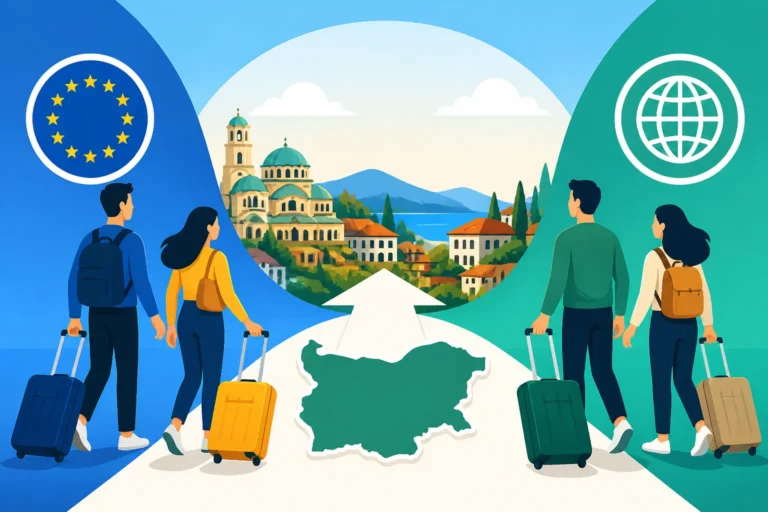
If you hold a passport from an EU member state, the European Economic Area (EEA), or Switzerland, you are in luck – this is unequivocally the fastest and simplest route to live in Bulgaria. You don't need a Type D visa at all! Your right to reside here is protected under EU freedom of movement laws.
The process is incredibly straightforward: You can enter Bulgaria using just your national ID card or passport. Once you've found suitable accommodation, you need to register your address with the local municipality (the Obshtina) and then apply for a Certificate of Continuous Residence at the Migration Directorate within 90 days of your arrival. This certificate confirms your legal right to live and work in Bulgaria. The documents usually required include proof of accommodation (rental contract or property deed), proof of financial means (like a bank statement or an employment contract), and proof of health insurance. The entire process, from arrival to holding your certificate, can often be completed within a few weeks, making it the genuine "fastest route."
Work Permit and Single Permit Route
For non-EU citizens, securing a job offer in Bulgaria is one of the most common and, often, one of the more straightforward pathways to long-term residency. This is typically handled through what's known as the "Single Permit for Work and Residence in Bulgaria." This system streamlines the process, combining both your work authorization and your residence permit application into one submission.
Here's how it generally works:
Your prospective employer in Bulgaria takes the lead. They must apply for a work permit on your behalf with the Bulgarian Employment Agency. This involves proving that no suitable Bulgarian or EU citizen could be found for the role – a labour market test of sorts. Once the Employment Agency approves the work permit, the employer then submits the "Single Permit" application to the Migration Directorate. Only after this Single Permit is approved can you apply for your Type D visa at the Bulgarian embassy in your country. After obtaining your Type D visa and entering Bulgaria, you then visit the local Migration Directorate to get your actual residence card. The "fastest" aspect here comes from your employer handling much of the initial, complex paperwork on the Bulgarian side, potentially reducing your personal stress and application errors. Understanding the rules for foreign workers in Bulgaria is key here, as is knowing how a work permit and single permit work for non-EU workers in Bulgaria.
Self-Employed and Entrepreneur Visa
If you're an entrepreneur with a solid business plan and capital, or a freelancer looking to set up shop, the self-employed or entrepreneur visa can be a viable, and sometimes relatively fast, option. This route allows non-EU citizens to obtain a Type D visa and subsequent residence permit by registering a company or as a self-employed person in Bulgaria.
The primary requirement is often the establishment of a Bulgarian company (most commonly an EOOD or OOD) that creates at least 10 new full-time jobs for Bulgarian citizens. While this sounds like a hefty requirement, there are other, more accessible avenues for entrepreneurs, such as demonstrating significant investment or operating a business that aligns with Bulgaria's economic interests. Registering as a freelancer (Свободна Професия) is another option, though the specific residence permit category for freelancers can be complex and requires a strong business case and sufficient income proof. The speed here depends heavily on your preparedness: having your business plan, initial capital, and all company registration documents in order before you even begin the visa application process. For those looking to go this route, researching how to register a company (EOOD/OOD) as a foreigner in Bulgaria is paramount, as is understanding how to register as a freelancer (Свободна Професия) in Bulgaria.
Retirement Visa
For non-EU citizens of retirement age with a stable income and no intention of working in Bulgaria, the retirement visa is an incredibly popular and often straightforward path. Bulgaria offers a relatively low cost of living and a pleasant climate, making it an attractive retirement destination. This route bypasses the need for employment or business setup, which can simplify the application process considerably.
The main requirements for a retirement visa (Type D, basis "Pensioner") include proof of your pension income (which must be sufficient to support yourself without working), proof of a Bulgarian bank account where your pension will be received, and comprehensive private health insurance covering Bulgaria. You’ll also need proof of accommodation (a rental contract or property deed) in Bulgaria. While it's not "instant," the process is generally well-defined, and once all documents are accurately gathered, it proceeds quite predictably. Many expats find this to be the least stressful non-EU route due to its clear criteria and relatively stable requirements. Ensure you understand How to Buy Private Health Insurance as a Newcomer in Bulgaria as this is a crucial step.
Key Factors Influencing Speed and Success
No matter which "fastest route" you choose, certain universal factors will significantly impact the speed and success of your application. Overlooking any of these can lead to frustrating delays, rejections, and a prolonged stay in bureaucratic limbo. This is where meticulous attention to detail truly pays off.
Document Preparation and Accuracy
This cannot be stressed enough: the single biggest cause of delays and rejections in Bulgarian immigration processes is incomplete or incorrect documentation. Every single document required – from your passport to birth certificates, marriage certificates, bank statements, educational diplomas, and police clearance certificates – must be absolutely perfect. This means:
- Originals and Copies: Always have originals to show and high-quality copies for submission.
- Translations: All foreign documents must be officially translated into Bulgarian by a sworn translator recognized by the Ministry of Foreign Affairs, and then often certified (apostilled). This is a non-negotiable step.
- Apostille/Legalization: Depending on your country of origin and Bulgaria's international agreements, your documents may need an Apostille stamp or full consular legalization. This can take time in your home country, so plan well in advance.
- Validity: Ensure all documents are current and won't expire during the application process. A common mistake is submitting a passport that's due to expire in less than six months.
- Consistency: Names, dates, and addresses must match across all documents. Any discrepancy, even minor, can raise red flags and cause delays.
Treat your document checklist like a sacred text. Double-check everything, then ask someone else to double-check it. Seriously. This level of diligence, though tedious, is your fastest path to approval. For more details, consider reading about understanding document and translation requirements for Bulgaria immigration.
Financial Stability and Health Insurance
Regardless of your chosen path, proving you won't be a burden on the Bulgarian state is paramount. This means demonstrating sufficient financial means to support yourself and, if applicable, your dependents. The exact amount varies by visa category but generally requires a bank statement showing funds equivalent to at least the Bulgarian minimum wage for an extended period (usually 6-12 months).
Equally critical is health insurance. For any long-stay visa or residence permit, comprehensive private health insurance covering Bulgaria is mandatory for non-EU citizens. This isn't just a formality; it's a critical safety net. Look for a reputable international provider like Cigna Global that offers extensive coverage within Bulgaria. Public health insurance (NHIF) typically only becomes available once you are legally employed and making contributions, or for EU citizens who have registered their residency. Until then, private coverage is your responsibility. Make sure your policy meets the minimum coverage requirements set by the Bulgarian authorities – usually a minimum sum insured of €30,000 for medical expenses and repatriation. It’s also wise to research health insurance in Bulgaria: NHIF, private and international options explained.
Professional Assistance and Immigration Lawyers
While some determined individuals navigate the entire process themselves, especially for simpler routes like the EU citizen registration or the retirement visa, engaging professional assistance can dramatically speed things up and reduce stress. Immigration lawyers or specialized agencies in Bulgaria are experts in the nuances of the system. They know the latest requirements, common pitfalls, and can help prepare your dossier faultlessly.
For more complex routes, like the entrepreneur visa or specific work permits, their expertise is invaluable. They can liaise directly with the Bulgarian authorities, advise on the best legal basis for your specific situation, and ensure all documents are compliant. Yes, it's an added cost, but the peace of mind and the potential time saved – avoiding costly rejections and resubmissions – often make it a worthwhile investment. They can effectively help you to apply for a Type D long-stay visa for Bulgaria with minimal errors.
Practical Steps for a Smoother Transition
Getting your visa and residence permit is a huge step, but truly living in Bulgaria involves much more than paperwork. A smooth transition into daily life here requires planning and understanding beyond the immigration office.
Research and Plan Ahead
Before you even book your flight or submit your first document, immerse yourself in research about Bulgaria. Understand the culture, the cost of living, the regions, and daily life. What are the best cities to live in Bulgaria for expats? Where do you envision yourself settling down? Tools like Sirelo can be incredibly helpful for planning your actual move, from understanding logistics to finding reputable moving companies if you’re bringing your life’s possessions. Their resources can help you plan your move, ensuring your physical belongings arrive as smoothly as your legal status. Knowing what to expect regarding everything from groceries to public transport will make your arrival less of a shock and more of a prepared transition.
Consider visiting Bulgaria on a tourist visa first, if possible, to scout out locations, get a feel for the local atmosphere, and even start making connections. This kind of preparatory groundwork can make all the difference when it comes to settling in and feeling at home.
Housing and Initial Setup
Securing appropriate housing is a critical step, often required even for your Type D visa application. You'll need a rental contract or proof of property ownership that is officially notarized. Don't underestimate how long this can take, especially if you're trying to do it remotely. Once you have your accommodation sorted, you'll need to set up utilities – electricity, water, internet, and potentially gas. These processes involve separate applications, and while generally straightforward, they can be time-consuming if you're unfamiliar with the local providers and required documents.
Having a stable home base not only fulfils an immigration requirement but also provides the psychological grounding you need when starting fresh in a new country. It truly helps make the new place feel like "home." For detailed insights, consult The Expat Guide to Setting Up Utilities (Electricity, Water, Gas) in Bulgaria.
Understanding Local Culture and Language
While not a direct step in the "fastest route" for paperwork, embracing the local culture and making an effort to learn at least basic Bulgarian phrases will profoundly impact your integration and overall happiness. Bulgarians are generally warm and welcoming, but navigating daily life – from the market to the doctor's office – becomes infinitely easier with some grasp of the language. Even a simple "Здравейте" (Hello) or "Благодаря" (Thank you) goes a long way.
Understanding local customs, such as queue etiquette (or lack thereof sometimes!), coffee culture, and social norms, helps you feel less like a perpetual foreigner and more like an adopted local. This cultural immersion, though not bureaucratic, is arguably the "fastest route" to truly living and thriving in Bulgaria beyond just having a stamp in your passport.
Here’s a quick overview of some of the long-term residence routes:
| Residence Route Category | Key Requirement | Typical Processing Time (D-Visa + Residence Permit) | Notes |
|---|---|---|---|
| EU/EEA/Swiss Citizen | Proof of accommodation, sufficient funds, health insurance, registration within 90 days. | 2-4 Weeks (Post-Arrival Registration) | No Type D visa needed. Fastest and simplest. |
| Work / Single Permit | Job offer from a Bulgarian employer. Employer applies for work permit first. | 3-6 Months | Employer handles significant portion of initial application. Requires labour market test. |
| Self-Employed / Entrepreneur | Register a Bulgarian company, business plan, proof of capital, potentially create 10 local jobs, or other. | 4-8 Months | Can be faster if all business documents are meticulously prepared. Complex requirements for job creation or specific economic benefit. |
| Retirement (Pensioner) | Proof of sufficient pension income, Bulgarian bank account, private health insurance, accommodation. | 3-5 Months | Popular and well-defined. Requires no intent to work. Financial proof is key. |
| Study Visa | Admission to an accredited Bulgarian educational institution, proof of funds, accommodation, health insurance. | 2-4 Months | Good for younger individuals. Requires active student status. Limited work rights. For more, see how to apply for a student residence permit in Bulgaria. |
| Family Reunification | Relationship with a Bulgarian citizen or permanent resident, proof of funds, accommodation, health insurance. | 4-6 Months | Based on family ties. The Bulgarian resident acts as sponsor. Check how to sponsor your spouse for a residence permit in Bulgaria. |
Disclaimer
The information provided in this guide is for general informational purposes only and does not constitute legal advice. Immigration laws and procedures in Bulgaria can change frequently. Always consult with the official Bulgarian authorities (e.g., the Ministry of Foreign Affairs, Migration Directorate) or a qualified immigration lawyer in Bulgaria for the most current and specific advice pertaining to your individual situation.