How EU and Non-EU Nationals Move to Bulgaria (2027)
The idea of packing up your life and moving to a new country like Bulgaria is thrilling, isn't it? But then the reality hits: the paperwork. For many of us, the maze of visas, residence permits, and governmental requirements feels like a bureaucratic headache designed specifically to test our resolve. This comprehensive guide is here to untangle the complexities, offering clear, empathetic advice on how both EU and non-EU nationals can navigate the official channels and successfully make Bulgaria their new home.
Understanding the Landscape: EU, EEA, Switzerland, and Third-Country Nationals
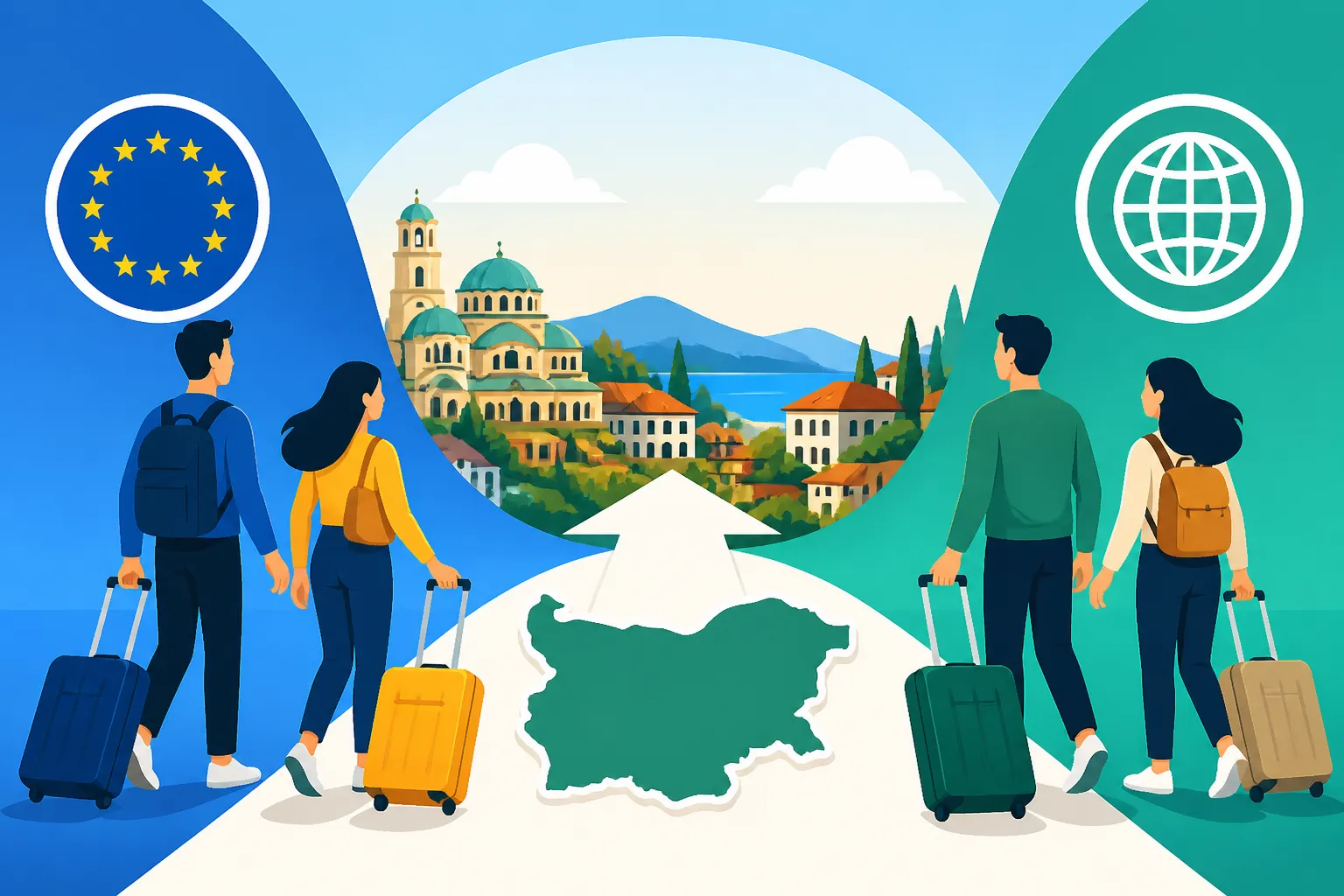
When you decide to move to Bulgaria, the very first, and perhaps most critical, distinction you'll encounter is whether you are an EU, EEA, or Swiss citizen, or what Bulgaria refers to as a "third-country national." This isn't just a minor administrative detail; it fundamentally alters your entire journey, from the documents you need to the offices you'll visit. It’s a reality that can feel a bit unfair if you're on the non-EU side, but understanding these differing legal frameworks from the outset is crucial for a smoother transition.
Why the Distinction Matters: Legal Frameworks and Freedoms
For citizens of the European Union, the European Economic Area (which includes Iceland, Liechtenstein, and Norway), and Switzerland, the path to living in Bulgaria is significantly streamlined thanks to the principle of free movement of persons. This means you don't need a visa to enter Bulgaria, and for stays longer than 90 days, you generally only need to register your presence, rather than apply for a traditional residence permit in the same way a third-country national would. Your rights to work, study, or reside are largely enshrined by EU law, making the initial hurdle much lower. It’s about exercising existing rights rather than seeking permission.
On the flip side, if you're a third-country national – someone from the UK, USA, Canada, Australia, or pretty much anywhere outside the EU/EEA/Switzerland – your journey begins with a much more stringent visa application process. You’ll need a specific Type D long-stay visa just to enter Bulgaria with the intention of residing here long-term, and then, once inside the country, you'll apply for an actual residence permit. This dual-step process often involves proving a substantial purpose for your stay, demonstrating significant financial means, and undergoing thorough background checks. The system is designed to control immigration, and while it might feel cumbersome, it's important to respect the process, as shortcuts simply don't exist and will only lead to greater frustration and potential denial.
The Bulgarian Context: EU Membership and National Laws
Bulgaria joined the European Union in 2007, a move that integrated its national laws with broader EU directives, particularly concerning immigration. While the overarching EU framework dictates the general principles of free movement and certain standards for third-country nationals, each member state retains the right to implement these rules through its own national legislation. In Bulgaria, the primary legal act governing the stay of foreigners is the "Law on Foreigners in the Republic of Bulgaria," alongside various ordinances and regulations.
This means that even for EU citizens, while you don't need a permit, you still need to complete administrative steps to register your presence for a long-term stay. The law specifies what documents you need to provide to prove your right to reside, such as demonstrating sufficient financial resources or being employed. For non-EU citizens, this national law dictates everything from the specific categories of residence permits available (work, study, family, business, etc.) to the exact requirements for each, including the duration of permits and pathways to long-term residency. Understanding that while Bulgaria is part of the EU, it still has its unique national bureaucratic flavour, will save you a lot of grief. It’s not just an EU-wide rulebook; it’s a Bulgarian interpretation.
The Smoother Path: Moving to Bulgaria as an EU/EEA/Swiss Citizen
If you hold a passport from an EU, EEA country, or Switzerland, you're in a much more fortunate position when it comes to moving to Bulgaria. While it's not entirely consequence-free – there are still administrative hoops to jump through – it's certainly a more straightforward and generally less stressful process than for your non-EU counterparts. You won't be battling for a visa, but you will need to formalize your presence if you plan to stay longer than a short holiday.
Initial Entry and the First 90 Days
For EU/EEA/Swiss citizens, entering Bulgaria is as simple as showing your valid national ID card or passport at the border. No visa, no special stamp, no pre-approval needed. You can stay in the country for up to 90 days within any 180-day period without any formal registration. This flexibility is fantastic, as it allows you a generous "trial period" to explore the country, find accommodation, scout out job opportunities, or simply get a feel for whether Bulgaria is truly the right fit for you.
Many expats use these initial three months to secure a rental agreement, perhaps start looking for work, or even begin language classes, all without the immediate pressure of looming immigration deadlines. It's a grace period that allows for a much more organic and less rushed integration. However, it’s crucial to remember that if your intention is to reside in Bulgaria long-term, you must initiate the registration process before these 90 days are up. Overstaying even as an EU citizen can lead to complications, even if the penalties are typically less severe than for third-country nationals.
Registering Your Stay: The "Лична Карта" (Identity Card) Process
If you plan to stay in Bulgaria for more than 90 days, you'll need to register your long-term residence with the local Migration Directorate (Миграция), usually located within the regional police departments. This is where you formalize your presence and apply for your Bulgarian identity card, known as a "Лична Карта" (Lichna Karta) for foreigners. This card essentially serves as your proof of registered residency and makes everyday tasks like opening a bank account or signing up for utilities much easier.
The documents required for this registration typically include:
- Your valid passport or national ID card.
- Proof of address in Bulgaria, usually a rental contract (договор за наем) or a notarised declaration from a property owner. Make sure your name is on the contract.
- Proof of sufficient financial means to support yourself without becoming a burden on the social assistance system. This can be demonstrated through an employment contract, proof of self-employment or company registration, evidence of enrolment in an accredited educational institution, or a bank statement showing adequate funds (often equivalent to the Bulgarian minimum wage for the period of your requested stay).
- Proof of comprehensive health insurance, unless you are covered by another EU member state's social security system (e.g., via an S1 form if you're a pensioner). More on this below.
You’ll typically submit these documents to the Migration Directorate, complete an application form, and pay a small fee. While an "interview" might be part of the process, it’s usually straightforward, mainly confirming your details and purpose of stay. Once approved, you'll receive your ID card, which is valid for five years and serves as your official proof of residence. For a deeper dive into this, you can check out our guide on How EU Citizens Register for Residence in Bulgaria.
Proof of Sufficient Means and Health Insurance
The requirement to demonstrate "sufficient means" is a standard part of EU free movement directives, ensuring that individuals exercising their right to reside in another member state have the resources to support themselves. In Bulgaria, this usually means proving you have funds equivalent to at least the national minimum wage for the duration of your intended stay, often for a full year upfront, deposited in a bank account. For 2026, keep an eye on the official minimum wage figures, but it’s always best to have a little more than the bare minimum to show. If you're employed, your employment contract can serve as proof, and if you're self-employed, your company registration documents and business plan might be requested.
Equally important is comprehensive health insurance. Even as an EU citizen, your European Health Insurance Card (EHIC) is primarily for temporary stays and unforeseen emergencies, not for full-time residency. For long-term residence, you generally need to be enrolled in the Bulgarian National Health Insurance Fund (NHIF) or have private health insurance. If you're employed in Bulgaria, your employer will typically register you for NHIF. If you're self-employed, you'll make contributions yourself. However, for those not working or awaiting registration, private insurance is essential. Companies like Cigna Global offer excellent international private health insurance plans that can provide peace of mind and comprehensive coverage while you navigate the local system or if you prefer private healthcare options. Understanding your obligations here is vital for your well-being and legal compliance. For a comprehensive look at your options, read Health Insurance in Bulgaria: NHIF, Private and International Options Explained.
The More Complex Route: Non-EU/Third-Country National Immigration
For those of you holding passports from countries outside the EU, EEA, or Switzerland, the journey to living in Bulgaria is undeniably more challenging. It’s a two-stage process that begins abroad and continues once you arrive. You’ll need to prepare for a significant amount of paperwork, potential delays, and a firm understanding of Bulgarian immigration law. Patience, meticulous organization, and a good sense of humour will be your best companions.
The Essential Type D Long-Stay Visa: Your First Hurdle
Before you even think about buying a plane ticket with a one-way destination to Bulgaria, you absolutely must secure a Type D long-stay visa. This visa is the gateway for all non-EU nationals intending to reside in Bulgaria for more than 90 days. You cannot simply enter Bulgaria as a tourist and then decide to apply for residency; that pathway is closed. The Type D visa must be applied for and obtained from a Bulgarian embassy or consulate in your home country, or in the country where you hold legal long-term residency. This detail is crucial – you can’t apply for it from just anywhere.
The application for a Type D visa is extensive and requires you to clearly state the purpose of your long-term stay. Common purposes include:
- Work: If you have an employment contract with a Bulgarian company.
- Study: If you’ve been accepted into a Bulgarian educational institution.
- Family Reunification: If you’re joining a Bulgarian citizen or a foreign national with a valid Bulgarian residence permit.
- Business/Entrepreneurship: If you plan to register a company or conduct significant business activity in Bulgaria.
- Retirement: For those with sufficient pension income.
Typical documents required for a Type D visa application generally include:
- A completed visa application form.
- A valid passport with at least six months validity beyond your intended stay and at least two blank pages.
- Recent passport-sized photographs.
- Proof of accommodation in Bulgaria (rental contract, property deed, or notarized declaration).
- Proof of sufficient financial means to support yourself without relying on social assistance (bank statements, pension statements, employment contract).
- Comprehensive travel health insurance valid for all Schengen countries and covering your initial period in Bulgaria, with a minimum coverage of €30,000.
- A clean criminal record certificate from your home country, translated and apostilled.
- Crucially, documents proving the purpose of your stay, such as an employment contract, university acceptance letter, marriage certificate, or company registration documents. These must be correctly translated into Bulgarian and, if applicable, apostilled or super-legalized.
It's vital to understand that the Type D visa itself is not a residence permit. It merely grants you permission to enter Bulgaria and stay for an extended period (usually 3 to 6 months) for the sole purpose of applying for your actual residence permit once you arrive. This means more paperwork awaits you upon arrival. For a step-by-step breakdown, consult our guide on How to Apply for a Type D Long-Stay Visa for Bulgaria.
From Visa to Residence Permit: The In-Country Application
Once you have your precious Type D visa stamped in your passport and you've arrived in Bulgaria, the real work begins. You must apply for your long-term residence permit at the local Migration Directorate (Миграция) before your Type D visa expires. This deadline is absolutely critical; missing it can lead to severe complications, including fines, deportation, or future bans from the Schengen area. While your visa might give you 90 or 180 days, it's generally advised to apply for the residence permit within the first two weeks of your arrival, giving you ample buffer time for any unforeseen issues or additional document requests.
The application process at the Migration Directorate will feel familiar, as you'll be submitting many of the same types of documents you prepared for your Type D visa. However, you'll need fresh copies, new translations of certain documents, and updated proof of address and financial means. For example, if your initial rental contract for the visa covered only a few months, you'll need a new or extended one for the residence permit application. You'll fill out another application form, pay another set of fees, and potentially undergo another interview, which will often be conducted in Bulgarian, so consider bringing a trusted interpreter if your language skills aren't yet up to par.
The Migration Directorate offices can be crowded, and wait times can be long. Be prepared for multiple visits, as it's common to be asked for additional documents or clarifications. My best advice: bring absolutely every single document you can think of, even if it wasn't on the official list, and always bring a few extra copies. This proactive approach can save you numerous trips and much frustration. Successfully navigating this second stage is what truly establishes your legal residency in Bulgaria. You can find more detailed instructions on How to Apply for a Residence Permit from Inside Bulgaria.
Common Pathways to Bulgarian Residence for Non-EU Nationals
Bulgaria offers several categories of residence permits for non-EU nationals, each tailored to a specific purpose. Understanding these pathways is crucial, as you must fit into one of them to be granted long-term residency. It's not a "general residency" permit; it’s always tied to a reason for being here.
Work Permits and the Single Permit System
For many non-EU citizens, securing a job with a Bulgarian employer is the most direct route to residency. Bulgaria operates a "Single Permit" system, which combines the work permit and residence permit into one application and one document. This simplifies things somewhat, as you no longer need separate applications for work and stay. The employer usually initiates this process on your behalf, applying to the Employment Agency and then the Migration Directorate.
The core principle behind a work permit for a non-EU national is that the employer must demonstrate that no suitable Bulgarian or EU/EEA/Swiss candidate could be found for the position. This is often done through labour market tests, where the job is advertised nationally and within the EU. Common requirements include:
- An official job offer and employment contract from a Bulgarian company.
- Proof of your qualifications and professional experience (diplomas, certificates, reference letters).
- The employer’s company registration documents.
For highly qualified professionals, the EU Blue Card offers a potentially faster and more streamlined process. It comes with certain advantages, such as easier family reunification and improved labour market mobility within the EU. To qualify, you generally need a higher education qualification, a job offer with a salary significantly above the average Bulgarian salary, and a contract for at least six months. This pathway acknowledges and seeks to attract skilled talent to Bulgaria. For comprehensive details on this, refer to How to Get a Residence Permit for Work in Bulgaria and Understanding the Single Permit for Work and Residence in Bulgaria.
Student Visas and Permits
Bulgaria is becoming an increasingly popular destination for international students, particularly for medical and technical fields, due to its reputable universities and relatively affordable tuition fees. If you've been accepted into a Bulgarian university or college, you can apply for a student residence permit.
The process begins with obtaining an acceptance letter from a Bulgarian educational institution. With this, you’ll apply for your Type D student visa at a Bulgarian consulate abroad. Once you arrive in Bulgaria, you then apply for your student residence permit at the Migration Directorate. Key documents include:
- Official acceptance letter from the university.
- Proof of payment of tuition fees (or at least the first installment).
- Proof of sufficient financial means to cover living expenses (e.g., bank statement showing funds for at least one academic year).
- Proof of accommodation (university dormitory contract or rental agreement).
- Comprehensive health insurance for the duration of your stay.
Students on a residence permit are often allowed to work part-time, typically up to 20 hours a week, which can help with living costs. It’s important to clarify these work rights with the Migration Directorate or your university’s international office, as regulations can change. For a full breakdown of this pathway, our guide How to Get a Student Visa and Study in Bulgaria: The Full Guide (2027) is invaluable.
Business, Freelance, and Self-Employed Options
Bulgaria has actively tried to attract foreign investment and entrepreneurship due to its favourable tax regime (a flat 10% corporate and personal income tax). There are several routes for those looking to start a business or work independently:
- Company Registration (EOOD/OOD): You can register a company (typically an EOOD for a sole owner or OOD for multiple owners) and then apply for a residence permit based on your role as a company manager. This often requires you to demonstrate that your company will create jobs for Bulgarian citizens or bring significant economic benefit. This category can be complex, involving a business plan and certain capital requirements.
- Freelancer (Свободна Професия): If your profession allows for freelance work (e.g., IT consultant, artist, translator), you can register as a freelancer. To obtain a Type D visa and then a residence permit under this category, you usually need to demonstrate a contract with at least one Bulgarian entity or individual that justifies your long-term stay, along with proof of sufficient funds to support yourself.
- Investment Residence Permit: For those with substantial capital, Bulgaria offers options for residence permits based on significant investment in the country, such as purchasing property, investing in government bonds, or creating a certain number of jobs. These are typically higher-threshold options and often involve legal consultation to ensure compliance.
Each of these entrepreneurial paths has distinct requirements and involves extensive documentation related to your business plan, finances, and legal registration. It's highly recommended to consult with a local lawyer specializing in immigration and commercial law for these routes. More details can be found in Self-Employment in Bulgaria: Registering a Business and Going Independent (2027).
Family Reunification and Marriage-Based Permits
If you are joining a Bulgarian citizen or a foreign national who already holds a valid Bulgarian residence permit (or EU long-term resident status), you can apply for a residence permit under family reunification. This pathway is intended to keep families together, but like all immigration processes, it requires diligent documentation.
Key aspects of this category include:
- Relationship Proof: For spouses, a marriage certificate (translated and apostilled/legalized) is essential. For children, birth certificates.
- Sponsor's Status: The family member you are joining (the "sponsor") must have a stable legal status in Bulgaria and often needs to prove sufficient income and suitable accommodation for the entire family.
- Shared Accommodation: You will typically need to demonstrate that you will be living together, often through a shared rental contract or property deed.
The initial application again begins with a Type D visa application from outside Bulgaria, followed by the residence permit application at the Migration Directorate upon arrival. While this category addresses the emotional need to be with loved ones, the administrative rigor is no less demanding. You will need to present all personal documents, proof of your relationship, and evidence of the sponsor's ability to support you financially. Our guide on Family and Dependent Residence Permits in Bulgaria: Bringing Your Loved Ones (2027) provides in-depth information.
Navigating the Bureaucracy: Tips, Tricks, and Common Pitfalls
The Bulgarian administrative system can feel like a labyrinth, especially for newcomers accustomed to different governmental processes. From meticulously preparing documents to understanding the nuanced expectations of officials, there are many opportunities for missteps. Being prepared for the bureaucratic dance can significantly reduce stress and speed up your application.
Document Preparation: Translations, Apostilles, and Notarization
This is arguably the most critical aspect of any Bulgarian immigration application. Even a tiny error or omission can lead to delays or outright rejection. Every document that is not originally in Bulgarian must be officially translated. This isn't a job for Google Translate or a friend who speaks Bulgarian; it requires a certified translator who is registered with the Bulgarian Ministry of Foreign Affairs. These "sworn translators" will translate your documents and stamp them, attesting to the accuracy of the translation.
Beyond translation, many foreign-issued documents, such as birth certificates, marriage certificates, or criminal record checks, will require an apostille. An apostille is a certification issued by a government that authenticates the origin of a public document, making it valid for international use under the Hague Apostille Convention. If your home country is not part of the Hague Convention, your documents might require "super-legalization" through a more complex diplomatic channel, involving your country's Ministry of Foreign Affairs and the Bulgarian embassy there. Furthermore, some documents, or copies of them, may need to be notarized by a Bulgarian public notary. Always ask for clear instructions on these requirements, as they are non-negotiable. Don't assume anything; confirm every single detail with the Bulgarian embassy or the Migration Directorate directly.
The Migration Directorate (Миграция): Your New Best Friend (or Nemesis)
The Migration Directorate, or Миграция, is the main governmental body you'll be interacting with for your residence permit applications and renewals. It's the epicentre of your immigration journey, and managing expectations here is key. While the officials are generally helpful, the system can be slow, sometimes inconsistent, and often requires multiple visits.
Prepare for long queues, especially if you arrive later in the day. It’s always a good idea to arrive before opening hours. Bring every document you think might be remotely relevant, even if it wasn't on the official list, and always have several photocopies of everything. It's not uncommon to be asked for a document you thought was unnecessary, or to discover that a copy needs to be notarized on the spot. Patience is a virtue here, as is politeness. If your Bulgarian isn't strong, consider bringing a Bulgarian-speaking friend or, better yet, hiring a local immigration lawyer who can communicate clearly and advocate on your behalf. They often know the specific nuances and requirements that aren't always explicitly written down. Remember, the staff deal with countless applications daily, and a clear, well-organized application with all necessary papers will always be appreciated. For a detailed guide on navigating this key institution, see Understanding the Role of the Migration Directorate in Bulgaria.
Financial Proof and Accommodation
These two elements are foundational to almost every long-term residence application in Bulgaria, regardless of your specific category. The Bulgarian authorities want to ensure that you will not become a financial burden on the state and that you have a stable, legal place to live.
For financial proof, you will typically need a Bulgarian bank account (or sometimes a foreign one, but a local one is almost always preferred for proof of funds). The bank statement must show sufficient funds, usually equivalent to the Bulgarian minimum wage for the period of your requested residence (e.g., 12 months for a one-year permit). For 2026, keep in mind this figure will likely be higher than previous years. It's prudent to have a bit more than the absolute minimum required to avoid any questions. This isn't just a formality; it's a genuine check on your solvency.
As for accommodation, you need a valid, registered address. This usually means a notarized rental contract (договор за наем) in your name, or a declaration from a property owner (again, notarized) stating that you live at their address. If you’ve purchased property, then your title deed (нотариален акт) will serve as proof. Without a confirmed address, your application simply won't proceed. Make sure these documents are fresh and cover your entire requested residence period. These basic proofs of stability are non-negotiable cornerstones of your application. For a broader understanding of living costs, which will impact your financial proof, you might find our article How Much Is the Cost of Living in Bulgaria for Expats? helpful.
Settling In and Long-Term Residency
Congratulations! You’ve got your residence permit in hand. The initial, most challenging hurdles are behind you. But obtaining your permit is just the beginning of your life in Bulgaria. There are still practical steps to take to truly settle in, and crucially, you'll need to understand the path to maintaining and eventually upgrading your residency status.
Initial Steps After Permit Approval: Bank Accounts and Registration
With your residence permit (лична карта за чужденец), many everyday tasks suddenly become much easier. One of the first things you'll want to do is open a proper bank account with a Bulgarian bank. While it's sometimes possible to open a basic account as a non-resident with just a passport, having your residence permit significantly streamlines the process and gives you access to more banking services. Major banks like UniCredit Bulbank, DSK Bank, and Raiffeisenbank are popular choices for expats. You’ll need your residence permit and often a BULSTAT number (a unique identification code for foreigners), which you usually get automatically with your residence permit. A local bank account is essential for receiving salary, paying bills, and generally managing your finances in Bulgaria. For a comprehensive guide on this, check out The Expat Guide to Opening a Bank Account in Bulgaria.
Beyond banking, you’ll want to sort out your utilities if you haven't already. This includes setting up your electricity, water, internet, and mobile phone services. Your residence permit will be key here for signing contracts with providers like Vivacom, A1, and Yettel. Don't underestimate the small victories of getting your internet installed or your phone connected; these are the threads that weave you into the fabric of daily life. Our guide The Expat Guide to Setting Up Utilities (Electricity, Water, Gas) in Bulgaria offers a detailed walkthrough.
Renewing Your Residence Permit: Don't Miss the Deadline!
Your initial temporary residence permit will usually be valid for one year (or for the duration of your study program). It is absolutely paramount that you renew it before it expires. The Migration Directorate typically advises applying for renewal 1-2 months prior to the expiry date. Leaving it to the last minute is a recipe for stress, potential fines, and even a lapse in your legal status.
The renewal process will feel very similar to your initial application. You'll need to submit updated versions of your documents:
- Your current residence permit.
- Your valid passport.
- Updated proof of accommodation (current rental contract).
- Updated proof of financial means (recent bank statements, current employment contract, or business registration).
- Proof of valid health insurance for the upcoming period.
- The completed renewal application form and relevant fees.
Any changes to your circumstances, such as a new job, a new address, or a change in marital status, should be reflected in your renewal application and supported by new documentation. Staying on top of renewal deadlines is a continuous responsibility of being a long-term resident in Bulgaria. For all the specifics, refer to How to Renew Your Residence Permit in Bulgaria.
Pathways to Long-Term and Permanent Residence
Successfully living in Bulgaria on temporary residence permits for a sustained period opens the door to more stable statuses: long-term and permanent residence. These statuses offer greater security, fewer bureaucratic hurdles, and often more extensive rights.
-
Long-Term Residence: After five continuous years of temporary residence, you can apply for long-term residence (Продължително пребиваване). This status is generally valid for five years and is automatically renewable. The key here is "continuous" residence, meaning you haven't spent excessive time outside Bulgaria during those five years (there are specific limits on absences, usually no more than 10 months in total during the five years, and no more than 6 consecutive months). The application will require comprehensive proof of your stable income, address, and continuous legal stay.
-
Permanent Residence: This is the most secure status short of citizenship. For most non-EU nationals, permanent residence (Постоянно пребиваване) can also be obtained after five years of continuous legal temporary residence, meeting similar requirements to long-term residence regarding absences. However, certain categories, such as individuals of Bulgarian origin or those with specific investment criteria, may qualify for permanent residence sooner or under different conditions. Permanent residence grants you almost all the rights of a Bulgarian citizen, except for voting in national elections and holding a Bulgarian passport. It also streamlines the path to potential Bulgarian citizenship by naturalization in the future.
These advanced statuses require thorough documentation to prove your continuous legal stay and stable integration into Bulgarian society. It's a significant milestone that offers peace of mind and significantly reduces the administrative burden over time. To fully understand these critical stages, be sure to read The Complete Guide to Long-Term and Permanent Residence in Bulgaria (2027) and How to Move from a Residence Permit to Permanent Residence in Bulgaria.
Moving Your Life and Belongings to Bulgaria
Once the legalities of visas and residence permits are (mostly) sorted, the practical reality of relocating your entire life becomes the next big project. Moving internationally is a huge undertaking, filled with logistical challenges, emotional goodbyes, and the excitement of a fresh start.
Planning Your Relocation: Logistics and Essentials
The act of physically moving your belongings to Bulgaria needs careful planning. This is where professional moving services truly shine. Whether you're shipping a few boxes or an entire household of furniture, an international moving company can manage the complexities of packing, customs declarations, shipping, and delivery. Websites like Sirelo are incredibly useful for comparing quotes from various reputable international movers, helping you find the best balance between cost and service. It saves you the headache of coordinating across borders and navigating customs regulations, which can be particularly tricky.
Beyond furniture, consider what other essentials you’ll bring. Are you bringing your car? That involves its own set of registration and import rules. Do you have pets? Pet relocation requires specific veterinary certificates, vaccinations, and sometimes even quarantine periods. Bulgaria has clear rules for importing pets, and it’s best to get this sorted well in advance. Think about what you truly need and what you can buy locally. Sometimes, it’s cheaper and less stressful to purchase new items upon arrival than to ship old ones across continents.
Financial Considerations: Budgeting for the Move
Moving to Bulgaria involves a cascade of costs that extend beyond just visa fees. Budgeting accurately for your relocation is essential to avoid financial strain during your initial months. Here's a rundown of potential expenses:
- Visa and Permit Fees: As discussed, these are mandatory and often involve multiple payments (e.g., Type D visa fee, residence permit application fee, card issuance fee).
- Document Preparation: This includes significant costs for certified translations, apostilles, and notarization. Depending on the number of documents, this can add up quickly.
- Travel Costs: Flights, initial temporary accommodation (hotel or Airbnb), and transportation upon arrival.
- Health Insurance: If you're not yet covered by the NHIF, you'll need private health insurance. As mentioned earlier, providers like Cigna Global offer comprehensive plans, but you need to budget for the premiums.
- Shipping and Relocation Services: Costs associated with moving companies, customs duties, and potentially storage.
- Initial Living Expenses: A buffer fund for groceries, local transport, setting up utilities (deposits, connection fees), and unforeseen expenses during your first few months.
- Furnishing Costs: If you're renting an unfurnished apartment, you'll need to budget for furniture, appliances, and household items.
Creating a detailed spreadsheet of all these potential costs will give you a clear picture and help you save effectively. Having a financial cushion for unexpected expenses is always a wise decision when moving to a new country.
Disclaimer
The information provided in this guide is intended for general informational purposes only and does not constitute legal, financial, or immigration advice. While we strive to provide accurate and up-to-date information, laws and regulations in Bulgaria, particularly concerning immigration, can change frequently. We strongly recommend consulting with the official Bulgarian authorities (e.g., the Ministry of Foreign Affairs, Migration Directorate), a qualified immigration lawyer, or a financial advisor for advice tailored to your specific situation. Reliance on any information provided in this article is solely at your own risk.