What Is the Difference Between a Residence Permit and EU Registration in Bulgaria?
Moving to Bulgaria is exciting, but let's be honest, the immigration jargon can be a real headache. You hear 'residence permit' and 'EU registration' thrown around, and if you're not careful, it all just blends into one confusing mess. Trust me, I've been there, staring at official documents written in Bulgarian, wondering if I'm even applying for the right thing! This guide is here to untangle that knot for you, explaining precisely who needs what and why, so you can navigate the Bulgarian bureaucracy with a bit more confidence.
The Core Difference: Who Needs What?
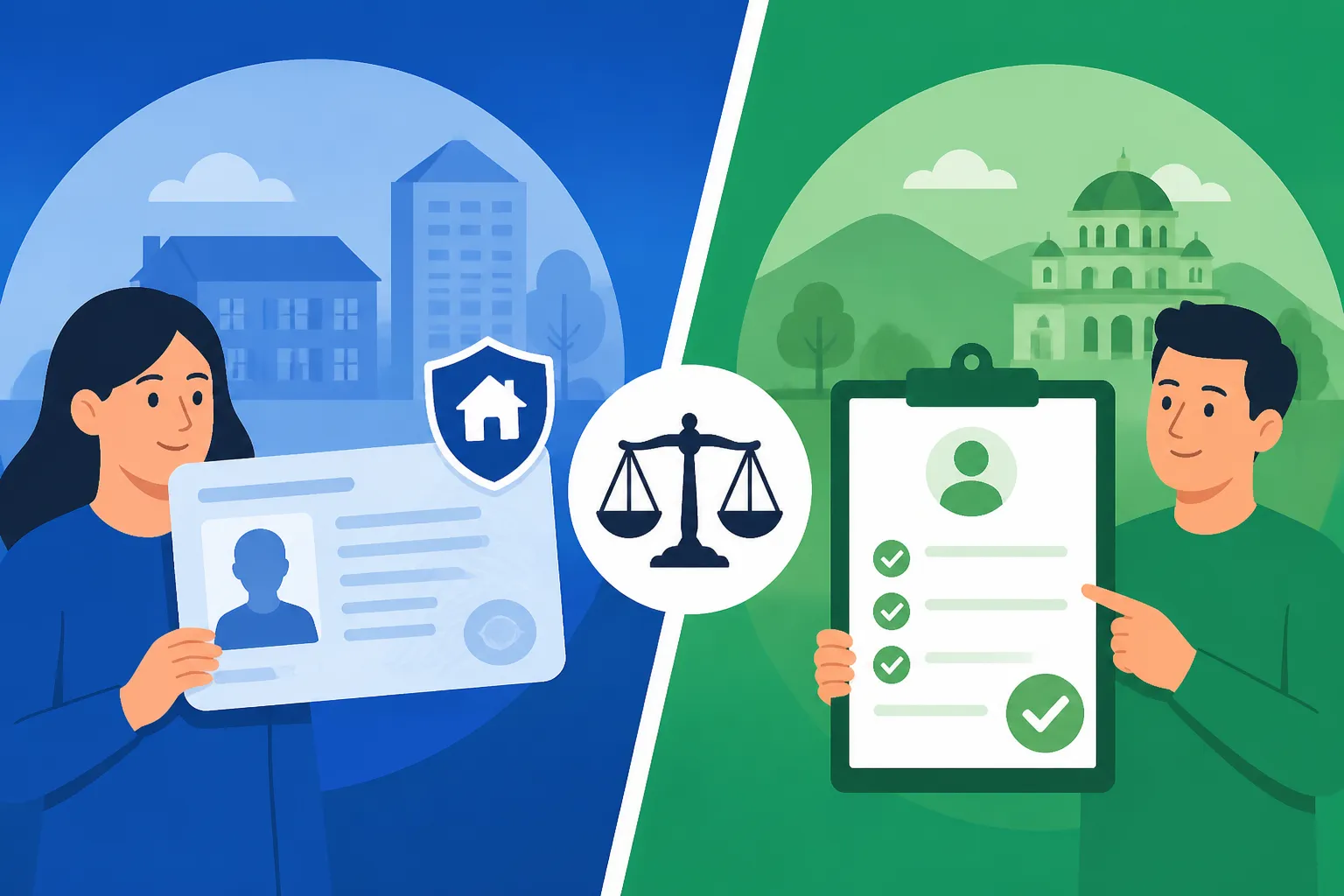
The fundamental distinction between a "residence permit" and "EU registration" in Bulgaria isn't just about semantics; it's about your legal standing and the entire process you'll go through to establish yourself here. It boils down to your citizenship and, crucially, your pre-existing right to live within the European Union. Many newcomers trip up right at this first hurdle, assuming all foreigners follow the same path, which simply isn't the case.
EU/EEA/Swiss Citizens and Their "Registration"
If you hold citizenship from an EU member state, the European Economic Area (EEA – Iceland, Liechtenstein, Norway), or Switzerland, your path to residing in Bulgaria is rooted in the principle of free movement. This means you generally have a right to live and work in Bulgaria, not merely a permission that can be granted or denied based on a long list of criteria. What you need to do is "register" your presence with the Bulgarian authorities. This isn't an application for a permit in the traditional sense, but rather a formal declaration and acknowledgement of your existing right.
Think of it this way: you already have the key to the EU club; Bulgaria just wants to know you've moved into their specific part of the neighbourhood. This registration process is relatively straightforward, designed to track who's living in the country for statistical and administrative purposes, and to ensure you meet basic conditions like having sufficient funds and health insurance. It solidifies your presence, granting you a personal identification number (ЛНЧ – Ličen Nomernik na Chujdenets) and a Bulgarian residence card, which acts as your official ID here.
Non-EU Citizens and the Residence Permit Requirement
For those of us hailing from outside the EU/EEA/Switzerland – think Americans, Canadians, Australians, Brits post-Brexit, and so on – the journey is entirely different. You do not possess the automatic right to reside in Bulgaria. Instead, you need to apply for explicit "permission" to live here, which comes in the form of a residence permit. This is a much more involved, multi-stage process that requires significant documentation and often a good deal of patience.
Your first critical step, almost without exception, will be obtaining a Type D (long-stay) visa before you even set foot in Bulgaria, typically from a Bulgarian embassy or consulate in your home country or country of legal residence. This visa is your gateway, granting you initial entry and the right to apply for the actual residence permit once you're on Bulgarian soil. Without that Type D visa, you’re stuck; you cannot simply arrive as a tourist and then apply for long-term residency. This structured approach means proving your legitimate reason for wanting to reside here from the very outset.
EU/EEA/Swiss Registration: Simplicity, But Still a Process
Even though it’s called "registration" and sounds less daunting than a "permit," there's still a specific process to follow for EU, EEA, and Swiss citizens. It's not a walk in the park, but it is certainly less bureaucratic than the non-EU route. The key is to understand the steps, gather your documents meticulously, and be prepared for a bit of back and forth, as is common with any administrative task in Bulgaria.
The Process for EU Citizens: Steps and Documents
Once you've arrived in Bulgaria, you have a grace period of up to three months to formally register your residence. While you might feel like settling in first, I strongly advise getting this sorted sooner rather than later. Delaying can lead to complications, and you'll need this registration for pretty much everything else, like opening a bank account or registering with a local doctor. The main office you'll be dealing with is the Migration Directorate (Дирекция „Миграция“) under the Ministry of Interior, or sometimes an equivalent at your local municipal administration (Община).
Here's a general breakdown of the steps and documents:
- Proof of Address: You'll need a valid rental contract (наемствен договор) or proof of property ownership (нотариален акт) in your name. Make sure your contract is properly registered with the National Revenue Agency (NRA) by your landlord – this is a common oversight that can cause delays. A simple, unregistered contract won't cut it.
- Proof of Funds: You need to demonstrate that you won't be a burden on the state. This usually means a bank statement from a Bulgarian bank showing sufficient funds. What counts as "sufficient" can vary, but generally, having at least a few months' worth of the minimum wage (for 2026, roughly 933 BGN/month or around €477) in your account is a good starting point. If you're employed, your employment contract (трудов договор) will suffice, showing your salary.
- Health Insurance: This is mandatory. If you’re employed in Bulgaria, your employer will register you for the National Health Insurance Fund (NHIF). If you’re self-employed or not working, you'll need to pay your own NHIF contributions or provide proof of private health insurance. While an EHIC can cover emergencies, for long-term residency, you'll need local coverage or comprehensive private cover like that offered by providers such as Cigna Global, especially if you want broader access to private clinics. Check out our guide on Health Insurance in Bulgaria: NHIF, Private and International Options Explained for more details.
- Valid Passport or ID: The original and a photocopy are always required.
- Application Form: You'll fill out a form at the Migration Directorate. While there might be English speakers available, it’s often best to bring someone who speaks Bulgarian, or have the form translated beforehand.
- Administrative Fee: There's a small fee to pay, usually at a bank within the Migration office or a nearby post office.
- Supporting Documents: If you're bringing family, you'll need marriage certificates, birth certificates, etc., all officially translated and apostilled if they're not from a country that's a party to relevant international agreements.
Once approved, you'll receive a certificate of permanent address and, shortly after, your plastic residence card (лична карта). This card is usually valid for five years, at which point you can apply for permanent residence.
Rights and Responsibilities of Registered EU Citizens
Once you've completed your registration, you’ll have largely the same rights and responsibilities as a Bulgarian citizen, with the exception of voting in national elections (though you can vote in local and European elections). This means:
- Freedom of Movement: You can enter and exit Bulgaria freely and travel within the Schengen area without needing a separate visa, even though Bulgaria isn't fully in Schengen yet for land borders.
- Access to Services: You gain full access to the Bulgarian public healthcare system, provided you are registered with the NHIF and a GP. Our guide, How to Register with the NHIF and a GP in Bulgaria (2027), explains this in detail. You can also enrol children in schools and access other public services.
- Right to Work and Study: You can freely seek employment, start a business, or enrol in educational institutions without needing additional work or study permits.
- Responsibility to Inform: It's your responsibility to inform the Migration Directorate of any changes to your address or marital status. Ignoring these updates can lead to issues down the line.
- Path to Permanent Residence: After five years of continuous legal residence, you become eligible to apply for permanent residence, and eventually, Bulgarian citizenship. This is a significant milestone for many expats seeking long-term stability.
Non-EU Residence Permits: A Multi-Step Journey
For non-EU citizens, the process is markedly more complex and requires careful planning. It involves two main stages: securing a Type D visa from outside Bulgaria, and then applying for the actual temporary residence permit once you're in the country. Missing a single step or document can send you back to square one, so attention to detail is paramount.
Understanding the Bulgarian Long-Stay (Type D) Visa
The Type D visa is your golden ticket. You absolutely cannot skip this step if you intend to reside in Bulgaria long-term. This visa must be applied for at a Bulgarian embassy or consulate in your country of origin or legal residence before you travel to Bulgaria. This is where many non-EU hopefuls stumble, thinking they can simply enter as a tourist and switch their status. Don't make that mistake!
The Type D visa application is essentially your first major hurdle. You’ll need to prove your intent to reside, your financial stability, and your clean record. Typical requirements include:
- Valid Passport: Must be valid for at least six months beyond your intended stay.
- Criminal Record Check: An apostilled document from your home country, translated into Bulgarian. This proves you’re not a wanted criminal.
- Proof of Accommodation: A notarized rental contract or title deed for property in Bulgaria.
- Proof of Sufficient Funds: A bank statement, ideally from a Bulgarian bank (though an international one might be accepted for the initial visa), showing you have enough money to support yourself. This needs to be significantly more than the minimum wage, generally covering at least a year's living expenses.
- Comprehensive Health Insurance: This is non-negotiable. You need a robust health insurance policy that covers you for a minimum of one year and is valid in Bulgaria, with coverage usually starting from €30,000. Many non-EU expats choose international providers like Cigna Global because their plans are designed to meet these exact requirements and offer excellent coverage. You can learn more about this in our guide, How Do I Get Health Insurance for a Bulgaria Residence Permit?.
- Reason for Stay: This is the most crucial part. You need concrete documentation to prove why you need a long-stay visa. This could be a work contract (for a Single Permit application), an acceptance letter from a Bulgarian university, proof of marriage to an EU/Bulgarian citizen, a detailed business plan for self-employment, or evidence of significant investment. Check out How Do I Apply for a Type D Visa for Bulgaria? for more specifics.
You'll attend an interview at the embassy/consulate, so be prepared to articulate your reasons for moving to Bulgaria clearly. The processing time can vary widely, often taking several weeks, so apply well in advance of your planned move.
Applying for Your Temporary Residence Permit
Once your Type D visa is granted and you've arrived in Bulgaria, the clock starts ticking. You usually have 90 days from your entry date to apply for your actual temporary residence permit at the local Migration Directorate. This is the stage where your Type D visa transitions into a physical Bulgarian residence card.
The documents required are very similar to those for the Type D visa, but they need to be updated and localized:
- Your Valid Type D Visa and Passport.
- Updated Proof of Address: Ensure your rental contract or property deed is current and legally sound.
- Bulgarian Bank Statement: Showing sufficient funds in a Bulgarian bank account.
- Bulgarian Health Insurance: While your international policy may have covered the Type D, you might need to show proof of local health insurance, either through NHIF contributions (if employed or self-employed) or a local private insurer.
- Supporting Documents for Your Basis of Stay: This is vital. If it's a work permit, you'll need your employer's full documentation. For study, your university enrollment confirmation. For family, updated marriage or birth certificates.
- Application Form and Fees: The standard administrative steps.
If all goes well, you’ll receive your temporary residence card (лична карта за пребиваване), which is typically valid for 6 or 12 months, depending on your grounds for residency. This card must be renewed annually for the first five years. It's an ongoing process, and missing renewal deadlines can lead to fines or even deportation, so mark your calendar! Our guide, The Expat Guide to Getting a Residence Permit in Bulgaria (2027), offers a more holistic view of this.
Paths to Residency: Work, Study, Family, Investment
The "reason for stay" on your Type D visa and subsequent residence permit application is critical. Bulgaria offers several common avenues for non-EU citizens to gain residence:
- Work Permit/Single Permit: This is the most common route for many. An employer in Bulgaria must sponsor you, demonstrating that no suitable Bulgarian or EU candidate could be found for the role. This leads to a "Single Permit" for work and residence. You can find detailed information in How to Get a Residence Permit for Work in Bulgaria.
- Study Permit: If you're accepted into a Bulgarian university or educational institution, you can apply for a student residence permit. This requires proof of enrolment and sufficient funds for your studies and living expenses. We cover this in depth in How to Apply for a Student Residence Permit in Bulgaria.
- Family Reunification: If you're married to a Bulgarian citizen or an EU citizen already residing in Bulgaria, you can apply for a family reunification permit. This involves proving your relationship and that the sponsor can support you.
- Self-Employed/Business Owner: This path requires you to register a company in Bulgaria and demonstrate a viable business plan that will contribute to the local economy. There are specific requirements regarding capital investment and job creation.
- Investment: For those with substantial capital, Bulgaria offers investment-based residency options, though these typically involve significant financial commitments. Our guide Understanding Bulgarian Residence Permits: Work, Study and Investment (2027) delves into these various paths.
Each path has its own specific set of additional documents and criteria, which you’ll need to meet rigorously. Flexibility and interpretation by the officials can vary, so always aim to over-prepare rather than under-prepare.
Key Differences in Practice: Rights, Duration, and Bureaucracy
While both processes ultimately lead to you living legally in Bulgaria, the journey and the nuances of your status are quite distinct. It’s not just a matter of different paperwork; it’s about different levels of inherent rights, the length of validity, and the recurring bureaucratic hurdles you'll face.
Freedom of Movement vs. Controlled Stay
For EU/EEA/Swiss citizens, your registration confirms your pre-existing right to freedom of movement. This means once you have your Bulgarian residence card, you can move, work, and reside in other EU member states (under their respective registration rules) with relative ease. Your status in Bulgaria is fundamentally tied to your EU citizenship. Even if your Bulgarian card expires, your right to be in the EU, and therefore Bulgaria, remains.
For non-EU citizens, your residence permit grants you permission to stay in Bulgaria for a specific purpose and duration. While your Bulgarian residence card allows you to travel within the Schengen area for short periods (up to 90 days in any 180-day period, once Bulgaria fully joins Schengen), your primary right to reside is tied directly to Bulgaria. If you lose the grounds for your permit (e.g., you quit your job or drop out of university), your right to reside can be revoked. You are monitored more closely, and any significant life changes must be reported to the Migration Directorate, as they can affect the validity of your permit.
Paperwork and Renewal Realities
The ongoing administrative burden also varies significantly.
EU/EEA/Swiss citizens typically receive a residence card valid for five years. After this period, and assuming continuous residence, you can apply for permanent residence, which usually leads to a card valid for another five years, but without the need to continuously prove your means of subsistence or address quite as rigorously. The path to permanent residence is more straightforward and less document-heavy once the initial registration is complete.
Non-EU citizens, however, face annual renewals for their temporary residence permits. This means every 6-12 months, you'll be back at the Migration Directorate, providing updated bank statements, rental contracts, health insurance, and proof that your grounds for residency are still valid. This can be exhausting and frustrating, feeling like a perpetual state of proving yourself. After five years of continuous temporary residence, you then become eligible to apply for long-term residence, and a year after that, permanent residence. The process to transition from temporary to long-term and then permanent residence for non-EU citizens is much more structured and demanding, as explained in our guide How to Move from a Residence Permit to Permanent Residence in Bulgaria. The bureaucracy involved in these renewals can be a significant source of stress for many expats.
| Feature | EU/EEA/Swiss Citizens | Non-EU Citizens |
|---|---|---|
| Legal Basis | Right to Free Movement (EU Law) | Permission to Reside (Bulgarian National Law) |
| Initial Step | Register at Migration Directorate within 3 months of arrival | Apply for Type D (long-stay) Visa from outside Bulgaria |
| Document Issued | Certificate of Permanent Address / Residence Card (ЛК) | Temporary Residence Permit Card (лична карта за пребиваване) |
| Required Before Arriving | None (just ID) | Type D Visa (from Bulgarian embassy/consulate abroad) |
| Key Requirement | Proof of sufficient funds/employment, health insurance, address | Reason for stay (work, study, family, business, investment), proof of funds, accommodation, comprehensive health insurance, clear criminal record |
| Duration | Initially for 5 years (leading to permanent residency) | Typically 6-12 months, renewable annually |
| Path to Permanent Residency | After 5 years of continuous legal residence | After 5 years of continuous temporary residence, then application for long-term or permanent residence |
| Common Frustrations | Language barrier, sometimes inconsistent information at local offices | Lengthy process, strict document requirements, bureaucracy, potentially higher fees |
Navigating the System: Tips for Both Paths
Regardless of whether you're registering as an EU citizen or applying for a residence permit as a non-EU national, navigating the Bulgarian administrative system can feel like a labyrinth. A little preparation and a good dose of patience will go a long way in making the experience smoother.
Essential Documents and What to Expect at Migration
My number one piece of advice, learned through countless hours spent in government offices here: always have originals and at least two sets of photocopies of every single document. Seriously, even if they say they only need one, bring two. And have digital copies on your phone or in the cloud. You never know when they might ask for an extra copy of something you thought was irrelevant.
Any document not in Bulgarian will need an official, notarized translation. This is not optional. Get it done by a certified translator in Bulgaria, as translations from outside the country might not be accepted. Similarly, documents from outside Bulgaria (like birth certificates or criminal records) often need an apostille – a special certification that authenticates the document for international use. Without it, your documents will be rejected outright.
When you visit the Migration Directorate, prepare for a wait. Bring a book, a fully charged phone, or a friend for company. Office hours can be limited, and queues can be long. While some larger city offices, like those in Sofia or Plovdiv, might have English-speaking staff, it’s not guaranteed. Having a Bulgarian speaker with you, even if it's just a friend, can significantly reduce stress and miscommunication. Remember to be polite but firm; sometimes a gentle nudge or a rephrasing of your question can get you the answer you need. Some expats even opt for immigration lawyers to help, especially with the more complex non-EU applications. If you’re also moving your household goods internationally, services like Sirelo can help connect you with reputable moving companies who understand the logistics of an international relocation.
Health Insurance and Other Practicalities
Health insurance is a non-negotiable requirement for both EU and non-EU citizens for long-term residency.
For EU citizens, your European Health Insurance Card (EHIC) covers medically necessary treatment during a temporary stay, but for proper long-term residency, you'll need to integrate into Bulgaria's National Health Insurance Fund (NHIF) system, which typically happens through employment or by making voluntary contributions. Alternatively, some choose private health insurance for broader coverage or shorter wait times. Dive into The Complete Guide to Healthcare in Bulgaria for Expats (2027) for a full picture.
For non-EU citizens, comprehensive private health insurance is usually required for both your Type D visa and your temporary residence permit application. This policy needs to meet specific Bulgarian requirements, including a minimum coverage amount. As I mentioned earlier, providers like Cigna Global are often chosen for their expat-focused plans that meet these criteria. Once you have your residence permit, you'll still need to ensure you maintain valid health insurance, either through private means or by contributing to the NHIF if you become employed. How Do I Get Health Insurance for a Bulgaria Residence Permit? can walk you through the specifics.
Beyond health insurance, remember that establishing your legal address and opening a local bank account are critical. You can't prove funds without a bank account, and you can't get official mail without a registered address. Our guide on How to Open a Bank Account at a Bulgarian Bank as a Foreigner is a must-read for this step. Getting these foundational elements in place correctly makes all subsequent administrative tasks much smoother.
Disclaimer
The information provided in this guide is for general informational purposes only and does not constitute legal, financial, or immigration advice. While we strive to keep the information up-to-date and accurate, laws and regulations in Bulgaria, especially regarding immigration and residency, can change frequently. It is highly recommended that you consult with a qualified legal professional, immigration expert, or the official Bulgarian authorities (such as the Ministry of Interior's Migration Directorate or a Bulgarian embassy/consulate) for advice tailored to your specific situation before making any decisions related to your relocation or residency in Bulgaria.