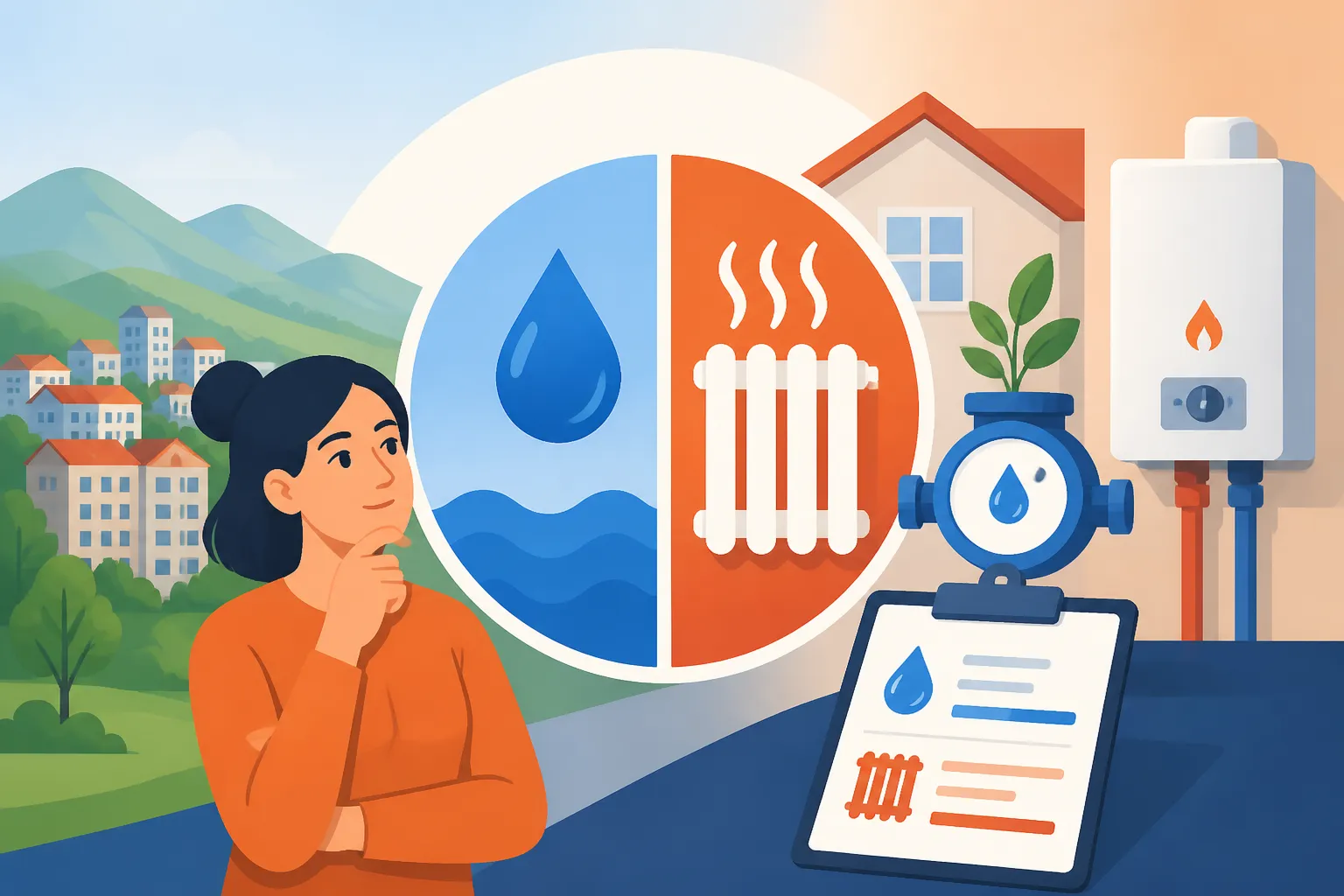
Understanding Water and Heating Bills in Bulgaria
Ah, the infamous Bulgarian utility bills! If you've just moved here, or even if you've been here a while and still feel a cold sweat break out when that envelope arrives, you're not alone. Figuring out how water and heating bills work in Bulgaria can feel like trying to decipher an ancient scroll written in a language you don't quite grasp, even when it's in Bulgarian. This isn't just about paying for what you use; it's about navigating a deeply rooted system with its own unique quirks, especially when it comes to shared building costs. But don't despair, because this comprehensive guide is here to demystify the process, validate your frustrations, and arm you with the knowledge to conquer your Bulgarian water and heating statements.
The Basics of Bulgarian Utility Billing: A Reality Check
When you first encounter a Bulgarian utility bill, particularly for water and heating, it can be quite a shock. They often look different from what you might be used to in other countries, and the sheer number of line items can be overwhelming. This isn't just about consumption; it's about the infrastructure, the communal living arrangements, and a history of specific billing practices that take some getting used to.
Decoding Your Monthly Statements
Let's be frank, those bills can be dense. They're usually printed on thin paper, often in black and white, and packed with columns and numbers. For electricity, you’ll typically deal with major regional providers like EVN, Energo-Pro, or CEZ (now part of Eurohold, operating under the name Electrohold). For water, it’s often a city-specific provider, like Sofia Voda in the capital, or similar municipal companies elsewhere. Heating, especially central heating, usually comes from "Toplofikatsia" – again, specific to your city (e.g., Toplofikatsia Sofia). Each bill will have your customer number (абонатен номер), the billing period, your address, and then a breakdown of charges. You'll see things like "консумирана вода" (consumed water) or "топлинна енергия" (thermal energy).
The challenge often lies in the details. You might see charges for "отвеждане на отпадни води" (wastewater disposal) or "пречистване на отпадни води" (wastewater treatment) that are separate from your actual water consumption. For heating, it gets even more complicated, with separate lines for "топлина за отопление" (heat for heating) and "топлина за сградна инсталация" (heat for building installation), which refers to the common parts heating. These common part charges are where many expats get particularly frustrated, as they can feel arbitrary, especially if you're rarely home or your apartment feels cold. Learning to recognize these common terms is your first step towards understanding, even if you still need a translation app or a kind Bulgarian neighbour to help.
The Importance of Meter Readings
Meter readings are the bedrock of accurate utility billing, but the process in Bulgaria can vary. For electricity, it's quite common for meter readers to physically visit your property, or for newer buildings, smart meters might transmit data remotely. For water, particularly in older apartment blocks, you might have individual meters in your apartment that need to be read, or sometimes, a single building-level meter where the consumption is then allocated. This is often where problems begin.
If your meter isn't read, or if you miss the window for submission, the utility company will often issue an estimated bill (по прогнозни данни or изчислено потребление). While these estimates usually average out over time, a series of high estimates can leave you with a surprisingly large bill to settle when an actual reading finally happens. It’s crucial to know your meter locations and how they're typically read. If you’re able, submitting your own readings online or via a dedicated phone line can give you peace of mind and more accurate bills. Make sure you keep a record of these submissions, just in case a discrepancy arises. Trust me, it saves a lot of headaches later on. Knowing What Documents Do I Need to See a Doctor in Bulgaria? might seem unrelated, but the principle of having your paperwork in order applies to everything here, even your utility bills!
Unpacking Your Water Bills in Bulgaria
Water is one of those essential utilities that, for most of us, we simply expect to flow freely. In Bulgaria, while the water itself flows, understanding the bill can sometimes feel like trying to find the source of a hidden spring. It’s not always straightforward, especially when you're part of a larger apartment building.
Water Providers and Charges
In urban areas, water provision is typically handled by municipal or regional companies. As mentioned, Sofia Voda (part of Veolia) is the main player in Sofia, but other cities have their own specific providers. Your bill will be primarily based on your consumption, measured in cubic meters (кубични метра, often abbreviated as куб.м or m³). This is usually the largest component of your bill.
However, it’s rarely just a simple charge per cubic meter. You’ll also see charges for wastewater collection ("отвеждане на отпадъчни води") and wastewater treatment ("пречистване на отпадъчни води"). These aren't usually based on separate meters but are calculated as a percentage or a fixed tariff based on your consumed water. So, if you use 10 cubic meters, you’ll pay for 10 cubic meters of supply, plus charges for 10 cubic meters of wastewater removal and treatment. In some areas, there might also be a small fixed monthly fee, regardless of consumption. The exact breakdown and tariffs are usually published on the provider's website. If you're wondering How Much Does It Cost to Rent an Apartment in Sofia in 2026?, remember that water bills, while generally low, do add to your overall monthly expenses.
Common Water Bill Headaches for Expats
One of the biggest frustrations for expats with water bills is dealing with estimated bills. If the meter reader can't access your apartment, or if they only read the main building meter, you might get an estimate. This can lead to underpaying for months, only to be hit with a huge catch-up bill when an actual reading occurs, or conversely, overpaying and having a credit. It's best to be proactive: if you see an estimated bill (usually indicated by "прогнозно" or similar on the statement), try to submit your actual reading to the provider. Many providers now have online portals or even dedicated apps for this.
Another common issue, particularly in older buildings, involves shared pipes or leaks. If there's a leak in a common part of the building, or an undocumented connection, it can inflate the shared consumption that's then allocated to all residents. This is where communication with your Domoupravitel (building manager) or Homeowner Association becomes crucial. If you suspect an issue, document everything, take photos, and insist on investigating. Payments are usually made through EasyPay, online banking, or at the provider's offices. For those who are just arriving and getting settled, managing these administrative tasks can be challenging. Having a reliable internet connection is key for online banking or translating documents; perhaps you're using a digital eSIM from Airalo to stay connected on the go.
Navigating the Bulgarian Heating System: Central vs. Individual
Heating in Bulgaria is a topic that can spark heated debates among residents, and for good reason. It’s often the most expensive utility, and the system, especially central heating, can be incredibly complex and, at times, frustratingly opaque. Understanding whether you have central or individual heating, and how each is billed, is paramount to managing your budget.
Central Heating: The Bulgarian Standard (and its quirks)
In most major Bulgarian cities, especially in older apartment blocks, central heating (централно отопление) is the norm, provided by companies like Toplofikatsia Sofia, Toplofikatsia Plovdiv, etc. This means heat and often hot water are supplied to your building from a centralized plant. On the surface, it sounds efficient, but the reality is often quite different for the individual resident.
Here's the main quirk: even if you turn off all your radiators, you will still receive a bill for central heating. Why? Because the heat passes through pipes in the common areas of the building, and heat naturally radiates from these pipes into your apartment and the stairwells. This is known as "топлина за сградна инсталация" (heat for building installation) or "common parts heating." This charge is usually calculated based on the volume of your apartment and the building's overall consumption, and it's a fixed cost you can't really avoid if you're hooked up to the central system. It's meant to cover the heat loss from the shared infrastructure. Many expats find this deeply unfair, feeling they're paying for heat they don't use, but it's an ingrained part of the system. Trying to understand How Bulgaria's Health System Works: The NHIF and Private Care Explained (2027) might feel like an easier puzzle than this!
Individual Heating Solutions: Electricity, Gas, Wood, and Air Conditioners
Not everyone is (or wants to be) on central heating. Many newer buildings, houses, and even some older apartments, especially outside the core city centers, rely on individual heating solutions. These offer more control over your consumption and often, more transparent billing.
- Electric Heaters: Simple and common, but can be very expensive if used as the primary heat source due to Bulgaria's electricity tariffs. Convector heaters, oil radiators, or fan heaters fall into this category.
- Gas: Natural gas is available in some cities and neighborhoods, particularly in newer constructions. If you have gas, you can use it for heating boilers, water heaters, and cooking. While the initial installation can be pricey, gas is generally more cost-effective than electricity for heating large spaces. The billing is straightforward, based on cubic meters of gas consumed, provided by companies like Overgas.
- Wood/Pellet Stoves: More common in rural areas or older houses. These require manual labor (feeding the stove, cleaning ash) but can be very economical, especially if you have access to cheap fuel. However, they raise air quality concerns in urban environments.
- Inverter Air Conditioners: Increasingly popular as an efficient heating and cooling solution. Modern inverter ACs can be surprisingly effective even in colder temperatures and are often more energy-efficient than traditional electric heaters. Many households use a combination of these, perhaps a central AC unit for the main living area and electric heaters for bedrooms, or a pellet stove for ambiance and supplementary electric heating. When considering The Complete Guide to Cost of Living in Bulgaria for Expats (2026), heating costs are a significant factor, and choosing your system wisely can make a big difference.
Understanding Central Heating Calculations and the Domoupravitel
Alright, let's dive into the deepest, darkest, and often most confusing rabbit hole of Bulgarian utility bills: central heating calculations. This is where most expats throw their hands up in exasperation, and honestly, even many Bulgarians find it baffling. It’s not just about what you use in your own apartment; it's about what the entire building uses and how that’s divvied up.
The Mystifying Formula of Heat Allocators
If your apartment building has central heating, chances are you'll have heat allocators (топломери) on your radiators. These are small devices, often digital, that measure "units" of heat consumption from each radiator. They are read by a separate company (a heat allocation company, like TechnoLogica or Brunata, not Toplofikatsia itself) once a month, usually remotely in modern systems, or manually in older ones. These units are not directly proportional to levs or kilowatt-hours; they are merely a relative measure within your building.
Here's the kicker: The heat allocation company takes the total heat consumption of the entire building (as measured by a main building meter) and then, using a complex formula, distributes that cost among all apartments. This distribution accounts for the readings from your heat allocators (your individual consumption) AND the dreaded "heat for building installation" (the common parts heating). So, even if your allocators show zero consumption, you still pay for the common parts heating. The formula also factors in the volume of your apartment, its orientation, and whether it has external walls. It's a system designed to ensure everyone contributes to the overall building's heat loss, but it often feels incredibly unfair, especially if your neighbours keep their windows wide open in winter while you're trying to conserve heat. It’s a collective burden, which can be tough to swallow. This system adds a layer of complexity not typically seen with, say, How Do I Set Up Electricity in Your Bulgaria Home.
Dealing with Domoupravitel and Homeowner Associations
The Domoupravitel (домоуправител), or building manager, and the Homeowner Association (Управителен съвет на етажната собственост) play a crucial role in managing common building utilities, including central heating. In many cases, the heat allocation company will send the building's total bill to the Domoupravitel, who then distributes the individual apartment bills or provides the data for residents to pay directly.
The Domoupravitel is also responsible for things like shared stairwell electricity, elevator maintenance, and general building repairs. This means you’ll often have a separate monthly fee for these "common parts" expenses, which can be quite low or surprisingly high depending on the building and its management. The challenge for expats often lies in communication. These roles are often filled by residents themselves, sometimes with varying degrees of professionalism or English proficiency. Getting clear explanations, understanding decisions, or disputing charges through a Domoupravitel can be incredibly difficult due to language barriers and cultural differences in how disputes are handled. It's a unique aspect of Bulgarian communal living that you really need to be aware of when considering Understanding Property Ownership and the Market in Bulgaria (2027).
| Feature | Central Heating (Toplofikatsia) | Individual Heating (Electricity, Gas, AC) |
|---|---|---|
| Pros | Convenient (always on), no individual boiler/heater maintenance | Full control over consumption, typically more transparent billing |
| Cons | Charges for common parts even if unused, often expensive | Higher initial setup costs, can be expensive if electric |
| Control | Limited; subject to building-wide system | Full control over temperature and usage |
| Typical Bill | Variable; often highest utility, includes common parts, complex | More predictable, based purely on individual meter readings |
| Maintenance | Handled by Toplofikatsia; building responsible for internal system | Individual responsibility (boilers, AC units) |
| Availability | Mostly urban apartment blocks | Houses, newer buildings, and apartments not on central heating |
| Language Barrier | High, due to complex calculations and Domoupravitel interface | Lower, usually direct communication with utility provider |
Practical Tips for Managing Your Bills
Navigating water and heating bills in Bulgaria doesn't have to be a constant source of stress. Once you understand the systems, there are practical steps you can take to manage your consumption, ensure accurate billing, and handle payments smoothly. A bit of proactive effort goes a long way here.
Payment Methods and Avoiding Disconnection
Bulgaria has a fairly robust system for utility payments, with several convenient options that cater to different preferences. The most popular method by far is EasyPay. These are ubiquitous payment kiosks found in almost every neighborhood, often in supermarkets, small shops, or standalone offices. You simply provide your customer number (абонатен номер) for each utility, and they can pull up your outstanding balance. You pay in cash, get a receipt, and it’s usually processed instantly. It’s quick, efficient, and great for those who prefer cash payments.
Many banks also offer online banking services where you can set up recurring payments or pay individual bills. This is fantastic for those who prefer to manage finances digitally. You'll need to know your unique customer numbers for each utility and the IBAN of the utility provider. Some utility companies, like Sofia Voda or Electrohold, also have their own online portals or apps where you can view your bills, track consumption, and make payments directly via card. This is highly recommended for greater transparency. Lastly, you can always pay at the post office or directly at the customer service offices of the utility providers.
A crucial point: do not miss payment deadlines! Utility companies in Bulgaria are quite swift to disconnect services for non-payment. For electricity, it can happen after just one overdue bill. Reconnection involves paying the outstanding amount plus a reconnection fee, and it can take several days to restore service. For heating, overdue bills can accumulate significantly, especially if you have central heating and are paying for common parts. Always keep proof of payment, especially for EasyPay, until you see your next bill reflecting the payment. If you're pondering How Much Does Private Health Insurance Cost in Bulgaria in 2026?, you're already thinking ahead about expenses, so apply that same diligence to your utility payments.
Energy Efficiency and Cost-Saving Measures
Once you understand how you're billed, the next step is to look at ways to reduce your consumption and, consequently, your costs.
- Insulation: This is your best friend against high heating bills. If you own your property, investing in good window and door insulation, or even external wall insulation, can drastically reduce heat loss. For renters, negotiate with your landlord for better seals around windows and doors, or use temporary draught excluders.
- Efficient Appliances: If using individual heating, consider modern inverter air conditioners which are far more efficient than older models or basic electric heaters. Look for energy-efficient ratings when buying new appliances.
- Smart Thermostats: For those with individual heating systems (gas boilers, electric heaters that can be controlled), a programmable or smart thermostat allows you to set schedules and temperatures, avoiding heating an empty home.
- Compare Tariffs (Electricity): While most electricity is from the main providers, in some cases, there might be options for different tariffs (e.g., day/night rates). Understand if your consumption patterns align with these.
- Mindful Consumption: Simple habits like taking shorter showers, turning off lights, unplugging electronics when not in use, and not overheating your home can add up. Even if it sounds basic, these small changes do make a difference to your How Much Does It Cost to Live in Sofia per Month? budget.
What to Do When Things Go Wrong
Despite your best efforts, sometimes things just go sideways. An unusually high bill, a suspected error, or a sudden disconnection can be incredibly frustrating, especially when you’re dealing with it in a foreign country. Knowing the right steps to take can save you a lot of grief.
Disputing a Bill or Reporting Issues
If you receive a bill that seems outrageously high or incorrect, don't just pay it and grumble. Take action!
- Gather Evidence: The first step is to document everything. Take photos of your meters (if accessible) showing current readings. Compare the disputed bill with previous ones to identify the exact discrepancy. Note down dates, times, and any names of people you speak to.
- Contact the Provider Directly: Your first port of call should always be the utility provider. Most have customer service hotlines or physical offices. Explain your issue clearly and calmly. If you don't speak Bulgarian, try to find a friend or a paid assistant who can help translate. Bring all your documentation. For central heating, you might also need to contact the heat allocation company (TechnoLogica, Brunata, etc.). They are often more helpful with specific meter reading queries than Toplofikatsia itself.
- Submit a Written Complaint: If a phone call or in-person visit doesn't resolve the issue, follow up with a formal written complaint. This creates a paper trail. Most companies have a complaints procedure and a dedicated email or address for this. State your case clearly, attach supporting evidence, and request a written response.
- Regulatory Bodies: If the provider is unresponsive or unhelpful, you can escalate the issue to the relevant regulatory body. For electricity, this would be the Energy and Water Regulatory Commission (EWRC – Комисия за енергийно и водно регулиране, КЕВР). For water, it’s usually also under the EWRC's purview. They handle consumer complaints and disputes. This step is more formal and might require legal or expert assistance, but it’s an option if you hit a brick wall. This process might even make you nostalgic for dealing with How to Register with the National Health Insurance Fund in Bulgaria, at least that has a clear framework!
Dealing with Language Barriers and Bureaucracy
Let's be real: navigating official channels in Bulgaria, even for something as mundane as a utility bill, can be a monumental task if you don't speak Bulgarian. The bureaucracy can be dense, and the language barrier often amplifies the frustration.
- Bring a Bulgarian Speaker: This is, by far, the most effective strategy. Whether it's a trusted friend, a helpful neighbour, or a professional translator/assistant, having someone who can communicate fluently will smooth over countless interactions. Even if they just translate key phrases, it makes a world of difference.
- Translation Apps and Tools: For quick checks, Google Translate or similar apps are invaluable. You can often point your phone camera at a document to get a rough translation, which can help you identify key information on a bill. However, for complex conversations or formal complaints, these are no substitute for human translation.
- Focus on Key Terms: Learn some basic utility terms in Bulgarian (e.g., "сметка" for bill, "вода" for water, "ток" for electricity, "отопление" for heating, "показания" for readings, "абонатен номер" for customer number). Even a little bit of vocabulary can help you understand the gist of a conversation or document.
- Patience and Persistence: Bureaucracy everywhere can be slow, but in Bulgaria, it sometimes feels like an art form. Be prepared for multiple visits, long waits, and potentially needing to explain your situation to different people. Remain polite but firm. Your persistence will eventually pay off. If you're moving here with lots of belongings, you'll want to ensure you're as organized with your admin as you were with your move. Perhaps you used a service like Sirelo to help compare removal companies when you were planning The Complete Guide to Moving to Bulgaria: Your First 90 Days (2027) – that same level of organization is needed here.
By taking a proactive approach, staying organized with your documents, and not being afraid to ask for help, you can absolutely get a handle on your Bulgarian water and heating bills. It's part of the expat journey, a rite of passage that eventually makes you feel more settled and in control of your new life here.
Disclaimer
The information provided in this guide is intended for general informational purposes only and does not constitute legal, financial, or professional advice. Utility regulations and billing practices in Bulgaria can change, and individual circumstances may vary. While we strive to keep this information accurate and up-to-date, we recommend consulting official sources, utility providers, or a local expert for specific advice pertaining to your situation.