How Do I Use My Foreign Driver’s Licence in Bulgaria?
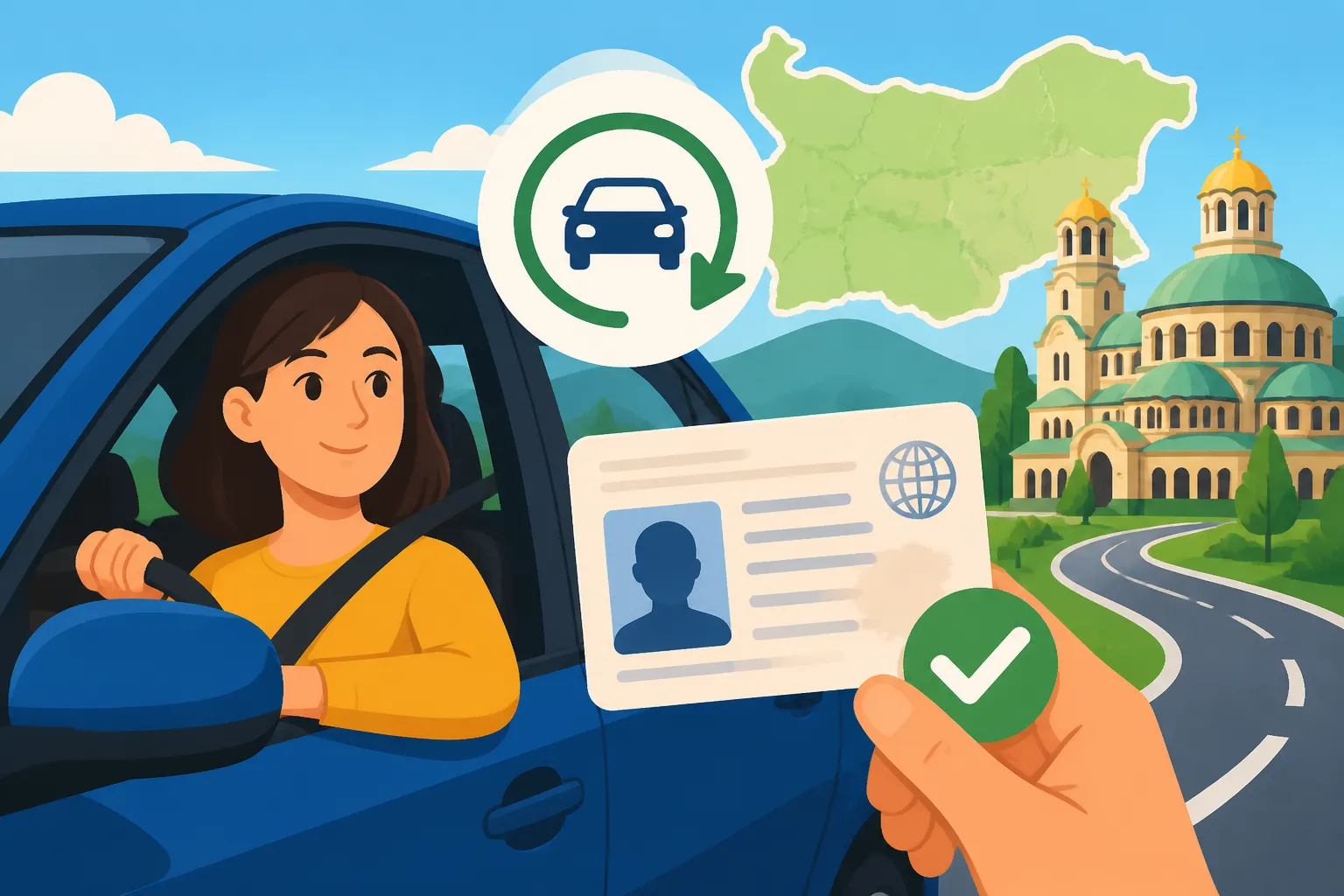
Ah, the Bulgarian driving license! It’s one of those administrative hurdles that can truly test your patience and make you wonder if you’ve somehow entered a parallel universe where common sense takes a vacation. You're probably scratching your head, trying to figure out if that plastic card from back home is still valid here, or if you need to jump through a thousand hoops to get a Bulgarian one. Don't worry, you're not alone. This guide is going to walk you through everything you need to know about using your foreign driver's license in Bulgaria, from those first few months to the inevitable exchange.
The Initial Grace Period: Driving with Your Existing Foreign License
When you first arrive in Bulgaria, the good news is you can usually drive on your existing foreign license for a period. This grace period is a lifesaver, allowing you to get settled without immediately fretting about another piece of paper. However, the exact rules depend heavily on where your license was issued, and understanding these distinctions is absolutely crucial to avoid any unwelcome surprises or fines down the road.
EU/EEA, UK, and Swiss Licenses
If your driving license was issued by an EU/EEA member state (that’s the European Union and the European Economic Area, including Iceland, Liechtenstein, and Norway), Switzerland, or even the UK post-Brexit, you're generally in a much more straightforward position. For those coming from EU/EEA countries, you can pretty much use your license as if it were a Bulgarian one, right from the moment you step foot in the country. This convenience is one of the benefits of EU integration. There's no immediate requirement to exchange it, and you can generally use it until it expires or you voluntarily decide to exchange it. However, if you become a permanent resident in Bulgaria, it's often advised to exchange it within six months of establishing residency, primarily for administrative ease and to ensure local authorities recognize it without question, especially if you get stopped or involved in an incident.
Now, for our friends from the UK and Switzerland, the situation is slightly different due to their non-EU status, but still relatively favourable. If you hold a UK or Swiss driving license and establish residency in Bulgaria, you are generally permitted to use your original license for up to one year from the date your residency is officially established. This means if you moved here in January and got your residence permit in February, your clock starts ticking from February. After this one-year period, you must exchange your license for a Bulgarian one. Failing to do so would mean you're driving without a legally recognised license, which can lead to significant penalties, including fines and even vehicle impoundment. It’s always best to be proactive and begin the exchange process well before that one-year mark approaches, given the often-leisurely pace of Bulgarian bureaucracy. You can find more details on residence permits in our guide, How Do I Apply for a Residence Permit in Bulgaria?.
Non-EU/EEA Licenses and the International Driving Permit (IDP)
For those of you with licenses from countries outside the EU/EEA, Switzerland, or the UK, the rules are a bit stricter, and you’ll almost certainly need an additional document: the International Driving Permit (IDP). Think of the IDP as an official translation and verification of your home country's driver's license, recognised by many countries worldwide under international treaties. It does not replace your original license; it must always be carried alongside your valid national driver's license. Without both, you're technically not legally permitted to drive.
You absolutely must obtain your IDP in your home country before you arrive in Bulgaria. You cannot get one here based on your foreign license. Most IDPs are valid for one year from their date of issue. This means for your first year of residency in Bulgaria, you can generally drive using your national license accompanied by a valid IDP. This gives you a crucial twelve-month window to get your affairs in order, including starting the process for a Bulgarian driving license if you plan on staying longer. After this one-year period of residency, your foreign license and IDP become invalid for driving in Bulgaria. At that point, you are required to exchange your license for a Bulgarian one, which often involves taking a driving test. This is a critical distinction that many expats overlook, often assuming their IDP will endlessly prolong the validity of their original license. It won't.
It’s also important to remember that some countries have bilateral agreements with Bulgaria regarding driving licenses. These agreements can sometimes exempt citizens from certain testing requirements during the exchange process. However, checking if such an agreement exists for your specific country is your responsibility, and it's best to confirm with the Bulgarian Traffic Police (KAT) directly, as information can change. Even with such an agreement, the one-year limit for using your foreign license/IDP after establishing residency generally still applies before you must exchange it.
The Bulgarian Driving License Exchange Process
Alright, so the grace period is ticking away, or perhaps it's already a distant memory. The reality is, if you’re planning to call Bulgaria home for the long term, you'll eventually need a Bulgarian driving license. This is where the bureaucratic fun truly begins! But don't despair, it's a well-trodden path, and knowing what to expect can significantly reduce your stress levels.
Who Needs to Exchange and When
Let's break down the timing. If you hold an EU/EEA license, while you can use it indefinitely, it’s highly recommended to exchange it for a Bulgarian one after six months of establishing residency. Why? Because it simplifies things. Local authorities will instantly recognise a Bulgarian license, and it integrates you fully into the local system. Plus, if your EU license is nearing its expiry, it's easier to renew it as a Bulgarian license here than trying to renew a foreign one from afar.
For our UK, Swiss, and non-EU/EEA license holders, the exchange is not optional – it's mandatory. As discussed, you have a one-year window from the date you establish your residency in Bulgaria. Once that year is up, your foreign license, even with an IDP, is no longer considered valid for driving here. This deadline is strictly enforced, and driving without a valid license beyond this period can result in hefty fines, legal complications, and potential impoundment of your vehicle. Imagine being stopped by a friendly officer in the middle of nowhere, only to find out your license is effectively useless. It's a situation you definitely want to avoid! So, mark that calendar and start the process early.
The Exchange Process: Steps and Documents
Prepare yourself for a few trips to the local Traffic Police (КАТ – "KAT") office. This isn't a one-and-done affair, but with all your ducks in a row, it can be relatively smooth. Here's a general outline of the steps and documents you'll need, though it’s always wise to double-check with your specific local KAT office, as requirements can sometimes vary slightly.
First and foremost, you'll need your Bulgarian residence permit (лична карта). This is proof that you are legally residing in the country. Without it, they won't even start the conversation. Next, your original foreign driving license is, of course, essential. They will take it from you as part of the exchange, so be prepared to part with it. Make sure you have a photocopy of it as well, just in case. You'll also need your passport or national ID card from your home country for identification.
A crucial and often confusing step is obtaining a medical certificate (лекарско свидетелство). This isn't just a quick check-up. You'll need to visit a Bulgarian general practitioner (GP) who will refer you to a panel of specialists – usually an eye doctor, an ENT, a neurologist, and potentially a psychiatrist – to confirm you are medically fit to drive. Each specialist will issue a small certificate, which your GP will then consolidate into a single, comprehensive lekarsko svidetelstvo. This can take several days or even a week, involving multiple appointments, so factor that into your timeline. You can find guidance on this process in our article, How to Choose and Register with a GP (Личен Лекар) in Bulgaria.
Depending on your license category and sometimes your age, you might also need a psychological fitness certificate. This is less common for standard car licenses (Category B) but is often required for professional drivers or those seeking higher categories (e.g., bus, truck). Check with KAT if this applies to you.
You'll also need proof of address, which is usually your lichna karta showing your registered address, or sometimes a recent utility bill. Then, there's the application form, which you'll fill out at the KAT office, and usually passport-sized photos, though some offices now have digital photo capture services. Finally, expect to pay an administrative fee for the exchange itself.
For non-EU/EEA licenses, particularly if your country doesn't have a bilateral agreement, you might need to have your original license translated into Bulgarian by a sworn translator and then apostilled or legalised. Always confirm this with KAT beforehand. It's an extra layer of bureaucracy, but it ensures your foreign document is officially recognised by the Bulgarian authorities.
Driving Tests: When Are They Required?
This is often the million-dollar question for expats. Do I have to re-take my driving test? The answer largely depends on your country of origin and any existing agreements Bulgaria has with it.
Generally, if you’re from an EU/EEA member state, you will not need to take any theoretical or practical driving tests when exchanging your license. The mutual recognition of licenses within the EU simplifies this significantly. You simply surrender your old license, and they issue you a Bulgarian one.
However, for those holding licenses from non-EU/EEA countries, including the UK and Switzerland, the situation can be more complex. If your country has a bilateral agreement with Bulgaria for the mutual recognition of driving licenses, you might be exempt from taking the tests. For example, some non-EU countries do have such agreements. If you are from one of these countries, the exchange process would be similar to that for EU citizens, minus the test requirement.
But, if your country does not have such an agreement, then yes, you will most likely be required to take both the theoretical (written) and practical (driving) tests in Bulgaria. This means studying the Bulgarian road rules (often available in English through private driving schools, but the test itself will be in Bulgarian or via a translator) and demonstrating your driving skills to a Bulgarian examiner. This can be a daunting prospect, especially if you haven't taken a driving test in years, let alone in a foreign language and unfamiliar environment. It's strongly advisable to seek out a local driving school that caters to expats or has English-speaking instructors to help you prepare. They can guide you through the local nuances and test expectations.
Navigating the Bureaucracy and Road Rules
Even once you’ve got your shiny new Bulgarian license, the journey doesn't end there. Driving in Bulgaria, like in any new country, comes with its own set of unwritten rules, local customs, and administrative peculiarities that can catch newcomers off guard. Patience, adaptability, and a good sense of humour are your best companions on the Bulgarian roads.
Navigating Bulgarian Roads and Rules
First, let’s talk about the roads themselves. Road quality can vary significantly. While major cities like Sofia and Plovdiv have relatively good infrastructure, once you venture into smaller towns or rural areas, you might encounter potholes, uneven surfaces, and less-than-perfect markings. Always be vigilant. Speed limits are generally 50 km/h in urban areas, 90 km/h outside urban areas, and 140 km/h on motorways (or 130 km/h on certain express roads). Speed cameras are common, so pay attention to signs.
Bulgarian drivers, bless their hearts, can sometimes be a bit… assertive. Expect quick overtakes, flashing lights to signal their intent (or sometimes just to say hello!), and a general understanding that rules are sometimes more like suggestions. Don't take it personally. Defensive driving is your best strategy. Always use your turn signals, even if others don't, and remember that pedestrians often have the right of way, though they might not always act like it.
A critical rule to remember is the mandatory use of winter tires from November 1st to March 1st. This isn't just a recommendation; it's the law. Violations can lead to fines. Also, always have your car’s required safety equipment on board: a first-aid kit, fire extinguisher, warning triangle, and a reflective vest. These are often checked during roadside stops. For more information on vehicle requirements, check out How to Register and License a Car in Bulgaria.
Dealing with the Authorities (KAT)
Dealing with the Traffic Police (KAT) can be an experience in itself. As mentioned, patience is paramount. Don’t expect things to move quickly, and always assume you might need to return for additional documents or clarifications. The language barrier is real, as many officers, especially outside major cities, may not speak English. If you’re not confident in your Bulgarian, bringing a Bulgarian-speaking friend or even a professional interpreter can save you immense frustration.
When stopped by the police, remain calm and polite. Present your documents (driver's license, car registration, insurance, vignette – road tax sticker). Avoid arguing or trying to bribe officials, as this can lead to serious legal trouble. If you believe there's a misunderstanding, ask for clarification or, if possible, for a superior officer. Most interactions are straightforward, but being prepared for potential communication challenges will ease your mind.
For general advice on navigating the move to Bulgaria, you might find resources from moving companies like Sirelo helpful in planning your relocation and understanding the various administrative steps involved beyond just driving licenses. They offer insights into international moves that can touch upon such local requirements.
Car Insurance and Registration Implications
Your driving license status directly impacts your ability to insure and register a vehicle in Bulgaria. When you register a car, you’ll need a valid Bulgarian driver’s license (or a foreign one that is still legally recognised within its grace period). Insurance companies will also require proof of your valid license. If you're caught driving without a valid license (i.e., you've passed your one-year residency mark for a non-EU license but haven't exchanged it), your car insurance could be invalidated. This means if you have an accident, you could be personally liable for all damages, which is a financial nightmare you want to avoid at all costs.
Make sure your car insurance is always up-to-date and that your license status aligns with Bulgarian legal requirements. Expats often underestimate the implications of having an "expired" foreign license on their insurance coverage. So, prioritize that exchange! For a deeper dive into car-related bureaucracy, take a look at our guide on Understanding Car Insurance and Registration in Bulgaria.
Key Considerations and Troubleshooting for Expats
Even with all the information in the world, things can still go sideways. Losing a document, facing unexpected delays, or simply needing clarification on a specific nuance can be a source of significant anxiety. Let's tackle some common scenarios and offer a few expert tips to help you navigate the Bulgarian driving landscape with greater ease.
Lost or Stolen Foreign Licenses
What happens if your original foreign license goes missing before you’ve had a chance to exchange it, or while your application is pending? This is a tricky situation, but not insurmountable. Your first step should always be to report it to the local police immediately. You'll need an official police report to prove the loss or theft, which is crucial for any further administrative steps.
If you’re still within your grace period and relying on your foreign license, the loss means you technically cannot drive until you have a replacement or a Bulgarian license. Contact your home country's issuing authority to see if they can issue a replacement or a confirmation letter. In Bulgaria, with the police report, you might be able to apply for a temporary driving permit, though this can be complicated and often requires a compelling reason. The best advice here is to act quickly and gather as much official documentation as possible. This scenario further highlights why exchanging your license promptly is always the safest bet.
Costs and Timelines
Budgeting for the license exchange process involves more than just the official fees. Here’s a rough breakdown of potential costs and timelines:
- Official Exchange Fee: This is typically a modest fee, usually around 25-50 BGN, depending on the urgency you request (standard vs. express service).
- Medical Certificate: The cost for the panel of specialists and your GP consolidating the certificate can range from 50 BGN to 150 BGN, depending on the clinic and number of specialists required.
- Psychological Fitness Certificate (if required): This could add another 50-100 BGN.
- Driving School/Tests (if required): This is the most significant potential cost. If you need to take theoretical and practical tests, a driving course can run anywhere from 600 BGN to over 1000 BGN, plus separate fees for the tests themselves.
- Translations/Apostilles (if required): Expect 20-50 BGN per document for sworn translation, and government fees for apostille/legalisation.
As for timelines, they are notoriously variable:
- Medical Certificate: 3-7 days to complete all appointments and get the final document.
- KAT Application Processing: Standard service can take up to 30 days for the new license to be issued. Express services might reduce this to 10-14 days, but always confirm availability and actual processing times.
- Driving Tests (if required): This can add months to the process. Finding a driving school, completing lessons, and booking test slots can take 1-3 months, possibly more if there are waitlists or if you need to retake a test.
Always give yourself ample lead time. Don't wait until the last minute of your grace period, especially if you anticipate needing to take tests.
Driving While Waiting
This is a frequently asked question, and the answer is usually a resounding "no" (or "only with extreme caution"). Once you've surrendered your foreign license to KAT for exchange, you will generally be given a temporary paper document. This document, officially, allows you to drive within Bulgaria while your new license is being processed. However, it is not an internationally recognised document, so if you plan any cross-border travel during this period, you would be driving illegally outside of Bulgaria.
If you are a non-EU/EEA citizen whose one-year grace period has passed and you are awaiting your exchange and you had to take a driving test, it's generally understood that you cannot legally drive until you pass the tests and receive your new license. The temporary paper issued during the application process is often contingent on having passed all necessary requirements. Always clarify your specific situation with the KAT officer when you submit your application. It’s better to be safe than sorry and avoid driving if there's any ambiguity regarding your legal status.
Living in Bulgaria as an expat means adapting to a new system, and navigating the driving license process is a prime example of that journey. It might feel like a bureaucratic maze, but with patience and preparation, you'll eventually have that Bulgarian license in hand, ready to explore all the beautiful corners of this country.
Disclaimer
The information provided in this guide is for general informational purposes only and does not constitute legal advice. While we strive to keep the information accurate and up-to-date, laws and procedures in Bulgaria can change without notice. Expats are strongly advised to consult with the relevant Bulgarian authorities (such as the Traffic Police, Ministry of Interior, or a qualified legal professional) for the most current and specific information pertaining to their individual circumstances. We cannot be held responsible for any inaccuracies or for any actions taken based on the information provided herein.