Can I Rent Out a Property I Buy in Bulgaria?
Moving to a new country like Bulgaria often comes with a savvy question: once you've settled in and perhaps bought a property, can you turn it into an income stream? Many expats ponder the possibility of renting out their Bulgarian property to generate extra cash, but the rules and practicalities can feel like navigating a maze. This comprehensive guide will walk you through everything you need to know about legally and effectively renting out property you own in Bulgaria, clarifying the processes and helping you avoid common expat pitfalls.
The Short Answer and Initial Legalities: Yes, But How?
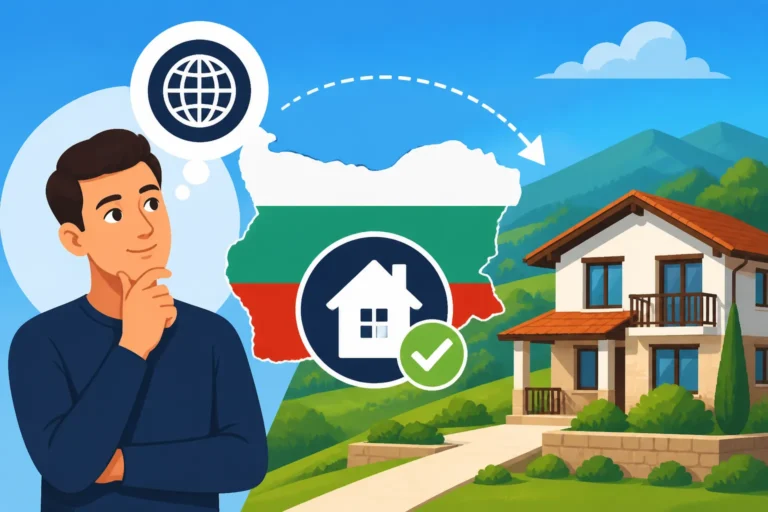
Absolutely, you can rent out a property you buy in Bulgaria! This isn't just a possibility; it's a common practice for both Bulgarian citizens and foreigners alike, and for good reason. The rental market, particularly in cities like Sofia, Plovdiv, Varna, and along the Black Sea coast, offers potential for a decent return, whether you're eyeing long-term tenants or the seasonal churn of tourists. However, it’s not as simple as handing over keys and collecting rent. There are crucial legal and administrative steps you must take to ensure you're operating within Bulgarian law, avoiding hefty fines or future complications.
First, let's talk about ownership. As a foreigner, you can generally own apartments and houses in Bulgaria. The main distinction historically was with land ownership; non-EU citizens typically had to register a Bulgarian company to own land. However, for EU citizens, this distinction has largely disappeared. For others, owning land directly can still be an issue, though purchasing an apartment (where you own a share of the land underneath but not the land outright) is usually straightforward. Before you even consider becoming a landlord, ensure your property purchase was done correctly. If you're still in the process of acquiring property, or just considering it, you might want to read How to Buy Property in Bulgaria as a Foreigner: The Full Guide (2027) for a thorough understanding.
The legal framework for renting properties in Bulgaria is primarily governed by the Law on Obligations and Contracts. This law outlines the basic rights and responsibilities of both landlords and tenants. While the law provides a general framework, the specifics are almost always determined by a well-drafted rental contract. It's not enough to simply have a verbal agreement; a written contract is essential. This document will serve as your legal backbone, detailing everything from rent amount and payment dates to responsibilities for repairs and the duration of the lease. Without it, you leave yourself exposed to potential disputes and very little legal recourse should things go sideways.
Moreover, if you intend to rent out your property, you need to understand your status. Are you just a private individual receiving income, or are you effectively operating a business? For most expats, renting out a single property (or even a few) will fall under personal income, but there are nuances, especially if you venture into short-term, tourist-oriented rentals, which often come with different registration and taxation requirements.
Navigating the Bureaucracy: Registration, Taxes, and Contributions
Alright, so you've got your property, and you're ready to start earning some income. The next step, and arguably the most crucial for staying out of trouble, is to properly navigate the Bulgarian bureaucracy regarding registration and taxation. This is where many expats, unfamiliar with the local system, can get tripped up.
Registering Your Rental Activity
When you start earning rental income, you effectively become a taxpayer in Bulgaria. The key institution you'll be dealing with is the National Revenue Agency (NRA), or Национална агенция за приходите (НАП) as it's known here. You need to declare your rental income.
For individual owners, this usually means including your rental income in your annual tax declaration. However, there's a specific step that many overlook: if you're engaging in continuous rental activity, especially if you're doing short-term rentals (like Airbnb or Booking.com), you might need to register this activity with your local municipality and potentially even as a self-employed person or a sole trader (ET – Едноличен търговец).
For long-term rentals, typically, you just declare the income annually. But let's say you're doing short-term rentals. You're effectively offering tourist accommodation. In this scenario, you're usually required to register your property as a "place for accommodation" with the relevant municipality. This involves applying for a category (star rating) for your property, even if it's just a private apartment. This category determines the local tourist tax you’ll need to collect and remit. This process varies slightly by municipality – what's standard in Sofia might have slight differences in Varna or Bansko, so always check with your local община (municipality) or consult with an accountant.
If you’re thinking, “This sounds like a lot for just renting out my place,” you’re not wrong. Bulgaria tries to streamline things, but the layers of administration can feel daunting. If you’re self-employed or run your own business, you already know about BULSTAT registration. If you're not, and this rental income is your primary source or you're doing short-term rentals, you might need to get a BULSTAT number. This is a unified identification code used for statistical purposes and, importantly, for tax and social security registrations. You can learn more about registering with the tax authorities by checking out How to Register with the National Revenue Agency (NRA) in Bulgaria.
Understanding Income Tax and Social Contributions
Now, for the numbers part. Bulgaria is famous for its flat tax system, and rental income is no exception. Personal income tax is a flat 10%. However, it's not quite as simple as taking 10% of your gross rental income.
For rental income from individuals, there's a legally recognised 10% deductible expense. This means you pay income tax on 90% of your gross rental income. So, if you charge 1000 BGN a month in rent, you'd calculate 10% tax on 900 BGN (90 BGN tax). This deduction is automatically applied; you don't need to provide receipts for it. This is quite beneficial for landlords, as it reduces your taxable income without requiring meticulous record-keeping for small expenses.
However, if your tenant is a company (e.g., they rent your property for their employees), they are generally obligated to withhold the 10% tax at the source and pay it directly to the NRA on your behalf. They should then provide you with a certificate confirming the tax paid. You'll still need to declare this income in your annual tax return, but you'll show that the tax has already been paid.
Beyond income tax, there are social and health insurance contributions. If you're formally employed in Bulgaria, your employer handles these for you. If you're retired, a student, or otherwise not actively working but generating significant rental income, the situation becomes more complex. If your rental activity is considered a "free profession" or you're registered as a self-employed person (especially for short-term rentals), you might be obligated to pay social and health contributions on a minimum monthly insurable income. This minimum is set annually by the state and can fluctuate. It’s a vital area to get right, as failing to pay these can lead to penalties and issues accessing the healthcare system. To truly understand the full scope of your tax obligations as an expat, particularly if you have other sources of income, referring to The Complete Guide to Taxes in Bulgaria for Expats (2027) would be invaluable. This guide provides a detailed overview of Bulgaria's tax system, including the flat 10% income tax explained in Understanding Income Tax and the Flat 10% Rate in Bulgaria (2026).
Don't forget about property tax and garbage fees! As a property owner, you're already liable for these. Your rental income doesn't change this, but it's an outgoing expense that eats into your profit. Make sure you understand Understanding Property Tax and Garbage Fees for Homeowners in Bulgaria to factor these into your calculations.
Here's a simplified table comparing tax implications for different rental scenarios:
| Rental Scenario | Taxable Income Calculation | Income Tax Rate | Other Contributions | Notes |
|---|---|---|---|---|
| Long-Term (Individual) | 90% of Gross Rental Income | 10% Flat Tax | May require self-paid social/health if no other employment/insurance. | Simplest setup. Annual declaration with NRA. |
| Long-Term (Company) | 90% of Gross Rental Income | 10% Flat Tax | May require self-paid social/health if no other employment/insurance. | Tenant company withholds and remits tax. You still declare. |
| Short-Term (Tourist) | 90% of Gross Rental Income | 10% Flat Tax | Mandatory social/health contributions (often based on minimum income) | Requires municipal registration as "place for accommodation," collecting and remitting tourist tax. Higher administrative burden. If operated as a business, VAT registration might be needed if turnover exceeds thresholds (e.g., 50,000 BGN annually), though this is complex and usually requires an accountant. You might even find yourself needing to file your annual return using the Filing Your Tax Return with the National Revenue Agency in Bulgaria: The Complete Walkthrough (2027) guide. |
Disclaimer: Tax laws can change. Always consult with a qualified local accountant or tax advisor for personalized advice.
Becoming a Landlord in Bulgaria: Practical Steps and Considerations
So, the paperwork is sorted (or at least, you know what needs sorting). Now comes the nitty-gritty of actually getting tenants and managing your property. This phase is less about government offices and more about people skills, market knowledge, and perhaps a bit of technology.
Finding Tenants and Setting the Right Price
Finding the right tenant is half the battle. You have several avenues in Bulgaria:
- Online Platforms: Websites like Imot.bg, Bazar.bg are popular for direct rentals. For short-term options, obviously Airbnb and Booking.com are king.
- Real Estate Agencies: Many agencies specialize in rentals and can handle tenant screening, viewings, and contract drafting for a fee (usually one month's rent, paid by the tenant or split). This can be a godsend if you're not fluent in Bulgarian or don't have the time.
- Word of Mouth/Expat Groups: Sometimes the best tenants come from personal recommendations or fellow expat networks. Facebook groups for expats in Bulgaria often have listings.
Setting the right price requires a bit of research. Look at comparable properties in your area. Consider the location, size, number of bedrooms, furnishings, and amenities. Sofia, for example, has vastly different rental prices between the central districts like Lozenets or Ivan Vazov and the outer neighbourhoods. You can get a good feel for the market by exploring How Much Does It Cost to Rent an Apartment in Sofia in 2026? and other similar resources.
When calculating your rental price, remember to factor in not just your mortgage (if any) but also property taxes, maintenance costs, and potential void periods. If you offer a furnished apartment, the initial investment in furniture will also need to be recouped.
Crafting the Rental Contract and Managing Deposits
A comprehensive written rental contract (Договор за наем) is non-negotiable. It should be in Bulgarian, and ideally, you should have an official translation if your Bulgarian isn't up to snuff. Key elements to include:
- Parties involved: Full details of landlord and tenant(s).
- Property description: Address, size, inventory of furnishings.
- Rent amount and payment terms: Due date, method of payment, penalties for late payment.
- Duration of lease: Fixed-term (e.g., one year) or indefinite. Fixed-term contracts are common and offer more security, though they can be renewed.
- Deposit: Typically one or two months' rent. This is crucial for covering potential damages or unpaid utility bills.
- Utility bills: Clearly state who is responsible for paying electricity, water, heating, internet, etc. (usually the tenant).
- Maintenance and repairs: Who is responsible for what. Minor repairs are often the tenant's responsibility, major structural ones the landlord's.
- Conditions for termination: Notice periods for both parties.
- Inventory and condition report: Take detailed photos or even a video before the tenant moves in to document the property's condition.
The deposit is your safety net. In Bulgaria, it’s common for the deposit to be held by the landlord, not in a protected scheme as in some other countries. This means it’s vital to have explicit clauses in your contract regarding its use and return. When the lease ends, inspect the property thoroughly against the initial condition report before returning the deposit. For more on this, check out How to Sign a Rental Contract and Pay a Deposit in Bulgaria.
Short-Term vs. Long-Term Rentals: Pros and Cons
This is a big decision that impacts your workload and potential income.
Long-Term Rentals:
- Pros: Stable income, less tenant turnover, lower marketing costs, less wear and tear, simpler tax and registration (usually).
- Cons: Generally lower monthly income compared to short-term, less flexibility to use the property yourself, sometimes harder to remove problematic tenants.
Short-Term Rentals (e.g., Airbnb, Booking.com):
- Pros: Higher income potential, great flexibility for personal use, demand is strong in tourist areas like Sofia, Plovdiv, Varna, and the coast.
- Cons: Very intensive management (cleaning, check-ins/outs, communication), higher wear and tear, requires municipal registration as accommodation, potentially more complex taxation (tourist tax, possible VAT thresholds), variable income depending on season. If you are managing your property remotely, reliable communication is essential. You might find using services like Airalo for easy international connectivity helpful for coordinating with cleaners or guests.
Many expats find that long-term rentals are a more "set it and forget it" option, especially if they are not living locally or don't want the hassle of constant management. However, for those in prime tourist spots with good management infrastructure, short-term rentals can be significantly more lucrative.
Common Challenges and Smart Solutions for Expat Landlords
Being an expat landlord in Bulgaria comes with its own unique set of challenges. Language barriers, cultural differences, and simply being far away can complicate things. But with a bit of foresight and the right tools, you can navigate these smoothly.
Overcoming Language and Cultural Barriers
Bulgarian is the official language, and while many younger people and those in larger cities speak English, not everyone does, especially when dealing with official documents or older tradespeople. Your rental contract must be in Bulgarian to be legally binding. It's highly advisable to have a trusted Bulgarian speaker (friend, lawyer, or accountant) review documents and assist with communications if you're not fluent.
Cultural differences can sometimes manifest in expectations regarding property maintenance, utility payments, or communication styles. Be clear and direct in your contract and communications, but always remain polite and respectful. Validation of frustrations is key here; it's genuinely tough sometimes when you expect one thing based on your home country's norms, and things operate differently here.
Remote Management and Finding Reliable Help
If you don't live in Bulgaria full-time, remote management is your only option. This can be efficient but requires trust and good systems.
- Property Management Companies: This is often the best solution for expat landlords. They handle everything: finding tenants, screening, contract management, rent collection, maintenance, and even dealing with utility bills and emergencies. They charge a fee, typically 10-15% of the monthly rent, but the peace of mind can be priceless. They're particularly helpful for short-term rentals, where daily tasks are numerous.
- Trusted Individuals: Some expats rely on trusted friends or family members who live locally. This works if you have someone truly reliable, but it can strain personal relationships if issues arise.
- Digital Tools: For self-managing, online platforms for communication, payment tracking, and property maintenance requests are useful. When you're traveling or managing your property from abroad, having reliable connectivity is crucial. You might find services like Airalo useful for staying connected without racking up huge roaming charges.
When looking for a property management company, ask for references, check their experience with expat clients, and ensure their contract clearly outlines their responsibilities and fees.
Handling Maintenance and Unexpected Issues
Things will break; it’s a fact of property ownership. Having a reliable network of handymen, plumbers, and electricians is crucial. If you use a property manager, they will typically have their own network. If you're self-managing, start building these contacts early. Ask other expats for recommendations.
A common issue, especially in older buildings, is unexpected repairs to common parts of the building. In Bulgaria, apartment owners are typically members of an "Owners Association" (Етажна собственост) for their building. Decisions about major repairs (roof, facade, common plumbing) are made by majority vote, and all owners contribute financially based on their ownership share. This can sometimes lead to unexpected bills, so factor it into your budget.
Market Trends and Maximizing Your Income
The Bulgarian rental market, especially in major cities, is dynamic. Sofia continues to attract professionals and students, leading to steady demand. Coastal areas like Varna and Burgas thrive in the summer but can be quieter off-season, making short-term rentals highly seasonal. Ski resorts like Bansko and Borovets follow a similar pattern during winter.
To maximize your income:
- Furnishings: Most tenants, especially expats and young professionals, prefer furnished apartments. Good quality, modern furnishings can command higher rents.
- Amenities: Reliable internet, air conditioning (for summer), and central heating (for winter) are non-negotiable for competitive rentals. Dishwashers, washing machines, and modern kitchen appliances are also highly sought after.
- Location: As always, location is key. Proximity to public transport, amenities, schools, and workplaces drives demand. If you're looking for areas with high rental potential, consider The Best Places to Live in Bulgaria for Expats: A Complete Guide (2027).
- Presentation: Professional photos for your listings make a huge difference. A clean, well-maintained, and aesthetically pleasing property will always attract more and better tenants.
- Consider a moving service for tenants: Sometimes, offering to help new tenants with their moving process can be an attractive perk. While you might not directly arrange it, mentioning services like Sirelo for comparing international movers could be a subtle value-add in your welcome packet for long-term expat tenants.
Renting out your property in Bulgaria can indeed be a rewarding venture, offering a solid income stream in a relatively affordable market. It demands diligence and an understanding of the local rules, but with the right approach and perhaps a little professional help, it’s a perfectly achievable goal for any expat property owner.
Disclaimer
The information provided in this guide is for general informational purposes only and does not constitute legal, financial, or tax advice. While we strive to keep the information up-to-date and accurate, laws and regulations in Bulgaria can change. It is essential to consult with qualified local professionals, such as a lawyer, accountant, or property management expert, for advice tailored to your specific situation before making any decisions related to renting out property in Bulgaria.