Can I Pay My Utility Bills Through My Bank in Bulgaria?
One of the biggest headaches when you first land in Bulgaria, even after you’ve sorted your residence permit and found a place to call home, is tackling those never-ending utility bills. The sheer thought of deciphering a new payment system in a foreign language can send shivers down your spine, leaving you wondering if you can just handle it all through your good old bank. The good news is, yes, you absolutely can pay your utility bills through your Bulgarian bank, and this guide will walk you through exactly how to do it without losing your mind.
Understanding Utility Bill Payment Methods in Bulgaria
Let's be real, when you first get here, the Bulgarian billing system can feel like a labyrinth designed by someone who secretly hates expats. You get a bill in Cyrillic, maybe it arrives in the post box, maybe it's online, and then you have to figure out how to actually pay it. It’s not always as straightforward as clicking a button in your home country, but once you get the hang of it, using your bank is by far one of the most convenient methods.
Traditional and Modern Payment Options
Before we dive deep into bank payments, it’s worth knowing the landscape. Historically, cash was king here, and many people still pay bills this way. You’d go to the post office or one of the ubiquitous EasyPay offices, present your bill, pay cash, and get a receipt. It’s simple, yes, but time-consuming, especially if you have multiple bills.
EasyPay terminals are still immensely popular. They’re everywhere – in supermarkets, small shops, standalone kiosks. You type in your customer number for electricity, water, heating, or internet, and it brings up your bill. Hand over the cash, and boom, it’s paid. It’s definitely a step up from the post office queue, but it still requires you to physically go somewhere. For those of us who prefer to manage finances from the comfort of our sofa, especially after a long day of navigating Bulgarian bureaucracy, this isn't ideal.
This is where your bank comes in. Modern banking in Bulgaria, especially with the larger institutions, has evolved significantly. They understand the need for convenience, and online payments, including direct debits, are readily available for most major utility providers. It means you can set it and forget it, or at least manage it with a few clicks.
The Role of Your Bulgarian Bank
Your Bulgarian bank account isn't just for receiving your salary or buying groceries; it’s a powerful tool for managing all your recurring expenses. Once you’ve successfully opened a bank account at a Bulgarian bank as a foreigner, which itself can be an adventure, you'll gain access to a world of financial convenience. Most banks, like UniCredit Bulbank, DSK Bank, and Raiffeisenbank (now KBC Bank Bulgaria), offer robust online banking platforms and mobile apps that allow you to manage your payments efficiently.
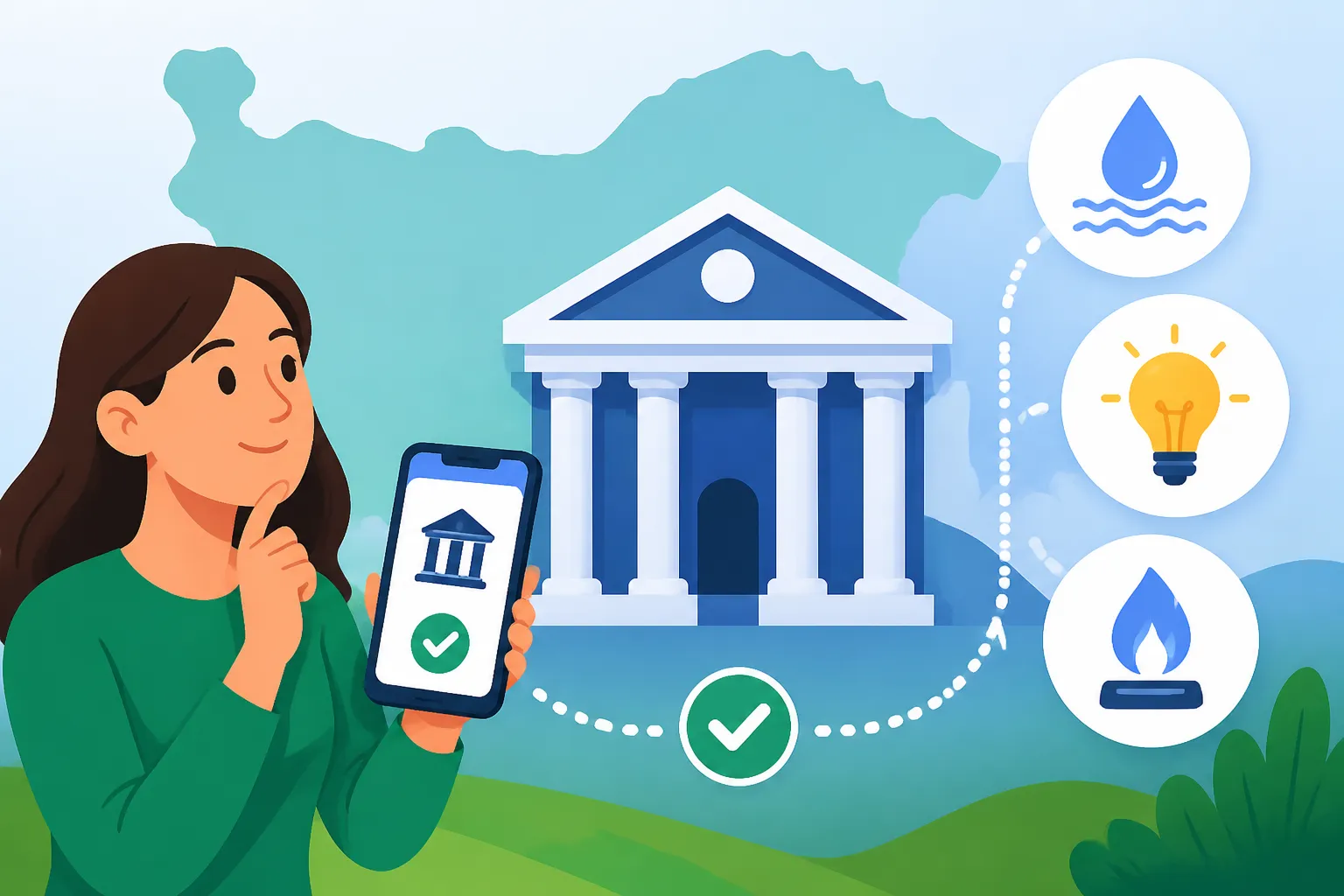
When it comes to utilities, your bank acts as an intermediary. Instead of you manually going to the provider or a third-party payment center, you instruct your bank to make the payment. This can be a one-off payment for a specific bill or, even better, a direct debit arrangement where the bank automatically pays the bill when it’s due. This automation is a lifesaver, ensuring you never miss a payment and avoid those annoying late fees or, worse, a disconnected service. Understanding the different options your bank provides is key to streamlining your financial life here. If you're still figuring out which bank to choose, you might find our guide on How to Choose the Best Bank for Expats in Bulgaria really helpful.
Specific Utility Providers and Their Systems
Bulgaria has several major utility providers, and while they might have slightly different billing formats, they generally all integrate well with the banking system. Let’s break down some of the main ones:
- Electricity: The country is typically split into three main regions, each served by a different provider: EVN (south-eastern Bulgaria, including Plovdiv), CEZ (western Bulgaria, including Sofia), and EnergoPro (north-eastern Bulgaria, including Varna). Each of these companies issues monthly bills. These bills will have a unique customer number (клиентски номер) and an invoice number (номер на фактура) or a payment reference number (референтен номер). These numbers are crucial when setting up payments through your bank.
- Water: Water services are usually managed by municipal companies, referred to as ViK (ВиК – Водоснабдяване и Канализация). For instance, Sofia is served by Sofiyska Voda. Similar to electricity, your water bill will have a client number and a specific payment reference.
- Heating (Toplofikatsia): In larger cities, district heating is common, provided by companies like Toplofikatsia Sofia. These bills can sometimes be confusing because they include charges for heating, hot water, and common parts of the building. Again, a unique client number is your key to making payments.
- Internet and Mobile Services: Companies like A1, Yettel, and Vivacom are the big players here. They all offer options to pay through your bank, often via direct debit or a recurring online payment. You'll typically find your subscriber number or invoice number on your monthly statement. You can learn more about this in our guide on How to Set Up Internet and Mobile Service in Bulgaria.
What’s important to remember is that whether you're paying for electricity from EVN or water from Sofiyska Voda, the process through your bank is remarkably similar. You’ll need the provider’s name, your specific customer number, and sometimes the invoice number. These details ensure your payment is correctly allocated to your account.
How to Set Up Utility Bill Payments Through Your Bulgarian Bank
Okay, let's get down to brass tacks. You've got your Bulgarian bank account, you've battled through the initial setup, and now you're ready to tackle those bills like a pro. The two main ways to pay via your bank are direct debits or manual online transfers. Both have their merits, but direct debits offer the ultimate hands-off convenience.
Setting Up Direct Debits (Декларация за директен дебит)
This is, hands down, the easiest and most stress-free way to manage your recurring utility bills in Bulgaria. A direct debit, known as "директен дебит" (direkten debit) in Bulgarian, authorizes your bank to automatically pay your bills directly to the utility provider on the due date. No more remembering deadlines, no more frantic dashes to EasyPay.
Here’s how it usually works:
- Gather Your Information: You'll need a recent utility bill from the provider you want to set up the direct debit for. On this bill, locate your customer number (клиентски номер) or subscriber number, and the exact name of the utility provider.
- Contact Your Bank: You can typically initiate a direct debit request either in person at a bank branch or, increasingly, through your online banking portal or mobile app.
- In-Person: If you prefer face-to-face interaction, head to your bank. Explain that you want to set up a direct debit for your electricity (ток), water (вода), or heating (топлофикация) bill. The bank staff will provide you with a form, often called a "Декларация за директен дебит" (Declaration for Direct Debit). You'll fill in your bank account details, the utility provider's name, and your customer number for that service. They will process it, and it usually takes a few days to become active.
- Online Banking: Many banks now allow you to set this up through their online platforms. Look for sections like "Плащания" (Payments), "Директни дебити" (Direct Debits), or "Регистриране на получател" (Register a recipient). You'll typically select the utility provider from a predefined list, enter your customer number, and confirm the authorization. For example, UniCredit Bulbank's Bulbank Online or DSK's DSK Direct usually have very clear menus for this.
- Confirmation: Once set up, your bank will usually send you a confirmation. It’s a good idea to still keep an eye on your first few bills after setting up a direct debit to ensure everything is working smoothly. You'll see the payment come out of your account automatically. The utility provider will still issue a bill, but you won't need to take any action.
- Managing Direct Debits: You can usually view, modify, or cancel your direct debits through your online banking platform or by visiting your branch. This flexibility makes them incredibly convenient.
This method completely removes the stress of forgetting to pay. Imagine the peace of mind knowing your electricity, water, and internet bills are handled without you lifting a finger each month!
Using Online Banking and Mobile Apps for Manual Payments
If direct debits aren't your thing, or if you have a one-off bill that needs paying, your bank's online banking portal or mobile app is your next best friend. Once you've completed the often-daunting process of How to Set Up Online Banking with a Bulgarian Bank, you'll find that manual payments are quite straightforward.
Here’s a general step-by-step guide:
- Log In: Access your online banking portal or mobile app using your credentials (username, password, and often a two-factor authentication via SMS or a token device).
- Navigate to Payments: Look for a section clearly labeled "Плащания" (Payments), "Преводи" (Transfers), or "Комунални услуги" (Utility services).
- Choose "Utility Payments" or Similar: Many banks have a dedicated menu for utility payments, where major providers are pre-listed. This saves you from manually entering bank details.
- If a pre-listed option exists: Select the relevant utility provider (e.g., "EVN," "Sofiyska Voda," "Toplofikatsia Sofia"). The system will then ask for your customer number (клиентски номер) and/or invoice number (номер на фактура/референтен номер) as found on your bill. Enter these details. The system might even automatically pull up your outstanding balance.
- If no pre-listed option (less common for major utilities): You might need to make a standard bank transfer. In this case, you'll need the utility provider's bank account details (IBAN, BIC/SWIFT code), which should be on your bill or their website. Crucially, you must include your customer number and the invoice number in the payment description (основание за плащане) to ensure the payment is correctly credited to your account. Without these, your payment might get lost in the system, causing a huge headache.
- Enter Amount: If the system didn't auto-populate the amount, enter the exact amount due from your bill.
- Review and Confirm: Double-check all the details – provider, customer number, amount. A mistake here could mean your payment goes astray. Confirm the transaction, usually requiring another layer of security (e.g., an SMS code).
- Save Receipt: Always save the digital payment receipt. It's proof that you paid, which can be invaluable if there's ever a dispute.
Paying manually through your online bank or app gives you full control over when and how much you pay, making it ideal for bills that fluctuate or if you just prefer to review each one before settling.
In-Person Bank Payments and Assistance
While online banking is convenient, sometimes you just need to speak to a human or you might encounter an issue that needs hands-on help. All major Bulgarian banks offer in-person bill payment services at their branches.
This is a good option if:
- You're not comfortable with online banking.
- You have a complex bill or a specific query.
- You need help setting up a direct debit for the first time.
- Your online payment failed, and you need immediate assistance.
Simply take your utility bill to a teller at your bank branch. They will input the details, take your payment (either from your account or in cash, depending on the bank's policy), and provide you with a stamped receipt. It's often slower than online methods but offers peace of mind through direct interaction. Many larger bank branches in cities like Sofia or Plovdiv will have English-speaking staff, or at least someone who can get by. Don't be shy about asking if someone speaks English; it can save you a lot of confusion.
Navigating Challenges and Best Practices for Expats
Even with bank payment options, being an expat in Bulgaria means you'll probably face a few unique challenges when it comes to utilities. But armed with the right knowledge and a bit of patience, you can navigate these waters successfully.
Language Barriers and Assistance
The Cyrillic alphabet and the Bulgarian language itself are often the biggest hurdles for expats. Your utility bills will almost certainly be in Bulgarian, and while bank interfaces often have English options, the fine print or specific terms might still be in Bulgarian.
- Translation Apps: Google Translate or similar apps are your best friends. Use your phone camera to scan text on bills or websites to get a quick translation. This is invaluable for identifying your customer number or understanding specific charges.
- Bank Staff: As mentioned, many banks, especially in major cities, will have staff who speak English. Don't hesitate to ask for an English speaker if you're struggling. It's far better to ask than to make a mistake.
- Expat Communities: Join expat groups on social media (Facebook is very active here). Someone else has likely faced the exact same problem you're dealing with and can offer advice or even help translate a tricky sentence.
- Bulgarian Friends/Colleagues: If you have trusted Bulgarian friends or colleagues, a quick photo of a bill and a "can you explain this?" message can go a long way.
Patience is key here. It will get easier over time as you become more familiar with the recurring terms and formats.
Avoiding Late Fees and Disconnections
Missing a utility payment in Bulgaria can lead to late fees and, in some cases, a disconnection of service. This is particularly true for electricity, which can be cut off relatively quickly if a bill remains unpaid.
- Set Reminders: If you're not using direct debits, set calendar reminders for when your bills are due. Most bills are issued monthly, but sometimes payment windows can be tight.
- Understand Billing Cycles: Familiarize yourself with when each of your bills typically arrives and its due date. Electricity bills often have a payment deadline within 10-14 days of issue.
- Check Outstanding Balances Online: Many utility providers have online portals where you can check your current and past bills and see if you have any outstanding amounts. This is often the quickest way to confirm you don't have any forgotten bills.
- Direct Debit is Your Friend: Seriously, for peace of mind, direct debits are the ultimate way to avoid late fees. Once set up, the money leaves your account automatically, eliminating the risk of human error.
Be proactive. A small effort in understanding the system can save you significant hassle and money in the long run.
Managing Bills from Abroad and Multi-Currency Accounts
If you’re often traveling or spend time outside Bulgaria, managing your bills can become trickier. However, online banking makes it possible.
- Reliable Online Banking Access: Ensure you have stable internet access and your bank’s online portal or app works reliably from wherever you are. Keep your two-factor authentication method accessible (e.g., your Bulgarian SIM card for SMS codes).
- International Transfers: If your primary funds are in a foreign currency, you’ll need to transfer money to your Bulgarian account to cover your bills. Services like Wise (formerly TransferWise) are incredibly popular among expats for their competitive exchange rates and low fees. You can easily transfer funds from your home country account to your Bulgarian one, making sure there's enough to cover your direct debits or manual payments. Using Wise can often save you a significant amount compared to traditional bank transfers. For a deeper dive into this, check out our guide on How to Transfer Money Into and Out of Bulgaria as an Expat.
- Multi-Currency Accounts (Less Common for Bills): While some Bulgarian banks offer multi-currency accounts, their primary use for utilities is often limited as payments need to be in Bulgarian Lev (BGN). However, a multi-currency card linked to a Wise account can be excellent for managing funds before transferring them to your BGN account for bill payments.
The key is to plan ahead. Don't wait until the last minute to transfer funds, especially if you're relying on international transfers that might take a day or two to clear.
Keeping Records and Understanding Your Bills
Always keep a record of your payments. With online banking, this is usually digital, but for cash payments, keep physical receipts. These records are your proof of payment if any dispute arises.
As for understanding your bills, while they are in Bulgarian, certain key pieces of information are universal:
- Клиентски номер / Абонатен номер: Customer/Subscriber number (essential for payments).
- Период: Billing period.
- Дата на издаване: Issue date.
- Краен срок за плащане: Due date.
- Обща сума за плащане: Total amount due.
- Показания (Стари/Нови): Meter readings (Old/New).
- Консумирана енергия/вода: Consumed energy/water (in kWh or cubic meters).
- Цена на енергия/вода: Price per unit of energy/water.
Over time, you'll start to recognize these terms, making your bills less intimidating. Many utility providers now also offer e-bills, which can be easily downloaded and archived. You can learn more about how to decode these by reading Understanding Water and Heating Bills in Bulgaria or How to Set Up Electricity in Your Bulgaria Home.
Other Convenient Payment Options Beyond Your Bank
While paying through your bank is super convenient, it's worth knowing about other popular options in Bulgaria. Sometimes, you might find yourself in a situation where cash is king, or a quick stop at a kiosk is simply more practical.
EasyPay and B-Pay Terminals
As mentioned earlier, EasyPay is a dominant force in Bulgarian bill payments. They have thousands of locations nationwide, from dedicated offices to kiosks within supermarkets and convenience stores. The system is incredibly efficient and user-friendly, even if you don't speak Bulgarian.
How it works:
- Locate a Terminal: Find an EasyPay office or a payment terminal.
- Select Utility: You'll typically find a touchscreen interface. Select the logo of your utility provider (e.g., EVN, Vivacom).
- Enter Customer Number: Input your customer number (the one from your bill). The system will then display your outstanding bills and the amounts due.
- Pay Cash: Pay the exact amount in cash to the teller or into the machine.
- Get Receipt: You'll receive a printed receipt, which is your proof of payment.
B-Pay is another similar system, often found at ATM-like terminals. Both offer immediate payment processing, which can be crucial if you're up against a tight deadline and your bank transfer might take a day to clear. While they don't offer the automated convenience of direct debits, they are excellent for quick, one-off payments and are a reliable fallback.
Post Offices and Cash Payments
The Bulgarian Post Office (Български пощи) is the most traditional way to pay bills and remains a viable option, especially in smaller towns or villages where EasyPay terminals might be less prevalent. It’s also often preferred by the older generation.
To pay at the post office:
- Bring Your Bill: Take your physical utility bill to any post office branch.
- Present to Teller: Hand your bill to the clerk. They will scan it or manually enter the details.
- Pay Cash: Pay the amount due in cash.
- Get Stamped Receipt: The clerk will stamp your bill as paid or provide a separate receipt.
While reliable, post offices can often have longer queues and the process can be slower than other methods. However, it's a solid option if you need to pay cash and are in an area without EasyPay. For comprehensive information on your overall living costs, including how these utility payments fit in, you can always check out How Much Is the Cost of Living in Bulgaria for Expats?.
In the grand scheme of things, being able to pay your utility bills through your bank in Bulgaria is a huge convenience that many expats come to appreciate. It might take a little effort to set up initially, but the long-term benefits of automation and control are definitely worth it.
Disclaimer
The information provided in this guide is for general informational purposes only and does not constitute financial, legal, or professional advice. While we strive to keep the information up-to-date and accurate, regulations and procedures in Bulgaria can change without notice. Always consult with relevant professionals or official sources for the most current and specific advice pertaining to your individual situation. We are not responsible for any inaccuracies or omissions in the content, nor for any actions taken based on the information provided herein.