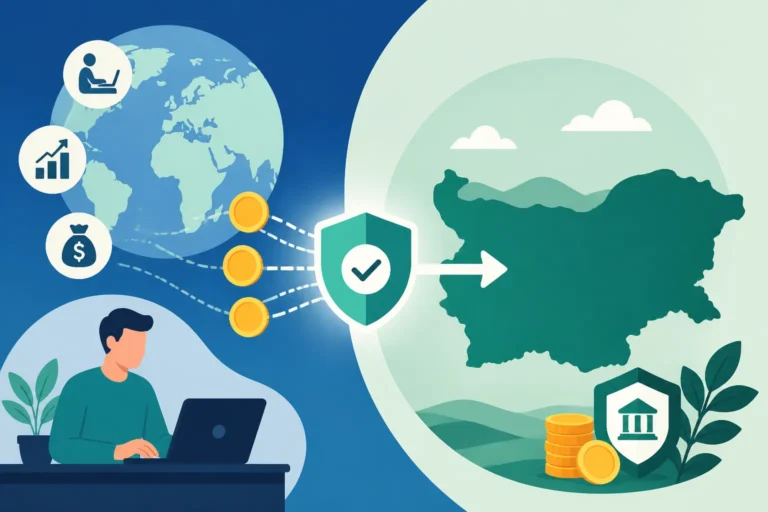
How to File Your First Tax Return After Moving to Bulgaria
Moving to Bulgaria is exciting, but let's be honest, the administrative hurdles, especially when it comes to taxes, can feel like navigating a labyrinth blindfolded. That first tax return, in particular, can be a real headache, leaving many expats feeling utterly overwhelmed. This comprehensive guide is here to untangle the complexities, walk you through the process, and help you confidently file your first annual income tax declaration in Bulgaria.
Understanding Bulgarian Tax Residency for Newcomers
One of the most crucial first steps in dealing with taxes in Bulgaria, or anywhere really, is figuring out your tax residency status. This isn't just a bureaucratic formality; it dictates what income you need to declare and where. For newcomers, this can be particularly confusing, especially if you’ve arrived mid-year or still have strong ties to your home country.
The 183-Day Rule and Your Initial Status
Bulgaria operates on a fairly standard international principle when it comes to tax residency: the 183-day rule. Simply put, if you spend more than 183 days within any 12-month period in Bulgaria, you are generally considered a Bulgarian tax resident for that tax year. This period doesn't have to be continuous; it's the cumulative total that matters. So, if you arrived in September, you're unlikely to hit that 183-day mark in your first calendar year. However, the rule typically looks at a 12-month period, which often means by your second calendar year, you'll almost certainly be a resident if you've stayed put.
Being a tax resident means Bulgaria will typically tax your worldwide income, regardless of where it's earned. This is a fundamental shift for many expats who might be used to only reporting income earned within their home country. For example, if you moved to Plovdiv in August, and earn income from a foreign source (like a remote job for an overseas company) from August to December, you’ll be expected to declare that income on your Bulgarian tax return for that year, even if you weren't a resident for the full calendar year. Understanding this initial status is key to avoiding missteps from the very beginning. Remember, even if you only spent a couple of months here in your first year, if those months pushed you over the 183-day threshold for a 12-month period that includes the subsequent year, you could be deemed a resident earlier than you think. It's truly a rolling calculation in practice.
Implications of Dual Residency and DTAAs
Now, for the really fun part: what if you find yourself considered a tax resident in two countries? This is known as dual residency and it's a very common scenario for expats, especially in their first year or two abroad. Maybe you still own property in your home country, or your family resides there, or you maintain a significant economic interest. In such cases, both Bulgaria and your home country might claim you as a tax resident, potentially leading to your income being taxed twice.
This is precisely where Double Taxation Avoidance Agreements (DTAAs) come into play. Bulgaria has signed DTAAs with numerous countries worldwide. These agreements are designed to prevent the double taxation of income and determine which country has the primary taxing rights over specific types of income. For instance, a DTAA might stipulate that while your salary earned in Bulgaria is taxed here, your pension from your home country might only be taxable there. To leverage a DTAA, you might need to obtain a certificate of tax residency from Bulgaria (or your home country) and present it to the relevant tax authorities. You can dive deeper into this complex topic by reading Tax Residency in Bulgaria: A Definitive Guide for Expats (2027). It's crucial to check if Bulgaria has a DTAA with your home country and to understand its specific clauses, as each agreement can differ slightly. Without understanding these, you could end up overpaying or underpaying, both of which can lead to complications.
Getting Your Affairs in Order: Essential Preparations
Before you even think about filling out a tax form, there’s some groundwork you absolutely need to lay. Think of it as preparing your battle station before facing the dragons of bureaucracy. This phase is all about getting properly registered and meticulously organizing your financial life for review.
Registering with the National Revenue Agency (NRA)
The National Revenue Agency, or NAP (Национална агенция за приходите – НАП) as it's known locally, is Bulgaria's tax authority. For every expat planning to reside and earn income here, registering with them is non-negotiable. If you're employed by a Bulgarian company, your employer will usually handle most of your initial registration and monthly tax deductions, similar to a PAYE system. However, if you're self-employed, freelancing, or running your own business, the onus is entirely on you.
The process typically involves obtaining a BULSTAT number, which is a unique identification code issued by the Registry Agency. Think of it as your business ID, or even your personal ID for certain financial activities if you're a freelancer. Once you have your BULSTAT, you'll need to inform the NRA. For individuals, your civil national identity number (EGN for Bulgarian citizens, LNCH for foreign residents) often serves as your tax identification number. However, registering for the NRA online portal, which is a lifesaver for filing, requires a qualified electronic signature (QES). Getting a QES involves a separate application process through a certified provider like Evrotrust or StampIT, and it can take some time. My advice? Start this early! It's an initial hurdle, but once you have it, the online world opens up. You can learn more about this process in How to Register with the National Revenue Agency (NRA) in Bulgaria.
Gathering Necessary Documents and Information
This step cannot be overstated: gather everything. Bulgarian tax authorities, like most, appreciate thorough documentation. For your first tax return, you’re essentially painting a picture of your financial situation since you arrived. This means you’ll need:
- Proof of Identity and Residency: Your passport, Bulgarian ID card (лична карта), and your residence permit.
- Income Statements: If you were employed by a Bulgarian company, they'll issue you a form (usually a СЛУЖЕБНА БЕЛЕЖКА or similar) detailing your gross income and taxes/contributions paid. If you worked abroad before moving or earned foreign income, you'll need corresponding statements or proofs of income from those sources.
- Bank Statements: Both Bulgarian and foreign bank statements, especially those showing income received or significant transactions.
- Employment Contracts/Freelance Agreements: Copies of your work contract in Bulgaria, or any contracts with clients if you’re freelancing.
- Social and Health Contributions: Records of any mandatory health and social security contributions paid, which your employer will provide or you can access via the NRA or your social security account if self-employed.
- Rental Agreements/Property Deeds: If you're renting out property or own property, relevant documents.
- DTAA Documentation: If you’re claiming relief under a Double Taxation Agreement, you might need a certificate of tax residency from your previous country.
- Any Other Relevant Financial Documents: Think interest statements, dividend statements, even records of charitable donations if you plan to claim any deductions (though these are quite limited in Bulgaria).
Organisation is key. Keep all documents, physical or digital, in a dedicated folder. If any documents are not in Bulgarian, you might need certified translations. It’s a pain, I know, but better to be prepared than scrambling at the last minute. This detailed record-keeping will not only simplify your tax filing but also serve you well if the NRA ever has questions down the line.
Navigating Income Tax for Your First Year in Bulgaria
Bulgaria is known for its attractive flat tax rate, which is a major draw for many expats. However, applying this flat rate to your first year, especially with a mix of local and foreign income, requires careful attention.
Bulgarian-Sourced Income (Employment, Freelance, Business)
The headline grabber for Bulgaria's tax system is its flat 10% personal income tax rate. It's wonderfully straightforward compared to progressive tax systems found elsewhere. For most employed expats, your Bulgarian employer will withhold income tax and social/health contributions directly from your salary each month, deducting it "at source." This means by the time you receive your pay, the taxes are largely taken care of, and your annual tax declaration might primarily be a confirmation exercise, or for declaring any other types of income you might have. Your employer will issue you a document at the end of the year detailing what was earned and withheld.
However, if you're a freelancer, sole trader, or run your own business in Bulgaria, the situation is a bit different. You are responsible for calculating and paying your own social and health contributions, usually on a monthly basis, and then filing your annual income tax return. Freelancers (as "свободна професия") have specific rules, often allowing a fixed percentage (e.g., 25%) deduction for expenses before the 10% tax is applied, which can be beneficial. It's important to understand the nuances, as underpaying these contributions can lead to penalties. Many self-employed expats find that using a local accountant is invaluable for ensuring compliance. Services like "Taxes for Expats" can also provide guidance specifically tailored to your unique international income situation, helping you understand how best to manage your Bulgarian tax obligations alongside any obligations in your home country.
Declaring Foreign Income and Assets
This is often the trickiest part for new expats. As a Bulgarian tax resident, you are generally required to declare your worldwide income. This means any income you earned from sources outside Bulgaria after becoming a tax resident must be reported. This could include:
- Remote work income: If you work for a foreign company while living in Bulgaria.
- Rental income: From properties you own abroad.
- Investment income: Dividends, interest, or capital gains from foreign bank accounts, stocks, or other assets.
- Pensions: From your home country.
The key here is the timing of your tax residency. If you became a tax resident in September, you'd typically declare foreign income earned from September to December. Income earned before you became a Bulgarian tax resident would usually not be declared here, but this needs to be clarified with your previous country's tax authority.
A common pitfall is forgetting to declare interest earned on foreign bank accounts or small dividends. Even if the amounts seem negligible, they contribute to your worldwide income and should theoretically be declared. Keeping meticulous records of all foreign transactions is essential. Using international money transfer services like Wise (formerly TransferWise) can be helpful here, as they often provide clear transaction histories that can assist in tracking income from abroad, though you'll still need to consolidate the full picture. It's not just about the money arriving in your Bulgarian bank account; it's about the source of the income, regardless of where the funds are physically held. Remember to also check How Bulgaria's Tax System Works: The Flat 10% Tax Explained (2027) for a more in-depth look at how the flat tax applies.
Step-by-Step: Filing Your Annual Tax Return (Form 50)
Alright, you've gathered your documents, understood your residency, and mentally prepared for the flat tax. Now, let's get down to the actual filing. The primary document for individual income tax is Form 50.
Understanding Form 50 (Годишна Данъчна Декларация)
Form 50, or "Годишна Данъчна Декларация по чл. 50 от ЗДДФЛ" (Annual Tax Declaration under Article 50 of the Personal Income Tax Law), is the cornerstone of your annual tax responsibilities. It’s a multi-page document that requires you to declare all your taxable income from various sources, any deductions you might be eligible for, and ultimately calculate your tax liability.
The form is structured into several sections or "Приложения" (Appendices), each designed for a different type of income. For example:
- Приложение 1: For income from employment.
- Приложение 2: For income from freelance activities (свободна професия).
- Приложение 3: For income from rent or other property leases.
- Приложение 4: For income from other sources, like capital gains or dividends.
- Приложение 5: For income from farming or forestry.
- Приложение 6: For income from transfer of rights or property.
As an expat, you’ll likely focus on Приложение 1 and 2 if you're employed or freelancing, and potentially Приложение 4 for any foreign investment income. The main body of Form 50 consolidates information from these appendices and calculates your total taxable income and the 10% flat tax due. You can usually download the current year's form from the official NRA website (nra.bg) or pick up a physical copy from an NRA office. It’s always best to work with the latest version, as slight changes can occur year-on-year. For more information, check out How to File Your Annual Tax Return in Bulgaria.
The Filing Process: Online vs. In-Person
You generally have two main options for submitting your Form 50:
1. Online Filing (Recommended for Expats):
This is by far the most convenient method once you get past the initial setup. To file online through the NRA's e-services portal, you must have a Qualified Electronic Signature (Квалифициран Електронен Подпис – КЕП). As mentioned earlier, this is a digital certificate you purchase from a provider like B-Trust, Evrotrust, or StampIT. Once you have your QES, you can log into the NRA portal, fill out the declaration form electronically, attach any necessary digital documents, and submit it. The system automatically performs basic checks and calculations, which is incredibly helpful.
- Pros: Accessible 24/7, instant submission confirmation, fewer errors due to automated checks, generally quicker.
- Cons: Requires obtaining a QES, which can be a bureaucratic hurdle and takes time, and the portal itself is predominantly in Bulgarian, which can be challenging without language skills or an interpreter.
2. In-Person Filing:
If the QES seems too daunting, or you prefer human interaction, you can file your paper declaration at any NRA office. You'll need to print out Form 50, fill it in manually (or type it in and print), and physically submit it.
- Pros: Direct interaction with NRA staff (though English might not be universally spoken), no need for a QES.
- Cons: Can involve long queues, potential language barriers, you bear the full responsibility for calculation accuracy, and you have to physically visit an office during working hours.
Key Deadlines: The standard deadline for filing your annual income tax return and paying any outstanding tax is April 30th of the year following the tax year (e.g., for 2023 income, the deadline is April 30, 2024). Missing this deadline can result in penalties.
Here's a simplified table comparing the two methods:
| Feature | Online Filing (with QES) | In-Person Filing (Paper Form) |
|---|---|---|
| Accessibility | 24/7 from anywhere with internet | During NRA office hours, requires physical visit |
| Setup | Requires obtaining a Qualified Electronic Signature (QES) | No special setup, just print/fill form |
| Language | Portal mostly Bulgarian, but automated checks are helpful | Forms are in Bulgarian, direct staff interaction (language risk) |
| Accuracy | Automated checks reduce calculation errors | Manual calculation, higher risk of human error |
| Confirmation | Instant electronic confirmation | Stamped copy of declaration as proof of submission |
| Time Savings | Significant, avoids queues | Can involve long wait times |
| Required Docs | Digital attachments | Physical copies |
Regardless of your chosen method, submitting your first tax return can feel like a big step. Don't be afraid to ask for help or dedicate ample time to the process. For more on navigating the digital side, explore Understanding the NRA Online Portal and E-Services in Bulgaria.
Common Expat Tax Scenarios and Considerations
Beyond the basic income declaration, expats often face unique situations that require special attention during their first tax return. It’s not just about earning; it's also about contributing and navigating potential deductions.
Social Security and Health Contributions in Your First Year
Understanding your social security (pension, unemployment, etc.) and health insurance contributions is crucial, especially in your initial year. For employed individuals, these contributions are typically deducted automatically by your Bulgarian employer and remitted to the National Revenue Agency (NRA) on your behalf. These are mandatory and ensure you're covered by the public healthcare system and contribute towards future pension entitlements. If you're employed, these deductions will be clearly stated on your payslips and on the annual income statement provided by your employer.
If you are self-employed, a freelancer, or a sole trader (ET – Едноличен търговец), the responsibility for calculating and paying these contributions falls directly on you. The contribution base is generally determined by your income but has minimum and maximum thresholds. You typically make these payments monthly, usually by the 25th of the following month. If you arrived mid-year, you'd only start contributing from the month your employment or self-employment officially began in Bulgaria. It's vital to get this right, as underpayments can lead to penalties and affect your access to public healthcare services through the National Health Insurance Fund (NHIF). Even if your income is from abroad, if you are a tax resident working remotely, you are still obligated to pay these contributions in Bulgaria. This is a point where many new expats often stumble, so make sure to look into Understanding Mandatory Social and Health Contributions in Bulgaria for more details.
Deductions, Reliefs, and Avoiding Penalties
Compared to many Western countries, Bulgaria's tax system offers relatively few deductions and reliefs for individuals. The flat 10% tax rate means less complexity in this area. However, there are a few standard reliefs you might be eligible for:
- For Children: There are tax reliefs for parents with dependent children, which can reduce your taxable income. The specifics often depend on the number of children and their age.
- Voluntary Pension Contributions: Contributions to voluntary pension funds in Bulgaria can sometimes be deductible.
- Life Insurance: Premiums for certain types of life insurance policies might also offer a small tax relief.
- Charitable Donations: Donations to specific Bulgarian charities can also qualify for relief, up to a certain percentage of your taxable income.
It’s always worth checking the current year's tax law or consulting with a tax advisor to see if any of these apply to your situation. The key, however, is to avoid penalties. The Bulgarian tax system, while simple in its flat rate, can be strict on compliance. Penalties for late filing or late payment can accrue quickly. For instance, if you don't file your declaration on time, you could face fines, and interest can be charged on overdue taxes. Even minor errors or omissions, if deemed deliberate, can lead to more serious consequences. Therefore, double-checking your declaration and adhering to the April 30th deadline for submission and payment is paramount. If you foresee difficulties in meeting the deadline, it’s always best to contact the NRA proactively, though extensions are rare for individuals. For more on handling different income streams, particularly if you're self-employed, you might find How to Pay Tax as a Freelancer or Sole Trader in Bulgaria helpful.
Resources and Support for Expat Tax Filing
Navigating a new country's tax system in a foreign language can be incredibly challenging. Fortunately, there are resources available, even if you sometimes have to dig a little to find them.
Finding English-Speaking Accountants and Advisors
Let's face it: the language barrier is real, and tax jargon is tough enough in your native tongue, let alone in Bulgarian. This is why many expats, especially in their first year or if they have complex financial situations (like foreign income, investments, or self-employment), opt to hire an English-speaking accountant or tax advisor. These professionals can:
- Help with Residency: Determine your precise tax residency status for your first partial year.
- Document Preparation: Advise on exactly which documents are needed and ensure they are correctly translated and formatted.
- Form Completion: Accurately fill out Form 50 and all necessary appendices, making sure all income sources are correctly declared.
- DTAA Claims: Help you understand and apply any relevant Double Taxation Avoidance Agreements.
- NRA Communication: Act as an intermediary with the National Revenue Agency, handling any queries or follow-ups.
- Optimisation: Ensure you take advantage of any available deductions or reliefs, however limited.
You can often find such professionals through expat groups on social media platforms, local business directories, or by asking for recommendations from other long-term expats in cities like Sofia, Plovdiv, or Varna. When choosing an accountant, make sure they have experience with international taxation and expat clients. It's worth the investment for peace of mind and to ensure you're compliant from day one. Companies that specialise in international tax, such as "Taxes for Expats," often have partners or can directly assist with Bulgarian tax filing for those with complex cross-border income.
Using the NRA Website and Support Channels
The National Revenue Agency's official website (nra.bg) is the primary source for all tax-related information, forms, and e-services. While it is predominantly in Bulgarian, many browsers offer translation features that can help you get the gist of the content.
Here's what you can typically find and how to use it:
- Forms: All official tax forms, including Form 50, are available for download. Look for sections like "Данъчни декларации" (Tax Declarations) or "Образци" (Forms).
- Guides and Laws: The website publishes guides and summaries of tax laws. While these are usually in Bulgarian, they are the definitive source of truth.
- E-services Portal: Once you have your QES, this portal is where you'll submit your declaration, check your tax obligations, make payments, and access other services. It's generally well-structured, but the language barrier can be tough.
- Contact Information: The NRA provides phone numbers and email addresses for general inquiries. Be prepared that responses might be in Bulgarian, and phone lines can be busy.
- Local Offices: For in-person support, visiting a local NRA office is an option. While some staff might speak basic English, relying on it for complex tax discussions isn't advisable. Bringing a Bulgarian-speaking friend or an interpreter can save a lot of frustration.
Keep in mind that while these channels exist, proactive research and preparing questions in advance (preferably translated) will make your interactions much more productive. And don't forget, services like Wise can help with tracking foreign income and expenditures, simplifying the data gathering for your return, especially if you're dealing with multiple currencies. For an overview of how funds move into and out of Bulgaria, you might want to read How to Transfer Money Into and Out of Bulgaria as an Expat.
Navigating your first tax return in Bulgaria might seem like a monumental task, but by understanding the residency rules, diligently gathering your documents, knowing your income sources, and utilising available resources, you can conquer it. Remember, consistency and accuracy are your best allies in the world of taxes.
Disclaimer
The information provided in this guide is for general informational purposes only and does not constitute professional tax or legal advice. Tax laws and regulations in Bulgaria can change, and individual circumstances vary greatly. We strongly recommend consulting with a qualified Bulgarian tax advisor or legal professional to receive advice tailored to your specific situation before making any decisions. We are not liable for any actions taken based on the information provided herein.