Can I Keep My Health Coverage If I Work Remotely from Bulgaria?
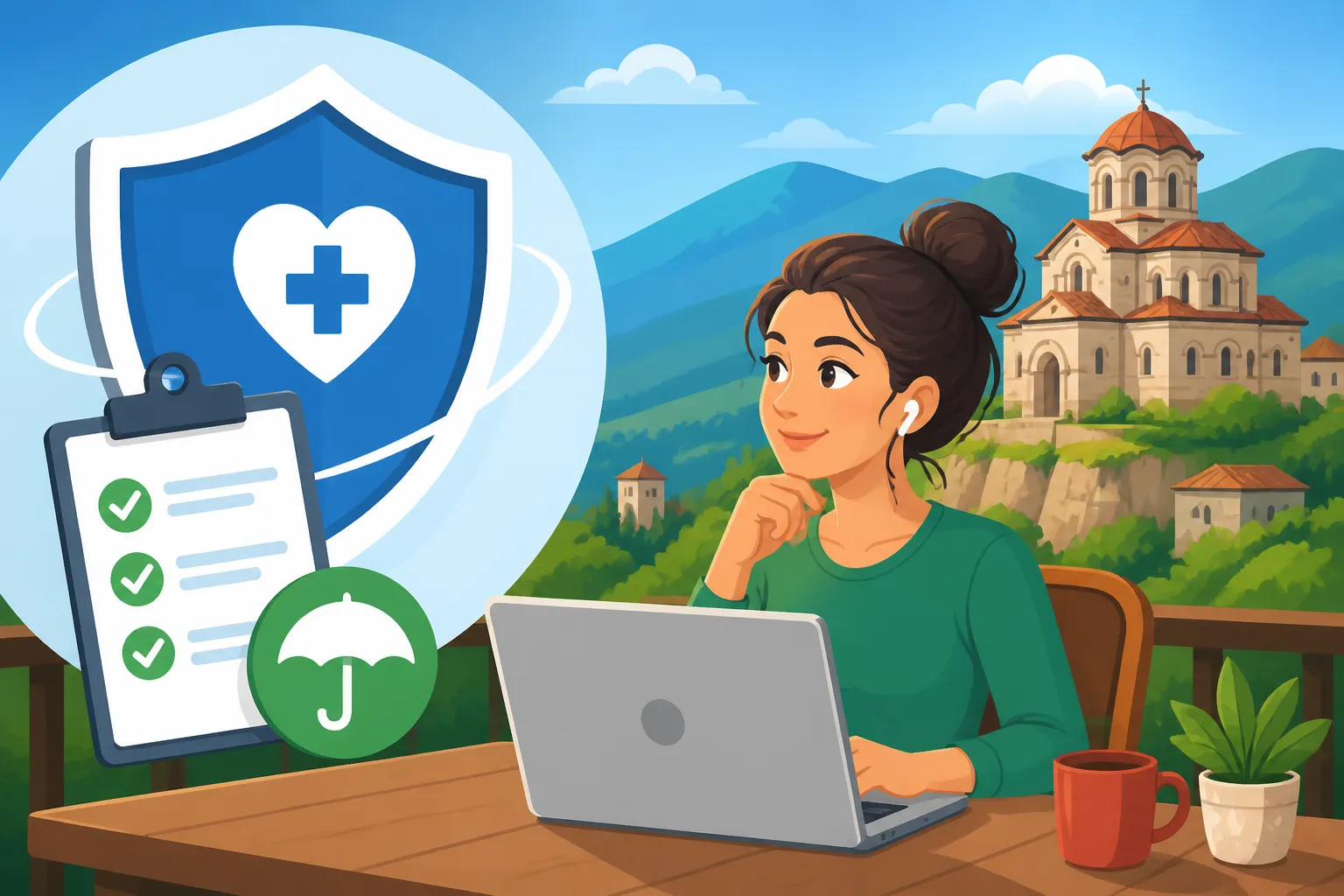
So, you've embraced the digital nomad dream, found your corner of paradise in Bulgaria, and you’re happily tapping away on your laptop, working for a company back home. Life is good, right? Well, until you stop to think about health insurance. It’s a common expat headache: "Can I just keep my old health coverage, or do I have to dive into the Bulgarian system?" This guide will meticulously break down your options, legal obligations, and practical considerations for maintaining continuous health coverage while working remotely from Bulgaria.
The Bulgarian Health Insurance Landscape for Remote Workers
It’s easy to assume your health insurance situation is straightforward when you’re still technically employed by a company in your home country. You might think, "Out of sight, out of mind," but when it comes to healthcare in Bulgaria, that approach can lead to significant problems down the line, especially with residence permits and unexpected medical bills. Bulgaria has its own rules, and they're not always intuitive for foreigners.
Understanding Mandatory Contributions: The NHIF
First things first, let's talk about the National Health Insurance Fund (NHIF), or as it's known here, the Natsionalna zdravnoosiguritelna kasa (NZOK). This is Bulgaria's public health insurance system, and for most residents, it’s mandatory. If you are formally employed by a Bulgarian company, registered as a freelancer, or otherwise generating income within Bulgaria that requires social security contributions, you are legally obligated to contribute to the NHIF.
The crucial point for remote workers is tax residency. If you spend more than 183 days in Bulgaria within any 12-month period, you are generally considered a tax resident. This means you are expected to declare your worldwide income in Bulgaria and pay Bulgarian taxes and social contributions, including those for health insurance. This applies even if your employer is abroad and you're receiving payments in a foreign bank account. Many remote workers initially overlook this, thinking their foreign employment absolves them of local obligations. It does not. If you become a tax resident and you are not otherwise covered by an EU/EEA/Swiss social security agreement (like an S1 form), you will need to register and contribute to the NHIF. Failing to do so can lead to penalties, issues with residence permit renewals, and mean you're not actually covered when you need medical care. It's a bureaucratic hurdle, but it's one you simply cannot ignore. For a deeper dive into the NHIF, you might want to check out our guide on How Bulgaria's Health System Works: The NHIF and Private Care Explained (2027).
When Your Foreign Employer Coverage Might Not Cut It
You might have a fantastic health plan through your employer in the US, UK, or another country. That’s great for when you’re in that country, but it’s rarely sufficient for long-term residency in Bulgaria. Here’s why:
- Geographical Limitations: Most domestic health insurance plans are designed for residents of a specific country. They might offer limited "travel" or "emergency abroad" coverage, but this is vastly different from comprehensive coverage for someone living in a foreign country. They typically won't cover routine check-ups, specialist visits, or non-emergency procedures in Bulgaria.
- Legal Compliance: For your Bulgarian residence permit, you need to prove you have valid health insurance that meets specific Bulgarian legal requirements. A standard foreign domestic policy almost certainly won't cut it. The Migration Directorate generally requires either proof of NHIF contributions (if you're a tax resident and obliged to pay) or a private international health insurance policy that explicitly covers you in Bulgaria for the duration of your permit.
- Direct Billing and Language Barriers: Imagine needing to see a doctor here. Your US-based insurance company might require you to pay upfront and then submit claims, which can be a slow, frustrating process involving mountains of paperwork and translations. Furthermore, few Bulgarian doctors or clinics will have direct billing agreements with obscure foreign insurers. This leaves you out of pocket and stressed when you should be recovering.
So, while it’s tempting to hang onto that familiar plan, relying solely on your foreign employer’s domestic health coverage while living long-term in Bulgaria is a risky gamble. It's usually neither legally compliant nor practically useful for your day-to-day healthcare needs here.
Navigating Your Options: NHIF, Private Bulgarian, or International Plans
Alright, so your old plan probably isn't the magic bullet. Now, let’s explore the viable options you have for health coverage while working remotely in Bulgaria. This is where you need to make an informed decision based on your residency status, duration of stay, and personal preferences.
Embracing the NHIF: When and How
If you've established tax residency in Bulgaria – meaning you spend more than 183 days here, and especially if you're registered as a self-employed person (freelancer) or a sole trader (ET/EOOD) in Bulgaria, even if your clients are all foreign – then you are almost certainly obliged to contribute to the NHIF.
When You Must Contribute:
- Bulgarian Tax Resident & Self-Employed/Sole Trader: If you're registered with the National Revenue Agency (NRA) as self-employed (svobodna profesiya) or running your own Bulgarian company (EOOD/OOD) and drawing an income, you must make mandatory social and health contributions to the NHIF. These contributions are based on a declared income, typically a minimum threshold.
- Employed by a Bulgarian Entity: Even if you're working remotely, if your foreign employer has a Bulgarian subsidiary or has formally employed you through a Bulgarian entity, they will handle your NHIF contributions as part of your salary deductions.
- EU Citizens with No S1 Form: If you're an EU/EEA/Swiss citizen working remotely for a non-EU company and establish tax residency in Bulgaria without an S1 form (which proves you're insured in another EU country), you will also be expected to contribute.
How to Register and Contribute:
- Register with the National Revenue Agency (NRA): This is your first step. You'll need your BULSTAT number (if self-employed) or personal ID number (PIN/LNCH) and your address registration.
- Declare Income and Pay Contributions: As a self-employed person, you'll declare your income and pay monthly contributions. These are usually paid by the 25th of the following month. You can do this online via the NRA portal or at a bank.
- Register with a GP: Once you're making contributions, you need to choose and register with a GP (lichen lekar). This GP will be your primary point of contact for referrals to specialists and most medical needs within the public system. This is a critical step many expats miss, leaving them effectively uninsured even if they're paying contributions.
Remember, the NHIF covers a wide range of services, including GP visits, specialist consultations (with a referral), hospital stays, and some prescription medications. However, it often comes with longer wait times for specialists and may not include access to the most modern private clinics. For detailed instructions on getting started, refer to How Do I Register with the NHIF in Bulgaria? and How to Register with the NHIF and a GP in Bulgaria (2027). The specifics of your residence status greatly impact your NHIF enrolment; you can learn more by reading Understanding How Your Residence Status Affects NHIF Enrolment in Bulgaria.
The Role of Private Health Insurance
Even when you're contributing to the NHIF, private health insurance in Bulgaria is a game-changer for many expats. It’s not just an alternative; it's often a highly recommended supplement.
Why Consider Private Health Insurance?
- Access to Private Clinics and English-Speaking Doctors: Bulgaria has an excellent network of private hospitals and clinics, particularly in cities like Sofia, Plovdiv, and Varna. These facilities often boast modern equipment, shorter wait times, and crucially, English-speaking staff. Major private providers include Acibadem City Clinic Tokuda Hospital, Hill Clinic, and Vita Hospital, among others.
- Enhanced Coverage: Private plans can cover things the NHIF doesn't, such as dental care (beyond basic emergency treatment), broader access to specialists without GP referrals, mental health services, and private hospital rooms.
- Convenience: Many private plans offer direct billing, meaning you don't pay upfront and wait for reimbursement. They also often come with dedicated English-speaking customer support.
When Private Insurance is Your Primary Option:
- Digital Nomads Not Yet Tax Resident: If you're on a specific digital nomad visa (should Bulgaria introduce one in the future that allows private insurance as primary proof of coverage) or if you are not yet a Bulgarian tax resident and your primary social security contributions are still in another EU country (and you have an S1 form), private health insurance might be your main requirement for a residence permit.
- Non-EU Citizens Awaiting NHIF Eligibility: For some non-EU citizens, particularly during the initial stages of a long-stay visa or residence permit application, a private international health insurance policy is often the only acceptable proof of coverage to the Migration Directorate.
Many expat residents opt for a hybrid approach: contributing to the NHIF for mandatory coverage while also holding a private plan for enhanced access and comfort. This gives you the best of both worlds. To understand what private plans offer, check out Understanding Private Health Insurance Plans in Bulgaria and a common question Do I Need Private Health Insurance in Bulgaria?.
International Health Insurance: A Digital Nomad's Best Friend
For remote workers, especially those who cherish flexibility and might move between countries, international health insurance is specifically designed for your lifestyle. These plans offer global coverage, making them ideal for individuals who are truly location-independent.
Key Benefits of International Plans:
- Global Coverage: Unlike domestic plans, international policies cover you across multiple countries. This is invaluable if you travel frequently or anticipate moving from Bulgaria to another destination down the line.
- Designed for Expats and Nomads: Companies like SafetyWing (mentioned here because it's a popular choice among digital nomads) craft their policies with the specific needs of mobile individuals in mind. They understand the nuances of living abroad, from visa requirements to emergency evacuations.
- Meets Visa Requirements: For many long-stay visas or initial residence permits in Bulgaria, an international private health insurance policy is explicitly required. These plans are usually designed to meet such criteria, covering essential medical services, emergency treatment, and repatriation. SafetyWing, for instance, offers plans that are often accepted for various digital nomad and long-stay visas.
- Continuity of Care: If you develop a chronic condition or need ongoing treatment, an international plan allows you to potentially seek care in different countries, depending on your policy terms, offering a sense of stability regardless of your physical location.
While local Bulgarian private plans are great, an international provider like SafetyWing might be a better fit if your lifestyle means you're not fixed in Bulgaria for the foreseeable future. They offer the peace of mind that comes with knowing you’re covered, whether you’re exploring the Rhodope Mountains or taking a quick trip to Greece. It's truly a "digital nomad's best friend" because it adapts to your journey. You can learn more about the diverse options available by reading What Health Insurance Options Are There for Expats in Bulgaria?.
Practical Considerations and Making the Right Choice
Choosing the right health coverage when working remotely from Bulgaria isn't a one-size-fits-all situation. It hinges on your personal circumstances, your long-term plans, and how deeply you intend to integrate into Bulgarian life.
The Tax Residency Conundrum
We touched on this earlier, but it truly deserves its own deep dive because it's where many remote workers get tripped up. The 183-day rule is critical. If you are physically present in Bulgaria for more than 183 days within any calendar year, you are presumed to be a Bulgarian tax resident. This means you have tax obligations here, including social and health contributions.
Scenario A: The Unaware Remote Worker
Let's say you're working remotely for a company in the US, getting paid into your US bank account, and you've been living happily in Plovdiv for eight months. You think, "My US company pays my health insurance, I'm fine." Wrong. As a tax resident, you are legally obliged to declare your income to the National Revenue Agency (NRA) in Bulgaria and pay health contributions to the NHIF. If you don't, you're not only breaking tax laws but also potentially leaving yourself without valid health coverage in Bulgaria, which can be uncovered during residence permit renewals or if you need serious medical care and they check your status.
Scenario B: The Self-Employed Remote Worker
Perhaps you’ve taken the plunge and registered as a freelancer (svobodna profesiya) in Bulgaria because it makes sense for your long-term residency plans. In this case, your obligation to contribute to the NHIF is explicit. You’ll declare a monthly income (at least the minimum insurable income) and pay your contributions directly. This ensures you’re fully integrated into the public system, giving you access to GPs and specialists as a Bulgarian resident.
What to do:
- Track Your Days: Keep a meticulous record of your entry and exit dates to Bulgaria.
- Consult a Professional: Before assuming anything, speak to a Bulgarian tax advisor or accountant specializing in expat affairs. They can help you understand your specific obligations, especially regarding double taxation agreements if your home country has one with Bulgaria.
- Plan for NHIF Contributions: If you determine you are a tax resident, factor NHIF contributions into your monthly budget. These are usually a percentage of your declared income, subject to minimum and maximum thresholds.
Ignoring tax residency can create a stressful, expensive mess. It's far better to address it proactively. For a comprehensive look at this, consult our articles Am I a Tax Resident of Bulgaria If I Work Remotely? and Understanding Tax Residency Rules and the 183-Day Test in Bulgaria.
Long-Term vs. Short-Term Remote Work Plans
Your health insurance strategy should align with how long you plan to be in Bulgaria.
- Short-Term Stays (under 6 months, or genuinely temporary): If you're genuinely on a short-term stay, perhaps just a few months, and your primary tax and social security ties remain firmly in another country (especially an EU/EEA country with an EHIC card), then an international travel or health insurance plan like SafetyWing might be perfectly adequate. These plans are flexible and designed for transient individuals. However, even for short stints, ensure your chosen plan meets any specific visa requirements you may have.
- Medium-to-Long Term Stays (6 months to several years): If you envision yourself in Bulgaria for a significant period, becoming a tax resident is almost inevitable. In this scenario, integrating into the NHIF system (by contributing yourself if self-employed/freelance, or through a Bulgarian employer) and supplementing it with a private Bulgarian health insurance plan is often the most sensible and legally compliant approach. This combination provides comprehensive care, peace of mind, and fulfills your residency requirements.
- Permanent Residence: If Bulgaria truly becomes your home, then the NHIF will become your primary insurer, and private supplementary insurance will likely be for enhanced services and convenience.
Consider your future self: will you want to build a life here, buy property, have children? These long-term goals usually necessitate full integration into the local social and health systems. Understanding the cost of these choices is also important; you can find more information in How Much Does Private Health Insurance Cost in Bulgaria in 2026?.
Steps to Ensure Continuous Coverage
Making sure you’re properly covered doesn’t have to be a headache if you approach it systematically. Here’s a plan of action:
- Assess Your Current Coverage:
- Contact Your Home Country Insurer/Employer: Ask detailed questions about international coverage. Does it cover routine care, not just emergencies, in Bulgaria? Does it meet Bulgarian legal requirements for residence permits? What are the claim procedures from abroad? Be specific.
- Understand Your Visa/Residence Permit Requirements: Check the exact health insurance stipulations for your Bulgarian visa or residence permit. Is it a public system, private, or international requirement?
- Determine Your Tax Residency Status:
- Count Your Days: Honestly evaluate how many days you expect to spend in Bulgaria within a 12-month period.
- Seek Expert Advice: Consult a Bulgarian tax lawyer or accountant. This is the most crucial step to avoid legal issues. They can clarify your obligations based on your income source and residency.
- Explore Bulgarian Options:
- NHIF: If you're obligated to contribute, understand the registration process with the NRA and NHIF. Learn how to choose a GP.
- Local Private Insurers: Research major Bulgarian private insurance companies like Generali, Allianz Bulgaria, and UNIQA. Compare their plans, especially those designed for expats.
- Consider International Options:
- Digital Nomad-Friendly Plans: Look into providers like SafetyWing or Cigna Global. They offer comprehensive coverage tailored for a mobile lifestyle, often meeting visa requirements. SafetyWing, for example, is well-regarded for its straightforward approach and competitive pricing for remote workers.
- Supplementary Coverage: Even if you choose a local Bulgarian private plan, keeping an international policy like SafetyWing as secondary travel insurance for trips outside Bulgaria can be a smart move, ensuring you're covered no matter where your adventures take you.
To help you visualize the differences, here’s a comparison table:
| Feature | NHIF (Public) | Bulgarian Private Insurance | International Private Insurance (e.g., SafetyWing) |
|---|---|---|---|
| Mandatory Status | Mandatory for tax residents (employees, self-employed) | Optional (often supplementary) | Required for some visas/permits, optional otherwise |
| Coverage Scope | Basic GP, specialist (with referral), hospital | Comprehensive (often includes dental, no referral needed for specialists, better facilities) | Global or regional; comprehensive for expats/nomads |
| Cost | Income-based contributions | Varies (competitive, can be expensive for top-tier plans) | Varies (competitive, especially for basic nomad plans) |
| Provider Network | Public clinics, hospitals | Private clinics, hospitals in Bulgaria | Global network of providers |
| Language Support | Predominantly Bulgarian | Often includes English-speaking staff | Typically excellent English support |
| Visa/Permit Acceptance | Accepted if mandatory status applies | Often accepted, depending on policy details | Frequently accepted for specific visas (e.g., digital nomad) |
| Wait Times | Can be long for specialists | Shorter | Varies by clinic choice, often shorter |
| Ideal For | Long-term residents, those legally required to contribute | Supplementary coverage, enhanced access, non-NHIF eligible | Digital nomads, frequent travelers, initial visa proof, those not integrating into public system |
Ultimately, your goal should be continuous, compliant, and comprehensive health coverage. Don’t wait until you’re sick or your residence permit is up for renewal to figure this out. A little proactive planning now will save you a world of stress later.
Disclaimer
The information provided in this guide is for general informational purposes only and does not constitute legal, tax, or medical advice. Regulations regarding health insurance, tax residency, and immigration in Bulgaria can change, and individual circumstances vary greatly. It is crucial to consult with qualified legal, tax, and insurance professionals in Bulgaria to obtain advice tailored to your specific situation.