What Documents Are Needed for a Marriage-Based Residence Permit in Bulgaria?
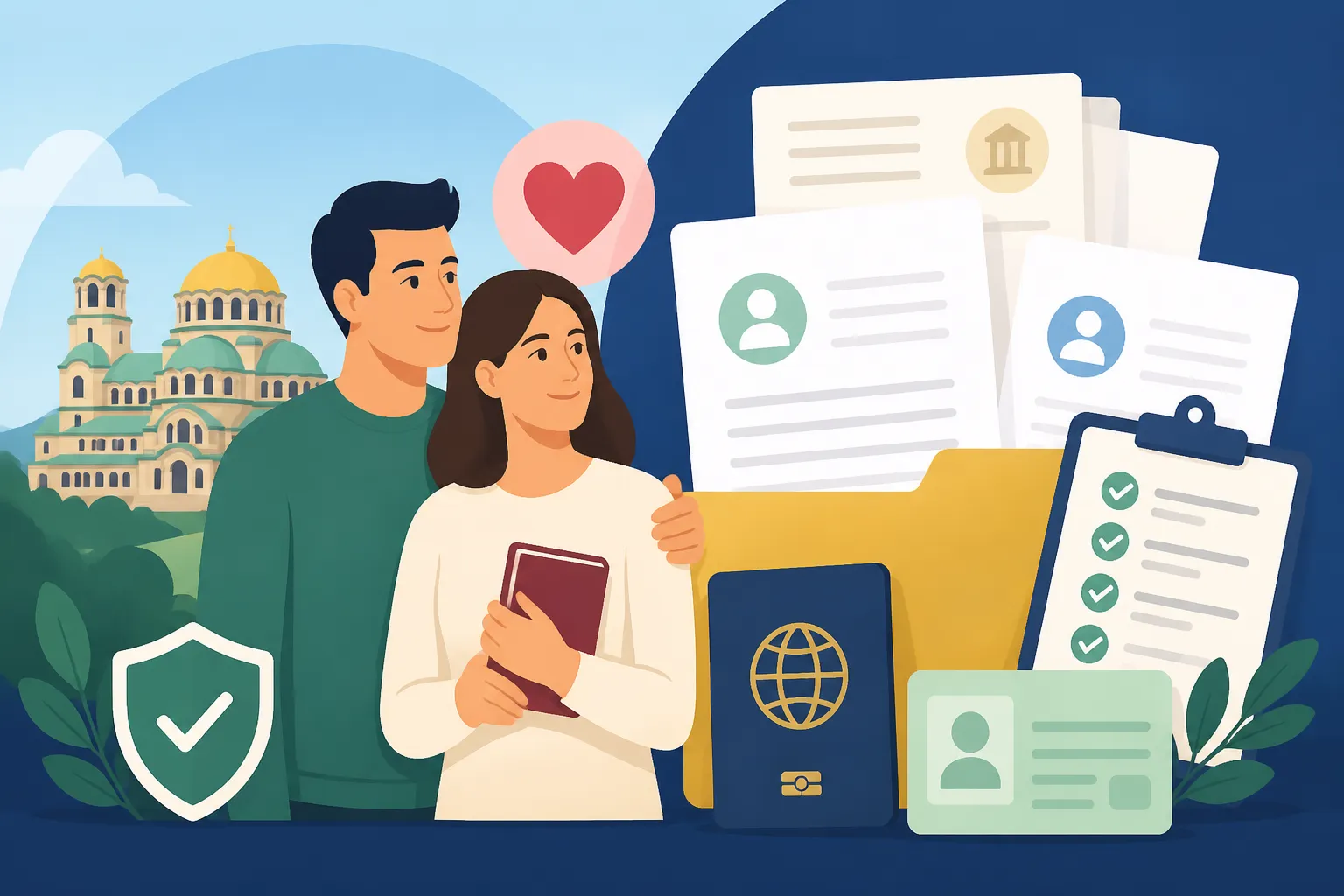
Oh, the joy of falling in love and deciding to build a life together in a new country! It's a beautiful, exciting adventure, but let's be honest, when that country is Bulgaria, even the most romantic notions quickly collide with a mountain of paperwork. Trying to figure out "What Documents Are Needed for a Marriage-Based Residence Permit in Bulgaria?" can feel like deciphering an ancient scroll written in a language you don't quite understand. But don't you worry, I've been through my fair share of Bulgarian bureaucracy, and I'm here to walk you through every single document you'll need, turning that daunting pile into a clear, manageable checklist so you can finally settle down with your loved one.
Understanding the Foundation: Who Qualifies for a Marriage-Based Permit?
First things first, let's clarify who this permit is for, because the specifics can vary slightly depending on your spouse's nationality. You see, Bulgaria, like any other EU member state, has rules that differentiate between EU citizens, their non-EU family members, and non-EU citizens marrying Bulgarian citizens. It’s a bit of a labyrinth, but knowing your starting point makes all the difference.
Different Spousal Scenarios and Their Implications
Generally, when we talk about a marriage-based residence permit for Bulgaria, we're usually referring to one of two main scenarios:
- You, a non-EU citizen, are married to a Bulgarian citizen: This is the most common scenario for those seeking a "family reunification" permit. Your Bulgarian spouse acts as the anchor for your residency. The process here is relatively straightforward in terms of eligibility, but still demanding in terms of documentation. You'll typically apply for a long-stay Type D visa from your home country (or country of habitual residence) first, based on family reunification, and then apply for your actual residence permit once you arrive in Bulgaria.
- You, a non-EU citizen, are married to an EU citizen who is exercising their right of free movement in Bulgaria: This is a different beast entirely, governed by EU directives. Your EU spouse must be living and working (or otherwise financially stable) in Bulgaria. Your application will be based on your status as a family member of an EU citizen, which sometimes means slightly different, often more streamlined, requirements than if your spouse were Bulgarian. However, the core principle remains the same: proving your legitimate relationship and your family's ability to support themselves. You generally apply directly for a residence card from within Bulgaria after entering with a valid visa or visa-free entry, depending on your nationality.
No matter your specific situation, the underlying principle is demonstrating a genuine, lasting marital relationship and proving you won't be a burden on the Bulgarian state. This is why the document list is so comprehensive. They want to ensure you're truly building a life here, not just using marriage as a shortcut for residency. It might feel intrusive, but it’s a standard approach.
The Rationale Behind the Demanding Document List
It’s easy to get frustrated when you see the sheer volume of paperwork required. Believe me, I’ve been there, pulling my hair out trying to find that one elusive stamp or translation. But let’s try to understand the why. The Bulgarian authorities, particularly the Migration Directorate (Дирекция „Миграция“), are essentially trying to verify a few key things:
- Your Identity and Legality: They need to confirm you are who you say you are, that your passport is valid, and that you haven't overstayed any previous visas or committed any crimes. This is about national security and immigration control.
- The Authenticity of Your Marriage: Unfortunately, sham marriages are a thing. Authorities need to be absolutely certain your marriage is genuine, not just a convenient arrangement for residency. This is why they ask for so much evidence of a shared life.
- Your Financial Self-Sufficiency: They want to ensure you won't become a burden on Bulgaria's social system. You (or your spouse) must demonstrate sufficient funds to support yourselves and have proper health insurance.
- Your Accommodation: You need a place to live. Proof of address is fundamental for any form of residency.
So, while it feels like they’re making you jump through endless hoops, each document serves a purpose in establishing your legitimate claim to live in Bulgaria with your spouse. The trick is to prepare meticulously and assume they'll want every piece of paper imaginable.
The Core Document Checklist for Your Marriage-Based Application
Alright, let's dive into the nitty-gritty: the actual documents you'll need. This is where most people get tripped up, so pay close attention. I've broken it down into categories to make it easier to digest. Remember, originals are almost always required for viewing, and copies will be taken. Any document not originally in Bulgarian must be officially translated and legalised (often with an apostille). For detailed guidance on this, you'll want to read up on Understanding Document and Translation Requirements for Bulgaria Immigration.
Your Personal Identification and Financial Proof
These are the foundational documents that tell the Bulgarian authorities who you are and that you can sustain yourself.
- Valid Passport: This seems obvious, right? But make sure it has at least 6 months validity beyond your intended stay and at least two blank pages. You’ll need copies of all processed pages, not just the main data page.
- Application Form: The dreaded form! It must be completely filled out in Bulgarian (or English, depending on the form version, but Bulgarian is always safer if you can manage). You can usually find the latest version on the Migration Directorate's website or pick it up at their office. Take your time, fill it neatly, and don't leave any fields blank – write "N/A" if it doesn't apply.
- Recent Passport-Sized Photos: Usually two or three, recent (taken within the last six months), colour, on a white background, and meeting standard passport photo dimensions (3.5 x 4.5 cm).
- Proof of Accommodation: This is critical. It could be a notarised rental agreement (най-добре нотариално заверен договор за наем), a property deed if you own a home, or a declaration from your spouse that you will live together at their registered address, usually accompanied by their property deed or rental agreement. Make sure the address on this document matches everything else.
- Proof of Funds: This demonstrates you have enough money to support yourself. The requirement typically means having funds equivalent to at least the Bulgarian minimum wage for the duration of your permit (e.g., 6 or 12 months). This can be proven with a recent bank statement from a Bulgarian bank (or an international bank, though Bulgarian is often preferred). If your spouse is supporting you, they will need to provide their bank statements and an official declaration of financial support. You might find resources like The Expat Guide to Opening a Bank Account in Bulgaria helpful for this step.
- Health Insurance: This is non-negotiable for any long-term stay. You must have valid health insurance covering you for the entire period of your requested residence permit. For non-EU citizens, this often means private international health insurance. Policies that meet the requirements often cover emergency medical evacuation and repatriation. Many expats turn to providers like Cigna Global for comprehensive international health insurance that is recognized in Bulgaria and provides peace of mind. They offer plans specifically designed for expatriates, ensuring you meet all the visa and residency requirements without hassle.
- Criminal Record Check: You'll need a certificate from your home country (and any other country where you've lived for more than a certain period, usually the last 5 years) stating you have no criminal convictions. This must also be officially translated and apostilled.
Demonstrating Your Legitimate Connection: The Marriage-Specific Documents
This is where you prove that you and your Bulgarian partner are genuinely married and building a life together. Don't underestimate the importance of these documents.
- Original Marriage Certificate: This is the cornerstone. If you married in Bulgaria, you’ll have the Bulgarian certificate. If you married abroad, it needs to be apostilled (or super-legalised, depending on the country) and then officially translated into Bulgarian. For example, if you married in the UK, you’d need an apostille from the UK Foreign, Commonwealth & Development Office, followed by a translation by a sworn translator in Bulgaria. You can learn more about this by reading How to Get Your Documents Apostilled for Bulgaria Immigration.
- Proof of Joint Life/Cohabitation: This is where you really need to show you’re a genuine couple. The more evidence, the better. Think about:
- Joint bank accounts: Statements showing shared finances.
- Joint utility bills: Electricity, water, internet bills with both your names.
- Correspondence: Letters addressed to both of you at the same address.
- Photos: A selection of photos together from different periods, showing family, friends, holidays.
- Witness statements: Letters from friends or family (Bulgarian or foreign) confirming your relationship and cohabitation.
- Shared lease agreements or property deeds: If both your names are on the accommodation document.
- Children's birth certificates: If you have children together, this is strong evidence.
- Travel documents: Proof of shared travel and holidays.
They are essentially looking for any tangible evidence that you live together as a married couple, sharing responsibilities and experiences. It’s about building a narrative through paperwork.
The Bulgarian Spouse's Contributions
Your Bulgarian spouse isn't just a signature; they are an active part of your application process and must provide their own documents.
- Bulgarian ID Card (Лична карта): Original and copies.
- Proof of Address Registration (Адресна регистрация): This is usually on their ID card, but sometimes an additional document might be requested to confirm their permanent address in Bulgaria.
- Proof of Income/Employment (Удостоверение за доходи/Трудов договор): If your spouse is financially supporting you, they need to show they have sufficient and stable income. This could be an employment contract, recent pay slips, or a tax declaration.
- Declaration of Financial Support: A notarised declaration from your spouse stating they will support you financially during your stay in Bulgaria. This is a common requirement for family reunification.
- Property Deed or Rental Agreement: If your spouse is providing the accommodation, they need to present the document proving their ownership or right to reside at that address.
The Application for the Permit Itself
Once you have all your documents ready, the actual application process for the residence permit will commence. If you've entered Bulgaria on a Type D visa for family reunification, you typically have a short window (often 90 days) to apply for your residence permit at the local Migration Directorate. This is the crucial step after your arrival. You'll need to submit the gathered documents along with an application specifically for a How to Apply for a Temporary Residence Permit in Bulgaria. Remember, the Migration Directorate staff handle many applications daily, so being organised and polite goes a long way.
Navigating the Bureaucratic Labyrinth: Tips and Pitfalls
Let's face it, dealing with government offices anywhere can be stressful, and in Bulgaria, it comes with its own unique flavour of bureaucracy. Here are some seasoned expat tips to help you keep your sanity.
Translations, Legalisation, and Apostille: The Golden Rule
This cannot be stressed enough: every single document not issued in Bulgarian must be officially translated and, in most cases, legalised with an apostille. This means:
- Apostille: For documents issued in countries that are signatories to the Hague Apostille Convention, you’ll get an Apostille stamp from the competent authority in the issuing country (e.g., Foreign Affairs Ministry).
- Super-legalisation: If your country is not a signatory to the Hague Convention, your document might need super-legalisation – a more complex process involving your country’s Ministry of Foreign Affairs and then the Bulgarian embassy or consulate in that country.
- Official Translation: Once apostilled/super-legalised, the document must be translated into Bulgarian by a sworn translator registered with the Bulgarian Ministry of Foreign Affairs. These translations often come with a stamp and seal. Never just use an online translator for official documents; it will be rejected.
The biggest mistake expats make is thinking they can skip steps or use unofficial translations. Don't. It will only lead to delays and rejections. Double-check with the Bulgarian embassy or consulate in your home country or a local migration lawyer about the exact requirements for your specific documents.
The Migration Directorate Experience
The Migration Directorate offices, often referred to by expats as "Migratsiya," are where you'll be spending some quality time. Whether you're in Sofia, Plovdiv, Varna, or a smaller town, the experience can vary.
- Patience is a Virtue: Be prepared for waiting times, often long ones. Bring a book, your phone, or simply practice your Bulgarian.
- Morning is Best: Often, going early in the morning, shortly after opening, can reduce your wait.
- Be Polite and Prepared: The staff are doing their job, and a polite, well-prepared applicant makes their day easier, and yours too. Have all your documents organised, ideally in a folder, with originals and copies clearly separated.
- Don't Be Afraid to Ask (Carefully): If you're unsure about something, ask. However, sometimes different officials might give slightly different interpretations, so try to get consistent advice. If you can, bring a Bulgarian friend or a paid interpreter.
- Local Variations: While the law is national, sometimes the application of rules or specific required supporting documents can vary slightly between cities or even within different departments of the Migration Directorate.
This entire process, from getting your initial visa to your residence permit, is a marathon, not a sprint. Understanding the Cost and Timeline of the Bulgaria Residence Permit Process can give you a clearer picture of what to expect in terms of duration and fees.
Preparing for the Interview
While not all marriage-based residence permit applications automatically lead to an interview, it's always a possibility, especially if the authorities have any doubts about the authenticity of your relationship. If an interview is requested, both you and your spouse will typically be interviewed, sometimes separately.
- Be Honest and Consistent: The primary goal of the interview is to establish the genuineness of your marriage. They will ask questions about your relationship, how you met, your daily life together, your shared future plans, and details that only a genuine couple would know.
- Know Your Story: Ensure your answers are consistent with each other and with the documentation you’ve provided. You’re not trying to memorize a script, but rather naturally tell the story of your life together.
- Be Prepared for Personal Questions: Some questions might feel invasive, but they are generally aimed at assessing the depth of your relationship. Maintain your composure and answer truthfully.
It’s crucial to remember that the Migration Directorate is looking for bona fide relationships. If your marriage is genuine, you have nothing to hide, and with proper preparation of your documents, you stand a very good chance of approval. And once you have that residence permit, you're well on your way to truly building your life here! Don't forget that after your initial temporary permit, you'll need to remember to How to Renew Your Residence Permit in Bulgaria as needed.
| Document Category | Specific Document Requirement | Notes & Tips for Expats |
|---|---|---|
| Personal Identification | Valid Passport (with copies of all pages) | Ensure at least 6 months validity beyond intended stay. |
| Completed Application Form | Fill neatly in Bulgarian (or English where specified); don't leave blanks. | |
| Passport-sized Photos (2-3) | Recent (within 6 months), colour, white background, 3.5 x 4.5 cm. | |
| Proof of Relationship | Original Marriage Certificate | Must be apostilled/super-legalised and officially translated into Bulgarian if issued abroad. |
| Evidence of Joint Life/Cohabitation | Provide multiple types: joint bank statements, utility bills, photos, witness letters, joint property/lease agreements. The more, the better. | |
| Financial & Accommodation Proof | Proof of Sufficient Funds (bank statements) | Equivalent to at least Bulgarian minimum wage for permit duration. Spouse's bank statements & notarised support declaration if they are providing support. |
| Health Insurance Policy | Must cover the entire permit duration. Consider international providers like Cigna Global for comprehensive coverage recognized in Bulgaria. Print policy details for submission. | |
| Proof of Accommodation | Notarised rental agreement, property deed, or spouse's declaration of residency with their property proof. Must match address on application. You might be asked for recent utility bills too. The Expat Guide to Setting Up Utilities (Electricity, Water, Gas) in Bulgaria can help here. | |
| Clean Background | Criminal Record Check | From home country (and any other country lived in for last 5 years). Apostilled/super-legalised and officially translated. |
| Bulgarian Spouse's Documents | Bulgarian ID Card (Лична карта) | Original and copy. |
| Proof of Address Registration | Usually on ID card, but can be separate document if requested. | |
| Proof of Income/Employment (or other financial stability) | Employment contract, pay slips, tax declaration, or other proof of financial means to support the family. | |
| Notarised Declaration of Financial Support (if applicable) | Statement confirming they will support you financially. |
Disclaimer
The information provided in this guide is intended for general informational purposes only and does not constitute legal advice. Immigration laws and regulations in Bulgaria can change frequently. It is highly recommended to consult with the Bulgarian Migration Directorate, a legal professional specialising in immigration, or the Bulgarian embassy/consulate in your country of origin for the most accurate and up-to-date information regarding your specific situation before making any decisions. We are not liable for any actions taken based on the information provided herein.