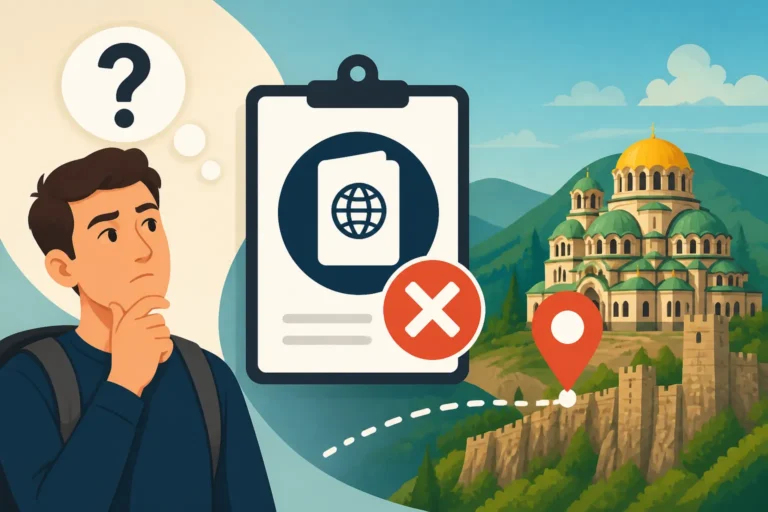
Understanding the Cost and Timeline of the Bulgaria Residence Permit Process
Oh, the Bulgarian residence permit process! If you've started looking into it, you've probably already felt that familiar knot of anxiety tightening in your stomach. It's not just the mountain of documents; it's the nagging uncertainty about how much this whole adventure is going to set you back, both in terms of your hard-earned cash and your precious time. This guide is here to walk you through the financial maze and bureaucratic timeline, giving you a realistic picture of what to expect so you can plan your move to Bulgaria with a little less stress and a lot more clarity.
The Initial Sticker Shock: Understanding Application Fees and Administrative Costs
Let's be honest, moving abroad often feels like a never-ending series of payments, and the residence permit process in Bulgaria is no exception. It's not just one big fee; it's a collection of smaller charges that can really add up if you're not prepared. Understanding these early on can help you budget effectively and avoid any nasty surprises down the line.
Type D Visa Application Fees: The First Hurdle
Before you even think about a residence permit in Bulgaria, most non-EU citizens need to secure a long-stay Type D visa. This is your gateway into the country, allowing you to actually apply for the residence permit once you're on Bulgarian soil. The cost for this visa is pretty standard across most Bulgarian embassies and consulates worldwide, typically sitting around €100. It's a non-refundable fee, which means if your application is rejected for any reason, that money is gone.
This fee generally covers the administrative processing of your visa application at the embassy. You'll usually pay it in the local currency of the country where you're applying, so keep an eye on the exchange rates. Sometimes, consulates might only accept cash, or they might require a bank transfer, so always check their specific payment methods beforehand. This initial outlay is just the first step, a necessary expense to even get your foot in the door.
Residence Permit Application Fees: Breaking Down the Payments
Once you've arrived in Bulgaria on your shiny new Type D visa, the real fun begins: applying for the actual temporary residence permit (often called a 'permit for extended stay'). These fees are paid directly to the Migration Directorate (Миграция) and vary depending on the duration you're applying for. For example, if you're applying for a 6-month permit, the fee is typically lower than a 1-year permit. As of early 2026, a 6-month temporary residence permit generally costs around 300 BGN, while a 1-year permit is about 500 BGN. These figures are always subject to change, so always double-check with the Migration Directorate's official website or your local office.
These fees cover the processing of your application, the issuance of the physical residence card, and other administrative costs associated with your stay. You'll typically be given a slip to pay this fee at a bank, and then you bring the receipt back to the Migration Directorate. It's critical to remember that these payments are usually non-refundable, regardless of the outcome of your application. So, ensure your documentation is absolutely watertight before you submit it. For a deeper dive into the distinctions, you might want to read about the difference between a Type C and Type D Visa in Bulgaria.
The Cost of Administration: State Taxes and Stamps
Beyond the headline application fees, there's a myriad of smaller administrative costs that often catch new expats off guard. Think of these as the 'death by a thousand cuts' in your immigration budget. These can include state taxes for certain documents, fees for issuing official certificates, and even the cost of specific postal stamps required for some submissions. While individually small, these can collectively add up to a significant amount.
For instance, when you apply for your residence permit, you might need to pay a small fee for a certificate confirming your address registration, or for a copy of a particular document from a state registry. Sometimes, you'll need to purchase specific tax stamps, known as гербови марки (gerbovi marki), from the post office to attach to official papers. These aren't usually clearly listed on official websites but are often part of the process. Always factor in an extra 50-100 BGN for these miscellaneous charges – it’s better to have it and not need it, than to be scrambling for change at the last minute while at the Migration Directorate.
Beyond the Basics: Hidden Costs and Essential Preparations
The stated fees for visas and permits are just the tip of the iceberg. To truly understand the cost of the Bulgaria residence permit process, you need to account for all the preparatory steps, many of which incur their own expenses. These 'hidden' costs are crucial for a smooth application and often prove more frustrating due to their unexpected nature.
Document Translation and Legalisation Expenses
This is where a significant chunk of your preparatory budget will likely go. Any document that is not originally in Bulgarian must be officially translated and, in many cases, legalised. This means getting an apostille if your home country is part of the Hague Apostille Convention, or a full legalisation through consular services if not. The cost for a sworn translation can range from 20-50 BGN per page, depending on the language and urgency. For example, a birth certificate might cost 30 BGN to translate, but a complex university diploma could be 50 BGN or more. Then, an apostille itself usually costs around 20-40 BGN per document, and you'll need to account for any courier fees if you're sending documents back and forth to your home country for this.
Imagine you need to translate your marriage certificate, your child's birth certificate, your university diploma, and a criminal record check. That’s at least four documents, each potentially needing translation and an apostille. Suddenly, you're looking at hundreds of BGN just for paperwork. It's crucial to use only translators who are certified with the Bulgarian Ministry of Foreign Affairs; otherwise, your documents will be rejected. This is an area where cutting corners will only lead to delays and additional costs down the line, so budget generously for it. You can learn more about these requirements in Understanding Document and Translation Requirements for Bulgaria Immigration.
Health Insurance: A Non-Negotiable Expense
One of the absolute non-negotiables for any residence permit application in Bulgaria is proof of valid health insurance. For non-EU citizens, this must be a private health insurance policy that covers emergency medical care, hospitalisation, and repatriation, with a minimum coverage of €30,000. While EU citizens can often rely on their EHIC for initial stays, non-EU nationals must show a proper policy. The annual cost for such a policy can vary wildly depending on your age, health status, and the level of coverage you choose.
A basic, compliant policy for a younger, healthy individual might start from around €200-€300 per year. However, if you're older, have pre-existing conditions, or want more comprehensive coverage beyond the bare minimum (which, let's face it, is highly advisable), you could be looking at €500-€1000+ annually. Reputable international providers like Cigna Global offer plans tailored for expats, ensuring you meet the Bulgarian requirements while also providing peace of mind. While it might seem like a large sum, having robust health insurance is not just a bureaucratic hurdle; it's a vital safety net in a foreign country. Getting the right coverage is a huge topic, and you can delve deeper into it with our guide, How Do I Get Health Insurance for a Bulgaria Residence Permit?
Proof of Accommodation and Financial Means
To live in Bulgaria, you need to show you have somewhere to live and enough money to support yourself without becoming a burden on the state. Proving accommodation often means submitting a notarised rental contract or a deed of ownership for property you’ve purchased. While a rental contract itself doesn't have an application fee, the notarisation of signatures can cost 10-30 BGN per signatory. If you used a real estate agent to find a place, you'd also have paid their commission, usually half a month's rent or more.
For proof of financial means, you'll generally need a bank statement from a Bulgarian bank showing that you have funds equivalent to at least the Bulgarian minimum wage for your duration of stay. For a 1-year permit, this usually means showing 12 times the minimum wage (currently around 933 BGN as of 2026, so approximately 11,196 BGN or €5,700). While the money itself isn't a cost (it's your own funds), transferring it to a Bulgarian bank account might incur bank fees, and currency exchange rates could eat into your savings. Make sure the bank statement is current and clearly shows your name and the funds. This is a critical piece of the puzzle, so ensuring you have these funds readily available in a local account is key.
The Timeline Tango: How Long Does This Really Take?
The question on every expat's mind: "How long will this take?" The answer, unfortunately, is rarely straightforward. The Bulgarian immigration process is not known for its speed, and patience is definitely a virtue you'll need in abundance. From the initial visa application to getting your physical residence card, expect to spend a considerable amount of time navigating the bureaucratic waters.
Type D Visa Processing Times: The Waiting Game Begins
Applying for a Type D visa from your home country or a country where you hold legal residence is the very first step. Officially, the processing time can range from 15 working days to 30 days, and in some more complex cases, it can extend up to 60 days. However, reality often dictates a longer wait. Factors like the specific Bulgarian embassy you're applying through, the volume of applications they're handling, and the thoroughness of your documentation can all influence the actual timeline.
For example, applying from a smaller consulate might be quicker than a bustling one in a major capital. During peak travel seasons, or after holidays, expect delays. Many accounts describe people waiting well over the official 30 days, sometimes pushing two or three months. It's crucial not to book your flights to Bulgaria until your Type D visa is firmly stamped in your passport. Remember, this is just the first hurdle. For detailed steps, see How to Apply for a Type D Long-Stay Visa for Bulgaria.
Temporary Residence Permit Processing: The Marathon Continues
Once you land in Bulgaria with your Type D visa, you typically have 90 days to apply for your temporary residence permit at the local Migration Directorate. This is a separate application process with its own timeline. After submitting all your meticulously prepared documents, you'll be given a receipt and told to return on a certain date. The official processing time for a temporary residence permit is usually stated as up to 14 working days for the standard service, or up to 3 working days for an express service (which, naturally, comes with a higher fee).
In practice, the standard service often takes closer to 3-4 weeks, especially in busy cities like Sofia or Plovdiv. The express service can be faster, but it's not always guaranteed to be exactly 3 days, sometimes stretching to a week. Once your application is approved, you'll then need to return to have your fingerprints taken and pay the fee for the physical card. The card itself can take another 7-10 working days to be produced for standard service, or 3 working days for express. So, from walking into the Migration Directorate to holding your residence card, you should realistically budget at least 4-6 weeks for the standard process. This is why understanding How to Apply for a Temporary Residence Permit in Bulgaria is so important.
Long-Term and Permanent Residence: The Long Haul
For those planning a truly long-term life in Bulgaria, the journey doesn't end with a temporary residence permit. After five continuous years of holding a temporary residence permit, you become eligible to apply for "long-term residence." This essentially grants you a more stable status, valid for five years and automatically renewable. The application process for long-term residence involves demonstrating your continuous stay, financial stability, and integration into Bulgarian society. The processing time can be similar to the temporary permit, around 14 days, but the scrutiny is generally higher.
Then, there's "permanent residence," which is the ultimate goal for many. This typically requires another five years of continuous residence after obtaining long-term residence. So, we're talking about a decade of living in Bulgaria before you can even apply for this status. The application for permanent residence is even more stringent, with more detailed checks on your background, finances, and adherence to all legal requirements. These later stages are truly a commitment, a testament to your desire to make Bulgaria your lasting home. To prepare for this long-term commitment, understanding The Expat Guide to Getting a Residence Permit in Bulgaria (2027) can be very helpful from the outset.
Practical Strategies for Expats: Saving Time and Money
Navigating immigration in Bulgaria can feel like trying to solve a Rubik's Cube blindfolded. But with a bit of foresight and strategic planning, you can minimise the financial strain and reduce the frustrating wait times. It's all about being proactive, organised, and knowing when to ask for help.
Organising Your Documents: Proactive Steps
The absolute best way to save time and prevent costly delays is to get your documents in perfect order before you even start the application process. Create a comprehensive checklist of every single document required for your specific visa and residence permit type. This isn't just a suggestion; it's practically a commandment. Ensure every document is current, that names match exactly across all forms of identification, and that expiry dates are well into the future. For instance, if your passport expires in six months, get it renewed now.
Make multiple photocopies of everything – sometimes they'll ask for two copies of one document, sometimes one. Having a master folder with originals, a copy folder, and a digital backup will save you endless headaches. Don't forget that certified translations and apostilles take time, sometimes weeks, especially if you need to send documents back to your home country. Start this process early. Trying to rush these steps later will invariably lead to express fees or missed deadlines, costing you more money and nerves. You can find more detail in our guide on How to Apply for a Residence Permit from Inside Bulgaria.
Leveraging Local Expertise: When to Seek Help
While many expats successfully navigate the process themselves, there are times when professional help is not just beneficial, but almost essential. The language barrier, subtle nuances in regulations, and the sheer complexity of the paperwork can be overwhelming. An immigration consultant or a lawyer specialising in immigration can guide you through each step, ensuring your application is complete and compliant. They can also represent you, attend appointments, and generally smooth over potential issues.
Yes, this comes at a cost, often ranging from a few hundred to over a thousand euros for a full service, depending on the complexity of your case. However, compare that to the cost of a rejected application, wasted time, new document fees, and the stress of repeated trips to the Migration Directorate. For those also dealing with the logistics of moving their entire life to Bulgaria, companies like Sirelo can offer broader relocation support, helping to coordinate everything from shipping your belongings to finding reliable local services, indirectly easing the overall burden of your move. If you have any doubts about your ability to manage the process, investing in expert advice can be a very wise decision. This can be especially true for certain categories of permits like Understanding the Investment Residence Permit in Bulgaria.
Financial Planning and Budgeting for Residency
A realistic financial plan is your shield against unexpected expenses. Don't just budget for the official fees; add a healthy buffer for incidentals. As a rule of thumb, add 20-30% to your estimated total costs for unforeseen translation needs, additional notarisations, courier services, or changes in fees. Remember to account for the cost of maintaining your minimum funds in a Bulgarian bank account for your proof of financial means – while it’s your money, it needs to be accessible here.
Consider the ongoing costs of required health insurance. When comparing providers, whether local Bulgarian options or international ones like Cigna Global, look beyond the cheapest premium. What is the deductible? What exactly is covered? Will it meet the requirements for your permit renewal next year? Bulgaria offers affordable healthcare overall, as explained in Why Bulgaria Has Affordable Healthcare: The Expat Guide (2027), but having good private coverage is key for your residence permit. Being financially prepared for the entire permit lifecycle, not just the initial application, will give you immense peace of mind.
Estimated Costs and Timelines: A Snapshot
To give you a clearer picture, here's a general overview of the estimated costs and timelines. Please remember these are approximations and can change based on current regulations, specific circumstances, and service providers.
| Item/Service | Estimated Cost (BGN) | Estimated Cost (EUR) | Estimated Timeline | Notes |
|---|---|---|---|---|
| Type D Visa Application Fee | ~200 | ~100 | 15-60 working days | Paid at embassy/consulate; non-refundable. |
| Temporary RP (6 months) | 300 | 153 | 14 working days (official) | Paid at Migration Directorate. |
| Temporary RP (1 year) | 500 | 255 | 14 working days (official) | Paid at Migration Directorate. |
| Express RP Processing | +200 | +102 | 3 working days (official) | Additional fee for faster processing. |
| RP Card Issuance (Standard) | 45 | 23 | 7-10 working days | For the physical card after approval. |
| RP Card Issuance (Express) | 90 | 46 | 3 working days | Additional fee for faster card production. |
| Document Translation | 20-50 per page | 10-25 per page | 1-5 days per document | Depends on language, length, urgency. |
| Apostille/Legalisation | 20-40 per document | 10-20 per document | 2-10 days per document | Plus courier fees if sent internationally. |
| Private Health Insurance | 400-2000+ per year | 200-1000+ per year | N/A | Mandatory; varies greatly by age, coverage, provider. |
| Notarisation of Rent Contract | 10-30 | 5-15 | Same day | Per signatory. |
| Proof of Funds (Bank Account) | N/A | N/A | N/A | Requires showing funds of |
| Immigration Consultant/Lawyer | 500-2000+ | 250-1000+ | Varies | Optional but highly recommended for complex cases or peace of mind. |
| Realistic Total for 1-Year Permit (Excluding personal funds) | ~1500-3500+ | ~750-1800+ | ~2-4 months minimum (start to finish) | This covers initial visa to holding RP card, including prep. |
Remember, these figures are estimates. Always budget more than you think you’ll need for the unexpected.
Disclaimer
The information provided in this guide is intended for general informational purposes only and does not constitute legal advice. Immigration laws and regulations in Bulgaria are subject to change. It is strongly recommended to consult with a qualified immigration lawyer or the official Bulgarian Migration Directorate for the most current and accurate information pertaining to your specific situation.