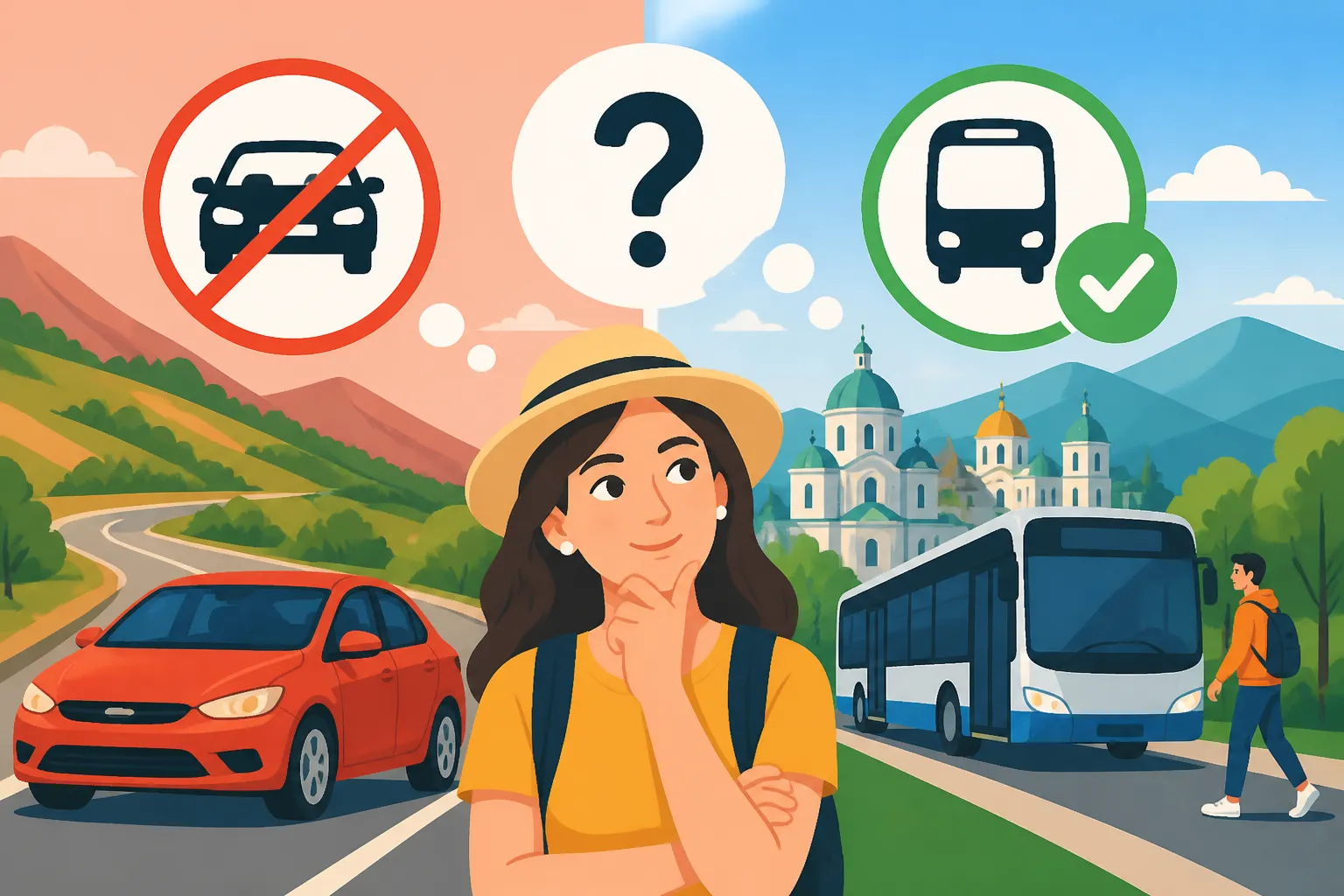
Do I Need a Car to Get Around in Bulgaria?
Let's be honest, when you first move to Bulgaria, especially if you're coming from a country where car ownership is almost a given, you might be wondering: "Do I really need a car here?" It's a valid question, one that every expat grapples with, and the answer isn't a simple yes or no. This guide will dive deep into Bulgaria's transportation landscape, helping you decide if buying or bringing a car is truly essential for your lifestyle, depending on where you choose to live and how you plan to explore this beautiful country.
Urban Living: Getting Around Cities Like Sofia, Plovdiv, and Varna Without a Car
If your life in Bulgaria is primarily centered in one of the major cities like Sofia, Plovdiv, or Varna, you'll be pleasantly surprised by how navigable they are without your own set of wheels. The public transport systems, while not always perfect, are generally comprehensive, affordable, and quite efficient.
Public Transport Networks
In Sofia, the capital, you'll find a well-developed network that includes the metro, trams, and buses. The Sofia Metro, for instance, has four lines that connect key residential areas, business districts, the airport, and the central bus and train stations. It’s clean, punctual, and generally less crowded than many Western European equivalents. During peak hours, trains run every few minutes, making commutes surprisingly quick. You can buy single-use tickets from machines at stations or kiosks, or invest in a "Sofia Card" for more economical daily, weekly, or monthly travel. Once you get the hang of the routes, it feels incredibly intuitive.
Beyond the metro, Sofia's trams and buses fill in the gaps, reaching almost every corner of the city. While traffic can sometimes cause delays, especially during rush hour, the sheer density of routes means you're rarely far from a stop. Apps like Moovit or Google Maps are invaluable for navigating the system in real-time, showing you routes, timings, and potential disruptions. For new arrivals, it can feel a little overwhelming at first, trying to decipher the Cyrillic signs and schedules, but practice makes perfect. Many expats initially rely heavily on these apps and a sense of adventure, and they quickly become pros.
Plovdiv and Varna, while lacking a metro, boast extensive bus networks that are the lifeblood of urban transit. Plovdiv’s buses connect its historical Old Town with modern districts, shopping centers, and industrial zones, making daily errands and sightseeing straightforward. Similarly, Varna’s buses traverse its coastal stretches, residential areas, and the city center, including routes that take you directly to the popular Golden Sands resort in the summer. Tickets are typically purchased directly from the driver or at kiosks near major stops, and are remarkably inexpensive compared to most of Europe. Learning the main lines and bus numbers for your regular journeys will make you feel right at home. It’s a bit of a learning curve, but one that many find rewarding, saving them a significant amount on transportation costs. Remember, a reliable mobile internet connection (perhaps with an eSIM from providers like Airalo) is super helpful for using mapping and public transport apps on the go.
Ride-Sharing and Taxis
When public transport feels a bit too much, or if you're out late, ride-sharing and traditional taxis are readily available, particularly in the larger cities. While global giants like Uber aren't widely operational in Bulgaria in the same way they are elsewhere, local alternatives thrive. Yellow! (Йелоу!) is a prominent and reliable taxi company across many Bulgarian cities, including Sofia, Plovdiv, and Varna, with its own user-friendly app. It functions much like Uber, allowing you to hail a ride, see the estimated fare, and track your driver's arrival. Bolt is also widely available and very popular, offering competitive pricing and a good user experience.
These services are surprisingly affordable compared to Western European or North American standards, making them a viable option for shorter distances or when you're carrying groceries. A typical ride across a city like Sofia might cost you anywhere from 5 to 15 BGN, depending on distance and traffic. When hailing a traditional taxi off the street, always check that the meter is running and that the prices per kilometer (usually displayed on the window) seem reasonable. While most drivers are honest, it’s always wise to be informed. For those evening adventures or when you just can't face another bus, these services are a godsend and mean you definitely don't need your own car for night-time navigation.
Walking and Cycling
Bulgarian cities, especially their historic centers, are wonderfully pedestrian-friendly. Sofia’s Vitosha Boulevard, Plovdiv’s Kapana district, and Varna’s Sea Garden are all best explored on foot, offering vibrant street life, charming cafes, and unique shops. The infrastructure for walking is generally good in central areas, with wide sidewalks and pedestrian zones. Many expats find they walk significantly more in Bulgaria than they ever did back home, simply because it’s a pleasant and practical way to get around.
Cycling, on the other hand, is a mixed bag. While larger cities like Sofia have made efforts to introduce dedicated bike lanes, the infrastructure is still developing and isn't as extensive or connected as in more bike-centric European cities. Outside of these designated lanes, cyclists often share the road with sometimes aggressive drivers, and potholes can be a hazard. That being said, for recreational cycling in parks or along the Black Sea coast in Varna, it's a fantastic option. Many locals do cycle for commuting, but it requires a certain level of confidence and awareness of local driving habits. If cycling is a big part of your daily routine, you might find it more challenging outside of specific routes.
Rural and Regional Travel: When a Car Becomes Indispensable
While city life in Bulgaria is perfectly manageable without a car, the narrative shifts dramatically once you venture beyond the urban hubs. If you plan to explore the country's stunning mountains, visit remote villages, or simply live somewhere a bit more tranquil, a car quickly moves from a luxury to an absolute necessity.
Limited Public Transport Outside Major Cities
The public transport infrastructure in Bulgaria significantly thins out once you leave the confines of Sofia, Plovdiv, Varna, or even the regional centers like Burgas or Veliko Tarnovo. Bus services to smaller towns and villages become infrequent, often running only a couple of times a day, if at all. These schedules can be erratic, and connections can be complicated or non-existent, turning what would be a straightforward car journey into an arduous, multi-leg expedition that eats up an entire day. Imagine trying to get from a small Rhodope village to the nearest town for specialist medical care, or trying to visit some of the less-known but equally stunning monasteries – without a car, it's a real challenge.
Train travel exists, connecting major cities, but it's often significantly slower than driving and doesn't reach the vast majority of smaller settlements or scenic natural attractions. The national rail network (BDZ) can be charmingly old-fashioned, but it's not geared for speedy or comprehensive coverage across the entire country. If your vision of expat life involves weekend trips to the mountains, discovering hidden historical gems, or exploring the picturesque countryside, relying solely on public transport will severely limit your experiences. The freedom that a car offers in these scenarios is unparalleled.
The Necessity for Flexibility and Access
Living in a rural area, or even in a smaller town, brings an entirely different set of logistical challenges that a car effortlessly solves. Grocery shopping, for instance, can become a weekly saga if the nearest well-stocked supermarket is 20 kilometers away and accessible only by an infrequent bus service. Families with children will quickly find that school runs, extracurricular activities, or even simply visiting friends in other villages become complicated without a car.
Consider the joys of spontaneity: deciding on a whim to drive up to Buzludzha Monument for sunrise, exploring a new hiking trail in the Pirin mountains, or simply taking a leisurely drive through the Rose Valley during blossom season. These experiences, which often define the allure of living in Bulgaria for many, are either impossible or incredibly difficult to orchestrate without personal transport. A car grants you the flexibility to travel on your own schedule, carry luggage, pets, or groceries without fuss, and truly immerse yourself in the rich tapestry of Bulgaria beyond the city limits. Moving your belongings can also be a challenge without a car; services like Sirelo can assist with larger moves, but for daily errands, a car makes life significantly easier.
The Road Conditions and Driving Culture
Now, let's talk about the actual experience of driving in Bulgaria. It's… unique. The road network is extensive, but quality can vary dramatically. While major highways (like the A1 from Sofia to Burgas or parts of the A2 to Varna) are generally well-maintained, once you peel off onto secondary or tertiary roads, you might encounter potholes, uneven surfaces, and a distinct lack of proper signage. Mountain roads, while scenic, can be narrow, winding, and sometimes poorly lit. Always be prepared for the unexpected, especially in rural areas where livestock, horse-drawn carts, or even unlit vehicles might appear on the road, particularly after dark.
Bulgarian driving culture is also something you'll need to adapt to. Drivers can be quite assertive, often exceeding speed limits, overtaking in questionable spots, and using indicators sparingly. Patience, defensive driving, and a good sense of humor are essential. That being said, once you get used to the rhythm, it's generally manageable. Just remember that it’s a different beast than driving in, say, Germany or the UK. Understanding these realities is crucial when weighing the "need" for a car against the potential frustrations of driving here. To ensure you're fully prepared, check out our guide on Driving in Bulgaria: Licences, Registration and Rules for Expats (2027).
The Pros and Cons of Car Ownership as an Expat in Bulgaria
Deciding whether to buy, lease, or bring a car to Bulgaria involves weighing up a number of factors, from the unparalleled freedom it offers to the often-underestimated costs and bureaucratic hurdles.
The Advantages of Having Your Own Wheels
The most significant advantage of owning a car in Bulgaria is undoubtedly the freedom it grants. You're no longer bound by bus schedules, train routes, or the availability of taxis. This is especially true if you enjoy exploring. Imagine spontaneous road trips to the stunning Seven Rila Lakes, a cultural excursion to the ancient Roman theatre in Plovdiv, or an escape to a quaint guesthouse in the Balkan Mountains. With a car, these adventures are within easy reach. This freedom is also invaluable for families with children, making school runs, doctor's appointments, and weekend outings infinitely simpler. Lugging groceries, carrying sports equipment, or transporting your beloved pet becomes a non-issue. For those who value privacy and personal space, a car provides a quiet sanctuary away from crowded public transport.
Moreover, if you find yourself living in a more remote area, as many expats choose to do for a quieter life or lower cost of living, a car becomes almost indispensable for day-to-day necessities. Access to larger supermarkets, specialized shops, or even basic services often requires a drive. It truly broadens your horizons and allows you to experience Bulgaria in a much richer, more personal way. You can also easily embark on cross-border adventures to neighboring countries like Greece, Turkey, or Romania.
The Costs and Hassles of Car Ownership
Owning a car isn't just about the purchase price; it comes with a host of ongoing costs and administrative tasks. First, there's the initial registration process, which can be quite bureaucratic, especially for imported vehicles. Our article on How to Register and License a Car in Bulgaria breaks down the steps. You'll need to navigate the vehicle inspection, obtain license plates, and ensure all documents are in order.
Then come the recurring expenses. Car insurance in Bulgaria is mandatory and varies based on factors like the vehicle's age, engine size, and the driver's history. While generally more affordable than in some Western countries, it's still a significant annual outlay. You can get a detailed breakdown in our guide: How Much Is Car Insurance in Bulgaria?. Fuel costs, while lower than in some EU nations, still add up, especially with extensive travel. Don't forget the annual road vignette, a sticker or electronic pass required for using national roads, which is relatively inexpensive but crucial to avoid fines. Maintenance and repairs, while often cheaper in Bulgaria due to lower labor costs, are still an unavoidable part of car ownership. Parking can also be a challenge in city centers, with paid zones (blue or green zones in Sofia) and limited free spots.
Beyond the financial aspects, dealing with potential breakdowns, navigating unfamiliar repair shops, and handling the annual inspections can add stress to expat life. It's a commitment that requires time and effort, and for some, the convenience doesn't always outweigh the hassle.
Alternatives to Full Ownership
If you're still on the fence about full car ownership, there are viable alternatives to consider. For occasional trips or longer explorations, car rental agencies are plentiful in major cities and at airports. Companies like Top Rent A Car, Enterprise, or local Bulgarian providers offer a range of vehicles for daily, weekly, or even monthly rentals. This can be a cost-effective solution if you only need a car sporadically for holidays or specific errands. Just be mindful of rental costs, which can escalate during peak tourist season.
Another option, particularly for short bursts of driving in urban areas, might be car-sharing services, though these are less developed and widespread in Bulgaria compared to Western Europe. However, for most expats, renting for specific purposes or relying on a combination of excellent public transport and ride-sharing remains the most practical approach if full ownership seems daunting or unnecessary. Weighing these alternatives against the Cost of Living in Bulgaria for Expats can help you make an informed financial decision.
Making Your Decision: Key Factors to Consider
Ultimately, the decision of whether or not you need a car in Bulgaria boils down to a few critical personal factors. There’s no one-size-fits-all answer, so take a moment to really consider your individual circumstances and preferences.
Your Location and Lifestyle
This is perhaps the most significant determinant. If you're envisioning a vibrant urban life in the heart of Sofia, living close to your workplace or favorite amenities, and enjoying weekends exploring city parks and museums, then a car is very likely superfluous. Public transport, walking, and ride-sharing will cover virtually all your needs efficiently and affordably. Many expats thrive in Sofia without ever feeling the need for a car, especially if they are singles or couples without young children. To understand this better, you might want to read about The Best Places to Live in Bulgaria for Expats: A Complete Guide (2027) or even specifically What Are the Best Neighbourhoods for Expats in Bulgaria?.
However, if your Bulgarian dream involves a renovated village house in the countryside, a remote mountain retreat, or even a smaller town that isn't a major regional hub, a car will quickly become indispensable. Access to basic services, social events, and wider exploration will be severely hampered without one. Similarly, if you have a family with children, a car often simplifies life immensely, regardless of whether you’re urban or rural, making school runs, doctor visits, and family outings far less stressful. Your lifestyle dictates your travel patterns, and those patterns dictate your need for a car.
Budget and Convenience
Consider your financial situation and how much you value convenience. Owning a car, even in relatively affordable Bulgaria, comes with a constant stream of expenses: purchase cost, registration fees, annual insurance, road vignette, fuel, maintenance, and parking. While public transport passes are incredibly cheap – a monthly pass for Sofia's metro, trams, and buses is a fraction of the cost of car ownership – the overall The Complete Guide to Cost of Living in Bulgaria for Expats (2026) for a family with a car will be higher than for one relying solely on public transport.
On the flip side, the convenience a car offers is undeniable. It saves time, provides comfort, and offers unparalleled flexibility. It's about weighing these tangible and intangible benefits against the ongoing financial outlay and administrative effort. For some, the peace of mind and freedom a car provides are worth every penny; for others, the cost and hassle outweigh the benefits. Think about how much you are willing to spend to maximize your personal convenience and flexibility.
Understanding Driving and Road Rules
Before making a final decision, be realistic about your comfort level with driving in a foreign country. As mentioned, Bulgarian driving culture can be a shock for some, and road conditions outside major arteries might be challenging. If you’re a nervous driver or easily stressed by chaotic traffic, you might find that the benefits of car ownership are diminished by the anxiety of driving. On the other hand, if you're an adaptable and confident driver, you'll likely adjust quickly and appreciate the independence.
Furthermore, ensure you understand the rules for foreign drivers in Bulgaria. You might be able to use your existing driver's license for a certain period, but eventually, you may need to exchange it or obtain a Bulgarian one. Our comprehensive guide, How Do I Use My Foreign Driver's Licence in Bulgaria?, provides all the details you need. Being prepared for the realities of driving here will help you make a more informed decision.
Ultimately, Bulgaria offers a spectrum of living experiences, and your transportation needs will perfectly align with the one you choose.
Disclaimer
The information provided in this guide is for general informational purposes only and does not constitute legal, financial, or professional advice. While we strive to keep the information up-to-date and accurate, regulations and conditions in Bulgaria can change. Always consult with relevant professionals or official sources for the most current and specific advice pertaining to your individual situation.