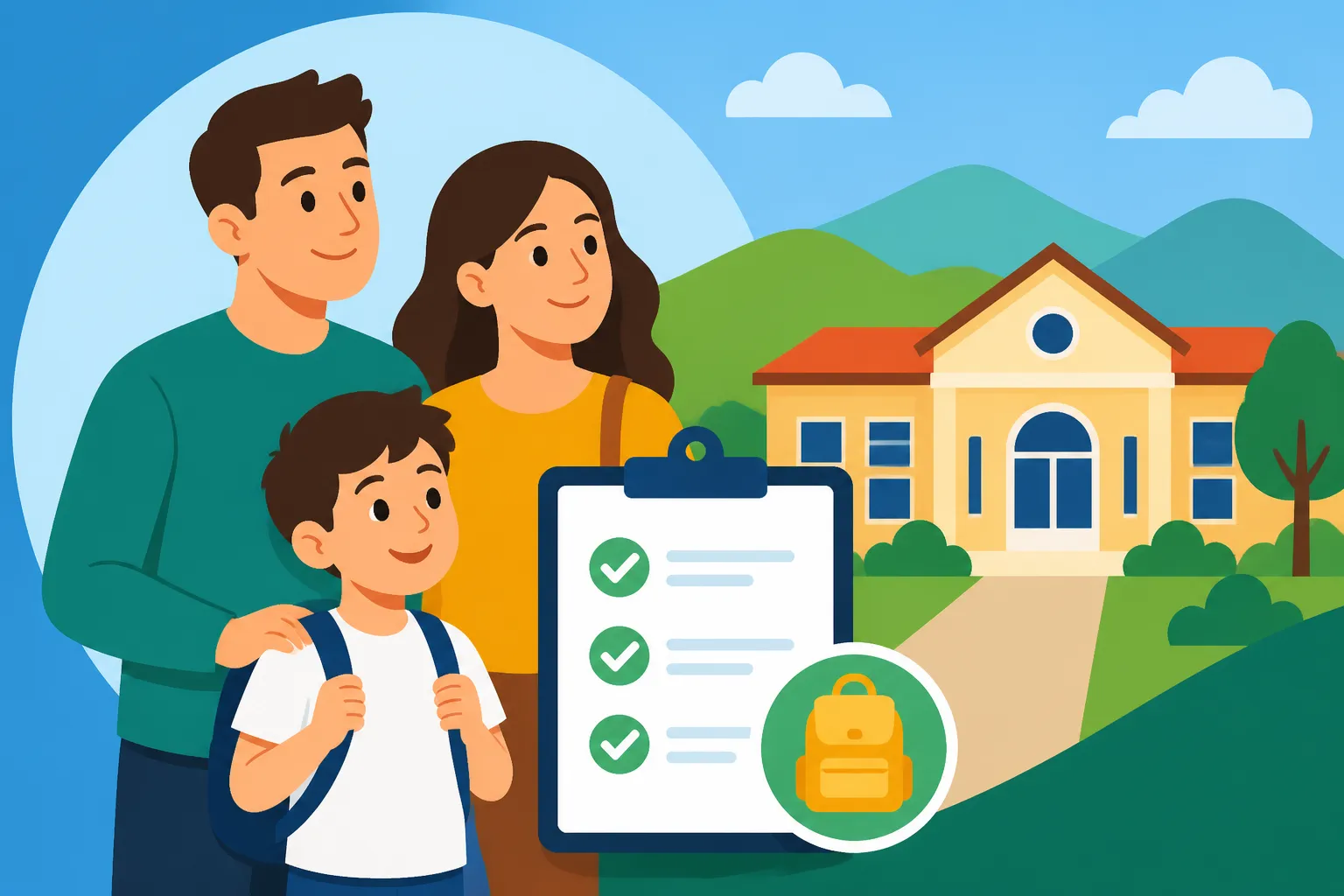
How Do I Enrol My Child in School in Bulgaria?
Oh, the joys of navigating a new country's bureaucracy, especially when it involves something as precious as your child's education! It's one of those hurdles that can feel utterly overwhelming, isn't it? The labyrinthine processes here in Bulgaria are well known for the headaches it can cause. This guide aims to demystify the school enrolment process, giving you a clear, realistic roadmap so you can get your little ones settled without too many tears – yours, mostly.
Understanding Bulgaria's Education System for Expats
Before you even start looking at specific schools, it’s really helpful to get a handle on the general landscape of education here in Bulgaria. It's not a one-size-fits-all situation, and what works best for your family will depend a lot on your long-term plans, your child's age, and your budget. The choices typically boil down to public (state-funded) schools, private Bulgarian schools, and international schools. Each has its own distinct flavour and set of challenges and benefits for expat children.
The Bulgarian education system generally follows a structure similar to many European countries. Children typically start compulsory education around age 6 or 7, beginning with primary school (grades 1-4), followed by junior high (grades 5-7), and then high school (grades 8-12). The academic year usually kicks off in mid-September and runs until late May or early June. You'll find that the curriculum is comprehensive, covering core subjects like Bulgarian language and literature, mathematics, history, geography, science, and foreign languages, most commonly English.
Public Schools The Local Experience
Enrolling your child in a public school in Bulgaria can be a fantastic way for them to truly integrate into Bulgarian society and master the language. It’s also, by far, the most budget-friendly option, as tuition is essentially free for residents. However, it comes with its own set of considerations for expat families. The primary language of instruction is, of course, Bulgarian. For children who don't already have a grasp of the language, this can be a significant initial barrier. While younger children tend to pick up new languages remarkably quickly, older kids might struggle more with the academic demands alongside learning a new tongue.
You might find that some public schools, especially in larger cities like Sofia, Plovdiv, or Varna, are more accustomed to foreign students and might even offer some support classes for Bulgarian as a foreign language. However, this isn't a universal offering, and resources can vary wildly between schools. The class sizes can also be larger than what you might be used to, particularly in popular urban areas. On the flip side, the cultural immersion is unparalleled. Your child will make local friends, celebrate Bulgarian holidays, and learn about the local customs firsthand. This is often an invaluable experience, building resilience and a broader worldview.
Private and International Schools A Different Path
For many expat families, private or international schools offer a smoother transition, particularly if you're only planning a temporary stay or if your children are older. International schools, like the American College of Sofia or the Anglo-American School of Sofia, typically offer curricula such as the International Baccalaureate (IB) or an American/British curriculum, with English as the primary language of instruction. This means your child can continue their education in a familiar language and system, which can be a huge relief during an already disruptive move.
Private Bulgarian schools, on the other hand, usually follow the national curriculum but often boast smaller class sizes, enhanced facilities, and sometimes a more modern pedagogical approach than their public counterparts. They might also offer more robust foreign language programmes or extracurricular activities. While tuition fees for these schools can be substantial, they often provide a more comfortable, familiar environment for expat children, making the initial adjustment to life in Bulgaria a little less daunting. When considering these options, think about what educational continuity means for your child and if you're aiming for them to eventually attend university back in your home country or another international institution. Having a strong international curriculum can really facilitate that path.
Key Steps for Enrolling Your Child in a Bulgarian School
The enrolment process, while sometimes bureaucratic, is manageable once you know the steps. It’s definitely not a simple "walk-in-and-sign" affair, but with patience and preparation, you'll get there. Knowing whether you're aiming for a public or private school first will dictate slightly different paths.
One thing to keep in mind throughout this process is the importance of having reliable communication. You’ll be making calls, sending emails, and perhaps even relying on translation apps during in-person visits. Having a solid mobile data plan is essential. I remember when I first arrived, getting local connectivity was a mission, but now services like Airalo can make sure you're connected from the moment you land, taking one small stress off your plate while you're navigating these bigger tasks.
Navigating Public School Enrolment
Enrolling your child in a public school in Bulgaria primarily revolves around your registered address. Children are typically assigned to schools based on their proximity to their official residence. This system aims for equitable distribution and ensures local children attend local schools. The first, and often most critical step, is registering your address officially. You'll need a rental agreement or proof of ownership, and then you'll need to register at the local municipality (Obshtina). This official address will be crucial for the school registration process. You can find more details about this in our guide on how to register your address after moving to Bulgaria.
Once your address is sorted, you’ll need to contact the local Regional Department of Education (Регионално управление на образованието – РУО) or the municipality to find out which schools serve your area and the specific enrolment dates. These dates can be quite strict, especially for popular schools in urban centres. Generally, applications for the upcoming academic year open in late spring or early summer, with enrolment happening over the summer. You’ll submit an application form, usually available from the school or municipality website, along with all the required documents. Don't be surprised if there's a lottery system for oversubscribed schools, especially for first grade. This is where living close to your desired school can genuinely give you an advantage.
The Private and International School Application Process
The enrolment process for private and international schools is often more structured and less dependent on your residential address, though proximity might still be a factor for your commute. Most private and international schools have their own admission procedures, which typically begin much earlier than public schools – sometimes as early as the autumn of the year before your child is set to start. It's common to apply up to a year in advance, especially for highly sought-after institutions.
The process usually starts with an online application, followed by submitting supporting documents. Many schools require an entrance exam or an interview with the child and parents to assess academic readiness and suitability. They’ll want to see previous school records, academic achievements, and sometimes even a letter of recommendation. It's a much more competitive process than public school enrolment, and spaces can be limited. Don't forget that these schools come with significant tuition fees, which can range from a few thousand Euros per year for some private Bulgarian schools to well over €10,000-€20,000 per year for top-tier international schools. Always factor these costs into your overall budget for living in Bulgaria.
| School Type | Primary Language | Curriculum | Cost (Annual) | Enrolment Basis | Key Benefit for Expats |
|---|---|---|---|---|---|
| Public Bulgarian | Bulgarian | National Bulgarian | Free (state-funded) | Residence-based; Lottery | Full cultural and linguistic immersion; cost-effective |
| Private Bulgarian | Bulgarian (often with strong English/other language programs) | National Bulgarian (enhanced) | €2,000 – €8,000+ | Application, sometimes interview/exam | Smaller classes, potentially better facilities; still local curriculum |
| International | English (or other) | IB, American, British, German, French | €8,000 – €25,000+ | Application, entrance exams, interviews | Familiar curriculum, smooth transition, English instruction |
Required Documents and Practical Tips for Enrolment
Ah, the paperwork! It's the bane of every expat's existence, and school enrolment is no exception. Getting your documents in order beforehand will save you a world of stress and multiple trips to various offices. Always, always check the specific requirements of the school you’re applying to, as they can differ slightly. What one school needs, another might not, but there's a common core of documents you'll definitely encounter.
When you're gathering these documents, remember that translation and legalisation are often necessary. Any document not originally issued in Bulgarian will typically need to be translated by a sworn translator and then often apostilled or legalised, depending on the country of origin and any international agreements Bulgaria has. This can add both time and expense to the process, so factor it into your planning. It's worth finding a reliable translation agency early on; many law firms also offer these services, which can be useful when you are also Getting Your Documents Apostilled for Bulgaria Immigration.
Essential Documents for Your Child's Registration
Here’s a general list of documents you can expect to need. Keep original copies safe and only submit certified copies where required:
- Birth Certificate: Your child's original birth certificate, translated into Bulgarian and legalised.
- Passport/ID: Your child’s passport or ID card, and copies of your own residence permit/ID.
- Medical Certificate/Health Card: This is absolutely crucial in Bulgaria. Your child will need a comprehensive medical examination, usually by a Bulgarian GP (личен лекар – personal doctor), who will issue a health card (здравно досие) confirming they are fit to attend school and listing their vaccinations. This can be one of the trickier parts to navigate, so starting early with How to Choose and Register with a GP (Личен Лекар) in Bulgaria is wise.
- Proof of Residence: Your rental contract or property deed, along with your official registration from the municipality (адресна регистрация).
- Previous School Records: Report cards, transcripts, or certificates from your child's previous school. These will also need to be translated and potentially legalised. For older children, proof of completed grades is vital.
- Application Form: The specific application form provided by the school or the local education authority.
For younger children entering primary school, some schools might also request a psychological assessment or a readiness test, especially if they are unsure about the child's readiness for formal schooling in a new environment. Don't be alarmed by this; it's often a standard procedure to ensure the best placement. For international schools, you'll also likely need letters of recommendation from previous teachers and potentially a statement of purpose from the parents.
Overcoming Language Barriers and Bureaucracy
Let's be real: navigating official processes in a foreign country can be frustrating, and Bulgaria is no exception. The language barrier is often the biggest hurdle. While many younger Bulgarians speak English, you can't always count on finding an English speaker at every municipal office or even at every school. This is where Google Translate, a phrasebook, or ideally, a Bulgarian friend or a professional translator becomes your best ally. I've spent countless hours trying to explain things with gestures and broken Bulgarian, only to realise a simple phone call with a fluent speaker would have saved me half a day!
Empathy and patience are key. The officials are doing their job, and sometimes their systems are just different from what you're used to. Try to be polite and persistent. If you hit a wall, don’t be afraid to ask for clarification, or if possible, seek assistance from a local. Many expat groups online can also offer invaluable advice based on recent experiences. Remember that everyone's situation is unique, and what worked for one family might not be exactly the same for yours.
Consider engaging a relocation service if the stress is too much. While I generally advocate for a DIY approach where possible, for complex administrative tasks like school enrolment, having a local expert guide you through the intricacies can be worth its weight in gold. They can help with everything from document translation and legalisation to making appointments and accompanying you to meetings. When you're coordinating a whole move, perhaps even with the help of international movers found through platforms like Sirelo, adding school enrolment to that list can feel like too much. Don't hesitate to outsource some of the legwork if it means maintaining your sanity. It's all part of the grand adventure of Moving to Bulgaria: Your First 90 Days!
Lastly, stay organized. Create a folder (digital and physical) for all school-related documents. Keep copies of everything you submit and note down dates, names of people you've spoken to, and any specific instructions you receive. This will be invaluable if you need to follow up or clarify anything down the line. Good luck – you’ve got this!
Disclaimer
Please note that while I strive to provide accurate and up-to-date information, regulations and procedures in Bulgaria can change. It is always advisable to verify the latest requirements with the relevant Bulgarian authorities, such as the Ministry of Education and Science, the local municipality, or the specific school you are interested in. This guide is for informational purposes only and does not constitute legal advice.