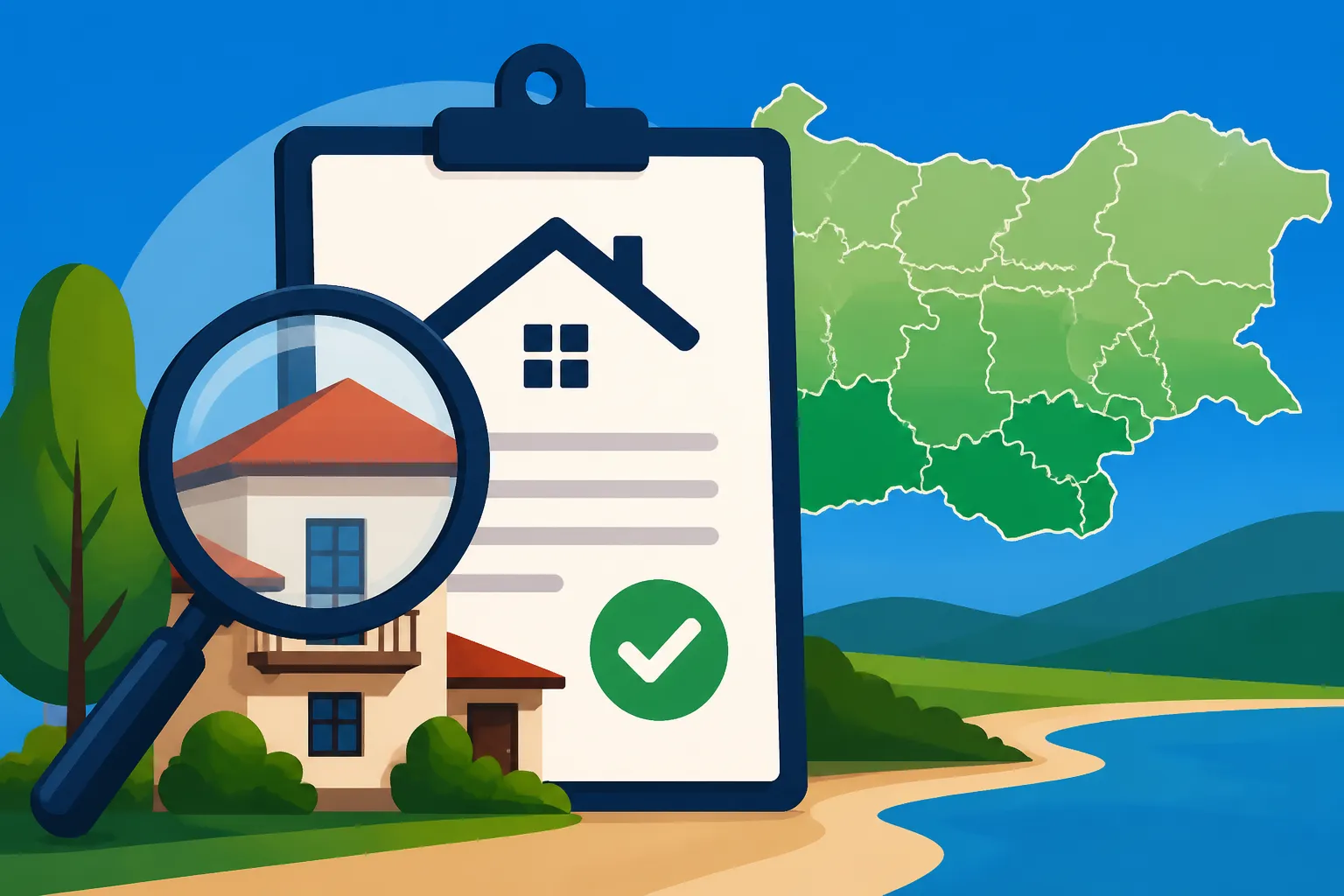
How Do I Check a Property Title in Bulgaria?
Moving to Bulgaria and eyeing that perfect apartment or a charming village house? It's an exciting time, but before you get swept away by the low prices and beautiful scenery, there’s one critical step you absolutely cannot skip: checking the property title. Trust me, as an expat who’s seen it all, ignoring this can lead to a world of pain, from hidden debts to ownership disputes that could cost you your investment and your peace of mind. This guide is going to walk you through exactly how to navigate the sometimes-murky waters of Bulgarian property title checks, ensuring your dream home doesn't turn into a bureaucratic nightmare.
Why Checking a Property Title in Bulgaria is Absolutely Crucial for Expats
When you're buying property in a foreign country, it's not just about the bricks and mortar; it's about the legal history attached to that property. Bulgaria has a distinct past, and its legal and administrative systems can throw up surprises for those accustomed to different norms. For us expats, this due diligence isn't just a recommendation; it's a non-negotiable step to protect your significant investment.
Avoiding Past Mistakes and Hidden Issues
Bulgaria's transition from a communist state means that property ownership records, while significantly improved, can sometimes carry baggage from previous eras. You might encounter situations where properties have multiple undeclared heirs from decades ago, or where parts of a building were constructed without proper permits. Imagine buying a beautiful villa only to find out later that the gorgeous extension was built illegally and could face demolition, or that a distant relative of the previous owner suddenly appears with a claim. These aren't just hypothetical scenarios; they are real-life headaches that expats have faced. Without a thorough title check, you could inherit outstanding mortgages, liens, easements that restrict your use of the property, or even unpaid utility bills or tax debts that could transfer to the new owner under certain circumstances. It's a risk most of us aren't prepared for.
Understanding the Unique Bulgarian Context
The legal framework around property in Bulgaria, while robust in theory, can be challenging to navigate in practice due to language barriers, local customs, and bureaucratic specifics. Unlike some Western countries where property records are fully digitized and easily accessible with a few clicks, here, the information might be spread across different agencies or require specific local knowledge to interpret correctly. For instance, what seems like a simple transfer of ownership might involve checking municipal records for tax liabilities, the Property Register for encumbrances, and even court records for ongoing disputes. This is why merely looking at a deed isn't enough; you need to delve deep into the property’s past. This deep dive helps you understand the true legal standing of the asset you're about to acquire.
The Bulgarian Property Register: Your Starting Point (and Its Limitations)
Every journey needs a starting point, and for checking a property title in Bulgaria, that's the Property Register. It's the official record-keeper, but it's important to understand what it can and can't do for you, especially as a foreigner.
What is the Property Register and How Does It Work?
The Bulgarian Property Register is maintained by the Registry Agency (Агенция по вписванията), an executive agency under the Ministry of Justice. This is the central repository for all legal information concerning real estate across the country. Its purpose is to ensure publicity and transparency of property rights, and it's where all acts related to property—sales, mortgages, leases exceeding one year, easements, and court decisions—are officially registered. Each property is assigned a unique cadastral identifier (идентификатор), which is critical for pulling up its records.
The register should contain comprehensive details about current and historical ownership, any registered encumbrances like mortgages (ипотеки), liens (възбрани), or easements (сервитути), and any pending lawsuits affecting the property. The system is designed to provide legal certainty, meaning that whatever is recorded there is generally considered publicly known and legally binding. If something isn't registered, it might not be enforceable against a good-faith purchaser. However, this doesn't mean you can just pop online and instantly get all the answers in English.
Accessing Information: Online vs. In-Person
The Registry Agency does have an online information system, often referred to as the IKAR system (or the property register portal), which allows for certain inquiries. You can sometimes search by cadastral identifier or even by owner name, though the latter can be tricky if you don't have exact details. However, accessing comprehensive and legally verifiable documents, such as a full Удостоверение за тежести (Certificate of Encumbrances), usually requires an official application, often in person or through a licensed professional. The online interface is primarily in Bulgarian, and the search parameters can be quite specific, requiring knowledge of the precise property идентификатор or specific registration numbers.
For expats, attempting to navigate this portal alone can be a significant hurdle. Not only is there the language barrier, but understanding which documents to request and how to interpret them correctly is a specialized skill. An in-person visit to a local Registry Agency office, while offering direct access, still demands fluency in Bulgarian and an understanding of the administrative process. This is precisely why relying on a trusted local expert is not just convenient but often essential for a successful transaction. Before you even get to this stage, ensuring you have reliable mobile data is key. Many expats find getting an eSIM from a provider like Airalo{:target="_blank"} incredibly helpful for staying connected during these bureaucratic adventures, letting you translate on the fly or contact your lawyer without interruption.
Key Documents and Information You'll Need for a Title Check
Before anyone can start digging into the property's history, you need to arm them with the right information and paperwork. Think of it as preparing your archaeological tools before you start excavating.
Gathering Essential Details About the Property
The absolute most crucial piece of information is the property's unique cadastral identifier (идентификатор). This is like the property's social security number. You can usually find this on any existing property deeds, tax declarations, or even a preliminary contract. Without this, finding accurate records can be like looking for a needle in a haystack. If you only have the address, your lawyer or notary can usually find the идентификатор through the Cadastre Agency, but it adds an extra step and potential delay. It’s also incredibly helpful to have the seller's full names (as they appear on their ID cards), personal identification numbers (EGN for Bulgarian citizens, or BULSTAT number for foreign entities/individuals registered for certain purposes), and their current address. These details ensure that the search is correctly focused on the right individuals and their ownership history.
Required Documents for Your Inquiry
While you, as the buyer, might only need your passport to identify yourself, the process of officially requesting title information typically involves specific application forms from the Registry Agency. These forms are exclusively in Bulgarian and must be filled out precisely. If you have a preliminary contract signed with the seller, this document can be useful as it usually contains all the necessary property and seller details. However, the heavy lifting of preparing and submitting these requests almost always falls to your appointed legal representative – be it a notary public or a lawyer. They will prepare the necessary applications, perhaps draft a power of attorney if you can't be present in person, and ensure all submissions meet the legal requirements.
Getting a clear understanding of the full process and required documents from the start is important. For a holistic view, you might want to read our guide on how to Understanding Property Ownership and the Market in Bulgaria (2027), which covers many aspects of the property landscape here.
The Step-by-Step Process of a Thorough Property Title Check
So, you've got your eye on a place, and you know why a title check is vital. Now, let's talk about the practical steps involved in getting that crucial peace of mind. This isn't a DIY project for expats, not if you want to sleep soundly at night.
Engaging a Local Notary Public or Lawyer
This is where your professional team comes in, and frankly, it's the single most important decision you'll make in the buying process. You absolutely need to engage a reputable, independent local lawyer who specializes in real estate. While the notary public is legally obliged to check the title before officiating the sale, your lawyer works solely for your interests. Their role is to conduct a separate, exhaustive investigation, advise you on potential risks, and explain everything in terms you understand.
A good lawyer will act as your advocate, navigating the complexities of the Bulgarian legal system. They'll communicate with the seller's representatives, clarify any ambiguities, and ensure that all legal conditions are met to protect your investment. Choosing a lawyer who is fluent in English and has experience working with foreigners is key. You'll be dealing with nuanced legal concepts, and clear communication is paramount. Don't be shy about asking for references or checking their credentials.
What the Legal Professional Will Investigate
Your lawyer's investigation will be far more comprehensive than a simple search on the Property Register. Here’s a rundown of what they'll meticulously go through:
- Ownership History: They'll trace the property's ownership back at least 10 years, sometimes longer, to ensure there are no breaks in the chain of title or any prior unregistered claims. This includes checking for inherited property that might have multiple heirs, some of whom may not have officially renounced their rights.
- Encumbrances: This is vital. They will request an official Certificate of Encumbrances (Удостоверение за тежести) from the Registry Agency, which lists all registered mortgages, liens, easements, foreclosures, and seizures. This document will clearly show if the property is currently used as collateral for a loan or if there are any legal restrictions on its use or sale.
- Legal Disputes: They'll check for any pending lawsuits (съдебни дела) related to the property that could affect its ownership or value. This often involves cross-referencing information with court registries.
- Tax Liabilities: Your lawyer will verify that all local property taxes (данък върху недвижимите имоти) and garbage collection fees (такса битови отпадъци) are paid up to date. In Bulgaria, certain tax debts can, in some cases, transfer with the property, so you want to ensure a clean slate. This is a critical point that can become a massive headache if overlooked.
- Cadastral Information: They'll confirm that the property’s physical description in the Cadastre Agency matches the actual property on the ground and the description in the deeds. Discrepancies here can indicate illegal construction or errors in registration. Our guide on How to Complete the Property Purchase and Notary Process in Bulgaria delves deeper into the role of cadastral data.
- Building Permits and Usage Permits (Akt 16): For new or recently constructed properties, or properties with extensions, your lawyer will verify that all necessary building permits (разрешение за строеж) were obtained and, crucially, that a Permit for Use (Разрешение за ползване), also known as Akt 16, has been issued. Akt 16 confirms that the building is legally completed and fit for habitation according to all regulations. Buying a property without Akt 16 can leave you in a legal limbo, unable to register for utilities properly or even face future demolition orders.
Understanding the Property Certificate (Удостоверение за тежести)
The Удостоверение за тежести (Certificate of Encumbrances) is your golden ticket. This official document, issued by the Registry Agency, is the definitive statement of all legal burdens and rights attached to a property at a specific point in time. It details any mortgages, court attachments, rights of use, or other claims that have been formally recorded against the property. Your lawyer will obtain this certificate for you.
It's vital that this certificate is as recent as possible – ideally issued within a few days of the final signing of the preliminary contract or the actual deed of sale. This is because new encumbrances can theoretically be registered very quickly. A certificate that's weeks or months old simply won't cut it, as a lot can change in the Bulgarian bureaucratic system in a short span. Your lawyer will usually request an updated one just before the notary finalizes the deal to ensure no last-minute surprises. This rigorous checking is a core part of the overall legal process, which is also touched upon in Understanding Property Valuation and Mortgages in Bulgaria.
Common Red Flags and How to Address Them
During the title check, your lawyer might uncover certain issues. It’s crucial to know what these red flags are and, more importantly, how to deal with them without panicking.
Discrepancies in Documentation or Property Descriptions
This is a fairly common red flag, especially with older properties. Your lawyer might find that the size of the property listed in the old deeds doesn't quite match the cadastral plan, or that the names of past owners have slight variations. Sometimes, a cellar or attic space has been converted into living space without being properly registered, or an extension added without the correct permits. These aren't always deal-breakers, but they require clarification.
For instance, if the cadastral plan shows a smaller area than the deed, it might indicate an unregistered addition, which could be illegal. If names don’t match exactly, it could be a simple clerical error that needs to be corrected by the seller, or it could point to a more serious ownership dispute. Your lawyer will advise you on the severity of the discrepancy. Minor administrative errors can often be rectified by the seller through a visit to the Cadastre Agency or Registry Agency, but significant discrepancies, particularly those involving undeclared construction, might mean the property is too risky to purchase or requires the seller to legalize the changes at their expense before closing.
Unresolved Debts, Mortgages, or Legal Disputes
This is arguably the most serious category of red flags. If the Удостоверение за тежести reveals an active mortgage, a seizure for unpaid debts, or a pending lawsuit concerning the property, you need to hit the brakes. While many property sales happen when there's an existing mortgage, the critical point is that the mortgage must be cleared or transferred as part of the transaction. Your lawyer will ensure that the sale agreement includes clauses stipulating that any outstanding debts or encumbrances will be fully settled by the seller using part of the purchase price before the property title transfers to you. For example, a common practice is for the notary to transfer the portion of the purchase price needed to clear the mortgage directly to the seller’s bank, with proof of clearance provided immediately.
If there's a legal dispute, it could mean a third party claims ownership or has a right over the property. Buying into such a situation could mean years of court battles. Your lawyer should provide a clear assessment of the risks. In many cases, it's safer to walk away from a property with unresolved legal disputes. You don't want to inherit someone else's problems, especially not in a foreign legal system. For more on the associated costs, including potential legal fees, you can check out The Cost of Healthcare in Bulgaria: A Complete Breakdown for Foreigners (2026), which, though about healthcare, reminds us that professional service costs should always be factored into your budget.
Issues with Building Permits or Usage Permits
This red flag is particularly prevalent with older homes or properties in rural areas where modifications might have been made informally. As mentioned, the lack of an Akt 16 (Permit for Use) for a new build is a major issue. It means the building is technically incomplete and not officially approved for habitation, which can impact insurance, utilities, and future resale. For older properties, renovations or extensions made without proper permits can also be problematic. Local municipalities can order the demolition of illegal structures, leaving you with significant losses.
Your lawyer will meticulously check for these permits. If issues are found, they should advise you on whether the illegal construction can be legalized retrospectively (a process that can be costly and time-consuming for the seller) or if it's simply too risky. Sometimes, the seller might agree to shoulder the costs and responsibility for legalization before the sale, but this must be watertight in the contract. Otherwise, it’s a strong signal to reconsider. You're not just buying a home; you're buying its entire regulatory history, and any shortcuts taken in the past could become your burden.
Why a Professional is Indispensable for Expats
You might be tempted to save a few quid and try to handle things yourself, especially if you're quite fluent in Bulgarian. But trust me, the legal and administrative labyrinth of property purchases here is no place for penny-pinching.
Navigating Language Barriers and Legal Complexities
Even if you speak Bulgarian well enough for daily conversation, legal Bulgarian is a whole different beast. It’s full of specific terminology, obscure phrases, and historical quirks that even native speakers might struggle with without legal training. Understanding the nuances of a property deed from 1950 or a cadastral sketch from the 1980s requires expertise. A simple mistranslation or misunderstanding of a legal term could have devastating consequences, potentially costing you hundreds of thousands of leva.
An experienced Bulgarian lawyer who regularly works with international clients will not only translate documents accurately but also explain the implications of each clause and document in a way that makes sense to you. They act as your cultural and legal bridge, ensuring that you’re not just signing papers but truly understanding what you’re committing to. They can also represent you directly, sparing you countless trips to various government offices, each with its own specific opening hours, document requirements, and queues. This level of support is invaluable when dealing with a foreign bureaucracy, as you might find when registering for other services, as covered in How to Register with the National Health Insurance Fund in Bulgaria.
Mitigating Risks and Ensuring Peace of Mind
Ultimately, hiring a professional for your property title check isn't an expense; it's an investment in your security and peace of mind. The legal fees for a thorough property due diligence are a small fraction of the property's purchase price, yet they protect you from potentially massive financial losses and emotional stress. Imagine buying a property only to find out months later that it's tied up in a decades-old family dispute, or that the previous owner owes significant back taxes that have now become your problem. These situations are not just inconvenient; they can be financially ruinous.
Your lawyer's job is to identify all these risks before you commit your money. They ensure that when you finally sign that deed, you’re doing so with full knowledge of what you’re buying, free from hidden encumbrances or legal traps. They will literally comb through mountains of paperwork, verify every detail with official agencies, and give you a comprehensive report on the property's legal status. This diligence allows you to proceed with confidence, knowing that you’ve done everything possible to secure your investment in Bulgaria. Thinking ahead about your new life here, you might also be looking into moving logistics; platforms like Sirelo{:target="_blank"} can help you compare removal companies, but always ensure the property is legally sound before planning your move.
| Check Aspect | Who Performs It (Primary) | Key Documents Involved | Common Red Flags | Outcome if Unresolved |
|---|---|---|---|---|
| Ownership History | Lawyer | Deeds, Inheritance Documents | Breaks in chain, undeclared heirs | Ownership disputes, invalid title |
| Encumbrances | Lawyer (via Registry Agency) | Удостоверение за тежести | Active mortgages, liens, easements, seizures | Property repossessed, restricted use |
| Legal Disputes | Lawyer (via Court Registries) | Court rulings, lawsuit filings | Pending litigation affecting property | Lengthy court battles, loss of property |
| Tax & Utility Debts | Lawyer (via Municipality/Providers) | Tax declarations, utility bills | Unpaid property taxes, municipal fees, utilities | Debts transfer to new owner, service cuts |
| Cadastral Matching | Lawyer (via Cadastre Agency) | Cadastral map, property plan | Discrepancies in size, boundaries, layout | Illegal construction, future disputes |
| Building/Usage Permits | Lawyer (via Municipality) | Разрешение за строеж, Akt 16 | Missing permits, unlegalized additions | Demolition orders, inability to use property |
Disclaimer
This article is for general informational purposes only and does not constitute professional advice. Laws, prices and regulations vary by location and change over time. Consult a qualified professional for guidance on your specific situation.