What Are the Eligibility Criteria for Each Residence Permit Type in Bulgaria?
Navigating the labyrinthine world of immigration can feel like a full-time job, especially when you're trying to figure out how to legally set up your life in a new country like Bulgaria. The sheer volume of information, often presented in dense legal jargon, can be incredibly daunting, leading to confusion and frustration about what documents you truly need and which "ground" for residence actually applies to your situation. This guide is here to untangle that complexity, breaking down the specific eligibility criteria for each common type of residence permit in Bulgaria, ensuring you have a clear roadmap for your move.
The Foundational Pillars of Bulgarian Residence Eligibility
Before diving into the specifics of various permit types, it's absolutely crucial to understand that there are universal requirements that apply to nearly every single person seeking residence in Bulgaria, regardless of their specific purpose for being here. Think of these as the bedrock upon which any successful application is built. Skipping or underestimating any of these can lead to immediate rejection, sending you back to square one.
General Requirements for All Applicants
Let's be real, the Bulgarian authorities, like any other country's immigration department, want to ensure that anyone settling here is a responsible individual who won't become a burden or a risk. This means demonstrating you meet basic standards of good conduct, financial stability, and preparedness.
First and foremost, your passport must be valid for at least six months beyond the expiry date of the visa or residence permit you're applying for. This isn't just a suggestion; it's a hard rule. Many an expat has had their application delayed or rejected because they overlooked this simple detail, having to scramble to get a new passport from their home embassy. Beyond that, a clean criminal record is non-negotiable. You'll need to provide a certificate of no criminal conviction, usually issued by your home country's authorities, sometimes requiring an apostille and a sworn translation into Bulgarian. This is their way of saying, "We welcome you, but please, no bad apples."
Then there's the ever-present question of finances. You absolutely must demonstrate sufficient funds to support yourself and any dependents for the duration of your intended stay. While the exact amount can vary by permit type, a general rule of thumb is to show at least the Bulgarian minimum wage multiplied by the number of months you're applying for, or even better, the average monthly salary to demonstrate a comfortable living. This proof usually comes in the form of a bank statement from a Bulgarian bank account, sometimes requiring an initial transfer from your home country. This can be a bit of a chicken-and-egg situation – you need a permit to easily open an account, but you need an account to show funds for the permit! It's a classic expat dilemma, often solved by opening a basic non-resident account first or bringing enough cash to open one upon arrival.
Finally, you need a place to live, and proof of it. This could be a notarized rental contract, a deed of ownership if you’ve purchased property, or a declaration from a host providing accommodation. And don't forget health insurance! For non-EU citizens, comprehensive private health insurance is a mandatory requirement until you become eligible for the National Health Insurance Fund (NHIF). Even then, many prefer to supplement with private options. Companies like Cigna Global offer plans tailored for expats, ensuring you're covered for unexpected medical events. Remember, an accident or illness before you're fully integrated into the public system can lead to significant out-of-pocket costs. For more information, you might find guidance in How Do I Get Health Insurance for a Bulgaria Residence Permit?.
Understanding the Importance of Your 'Grounds' for Residence
Unlike some countries where you might simply apply for a "long-stay visa," Bulgaria, like most EU nations, requires you to have a very specific, legally recognized reason for wanting to reside there. This "ground" for residence is the entire basis of your application, and without a clear, documented purpose, your application won't stand a chance.
Each of these "grounds" is tied to a specific article or paragraph in the Bulgarian Aliens Act, and they all have distinct, often complex, requirements. This is where many expats get tripped up, trying to fit their unique situation into a box that doesn't quite match. For instance, you can't just say you want to "live" here; you need to specify why you want to live here – is it for work, study, family, retirement, or something else? Your chosen ground dictates every single document you'll need to prepare, the forms you'll fill out, and the specific interviews you might face.
For non-EU citizens, almost all long-term residence permits start with obtaining a Type D long-stay visa from a Bulgarian embassy or consulate in your home country or country of permanent residence. This visa is essentially your golden ticket to enter Bulgaria and then apply for the actual residence permit with the Migration Directorate. Without that Type D visa, you cannot apply for a long-term residence permit from within Bulgaria, with very few exceptions. It’s a crucial first step, and understanding its requirements is paramount. You can learn more about this initial hurdle in How to Apply for a Type D Long-Stay Visa for Bulgaria.
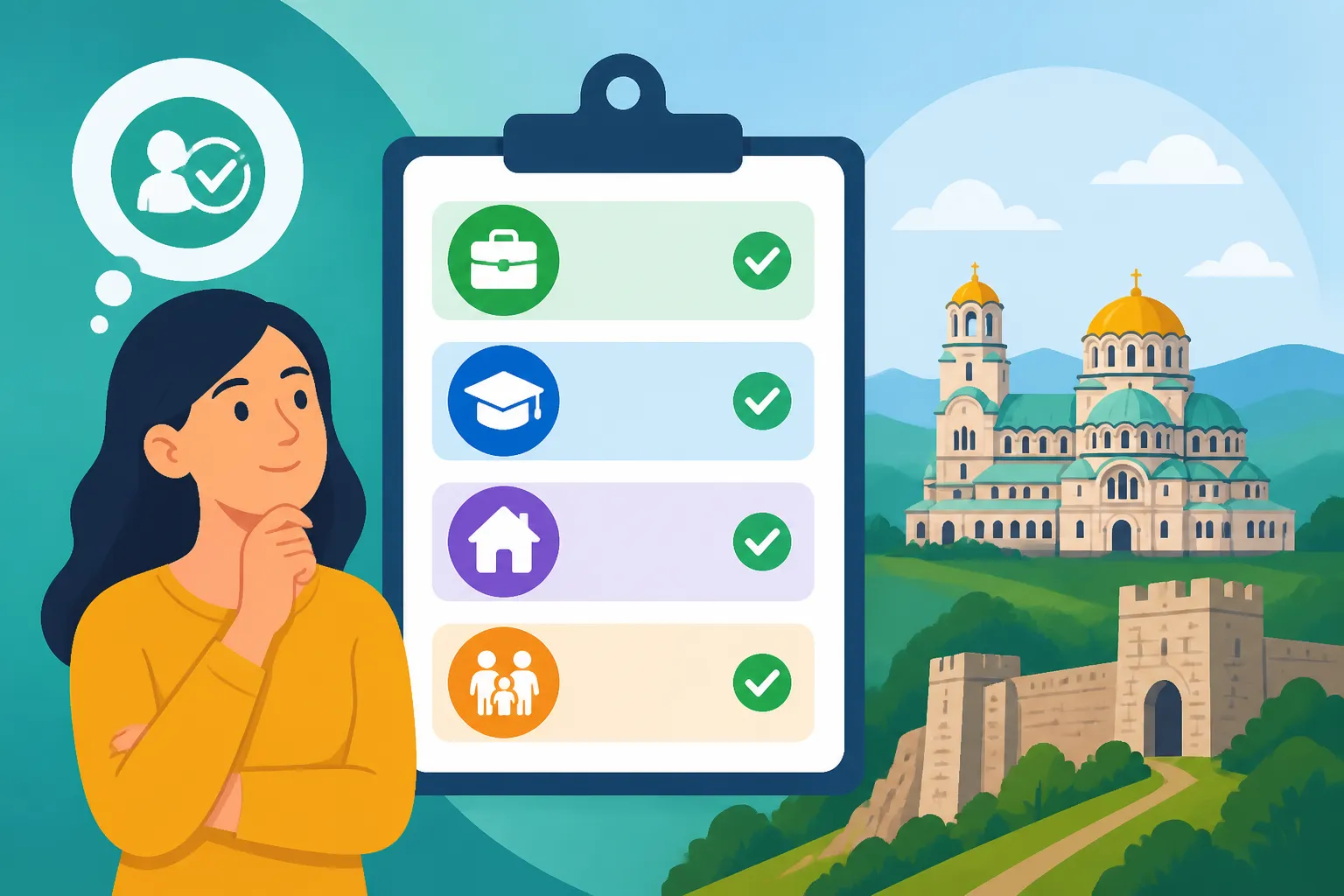
Common Paths: Eligibility for Key Residence Permit Categories
Now that we've covered the basics, let's explore the most common reasons why people move to Bulgaria and what it takes to qualify for each. These are the routes most expats typically follow, each with its own set of hurdles and documentation.
Work Permit Eligibility (Single Permit)
For non-EU citizens, gaining the right to work in Bulgaria is often a multi-stage process, typically involving what's known as a "Single Permit." This permit combines your work authorization and residence permit into one document.
The absolute first requirement is a concrete job offer from a Bulgarian employer. You cannot simply arrive in Bulgaria and then look for work and expect to apply for a work permit. Your prospective employer is the key player here. They must initiate the process by applying for your work permit on your behalf with the Employment Agency. This involves demonstrating to the authorities that there is no suitable Bulgarian or EU citizen available to fill the position you're being hired for – this is often referred to as a "labour market test." The job must genuinely require your specific skills and qualifications, which must be clearly documented. This means providing authenticated copies of your educational degrees, professional certificates, and previous work experience, all translated into Bulgarian.
Your employer will also need to provide details of your employment contract, including salary, job description, and working conditions, which must comply with Bulgarian labour law. The process can be lengthy and requires significant paperwork from the employer's side, so finding a company with experience in sponsoring foreign workers is a huge plus. Once the Employment Agency approves the work authorization, you can then proceed to apply for your Type D visa (if you haven't already), and then the Single Permit itself at the Migration Directorate. EU citizens, of course, have it much easier – they generally only need to register their address with the local municipality and then with the Migration Directorate, as detailed in How a Work Permit and Single Permit Work for Non-EU Workers in Bulgaria.
Student Permit Eligibility
Bulgaria has become an attractive destination for international students, particularly for medical and technical degrees, due to its reputable universities and lower tuition fees compared to Western Europe. However, getting a student residence permit isn't as simple as just getting accepted.
The core eligibility here is an official acceptance letter from an accredited Bulgarian educational institution – be it a university, college, or even a language school offering intensive courses. This letter must clearly state the duration of your program, confirming you are a full-time student. Beyond academic acceptance, you must prove you have the financial means to cover your tuition fees and living expenses for the entire academic year. This typically means presenting bank statements showing funds equivalent to at least the minimum wage for each month of your intended stay, plus your annual tuition. Many students will show a lump sum of funds in a Bulgarian bank account to cover these costs upfront.
Accommodation proof is also essential, often a dormitory agreement, a notarized rental contract, or a declaration from a host. And, as with all permits, comprehensive health insurance for the duration of your studies is a must. If you’re under 18, parental consent and guardianship arrangements might also be required. It’s a rigorous process, but with careful preparation, it's very achievable. For a more detailed walkthrough, check out How to Apply for a Student Residence Permit in Bulgaria.
Family Reunification Permit Eligibility
Bringing your loved ones to Bulgaria is a common aspiration for many expats, and the family reunification permit provides a pathway for spouses and minor children to join a primary resident. The eligibility here hinges entirely on your relationship to the primary resident (the "sponsor") and their ability to support you.
The primary resident in Bulgaria must hold either Bulgarian citizenship or a valid long-term or permanent residence permit. This sponsor must prove their legal and stable income is sufficient to support all family members without relying on social assistance. They will need to provide evidence of their employment, salary, and bank statements. Furthermore, adequate accommodation for the entire family is critical. This means a rental contract or property deed for a living space that is suitable in size for the number of people who will be living there.
The relationship itself must be legally proven. For spouses, an official marriage certificate, legalized and translated into Bulgarian, is required. For children, birth certificates performing the same legal journey are necessary. In some cases, authorities may even conduct interviews to ascertain the genuineness of the relationship. It's a straightforward but document-heavy process designed to ensure family integrity and financial responsibility. Learn more about the specific steps in How to Sponsor Your Spouse and Children for a Bulgaria Residence Permit.
Self-Employed or Freelancer Permit Eligibility
This category is often appealing to digital nomads and entrepreneurs, but let me tell you, it's one of the trickier ones to secure. Bulgaria wants to attract business and talent, but it also has strict rules to prevent "visa shopping."
For non-EU citizens, to qualify for a self-employed or freelancer permit, you generally need to register a company in Bulgaria (most commonly an EOOD or OOD, similar to a Limited Liability Company) or, less commonly, register as a "Samoosiguravashto se litse" (self-insured person, for certain regulated professions or a specific type of freelancer). The key here is to demonstrate a genuine business activity that benefits the Bulgarian economy. This usually means presenting a robust business plan, proving you have initial capital for investment, and showing that your business will generate sufficient income not just for your living expenses but also to pay taxes and social contributions in Bulgaria.
Simply being a freelancer working for foreign clients isn't enough on its own; you need to demonstrate how your activity will integrate into and contribute to the local economic fabric. This might involve hiring Bulgarian staff, renting office space, or demonstrating significant financial turnover. You'll need to show proof of financial stability in a Bulgarian bank account, often a significantly higher amount than for other permit types, to cover both your business setup costs and personal living expenses. The administrative burden can be substantial, often requiring the help of local accountants and lawyers. For more on the specifics of self-employment, you can consult Self-Employment in Bulgaria: Registering a Business and Going Independent (2027).
Niche Categories and Special Considerations
While the above categories cover a broad spectrum of expats, Bulgaria also offers residence permits for specific groups with unique circumstances. These routes, while less common, are vital for those who fit the criteria.
Pensioner Permit Eligibility
Bulgaria has long been a popular retirement destination, especially for non-EU citizens who wish to enjoy its affordable cost of living and pleasant climate. The pensioner permit is specifically designed for them.
The primary eligibility criterion is proof of receiving a foreign pension, whether it's from a state, private, or occupational pension scheme. This pension income must be consistent and demonstrably sufficient to sustain you in Bulgaria without needing local employment or public assistance. While there's no fixed official minimum, it's generally advised to show an income well above the Bulgarian minimum wage – often at least twice that amount – to comfortably cover your living expenses, especially given that you'll be relying on private healthcare initially. This proof typically comes in the form of official pension statements and bank transfers.
Crucially, you must transfer these pension funds to a Bulgarian bank account and maintain a substantial balance there. You’ll also need to secure long-term accommodation (rental contract or property deed) and, as always, comprehensive private health insurance. Many pensioners find this path attractive due to the lower cost of living and potential for a higher quality of life on a fixed income. If you're considering this path, Can I Retire and Move to Bulgaria? might offer further insights.
Investment Permit Eligibility
For those with significant capital, Bulgaria offers an investment-based residence permit, often colloquially referred to as a "Golden Visa" or a simplified path to residence. However, make no mistake, this is not a cheap or easy route and is intended for very high-net-worth individuals.
The eligibility criteria are stringent and involve substantial financial commitments designed to boost the Bulgarian economy. This can include investing a specific amount (often in the hundreds of thousands or even millions of euros) in Bulgarian real estate, government bonds, or a Bulgarian company creating a certain number of jobs. The exact thresholds and qualifying investment types can change, so it's absolutely vital to consult with specialized legal and financial advisors who are experts in Bulgarian immigration law. This is not a DIY project.
You will need to provide meticulous documentation of the source of your funds, demonstrating they were legally acquired. This route often offers a fast-track to long-term or even permanent residence, bypassing some of the longer waiting periods associated with other permit types. But the financial commitment is serious. For an overview of this specific route, consult Understanding the Investment Residence Permit in Bulgaria.
Digital Nomad Permit Eligibility
Bulgaria has recently introduced a framework to welcome digital nomads, recognizing the growing trend of remote work. While not a standalone "permit type" in the same way as work or study, it provides a clear pathway for location-independent professionals.
The core eligibility for the digital nomad route is demonstrating that you can perform your work remotely using telecommunication technologies, and that your employer is based outside of Bulgaria, or that you are self-employed with clients primarily outside of Bulgaria. The most critical financial requirement is proving a stable monthly income that is at least three times the average gross salary in Bulgaria for the previous 12 months. This figure is regularly updated, so you'll need to check the current amount. This is to ensure you can comfortably support yourself and contribute to the local economy.
As with other permits, you’ll need proof of accommodation (rental agreement or property ownership) and comprehensive health insurance valid for your entire stay. The application process usually involves applying for a Type D visa as a digital nomad, followed by applying for the actual residence permit with the Migration Directorate. This is a fantastic option for those who genuinely work remotely and wish to experience life in Bulgaria without needing a local job sponsor. For more on navigating this exciting new path, be sure to read How Do I Apply as a Digital Nomad in Bulgaria?.
To give you a clearer picture, here's a quick overview of some key criteria for different permit types:
| Permit Type | Main Grounds | Key Eligibility Criteria (Non-EU) | Common Duration |
|---|---|---|---|
| Work (Single Permit) | Employment with a Bulgarian company | Job offer, employer sponsorship, specific qualifications, labour market test | 1 year (renewable) |
| Student | Enrollment in accredited Bulgarian institution | Acceptance letter, proof of funds for tuition & living, accommodation | 1 year (renewable per academic year) |
| Family Reunification | Family member of Bulgarian/Resident sponsor | Legal relationship proof, sponsor's stable income & accommodation | Varies (aligned with sponsor's permit) |
| Self-Employed/Business | Registered company/freelancer activity | Business plan, investment capital, economic benefit, stable income | 1 year (renewable) |
| Pensioner | Receiving foreign pension | Proof of sufficient pension income, Bulgarian bank account funds, health insurance | 1 year (renewable) |
| Investment | Substantial financial investment | Significant investment in approved assets, legal source of funds | Varies (fast track options) |
| Digital Nomad | Remote work for foreign entity/clients | Proof of 3x average Bulgarian salary income, remote work contract, health insurance | 1 year (renewable) |
Remember, each of these processes will require a meticulously prepared dossier of documents, many of which need to be translated into Bulgarian by a sworn translator and often legalized with an apostille. Preparing these documents properly is half the battle, and you can find more guidance on this in Understanding Document and Translation Requirements for Bulgaria Immigration. When you're planning your move, consider using services like Sirelo to help manage the logistics of relocating your belongings, making one less thing to worry about during this complex process. The entire journey of moving to Bulgaria, from visa application to settling in, is a process, but with the right information, it’s entirely manageable. Don't hesitate to check out The Complete Visa and Immigration Guide for Relocating to Bulgaria (2027) for a broader perspective.
Disclaimer
The information provided in this guide is intended for general informational purposes only and does not constitute legal advice. Immigration laws and regulations in Bulgaria are subject to change. It is highly recommended to consult with the Bulgarian Migration Directorate or a qualified immigration lawyer for personalized advice regarding your specific situation before making any decisions related to your residence permit application.