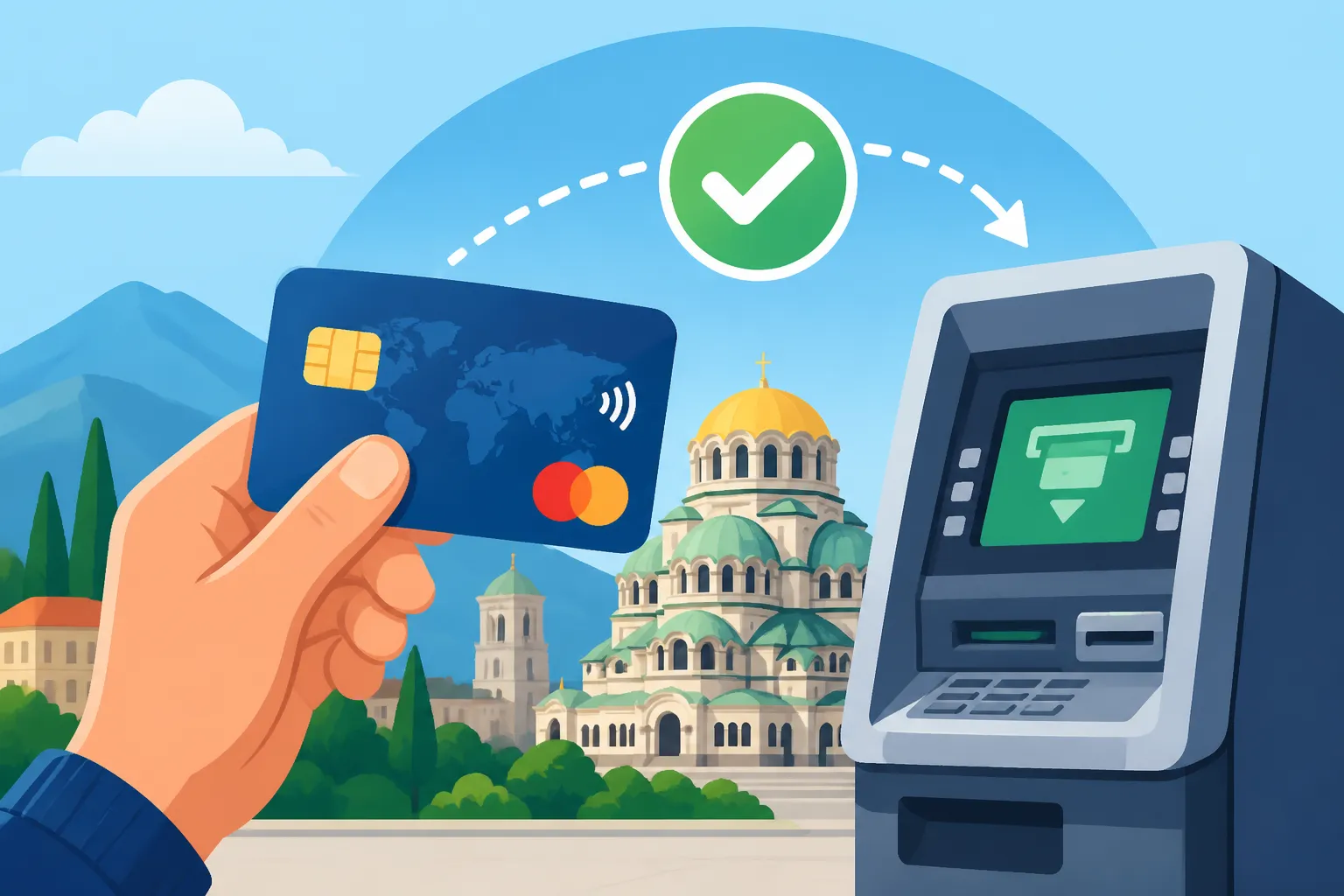
Can I Use My Foreign Bank Card in Bulgaria?
Moving to or even just visiting Bulgaria, one of the first things that probably pops into your mind after you’ve tackled accommodation and maybe a few phrases in Bulgarian is, "How on earth will I pay for things?" Specifically, whether your trusty foreign bank card will work here or if you're in for a frustrating scramble for cash. It’s a completely valid concern, and trust me, I’ve been there, fumbling with my card at a till, wondering if it would go through. This guide is here to unravel all your questions about using your foreign bank card in Bulgaria, giving you the insider scoop on what to expect.
Understanding Card Acceptance in Bulgaria
Let's get straight to it: generally speaking, your foreign bank card will absolutely work in Bulgaria. This isn't some cash-only backwater; it's a modern European country with a robust banking system. However, like anywhere else, there are nuances, and being prepared makes all the difference.
Widespread Acceptance of Major Networks
You'll be relieved to hear that Visa and Mastercard are incredibly well-accepted across Bulgaria. Whether you're flashing a debit card for your daily groceries or a credit card for a nice dinner out, these two networks are ubiquitous. Most major supermarkets, retail chains, and respectable restaurants will have no problem processing these cards. Think of places like Lidl, Kaufland, Billa, Fantastico – they all accept cards without a second thought.
Debit cards often come with the Maestro or Cirrus logos, which are also widely supported. While these are common, it's always a good idea to have a Visa or Mastercard debit option as a primary backup, just in case a smaller machine has a hiccup.
Now, for American Express (AmEx) holders, it's a slightly different story. While you might find AmEx accepted in some high-end hotels, larger international stores, or more tourist-centric establishments, it's definitely not as universally welcomed as Visa or Mastercard. It's a bit like trying to find specific craft beer in a village pub – possible, but don't count on it as your only option. My advice? If AmEx is your go-to, make sure you have a reliable Visa or Mastercard in your wallet too. Discover cards are even less common, so I wouldn't recommend relying on them at all.
Common Scenarios for Card Usage
So, where exactly can you expect to tap or swipe your card?
- Retail Stores and Supermarkets: This is where your cards will get the most workout. From the massive grocery stores mentioned earlier to clothing boutiques and electronics shops, card payments are the norm. Even smaller, independent shops in bigger cities like Sofia, Plovdiv, and Varna often have POS terminals.
- Restaurants, Cafes, and Bars: Most eateries, especially in urban areas and popular tourist destinations, readily accept card payments. You’ll find the POS terminal brought to your table, or you might pay at the counter. However, if you venture into a tiny, traditional mehana (tavern) in a more remote village, cash might be the only option. Always a good idea to discreetly check for card logos on the door or ask beforehand if you're unsure.
- ATMs: ATMs are plentiful throughout Bulgaria, especially in cities and larger towns. You'll find them at banks (like UniCredit Bulbank, DSK Bank, Postbank, Fibank, Raiffeisenbank), shopping centers, and even standalone units in convenient locations. These are generally reliable for withdrawing cash using your foreign card. Just be mindful of the fees, which we'll delve into shortly.
- Online Purchases: If you're settling in and need to pay for local services online, or even just order some takeaway, your foreign card should work perfectly fine for online transactions. Most Bulgarian e-commerce sites and service providers accept Visa and Mastercard. Just make sure the website is secure (look for 'https://' and a padlock icon).
- Public Transport: In Sofia, the capital, you can actually use your contactless bank card directly on the metro gates! It's super convenient and saves you the hassle of buying a separate ticket. For buses and trams, you might still need a paper ticket or a travel card, but the trend towards contactless payments is growing. In other cities, it's usually cash for public transport.
Generally, you'll find Bulgaria to be a card-friendly country, especially in the major urban centers and popular tourist spots. But, as an old expat hand, I'll always tell you to carry some Bulgarian Leva (BGN) for those "just in case" moments. It saves a lot of stress.
Navigating Fees and Exchange Rates
This is where things can get a little tricky and where those seemingly small costs can add up without you even realizing it. Understanding how fees and exchange rates work is crucial to avoiding unpleasant surprises on your bank statement.
Foreign Transaction Fees from Your Home Bank
Your biggest foe here might not be Bulgarian banks, but your own bank back home. Many banks charge a "foreign transaction fee" or "international service fee" for purchases made in a foreign currency or processed outside your home country. This typically ranges from 1% to 3% of the transaction amount.
Let’s say you’re buying groceries for 100 BGN (about 50 Euros or 55 USD). A 2.5% foreign transaction fee would mean you’re paying an extra 2.50 BGN. Individually, it doesn’t seem like much, but imagine a month of daily expenses, a few larger purchases, and some ATM withdrawals. Suddenly, you've shelled out a significant chunk of money purely in fees.
Before you arrive in Bulgaria, a quick call or check of your home bank’s website for their specific foreign transaction fees is highly recommended. Some challenger banks or specific credit cards geared towards travel might offer no foreign transaction fees, which can be a real money-saver.
Dynamic Currency Conversion DCC and Why to Avoid It
This is a sneaky one, and it catches out many unsuspecting expats and tourists. Dynamic Currency Conversion (DCC) is when you're given the option to pay in your home currency (e.g., USD, GBP, EUR) instead of the local currency (BGN) when using a card at a POS terminal or ATM. The machine might friendly ask, "Do you want to pay in BGN or [Your Home Currency]?"
Always, and I mean always, choose to pay in BGN.
Here’s why: When you choose your home currency, the Bulgarian merchant or ATM operator applies their own exchange rate, which is almost always less favorable than the rate your bank or card network (Visa/Mastercard) would use. They might also tack on an additional conversion fee. You end up paying more for the convenience of seeing the transaction in a familiar currency. When you opt for BGN, your bank or card network performs the conversion, usually at a much better, closer-to-market rate. It's an easy trap to fall into, but once you know about it, it's easy to avoid.
ATM Withdrawal Fees
Ah, the ATM – a lifeline for cash, but also a potential minefield of fees. When you pull cash out of an ATM in Bulgaria using a foreign card, you could be hit with two types of fees:
- Your Home Bank’s ATM Fee: Many banks charge a fee for using an ATM that isn't part of their network, especially internationally. This can be a flat fee (e.g., $5 or £3 per withdrawal) plus that pesky foreign transaction fee we just talked about.
- Bulgarian ATM Operator Fee: This is the fee charged by the local bank that owns the ATM. Some Bulgarian banks, like UniCredit Bulbank, DSK Bank, Postbank, and Raiffeisenbank, may charge a direct fee for foreign card withdrawals. This fee can vary, but it’s often clearly displayed on the ATM screen before you confirm the transaction. However, some ATMs, particularly those from smaller banks or independent operators, might not charge this fee, or they might be lower.
Strategies to minimize ATM fees:
- Withdraw larger amounts less frequently: Instead of making several small withdrawals, which incurs a flat fee each time, plan to take out a larger sum that will last you a few days or a week.
- Check ATM screens carefully: Before confirming any transaction, read the information on the screen. Any fees being charged by the local ATM operator should be displayed. If you don't like what you see, cancel the transaction and try another ATM.
- Consider banks with global ATM networks or partnerships: Some international banks have agreements that waive fees for their customers at partner banks abroad. Check if your home bank has such a relationship in Bulgaria.
- Look into services like Wise: This is where a service like Wise really shines. Their debit card often offers free ATM withdrawals up to a certain monthly limit, and their exchange rates are highly competitive. It's a game-changer for many expats looking to manage their money more efficiently. In fact, many people use Wise for international transfers too, to get their funds into a local account once they've settled, avoiding hefty bank transfer fees. If you're planning on staying longer, understanding How to Transfer Money Into and Out of Bulgaria as an Expat is key.
Here's a quick comparison of fee considerations:
| Scenario | Foreign Bank Card (Standard) | Travel-Friendly Card (e.g., Wise Debit) | Local Bulgarian Bank Card |
|---|---|---|---|
| Retail Payment | Home bank foreign transaction fee (1-3%) | Often no foreign transaction fee | No foreign transaction fee |
| ATM Withdrawal | Home bank ATM fee + foreign transaction fee + local ATM operator fee (variable) | Often free up to a monthly limit, then small fee; good exchange rates | No foreign transaction fee or local ATM operator fee (if using own bank's ATM) |
| Online Purchase | Home bank foreign transaction fee (1-3%) | Often no foreign transaction fee | No foreign transaction fee |
| Exchange Rate | Typically good (Visa/MC rate), unless DCC selected (bad rate) | Excellent (mid-market rate) | Not applicable (already in BGN) |
Always be mindful of the numbers, and you'll keep more of your hard-earned cash where it belongs – in your pocket.
Practical Tips for Using Foreign Cards in Bulgaria
Alright, so we've covered the basics of acceptance and the sneaky world of fees. Now, let’s get down to some practical advice, honed over years of living abroad, to make your financial life in Bulgaria as smooth as a fresh banitsa.
Always Have Some Local Cash
This is perhaps the most fundamental piece of advice any veteran expat in Bulgaria will give you: always carry some cash. While card payments are prevalent, there are still plenty of situations where cash is king, especially outside of the major cities.
Think about:
- Small, Independent Shops and Markets: That charming little bakery with the incredible mekitsi? The vendor at the local fruit and vegetable market? The tiny souvenir stand by the church? Many of these operations might prefer cash or simply not have a card terminal.
- Taxis: While some larger taxi companies in Sofia might accept cards, especially if you use an app like Yellow! Taxi, many independent drivers or those in smaller towns will expect cash.
- Smaller Restaurants and Cafes in Rural Areas: As mentioned before, if you're exploring the more traditional side of Bulgaria, particularly in smaller towns and villages, cash is often the only way to pay. Don’t get caught out after a delicious meal!
- Unexpected Situations: Sometimes technology fails. A card machine might be down, the internet connection might be spotty, or your card simply might not read. Having cash as a backup can save you from an embarrassing situation.
A good rule of thumb is to always have at least 50-100 BGN on you, especially if you’re planning a day trip or heading to a less urbanized area.
Inform Your Bank Before Traveling
This tip has become slightly less critical with modern banking tech, but it’s still good practice. In the past, if your bank saw a transaction from Bulgaria and you hadn't told them you were traveling, they might flag it as suspicious activity and temporarily freeze your card to protect you from fraud.
Today, many banks have sophisticated fraud detection systems, and some even allow you to set travel notifications directly through their mobile apps. However, a quick call to your bank's customer service or a message through their app to say, "Hey, I'm going to Bulgaria from X date to Y date," can prevent unnecessary headaches. There’s nothing worse than being unable to pay for something when you’re far from home.
Consider a Travel-Friendly Card or Service
This is truly a game-changer for minimizing fees and simplifying your finances while abroad. Traditional banks can hit you with a double whammy of foreign transaction fees and unfavorable exchange rates. Modern fintech solutions offer a much more expat-friendly approach.
Services like Wise (formerly TransferWise) offer multi-currency accounts and debit cards that are specifically designed for international living and travel. With a Wise card, you can:
- Hold multiple currencies: Load money onto your card in your home currency, then convert it to BGN at the real mid-market exchange rate, often for a very small, transparent fee.
- Spend like a local: When you spend in BGN, if you have BGN in your account, it uses that directly. If not, it converts from another currency at a great rate, avoiding those nasty foreign transaction fees.
- Lower ATM fees: Wise often allows a certain amount of free ATM withdrawals per month, after which a small fee applies. This is usually far less than what traditional banks charge.
Other options include specific credit cards from your home country that advertise "no foreign transaction fees" or pre-paid travel cards. Do your research, as these can save you a significant amount over time. If you’re really diving deep into managing your finances across borders, it's worth exploring What Is the Best Multi-Currency Account in Bulgaria?.
Security Precautions
Using your card anywhere requires vigilance, and Bulgaria is no different. While generally safe, petty crime like card skimming can occur.
- ATMs and POS Terminals: When using an ATM, always check the card slot and keypad for anything that looks unusual or loose. Jiggle it gently. Cover the keypad with your hand when entering your PIN to guard against "shoulder surfing." The same goes for POS terminals in shops – keep your eye on your card and make sure the amount entered is correct.
- Keep Cards in Sight: When paying in a restaurant, insist that the POS terminal is brought to your table, or accompany the waiter to the payment point. Never let your card out of your sight.
- Online Payments: Only make online purchases on secure websites (check for 'https://' and a padlock icon in the browser bar). Be wary of unsolicited emails or texts asking for your card details.
- Be Aware of Surroundings: When withdrawing cash, especially late at night, be mindful of who is around you. If an ATM feels unsafe or isolated, find another one.
By following these practical tips, you can use your foreign bank cards confidently and securely throughout Bulgaria.
Alternatives and When to Consider a Local Bank Account
While foreign cards are perfectly usable for short to medium stays, there comes a point for many expats when a local Bulgarian bank account simply makes more sense.
Prepaid Travel Cards and Multi-Currency Accounts
As touched upon earlier, prepaid travel cards and multi-currency accounts are excellent bridges between relying solely on your home bank card and fully committing to a local bank account.
Advantages:
- Budgeting: You can load a specific amount of money, helping you stick to a budget.
- Security: If the card is lost or stolen, your main bank account isn’t directly compromised, only the funds loaded onto the travel card.
- Better Exchange Rates: Services like Wise offer competitive, often mid-market exchange rates, significantly reducing conversion costs compared to traditional banks. This transparency is incredibly valuable when you're managing expenses in a different currency.
- Convenience: Many offer instant notifications on spending and easy top-ups via an app.
These accounts can be especially useful in the initial months of your relocation, allowing you to manage your finances in Bulgaria before you have all the necessary documents to open a traditional local bank account. They truly make the transition smoother, letting you worry less about fluctuating exchange rates and hidden fees.
Opening a Bulgarian Bank Account
For those settling in Bulgaria for the long haul – think more than a few months – opening a local bank account becomes less of an option and more of a necessity.
When it becomes necessary:
- Employment: If you’re working in Bulgaria, your employer will almost certainly require a local bank account for salary payments.
- Paying Local Bills: Rent, utilities (electricity, water, internet), phone contracts – many of these are easiest to pay via direct debit or online banking from a Bulgarian account. While some international services accept foreign cards, local bank transfers are often smoother and cheaper. You'll definitely want to know How to Pay Your Utility Bills in Bulgaria?.
- Avoiding Foreign Transaction Fees Entirely: Once your money is in BGN in a Bulgarian bank account, you completely bypass all foreign transaction fees and most currency conversion issues for day-to-day spending.
- Easier for Landlords and Service Providers: Having a local account simplifies transactions with landlords, local businesses, and service providers, who are often more comfortable with local bank transfers.
- Building Local Financial History: For future aspirations like getting a local loan, mortgage, or even certain phone contracts, having a local banking history is beneficial.
- Tax Obligations: If you become a tax resident in Bulgaria, managing your income and potentially paying local taxes, such as those overseen by the National Revenue Agency (NRA), is much simpler with a Bulgarian account. You’ll want to get acquainted with Understanding Income Tax and the Flat 10% Rate in Bulgaria and How Do I Pay My Income Tax in Bulgaria?. For more complex situations, especially regarding international income, services like Taxes for Expats can be invaluable for ensuring you comply with both Bulgarian and your home country’s tax laws.
Benefits of a local account:
The main local banks you'll encounter are UniCredit Bulbank, DSK Bank, Postbank, Fibank, and Raiffeisenbank. They all offer a range of services from basic current accounts to savings accounts and online banking. While the process of opening an account might feel a bit bureaucratic, requiring your passport, residence permit, and sometimes proof of address or income, the long-term benefits for a permanent resident far outweigh the initial hassle. Seriously, it's one of those things that feels like scaling a mountain at first, but once it's done, you'll wonder why you waited. To ease the transition, I've put together a comprehensive guide on The Expat Guide to Opening a Bank Account in Bulgaria that covers everything you need to know.
Understanding your financial options is a big part of feeling settled. Whether you stick with your foreign cards for a while or dive into local banking, knowing the landscape will help you make the best decisions for your expat journey.
Disclaimer
The information provided in this guide is for general informational purposes only and does not constitute financial, legal, or tax advice. While we strive to keep the information up-to-date and accurate, regulations and banking practices in Bulgaria can change. It is always recommended to consult with a qualified financial advisor, tax specialist, or directly with banks and authorities in Bulgaria for advice tailored to your specific situation.