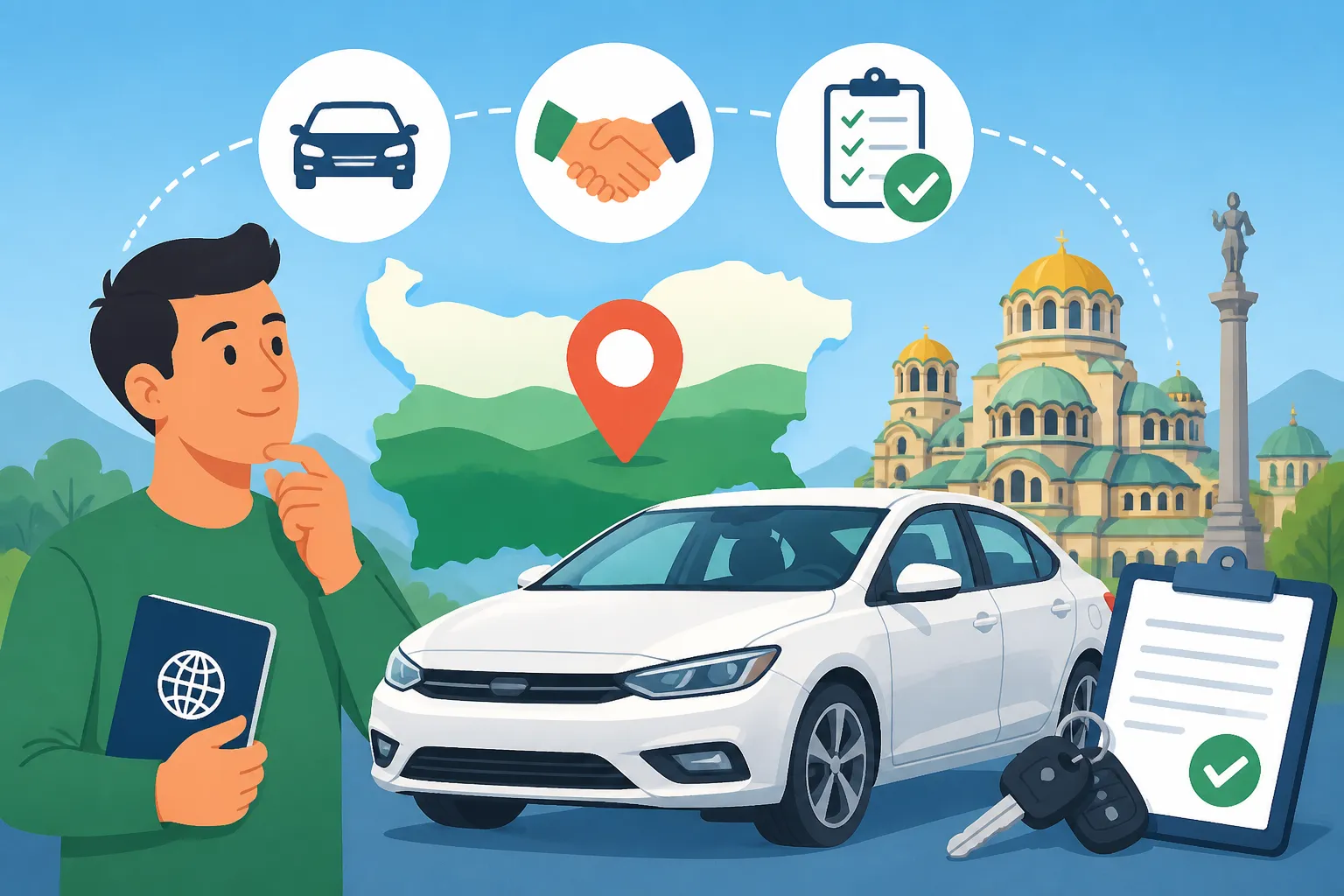
Understanding How to Buy a Car as a Foreigner in Bulgaria
Trying to navigate the car market as a foreigner in Bulgaria can feel like deciphering ancient scrolls written in a language you don't quite understand. The bureaucracy, the various government agencies, and the subtle cultural nuances can quickly turn an exciting purchase into a frustrating ordeal. This comprehensive guide is here to cut through the confusion, offering a realistic, step-by-step roadmap for expats looking to buy a car in Bulgaria, ensuring you hit the road with confidence and minimal headaches.
Navigating the Bulgarian Car Market: First Steps for Foreigners
Stepping into the Bulgarian car market, whether for a sleek new model or a trusty used vehicle, can be an eye-opening experience. It's quite different from what many expats are used to, often involving a bit more legwork and a healthy dose of patience. The market is vibrant, with options ranging from brand new imports to older, more affordable vehicles, but understanding the lay of the land is crucial before you even start looking. It’s not just about the car itself, but about how the entire ecosystem operates here.
Before you even think about prices, it's wise to consider your needs. Will this car be for city driving in places like Sofia or Plovdiv, where parking can be a nightmare and smaller cars are more practical? Or do you need something robust for navigating rural roads and venturing out into the beautiful Bulgarian countryside? Your lifestyle, family size, and intended use will heavily influence whether a compact city car, a family sedan, or an SUV is the right fit. Don't forget to factor in potential long drives if you plan on exploring the Balkans!
One common pitfall for new arrivals is rushing into a purchase. Take your time, get a feel for local prices, and don't be afraid to walk away if something doesn't feel right. The car market is big enough that you'll always find another option. Moreover, familiarize yourself with typical Bulgarian driving conditions – some roads, especially outside major cities, can be challenging, which might steer you towards a vehicle with better ground clearance or more robust suspension.
New vs. Used Cars: What to Consider
Deciding between a new or used car in Bulgaria involves weighing several factors, each with its own set of advantages and potential drawbacks for expats. The choice often boils down to budget, peace of mind, and how much you're willing to engage with the intricacies of the local market. Both options are perfectly viable, but they cater to different needs and risk tolerances.
Buying a new car from an authorized dealership, such as representatives for brands like Toyota, Volkswagen, or Dacia, often provides the most straightforward and secure experience. You get a full warranty, the latest safety features, and often, transparent pricing. For many expats, the appeal of a new car is the elimination of hidden mechanical issues, the guarantee of compliance with EU standards, and the comfort of dealing with professional sales teams, many of whom speak English. This option, while pricier, significantly reduces the administrative and mechanical uncertainties that can plague used car purchases, giving you a smooth start from day one.
On the flip side, the used car market in Bulgaria is enormous and can offer incredible value. However, it requires a much more discerning eye and often, local assistance. Many used cars are imported from Western Europe, and while some are in excellent condition, others might have clocked a significant number of kilometers or have undisclosed issues. The prices can be very attractive, but the caveat is the potential for unexpected repair costs down the line. If you go this route, it's almost essential to have an independent mechanic inspect any potential purchase thoroughly – a small investment that can save you thousands later.
Where to Find Cars: Dealerships, Private Sellers, Online Platforms
Once you've decided on new or used, knowing where to look is the next crucial step. The Bulgarian car market offers diverse avenues for acquisition, each with its own typical procedures and level of convenience for a foreigner. It's worth exploring a few different channels to compare options and get a good feel for what's available.
For new cars, your best bet is to head straight to the official brand dealerships. In major cities like Sofia, you'll find numerous showrooms clustered in industrial zones or along main boulevards. These dealerships offer not only new cars but often also certified used vehicles that come with some level of warranty, having been traded in or used as demonstration models. This can be a great middle-ground option, combining some of the security of a new car with a more palatable price point. Sales staff are generally professional and equipped to guide you through the purchase process, including financing options and initial registration.
The used car market is far more fragmented. Online platforms are arguably the most popular starting point. Sites like Mobile.bg and Cars.bg are the Bulgarian equivalents of major international car sales websites, listing thousands of vehicles from both private sellers and smaller, independent dealerships. You'll find everything from budget-friendly commuters to luxury SUVs. These platforms allow you to filter by make, model, year, price, and location, making it easy to browse from the comfort of your home. Just be prepared for a wide range of conditions and remember that pictures can be deceiving.
Beyond online listings, there are physical used car lots scattered throughout cities and on the outskirts. These can be overwhelming, with rows upon rows of cars, and the quality can vary wildly. While you might stumble upon a great deal, it's often an environment where negotiation is expected, and a good command of Bulgarian or a trusted local companion is highly beneficial. Finally, word-of-mouth recommendations can also lead to private sales, often for cars owned by expats leaving the country, which can sometimes mean a smoother transaction with clearer history. Remember, staying connected with a local data plan, perhaps with an Airalo eSIM, will be essential for coordinating viewings and communicating on the go.
The Paperwork Maze: Essential Documents and Legalities
Ah, Bulgarian bureaucracy! It’s a rite of passage for every expat, and buying a car is no exception. While perhaps not as complex as some other administrative hurdles, it definitely requires careful attention to detail and a methodical approach. The good news is that with a clear understanding of the required documents and processes, you can navigate this maze successfully. The key is to be prepared and anticipate what will be asked of you, rather than being surprised at each turn.
One of the biggest frustrations can be the feeling of doing things backwards, or needing one document to get another, which then requires the first one again. It's a dance, really. Ensure all your personal identification documents are up-to-date and have sufficient validity. This includes your passport and your Bulgarian residence permit. If you're married and buying a car jointly, ensure you both have all necessary identification. Every piece of paper needs to align perfectly, so don't be afraid to double-check everything.
For non-EU citizens, especially, the process can sometimes involve an extra layer of scrutiny. Bulgarian authorities need to ensure you have a legitimate basis for residence and that you’re not just passing through. Your residence card (личностна карта на чужденец) is your golden ticket for most administrative procedures, so make sure it's current and readily available. Without it, you'll hit a roadblock before you even get started.
Required Documents for Foreign Buyers
To legally purchase and register a car in Bulgaria as a foreigner, you’ll need a specific set of documents. Having these prepared in advance will save you significant time and multiple trips to various offices. This list covers the essentials, but it's always wise to check with the specific authorities or your legal advisor for any last-minute changes or additional requirements based on your unique residency status.
First and foremost, you'll need your valid passport and your Bulgarian residence permit (or Лична карта if you're an EU citizen registered as a resident). These prove your identity and your legal right to reside in Bulgaria. For the car itself, you’ll need the original vehicle registration certificate (талон), which usually comes in two parts: a large one and a small one. These documents detail the car's specifications, ownership history, and technical data. You'll also need a valid technical inspection certificate (Технически преглед) and proof of mandatory civil liability insurance (Гражданска отговорност), as you cannot transfer ownership or register a car without these being active.
If you're buying a used car from a private seller, you’ll also need the existing vehicle inspection certificate. If it's expired or about to expire, the seller might need to renew it before the sale can be finalized. It's also crucial to get a certificate from the National Revenue Agency (NRA) (НАП) confirming that the car has no outstanding taxes or penalties. This is a vital step to ensure you don't inherit previous owners' debts. Finally, if you're not fluent in Bulgarian, you might need a sworn translator to accompany you to the notary and other official appointments to ensure you fully understand all documents and proceedings. This isn't just about language; it's about protecting your interests.
The Role of the Notary and Translation Services
The notary plays a pivotal role in the car buying process in Bulgaria, particularly for used vehicles purchased from a private individual. They are the legal gatekeepers, ensuring the transaction is legitimate, the documents are in order, and the transfer of ownership is legally binding. This isn’t a step you can skip, and it's where many foreigners often feel most out of their depth due to the legal jargon and formal procedures.
When buying a used car from a private seller, both you and the seller must appear before a notary public to sign the purchase agreement (Договор за покупко-продажба). The notary will verify the identities of both parties, check the car's registration documents, and ensure that all legal conditions for the sale are met. They will also calculate the local transfer tax (местен данък), which is typically a percentage of the car's tax assessment value or sale price, whichever is higher. The notary fee itself is also due at this stage. It's crucial that all parties involved understand the agreement, so if your Bulgarian isn't fluent, hiring a sworn translator to be present during the signing is highly recommended and sometimes even required by the notary themselves.
For those less familiar with Bulgarian, the need for translation services extends beyond the notary. While many urban professionals might have some English, navigating the KAT (traffic police) office or even some smaller dealerships might require a translator, either a professional one you hire or a trusted Bulgarian friend. Misunderstandings can lead to significant delays or errors in your car registration. Don't underestimate the value of clear communication in these formal settings. Having your residence permit and passport translated and certified might also be requested in certain situations, though usually, the originals suffice. It’s better to be overprepared than underprepared when dealing with official Bulgarian institutions.
Understanding the Purchase Agreement (Договор за покупко-продажба)
The purchase agreement, known in Bulgarian as "Договор за покупко-продажба", is the cornerstone of your car acquisition. This document legally formalizes the transfer of ownership from the seller to you, and understanding its contents is paramount, even if you’re relying on a translator. This isn't just a formality; it's your legal protection.
This agreement typically includes detailed information about both the buyer and the seller (full names, addresses, personal ID numbers), a comprehensive description of the vehicle (make, model, VIN, registration number, engine number, year of manufacture), the agreed-upon sale price, and the terms of sale. It should explicitly state that the seller is transferring all ownership rights and that the vehicle is free from any encumbrances, such as liens, outstanding fines, or legal disputes. The notary ensures these details are accurate and that the agreement complies with Bulgarian law. Make sure the sale price listed accurately reflects what you paid, as this amount will be used to calculate transfer taxes.
Once signed and certified by the notary, this agreement becomes the official proof of your ownership. You'll need it for practically every subsequent step, from registering the car with KAT to obtaining insurance in your name. Keep the original document in a safe place, and always have copies readily available for administrative purposes. Before signing, take the time to read through it, or have your translator explain every clause. If anything seems ambiguous or incorrect, insist on clarification or correction before putting your signature to paper. Remember, once it's signed and sealed by the notary, changing it can be a lengthy and complicated process.
Registration and Roadworthiness: Getting Your Car on Bulgarian Roads
So, you've made the purchase, navigated the notary, and the car is technically yours. Fantastic! But hold your horses, because you’re not quite ready to hit the open road. The next phase involves registering your new vehicle with the relevant authorities and ensuring it meets all Bulgarian roadworthiness standards. This part often feels like the final sprint, but it's where many expats can stumble if they don't know the exact order of operations.
The main player in this stage is KAT (КАТ), the Bulgarian Traffic Police. They are responsible for vehicle registration, issuing new number plates, and updating ownership records. Be prepared for a bureaucratic experience: queues, specific opening hours, and sometimes, a lack of English-speaking staff. It’s a good idea to bring a Bulgarian speaker with you if you're not confident in your language skills. This is where patience truly becomes a virtue.
Getting your car officially recognized and compliant in Bulgaria is more than just paperwork; it’s about making sure your vehicle is safe for everyone on the road. From mandatory insurance to the annual technical inspection and the road vignette, each step is designed to keep traffic flowing smoothly and safely. For a deeper dive into the overall process, you might find our guide on How to Register and License a Car in Bulgaria incredibly useful.
Registering Your Car with KAT (КАТ)
This is the big one. After you've completed the purchase and the notary has certified the agreement, your next critical stop is KAT (КАТ) – the Traffic Police Directorate. This is where your car officially gets its Bulgarian identity and number plates. You typically have a grace period of 30 days from the date of purchase to complete this registration, so don't procrastinate.
When you arrive at KAT, you'll need to submit a comprehensive set of documents: your passport and residence permit, the notarized purchase agreement (Договор за покупко-продажба), the original vehicle registration certificate (both parts), proof of valid civil liability insurance (Гражданска отговорност), and the receipt for the paid local transfer tax. If the car has an existing technical inspection certificate, bring that too. You will fill out an application form – usually available at the KAT office itself or sometimes downloadable online.
The process at KAT involves several steps: submitting your documents, having the car physically inspected by a KAT officer (they'll check the VIN and engine number against the documents), paying the registration fees, and finally, receiving your new Bulgarian registration certificate and number plates. It's not uncommon for this to take several hours, so plan accordingly. If you're wondering How Do I Register a Car in Bulgaria?, remember that having all your documents perfectly organized before you go is the key to minimizing delays.
Mandatory Insurance: Гражданска Отговорност (Civil Liability) and Casco
Insurance is not just a good idea; it's a legal requirement in Bulgaria. You cannot register or drive a car without valid civil liability insurance, known as Гражданска отговорност (Grazhdanska Otgovornost). This is the absolute minimum coverage you must have, and it protects you against financial liabilities for damages or injuries you might cause to third parties in an accident.
You can purchase Гражданска отговорност from various insurance companies operating in Bulgaria, such as DZI, Euroins, or Lev Ins. Prices vary based on the vehicle's engine size, your age, driving history, and sometimes even your residence location. It's always a good idea to get quotes from several providers to find the best deal. For a detailed look at what to expect, check out our article on How Much Is Car Insurance in Bulgaria?. You'll need to present your car's registration documents and your personal ID to obtain this insurance. It's typically purchased for one year, and you must carry proof of it in your car at all times.
Beyond the mandatory civil liability, many expats also opt for comprehensive insurance, known as Casco (Каско). This is not legally required but offers extensive protection for your own vehicle against theft, fire, vandalism, and damage from accidents, regardless of fault. Given the varying road conditions and occasional parking mishaps, Casco can provide significant peace of mind. While it adds to your annual costs, the security it offers, especially for newer or more valuable vehicles, is often considered well worth the investment by many foreign residents.
Technical Inspection (Технически Преглед) and Road Vignette (Винетка)
Once your car is registered and insured, there are two more crucial elements to ensure it's legally roadworthy in Bulgaria: the annual technical inspection and the road vignette. These are ongoing responsibilities for all vehicle owners.
Every vehicle in Bulgaria must undergo a periodic technical inspection, or Технически преглед (Tekhnicheski Pregled). This inspection checks the vehicle's safety features, emissions, and overall mechanical condition to ensure it meets national standards. New cars usually have their first inspection after three years, then after two years, and then annually. Used cars typically require an annual inspection. You can find licensed technical inspection centers throughout Bulgaria. The cost is generally affordable, but if your car fails, you'll need to address the issues and repeat the inspection. For more detailed information on what to expect, refer to our guide on Understanding the Vehicle Inspection and Road Vignette in Bulgaria.
The other essential is the road vignette, or Винетка (Vinetka). This is a fee required for using most public roads outside of urban areas in Bulgaria, including highways and national roads. It's essentially a toll sticker or, increasingly, an electronic vignette. You can purchase these for different durations (weekend, week, month, three months, or a year) from petrol stations, post offices, or online via the official BG Toll website. Failing to display a valid vignette (or have an active e-vignette) can result in hefty fines, which traffic cameras constantly enforce. It’s easy to forget, but a quick online purchase can save you a significant headache, especially if you're planning a road trip or just a regular commute. Our article on How Much Does the Road Vignette Cost in Bulgaria? provides up-to-date pricing.
Costs Beyond the Purchase Price: What to Budget For
Buying a car in Bulgaria, just like anywhere else, isn’t just about the sticker price. There’s a whole host of additional costs that can quickly add up, and for expats, some of these might come as a surprise or involve different procedures than what you’re used to. It's crucial to budget meticulously to avoid any unexpected financial shocks. Think of it as a comprehensive cost of ownership rather than just the initial transaction.
Beyond the actual purchase, you're looking at various taxes, administrative fees, ongoing maintenance, and daily running costs. Many foreigners underestimate these "hidden" expenses, particularly if they are used to countries with different tax structures or lower fuel prices. A good financial plan factors in everything from the initial notary fees to the annual cost of the road vignette. It's all part of the grand adventure of How Much Is the Cost of Living in Bulgaria for Expats?.
Consider the entire lifecycle of your car ownership here. What's the fuel efficiency like for the model you're eyeing? Are spare parts readily available and affordable? How much will annual insurance set you back? These questions help paint a realistic picture of your financial commitment.
Taxes and Fees Associated with Car Ownership
The moment you decide to purchase a vehicle in Bulgaria, a series of taxes and fees kick in. Being aware of these upfront will help you prepare your finances and prevent any unpleasant surprises at the notary or KAT. These costs are non-negotiable and form an integral part of the total acquisition expense.
Firstly, there's the local transfer tax (местен данък), which is paid at the notary public during the transfer of ownership for used cars. This tax is determined by the municipality where the transaction takes place and is typically a percentage (e.g., 2-3%) of the car’s tax assessment value or the agreed-upon sale price, whichever is higher. For new cars purchased from a dealership, VAT (Value Added Tax) is included in the purchase price. Secondly, there are notary fees, which also depend on the sale price of the vehicle, though these are fixed by law.
Once you head to KAT for registration, you'll incur registration fees for the new registration certificate and number plates. These fees are relatively minor compared to the transfer tax but are mandatory. Annually, you will also be responsible for road tax (пътен данък), which is based on the car's engine power (kW) and age, and varies by municipality. This is usually paid to the local municipal tax office. Finally, there's the annual cost of your mandatory civil liability insurance and the road vignette, both detailed previously. All these elements contribute significantly to How Much Does It Cost to Register a Car in Bulgaria?, so always factor them into your overall budget.
Fuel, Maintenance, and Parking Costs
Beyond the initial purchase and associated fees, the day-to-day running costs of a car in Bulgaria are a significant consideration. These expenses will directly impact your monthly budget and your enjoyment of driving here. What seems affordable initially can quickly become a drain if you haven't accounted for fuel consumption and maintenance.
Fuel prices in Bulgaria, while generally lower than in many Western European countries, can still fluctuate and represent a substantial recurring expense, especially if you drive frequently. The cost of petrol (бензин) and diesel (дизел) can be checked at any petrol station, and our guide on How Much Is Petrol per Litre in Bulgaria in 2026? offers current insights. LPG (Autogas) is also widely available and significantly cheaper, making it a popular choice for many Bulgarian drivers. Maintenance costs are generally quite reasonable, with mechanics often offering more affordable rates than in other EU countries. However, finding a trustworthy and skilled mechanic who speaks English can be a challenge. It's wise to budget for routine servicing, unexpected repairs, and winter tire changes, which are mandatory from November 1 to March 1.
Parking in Bulgarian cities, especially Sofia, can be a genuine headache and an added cost. In central areas, you’ll find paid zones (blue and green zones), where you pay by the hour via SMS, parking apps, or kiosks. Fines for illegal parking are swift and can be quite expensive. Outside central areas, free parking might be available, but competition can be fierce. If you live in an apartment building, check if dedicated parking is included in your rent or purchase price. For example, knowing the general The Expat Guide to Setting Up Utilities (Electricity, Water, Gas) in Bulgaria) might indirectly inform you about the typical expenses associated with a home, including those like communal parking fees, if applicable.
Financing Options for Expats
For many, buying a car outright with cash isn't an option, and financing becomes a necessity. Navigating financing as an expat in Bulgaria can be different from your home country, with certain hurdles and specific requirements to consider. It’s not impossible, but it often requires establishing a financial history here.
If you're buying a new car from a dealership, they often have partnerships with local banks or offer their own financing solutions. This can be the most straightforward path, as they are accustomed to dealing with the necessary paperwork. However, as an expat, particularly if you're a relatively new arrival, banks might require a longer period of documented employment in Bulgaria, a stable Bulgarian bank account history, or even a larger down payment. Some banks may be hesitant to lend to individuals without a long-standing credit history in the country.
For used cars, financing options are generally more limited from traditional banks, especially for older or less expensive models. Personal loans might be an option, but again, your financial standing and residency status will heavily influence eligibility and interest rates. Another alternative, which some expats consider, is taking out a loan in their home country if interest rates are more favorable or if they have an established credit history there. However, this then involves international money transfers, which can have their own fees and exchange rate considerations. Always compare interest rates, repayment terms, and any hidden fees before committing to a financing plan.
Practical Tips and Common Pitfalls for Foreign Buyers
Alright, you're almost ready to go! But before you jump headfirst into car ownership, let's talk about some real-world advice and potential traps. Bulgarian administration can be demanding, and it helps to know that a little foresight and a few insider tips can save you a world of grief. It’s not just about the rules; it’s about understanding the unspoken norms and getting savvy.
The biggest frustration often comes from a lack of clarity or a perceived inconsistency in processes. What worked for one expat last year might be slightly different for you this year, or even in a different municipality. Don't let it get to you too much – just adapt and persist. Having a positive attitude and a good sense of humor (or at least a strong tolerance for mild absurdities) will serve you well. Remember, this is Bulgaria, and things often work on "Bulgarian time."
One thing I cannot stress enough is the value of local assistance. Whether it's a trusted friend, an agent, or even a friendly mechanic, having someone on your side who understands the local nuances and speaks fluent Bulgarian is invaluable. They can clarify confusing instructions, negotiate on your behalf, and simply make the process less stressful.
Finding an English-Speaking Mechanic or Helper
Once you own a car, finding a reliable and trustworthy mechanic becomes paramount. For expats, the added layer of a language barrier can make this a daunting task. You want someone who understands your vehicle, provides honest assessments, and can communicate effectively about the work needed.
In larger cities like Sofia or Plovdiv, you'll find an increasing number of mechanics or service centers that have English-speaking staff, particularly those associated with official dealerships or larger garages. Asking in expat groups online (Facebook groups are particularly active for this) is often the quickest way to get recommendations for mechanics who are known to be expat-friendly and speak English. Don't be shy about asking for personal referrals. A good mechanic is like gold, and word-of-mouth is often the best way to find them.
If you end up with a mechanic who doesn't speak English, consider bringing a Bulgarian friend along for initial consultations, or use translation apps on your phone to explain the issues. It's crucial that both you and the mechanic understand each other completely, especially when discussing diagnostics and repair costs. A simple miscommunication could lead to incorrect repairs or inflated bills. Also, once you find a good mechanic, stick with them! Building a relationship based on trust can save you a lot of hassle in the long run.
Protecting Yourself from Scams and Hidden Issues
The used car market, in any country, can be a minefield, and Bulgaria is no exception. While most sellers are legitimate, there are always a few bad apples. Foreigners, especially those new to the country, can sometimes be seen as easier targets. Therefore, exercising caution and taking proactive steps to protect yourself is absolutely essential.
Never buy a car without an independent mechanical inspection. This cannot be stressed enough. Hire a reputable mechanic, separate from the seller, to thoroughly check the vehicle for any underlying issues, past accident damage, or potential problems. This small investment (typically around 50-100 BGN) can save you thousands in future repairs. Be wary of sellers who refuse an inspection or push for a quick sale. Also, always check the car's VIN (Vehicle Identification Number) against the registration documents and consider running an online history check if available for cars imported from Western Europe.
Beyond mechanical issues, be cautious of legal scams. Ensure the seller is indeed the registered owner of the vehicle (their ID should match the name on the registration certificate). Never sign a blank document or an agreement you don't fully understand. If anything feels off during the negotiation or notarization process, trust your gut. It's far better to walk away from a suspicious deal than to get stuck with a problematic car or a legal headache. This diligence, combined with an understanding of Driving in Bulgaria: Licences, Registration and Rules for Expats (2027), will prepare you for a smooth journey.
Navigating Bulgarian Driving Culture and Road Rules
Finally, once you have your car, insurance, and plates, you're ready to drive! But adapting to Bulgarian driving culture and knowing the specific road rules are just as important as the car itself. It's a different rhythm on the roads here, and being aware can significantly enhance your safety and enjoyment.
Bulgarian drivers can sometimes be perceived as assertive or impatient, especially in cities. Don't take it personally. Be prepared for sudden lane changes, close tailgating, and creative parking. Indicators are sometimes seen as optional, and horn usage is more prevalent than in some other countries. Defensive driving is your best friend here. Always maintain a safe distance, anticipate maneuvers, and avoid road rage – it simply isn't worth it. Understanding How to Exchange or Use a Foreign Driver's Licence in Bulgaria is crucial before you even start driving here, as is knowing how to get a local one if you plan to stay long term, as explained in How Do I Get a Bulgarian Driver's Licence?.
Road rules largely align with European standards, but certain nuances exist. Speed limits are typically 50 km/h in urban areas, 90 km/h outside urban areas, and 130 km/h on motorways (though 140 km/h is allowed on some segments, check signs carefully). Headlights must be on at all times, even during the day. Parking rules are strictly enforced in cities. And remember, Bulgaria has a zero-tolerance policy for drinking and driving. Familiarizing yourself with these rules and staying alert will make your driving experience in Bulgaria much safer and more pleasant.
Here's a quick table to summarize some typical costs when buying and owning a car in Bulgaria:
| Cost Item | New Car (Est. Range) | Used Car (Est. Range) | Frequency | Notes |
|---|---|---|---|---|
| Purchase Price | €15,000 – €50,000+ | €2,000 – €20,000+ | One-off | Highly variable. Used cars depend on age, model, condition. |
| Local Transfer Tax | Included (VAT) | 2-3% of market value | One-off | Paid at Notary for used cars. Varies by municipality. |
| Notary Fees | Minimal (dealership) | €50 – €300+ | One-off | For used car sale agreement. Depends on car value. |
| KAT Registration Fees | €30 – €100 | €30 – €100 | One-off | For new registration certificate and plates. |
| Civil Liability Ins. | €150 – €400 | €150 – €400 | Annually | Mandatory. Varies by driver age, car power, history. |
| Casco (Comprehensive) | €500 – €2,000+ | €200 – €1,000+ | Annually | Optional, but recommended for valuable cars. |
| Road Tax | €20 – €200 | €20 – €200 | Annually | Varies by engine power, age, municipality. |
| Road Vignette (Annual) | €65 | €65 | Annually | Required for most roads outside urban areas. E-vignette. |
| Technical Inspection | €20 – €50 | €20 – €50 | Annually (used); less often (new) | After 3rd year for new, then 2nd year, then annually. Annually for used. |
| Fuel | Variable | Variable | Ongoing | Depends on usage. Consider LPG option for savings. |
| Maintenance/Repairs | Low (warranty) | Variable | Ongoing | Factor in budget for unexpected repairs. |
| Winter Tires (set of 4) | €200 – €600 | €100 – €400 | Every few years | Mandatory November 1 – March 1. |
| Parking (Sofia/Plovdiv) | Variable | Variable | Ongoing | Hourly paid zones in city centers. |
Disclaimer
The information provided in this guide is for general informational purposes only and does not constitute legal, financial, or professional advice. While we strive to keep the information up-to-date and accurate, laws, regulations, and procedures in Bulgaria can change without notice. Always consult with qualified legal and financial professionals for advice tailored to your specific situation. We are not responsible for any actions taken based on the information in this article.