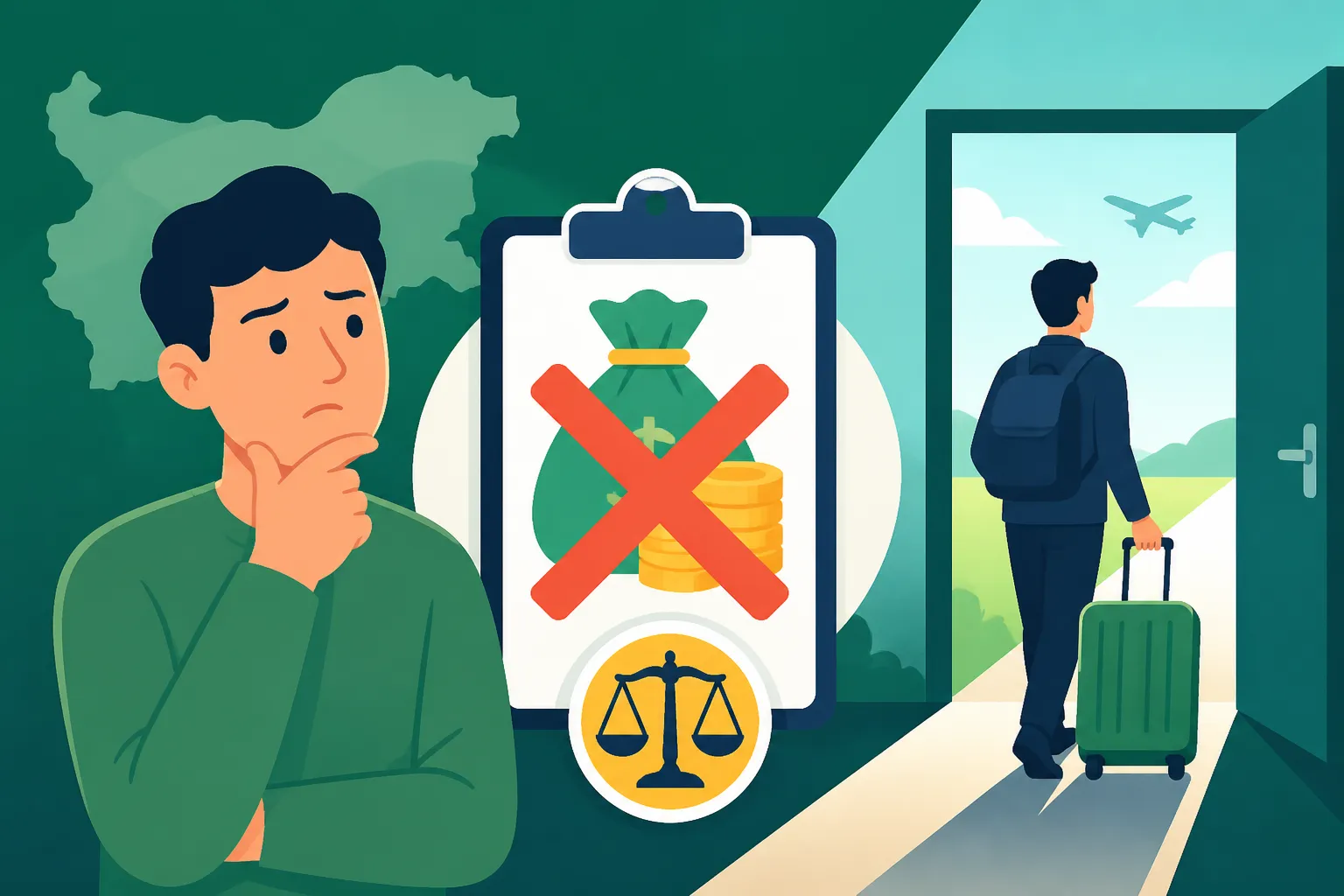
Do I Have to Pay Any Exit Tax When Leaving Bulgaria?
Leaving a country, especially one you've called home for a while like Bulgaria, often brings a unique mix of excitement and apprehension. Amidst all the packing, goodbyes, and planning for your next adventure, one question often lurks in the back of your mind: "Do I owe the Bulgarian taxman anything before I go?" The good news is that Bulgaria doesn't have a specific, punitive "exit tax" in the way some other countries might. However, that doesn't mean you can simply pack up and disappear without a thought for your financial obligations. This comprehensive guide will walk you through the various tax considerations you absolutely need to settle before you wave довиждане to Bulgaria, ensuring a smooth and stress-free departure.
Unpacking the "Exit Tax" Myth in Bulgaria
It's a common worry among expats globally: will the government take a chunk of your hard-earned money just because you're leaving? In many places, this fear is justified, with complex rules and fees associated with ending your tax residency. However, in Bulgaria, the concept of a dedicated "exit tax" as a separate levy simply doesn't exist. This might come as a relief, but it’s crucial to understand what this really means.
What People Often Mean by 'Exit Tax'
When expats talk about an "exit tax," they're often thinking of a few different things. Perhaps they've heard of countries that impose a tax on accumulated wealth or retirement funds when a long-term resident decides to leave. Or maybe they envision a final, additional fee applied simply for the act of moving out of the country's tax jurisdiction. These are legitimate concerns given varying global tax policies. For example, some nations have complex capital gains rules on assets deemed "exited" even if not sold, or specific fees for breaking certain residency contracts.
In Bulgaria, you won't find a single, standalone tax category labeled "Exit Tax" on any official forms. There isn't a department at the National Revenue Agency (NRA) solely dedicated to collecting a percentage of your assets as you cross the border for the last time. This distinction is vital because it reorients your focus from a special departure tax to ensuring all your regular tax obligations are met up to your date of departure. It's about tying up existing loose ends, not facing a new, unexpected charge.
Bulgaria's Approach to Departure Taxes
Bulgaria's tax system, with its famously flat 10% personal income tax, is generally straightforward. Its approach to individuals leaving the country aligns with this simplicity. The focus is primarily on your tax residency status and any income or capital gains you accrued while you were considered a tax resident in Bulgaria. Essentially, if you earned income or realised profits from assets while residing here, you are liable to pay taxes on those, regardless of whether you're staying or going. The departure itself doesn't trigger a new tax; it simply marks the end of your period of tax liability in Bulgaria.
This means your primary concern should be to ensure that all income earned from January 1st of your departure year up to your last day as a tax resident is correctly declared and taxed. Similarly, any sales of property, shares, or other assets that trigger capital gains tax must be handled before or immediately after your departure. It's about being diligent and making sure your record with the NRA is clear, rather than bracing for an additional "leaving fee." Understanding this nuance is the first step to a stress-free financial exit.
Crucial Tax Obligations Before You Depart Bulgaria
So, while there's no "exit tax," you still have a list of important financial housekeeping items to tick off. Neglecting these could lead to unexpected issues down the line, potentially complicating future visits or even affecting your tax standing in your new home country. Let's delve into what you absolutely need to settle.
Final Income Tax Declaration
This is perhaps the most fundamental task. When you leave Bulgaria permanently, you need to file a final income tax declaration for the partial year you resided here. For example, if you depart in July, you're still liable for taxes on all income earned between January 1st and your last day of tax residency in July. This could include your salary, rental income, or any other taxable earnings.
It's easy to overlook this, especially if your employer usually handles your taxes or if you’ve simply been a passive income earner. However, everyone who was a tax resident and earned income is expected to make this final declaration. The process for this is largely similar to your annual tax filing, but it covers a shorter period. You'll use the standard form and declare all taxable income. For detailed guidance on the overall process, you can refer to our guide on Filing Your Tax Return with the National Revenue Agency in Bulgaria: The Complete Walkthrough (2027). Don't just assume your employer will sort everything perfectly; it's your responsibility to ensure all your personal income from your Bulgarian residency is properly reported and any due tax is paid. If you’re unsure about the specifics, especially for a partial year, consulting with a local tax accountant can save you a lot of headaches.
Social and Health Contributions
For most expats, social and health contributions are mandatory while working and residing in Bulgaria. The key here is to ensure these contributions cease appropriately when you leave.
- For Employees: If you’ve been employed, your employer is responsible for stopping your contributions (social security, health insurance, and pension contributions) once your employment contract ends. They will process your final payments and deregister you from the system. It’s always a good idea to get confirmation of this from your employer or check with the National Social Security Institute (NSSI) directly if you have any doubts.
- For Self-Employed/Freelancers: This is entirely your responsibility. As a registered freelancer (свободна професия) or owner of a Bulgarian company (EOOD/OOD), you must formally notify the NRA of your cessation of activity or change in tax residency status. You’ll need to ensure all outstanding contributions are paid up to the month you cease being a resident. Missing this step can lead to accumulated debts and penalties. Our article on Understanding Mandatory Social and Health Contributions in Bulgaria provides more context on these obligations. Knowing when and how to stop these payments is crucial to avoid any nasty surprises later.
Capital Gains Tax on Assets
This is where many expats can inadvertently trip up. If you've sold property, shares, or other significant assets in Bulgaria before your departure, you need to be aware of potential capital gains tax liabilities.
- Property Sales: Generally, if you sell property that has been your primary residence for at least three years, you may be exempt from capital gains tax. However, if it's a second property or you've owned it for less than three years, you will likely owe capital gains tax. This is calculated on the difference between the acquisition price and the selling price, typically at the flat 10% rate. This tax is usually paid at the time of the sale, but you must ensure it's correctly declared in your final tax return. It’s crucial to understand these rules, as failing to declare can lead to significant penalties. We cover this in more detail in Do I Pay Tax When Selling Property in Bulgaria?.
- Shares and Other Assets: Similar rules apply to sales of shares in Bulgarian companies or other significant movable assets. If you've made a profit, you'll generally be liable for capital gains tax. Make sure all such transactions are properly documented and declared in your final tax filing.
If you are considering selling assets, it’s highly recommended to consult with a professional specializing in Taxes for Expats to ensure you meet all requirements and potentially mitigate your tax burden legally.
Property Taxes and Local Fees
Even if you leave Bulgaria, if you retain ownership of property here, you will remain liable for property tax (данък сгради) and garbage collection fees (такса битови отпадъци). These are annual municipal taxes, typically paid in instalments or as a lump sum with a discount early in the year.
Your departure does not negate these obligations. You need to ensure these are paid on time, either by setting up arrangements for direct debit, paying them remotely, or entrusting a reliable person or agency to handle them on your behalf. If you sell your property, the new owner will take over these responsibilities from the date of the sale, but you must ensure your portion up to that date is settled. Understanding How Much Is Property Tax in Bulgaria? can help you budget for these ongoing costs.
Business and Freelance Tax Obligations
For entrepreneurs, freelancers, or business owners, departing Bulgaria involves a more intricate tax winding-up process.
- Deregistering as a Freelancer: If you were registered as a свободна професия, you’ll need to formally deregister with the NRA. This involves submitting a final income declaration for your freelance activity up to your departure date and settling any outstanding income tax and social/health contributions. You might also need to inform other relevant bodies, depending on your profession.
- Closing a Bulgarian Company (EOOD/OOD): Winding up a Bulgarian company is a formal legal process that involves several stages, including liquidation, asset distribution, and submission of final financial statements and tax declarations. This can be complex and time-consuming, requiring the assistance of an accountant and a lawyer. Any outstanding corporate taxes, VAT, or other liabilities must be settled.
- VAT Registration: If your business was VAT-registered, you must deregister from VAT, which involves submitting a final VAT return and ensuring all VAT liabilities or refunds are reconciled.
This table provides a quick overview of key tax considerations when leaving Bulgaria:
| Tax Area | Applies To | Action Required | Key Point |
|---|---|---|---|
| Final Income Tax | All tax residents earning income | File a partial-year declaration | Covers income from Jan 1st to your last day of residency. |
| Social & Health Contributions | Employees, self-employed, company owners | Ensure cessation of payments (employer or self-managed) | Avoid accumulating debts; confirm deregistration with NSSI. |
| Capital Gains Tax | Individuals selling property, shares, assets | Declare and pay tax on profits from sales (if applicable) | Be mindful of the 3-year primary residence rule for property. |
| Property Taxes & Fees | Property owners | Settle all outstanding annual municipal taxes | Ongoing liability until property is sold or transferred. |
| Business/Freelance Taxes | Self-employed, company owners | Deregister, file final returns, settle all liabilities | Complex process, often requires professional accounting and legal help. |
As you can see, the situation is far from a simple "no tax." It's about diligent settlement of existing obligations. Don't hesitate to seek professional advice, especially for more complex scenarios involving capital gains or business closure. Reputable firms like Taxes for Expats often provide tailored advice for such situations.
Navigating Your Tax Departure: Practical Steps and Best Practices
Once you understand what you need to address, the next step is figuring out how to do it. The Bulgarian administrative system can be, let's just say, a learning experience even for seasoned expats. Approaching your tax departure systematically can help minimize stress and ensure nothing is overlooked.
Notifying the National Revenue Agency (NRA)
While there's no single "I'm leaving" form to fill out with the NRA (Национална агенция за приходите) as an individual, your actions will implicitly inform them of your change in status. The most critical step is ensuring your final annual income tax declaration is filed correctly. This declaration will cover the income earned during the portion of the year you were a tax resident.
It's also prudent to consider formally notifying them if you have complex affairs, like being registered as a freelancer or a sole proprietor. For EU citizens, simply deregistering your address with the Migration Directorate can sometimes be sufficient, but for non-EU citizens, the process of cancelling your residence permit and then filing a final tax return effectively signals your departure. If you've been filing taxes via the NRA online portal, make sure all your past records are accessible and that you've submitted your final documents. For more on dealing with the tax authority, our guide on How to Register with the National Revenue Agency (NRA) in Bulgaria provides foundational information.
Managing Your Bulgarian Bank Accounts
Deciding what to do with your Bulgarian bank accounts is another important step. Many expats choose to close them entirely, especially if they don't plan to return or retain any assets in Bulgaria. This involves visiting your bank branch, settling any outstanding fees, and transferring your remaining funds to your new international account. Be aware that some banks might charge a fee for closing accounts, and you might need to provide proof of your new address or tax residency.
However, if you plan to keep property in Bulgaria or have recurring expenses, you might opt to keep an account open, perhaps one with low maintenance fees. If you're transferring funds internationally, platforms like Wise (formerly TransferWise) can be incredibly helpful. They offer competitive exchange rates and lower fees compared to traditional banks, making the process of moving your funds out of Bulgaria much smoother. This is especially useful for managing finances remotely if you decide to keep a local account for property management or other reasons. You can find more advice on this in our article How to Transfer Money Into and Out of Bulgaria as an Expat.
Confirming Your Tax Residency Status Change
This is perhaps the most nuanced part of leaving. Simply moving physically doesn't automatically mean you cease to be a Bulgarian tax resident in the eyes of the law. Bulgaria, like many countries, uses the "183-day rule" as a primary indicator: if you spend more than 183 days in the country within any 12-month period, you're generally considered a tax resident.
When you leave, you need to be able to demonstrate that you no longer meet the criteria for Bulgarian tax residency and have established tax residency elsewhere. This might involve showing evidence of your new address, your new employment contract, or a tax residency certificate from your new country of residence. If you maintain significant economic ties to Bulgaria (e.g., substantial property, a running business, or dependants residing here), the NRA might argue you still have a "centre of vital interests" in Bulgaria, which could complicate your tax departure. For a deeper dive into this, check out Understanding Tax Residency Rules and the 183-Day Test in Bulgaria.
Seeking Professional Tax Advice
Honestly, while I can give you the general lay of the land, every expat's situation is unique. Your employment status, the types of assets you hold, whether you’re closing a business, and your new country of residence all play a role in your final tax obligations. Trying to navigate all this on your own, especially with language barriers and bureaucratic complexities, can be incredibly daunting and prone to errors.
This is where engaging a local Bulgarian tax accountant or an international firm specializing in Taxes for Expats becomes invaluable. They can review your specific circumstances, ensure all necessary declarations are filed correctly, help you understand any potential capital gains liabilities, and confirm your tax residency status change. They can also represent you with the NRA if needed, providing peace of mind as you embark on your next chapter. Don't see it as an extra cost, but as an investment in avoiding future complications.
Important Considerations for Your Future Tax Residency
Your departure from Bulgaria isn't just about what you leave behind; it's also about what you move forward with, particularly concerning your tax obligations.
Avoiding Double Taxation
Once you've left Bulgaria and established tax residency in a new country, you want to avoid a scenario where both Bulgaria and your new country claim tax on the same income or assets. This is where double taxation agreements (DTAs) come into play. Bulgaria has DTAs with many countries, designed to prevent individuals from being taxed twice on the same income.
It's crucial to understand how the DTA between Bulgaria and your new country works. For instance, if you continue to receive rental income from a property in Bulgaria after you've moved, the DTA will stipulate which country has the primary right to tax that income, and how relief for any tax paid in the other country is granted. This often means you'll declare the income in both countries, but relief will be provided in one to prevent double taxation. Our guide on Understanding Double Taxation Agreements and Foreign Income in Bulgaria offers more context. Make sure you get advice tailored to your specific situation and new country of residence.
Document Retention
Even after you've left Bulgaria, the NRA can, in theory, audit your tax affairs for several years after your final filing. It's an administrative best practice to keep all your relevant tax documents – income statements, payment receipts for taxes and contributions, property deeds, sales contracts, bank statements, and copies of all submitted tax declarations – for at least five years. Some professionals might even recommend longer, especially if property or business assets were involved.
Having these records readily accessible will be crucial if any queries arise after your departure. Scan everything, keep digital copies, and store them securely. You never know when you might need to prove that you fulfilled your obligations.
So, while the term "exit tax" might cause a shiver down your spine, rest assured that Bulgaria operates on a more conventional system of settling your outstanding affairs based on your period of residency. By being diligent, understanding your obligations, and not shying away from professional advice, you can ensure a clean and financially clear break from this beautiful country.
Disclaimer
The information provided in this guide is for general informational purposes only and does not constitute professional tax, legal, or financial advice. Tax laws and regulations in Bulgaria can be complex and are subject to change. It is highly recommended that you consult with a qualified Bulgarian tax professional or legal expert to discuss your specific circumstances before making any decisions related to your departure and tax obligations.