How Do I Apply for a Diploma Course in Bulgaria?
Ah, the quest for a "diploma course" in Bulgaria! It’s a term that can mean slightly different things depending on where you're coming from, and navigating the Bulgarian education system to find exactly what you're looking for can feel a bit like trying to solve a Rubik's cube blindfolded. But don't worry, you're not alone in this. Many expats come here with specific career goals or a desire to gain new skills, only to find the terminology and application processes a unique challenge. This guide will cut through the confusion and walk you through how to apply for various non-degree, vocational, or specialized diploma-style courses in Bulgaria, ensuring you have a clear roadmap to your educational aspirations.
Understanding What a "Diploma Course" Means in Bulgaria
When you say "diploma course," what often comes to mind in many Western countries is a specific post-secondary program, usually shorter than a full bachelor's degree, focused on practical skills or a specialized field. In Bulgaria, the terminology can be a bit more nuanced. While they have university degrees (bakalavarska stepen, magistarska stepen), there are indeed many programs that offer what you might consider a "diploma" – a certificate or qualification that attests to specialized training or vocational competence. These aren't usually issued by traditional universities in the same way a degree is, but rather by professional gymnasiums, vocational colleges, or specialized training centers. It's really about gaining a specific skill set for a particular profession.
You see, the Bulgarian National Qualifications Framework (NQF) aligns with the European Qualifications Framework (EQF), which helps categorize qualifications. Many "diploma courses" would fall into EQF levels 3-5, focusing on practical knowledge and professional skills, preparing you directly for employment in a specific field. So, while you won't walk away with a "Bachelor of Diploma Studies" (that's not a thing here!), you'll earn a recognized professional qualification that can open doors.
Vocational Schools and Professional Gymnasiums
These institutions are often the closest equivalent to what many expats think of as a "diploma course," particularly if you're looking for hands-on, career-specific training straight out of secondary education, or even as an adult looking for a career change. Vocational schools (profesionalni uchilishta) and professional gymnasiums (profesionalni gimnazii) are designed to equip students with practical skills for specific trades and professions. They typically offer programs lasting anywhere from one to five years, culminating in a Svidetelstvo za profesionalna kvalifikatsia (Certificate of Professional Qualification).
Imagine you're interested in becoming a chef, a hairdresser, an electrician, or a tourist guide. These are the places where you'd typically find such training. For instance, in Sofia, you might find a professional gymnasium specializing in tourism, offering programs in hotel management or culinary arts. These programs are intensely practical, often involving apprenticeships or significant hands-on training. The language of instruction is predominantly Bulgarian, which is an important consideration. If your Bulgarian isn't up to par, this might be your first hurdle, but don't let it deter you! There are resources like iTalki that can connect you with Bulgarian language tutors to help you prepare.
The curriculum here is often a mix of general education subjects (especially in the longer programs) and highly specialized vocational training. Upon completion, you're not just getting a piece of paper; you're getting demonstrable skills that are recognized within various industries across Bulgaria and, often, beyond its borders, thanks to the EQF alignment. It’s a fantastic route for those who want to jump into a new career path quickly and efficiently, focusing on direct employability rather than theoretical academic pursuits.
Post-Secondary Specializations and Colleges
Beyond the vocational schools for younger students, there's another tier that might align with your idea of a "diploma course": post-secondary specialized programs and certain offerings from colleges (kollezhi), some of which might even be affiliated with larger universities. These are typically shorter, more intensive programs designed for individuals who have already completed their secondary education and are looking for a highly focused specialization.
These courses might last one to two years and lead to a "Specialist" qualification, which is a recognized level within the Bulgarian education system. Think of areas like IT support, graphic design, marketing, or even specific healthcare roles that don't require a full university degree. For example, some technical colleges or private training centers in cities like Plovdiv or Varna might offer intensive coding bootcamps or digital marketing courses that provide a certificate of completion or a professional qualification upon success. These are particularly popular among expats looking to upskill or pivot into high-demand industries without committing to a full bachelor's or master's program.
The key difference here is often the entry requirement – you almost certainly need a completed secondary education diploma (diploma za sredno obrazovanie). Some of these programs, especially in fields like IT or business, might even be offered in English, which can be a huge relief for many foreigners. However, English-taught programs are less common outside of traditional university degrees, so always double-check. These colleges are often more flexible in their admission cycles compared to universities, sometimes offering rolling admissions or multiple start dates throughout the year. This flexibility can be a real boon for expats whose schedules might be less predictable. While these programs are not university degrees, they are a legitimate path to professional advancement and can be a stepping stone for further education if you decide to pursue a bachelor's degree later.
Navigating the Application Process for Diploma Courses
Applying for any educational program in a foreign country can feel like a bureaucratic maze, and Bulgaria is no exception. While the process for diploma courses might be slightly less arduous than applying for a full university degree, it still requires careful attention to detail, especially regarding documentation and timelines. The trick is to be meticulously organized and patient. Don't underestimate the need for official translations and apostilles – these are almost always required for any foreign document used in Bulgaria.
Your first step, naturally, will be identifying the specific course and institution that aligns with your goals. The Ministry of Education and Science website is a good starting point, though many vocational schools and colleges maintain their own websites, which vary wildly in quality and English translation. Don't be shy about reaching out directly via email or phone; a little persistence goes a long way.
Entry Requirements and Documentation
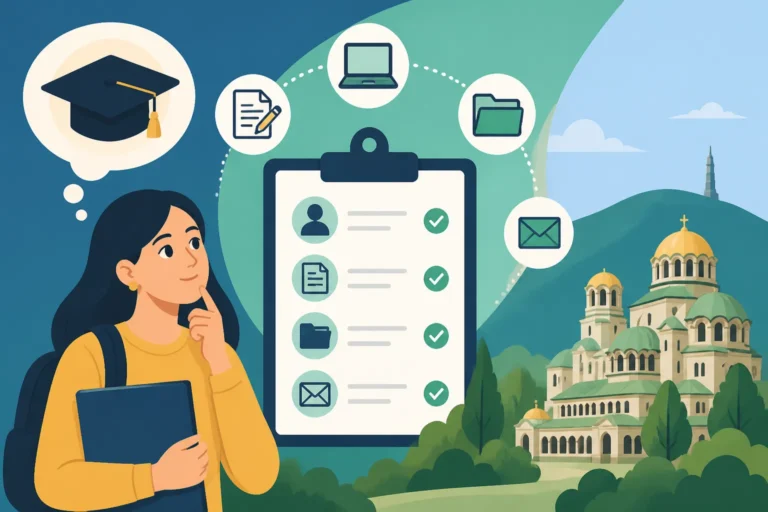
This is where the rubber meets the road. Each institution and program will have its specific requirements, but some common themes emerge:
- Secondary Education Certificate: Almost universally, you'll need to prove you've completed secondary education. This means your high school diploma or equivalent. This document will need to be translated into Bulgarian by a sworn translator and then legalized (typically with an Apostille seal, or consular legalization if your country isn't part of the Apostille Convention). This process can take time, so start it early! Trying to How Do I Get My Foreign Degree Recognised in Bulgaria? is a related but often more complex process for university degrees, but the principles of document recognition apply here too.
- Proof of Language Proficiency: If the course is in Bulgarian (which most vocational ones are), you'll likely need to demonstrate proficiency. Some institutions might offer their own internal language tests, while others might accept recognized certificates (though these are less common for vocational courses than for university programs). If you're not fluent, consider intensive language courses or private tutoring. As mentioned earlier, platforms like iTalki are excellent for finding native Bulgarian speakers who can help you hone your skills. For courses taught in English, you'd usually need an IELTS or TOEFL score.
- Application Form: Standard stuff, but fill it out completely and accurately. Bulgarian forms can sometimes be a bit dated or tricky to navigate online, so don't hesitate to ask for help from the admissions office.
- Passport/ID Copy: A clear copy of your passport or national ID card.
- Medical Certificate: A general health certificate, often specifically formatted for educational enrollment in Bulgaria, stating you are fit to study. This might need to be obtained in Bulgaria or translated and legalized if from your home country.
- Photos: Passport-sized photos are always required.
- Application Fee: Be prepared for a small, non-refundable application fee.
- Entrance Exams/Interviews: For some specialized or more competitive programs, you might need to sit for an entrance exam (e.g., in mathematics, a vocational skill, or general knowledge) or attend an interview. These would almost certainly be in Bulgarian unless it's an English-taught program.
This might seem like a lot, but taking it step-by-step makes it manageable. Always check the specific requirements on the institution's official website or by contacting their international admissions office. What documents do I need to enroll at a Bulgarian University? might offer some parallels, even if the "diploma" process is slightly different.
Here's a quick overview of common documents:
| Document Type | Purpose | General Requirement | Notes |
|---|---|---|---|
| Secondary Education Diploma | Proof of completed high school education | Translated & Apostilled/Legalized | Must be officially recognized |
| Language Proficiency | Demonstrate ability to study in instruction language | Test (e.g., internal, IELTS, TOEFL) or Interview | Often waived for native speakers or specific programs |
| Passport/ID Copy | Identification for administrative purposes | Clear photocopy | Ensure validity for entire study period |
| Medical Certificate | Proof of good health for study | Specific Bulgarian format or translated/legalized | Can often be obtained from a GP in Bulgaria |
| Photos | For student ID and records | Standard passport-sized | Usually 2-4 copies needed |
| Application Form | Official request for admission | Completed accurately and signed | Online or paper form |
| Application Fee | Administrative cost | Proof of payment (bank transfer, cash) | Non-refundable |
| Curriculum Vitae (CV) | Overview of academic and professional background | Required for some specialized or adult programs | Highlight relevant experience |
| Motivation Letter | Explaining your interest in the course | Required for some competitive programs | Demonstrate your commitment and goals |
Finding the Right Course and Institution
This part requires a bit of detective work. Bulgaria has a decent number of vocational schools and colleges, but not all of them cater to international students in the same way, nor do they all have robust online presence in English.
- Start Broad: Begin by identifying the field you want to study. Do you want to learn a trade, get into IT, or pursue a specific craft?
- Official Channels: The Bulgarian Ministry of Education and Science (МОН – Ministerstvo na obrazovanieto i naukata) website is the official source for accredited institutions. While not always user-friendly for English speakers, it lists all registered schools and universities. Searching for "професионални гимназии" (professional gymnasiums) or "колежи" (colleges) will give you a list.
- Direct Institution Websites: Once you have a few names, head straight to their websites. Look for "Прием на студенти" (Student Admission) or "За чуждестранни студенти" (For Foreign Students) sections. Bear in mind that information for non-EU/EEA students might be less prominent.
- Local Forums and Expat Groups: These can be goldmines of practical, real-world advice. Ask fellow expats if they know of specific programs or institutions that are foreigner-friendly. Sometimes word-of-mouth is the best way to uncover hidden gems.
- Private Training Centers: For certain modern skills (e.g., web development, digital marketing), private academies and bootcamps are flourishing in cities like Sofia. These are often more expensive but might offer English-taught programs and faster, more direct routes to employment. They usually issue their own certificates of completion rather than state-recognized diplomas, so clarify what kind of certification you'll receive.
- Accreditation: Always, always check the accreditation. For state-recognized diplomas, the institution should be accredited by the National Agency for Evaluation and Accreditation (NAEA). This ensures your qualification will be officially recognized.
- Location, Location, Location: Consider where you want to live. Sofia, Plovdiv, and Varna offer the widest range of options and are generally more expat-friendly. However, smaller towns might have specialized vocational schools that are highly regarded in their niche. The cost of living will also vary significantly between these cities, so consider How Much Does It Cost to Live in Sofia per Month? versus smaller cities.
Remember, finding the right course isn't just about the curriculum; it's about the entire experience. Consider class sizes, instructor-to-student ratio, facilities, and the kind of support they offer international students. It's also wise to consider how a prolonged stay for studies might impact your tax residency status. Consulting with specialists like Taxes for Expats can help clarify your obligations and ensure you’re making informed financial decisions before and during your studies.
Practical Steps After Application and Acceptance
So, you've done the hard work, submitted your application, navigated the interviews or exams, and received that coveted acceptance letter – congratulations! But the journey doesn't end there. For many international students, especially non-EU/EEA citizens, the next major hurdle involves securing your legal right to reside and study in Bulgaria. This is a critical stage that requires a forward-thinking approach and thorough preparation.
Beyond the administrative requirements, there's also the very real task of preparing yourself for life in a new country. Moving to Bulgaria is an adventure, but like any adventure, it's smoother with good planning. From finding a place to lay your head to understanding the local transport, these practical steps will ensure you're ready to hit the ground running and fully immerse yourself in your studies.
Visa and Residence Permit Considerations
This is arguably the most crucial step for non-EU/EEA citizens. Unlike EU citizens who simply need to register their address after three months, non-EU nationals require a Type D long-stay visa, followed by a temporary residence permit.
- Type D Visa Application: Once accepted, your acceptance letter from the educational institution is your golden ticket for applying for a Type D visa. You must apply for this visa at the Bulgarian embassy or consulate in your home country (or country of legal residence) before arriving in Bulgaria.
- Required Documents for Type D Visa: This typically includes your passport, the original acceptance letter, proof of financial means to support yourself (bank statements showing sufficient funds for your studies and living expenses), proof of accommodation (rental contract or dormitory agreement), comprehensive health insurance valid for Bulgaria, and a clean criminal record certificate (translated and apostilled). The specific requirements can vary slightly by consulate, so always check their official website. Knowing How Do I Get Health Insurance for a Bulgaria Residence Permit? is vital here.
- Processing Time: Be patient. Type D visa processing can take several weeks, sometimes even months, so apply well in advance of your course start date.
- Temporary Residence Permit: Upon arrival in Bulgaria with your Type D visa, you have a limited window (usually within 90 days) to apply for a temporary residence permit at the Migration Directorate (Миграция Дирекция) in the city where you'll be studying.
- Required Documents for Residence Permit: Many of the same documents you submitted for your Type D visa will be needed again, along with your Bulgarian entry stamp, an address registration certificate (adresna registratsia) from your municipality, and proof you've paid the state fees.
- Duration: Student residence permits are usually issued for the duration of your academic year, and you'll need to renew it annually for multi-year programs. Understanding How Long Does a Residence Permit Last in Bulgaria? is key to planning your stay.
- Work Rights: Generally, a student residence permit in Bulgaria allows for limited part-time work (e.g., up to 20 hours a week), but always confirm the specific conditions with the Migration Directorate, as rules can change. This is critical if you plan to support yourself while studying.
Navigating the visa and residence permit process is often cited as one of the most stressful parts of moving to Bulgaria. It’s complex, requires numerous documents, and often involves multiple visits to different institutions. Seeking advice from the international student office of your institution (if they have one) or a local legal consultant specializing in immigration can be incredibly helpful. You might even find insights in posts like How to Apply for a Student Residence Permit in Bulgaria.
Preparing for Your Studies
With the legalities underway, it’s time for the practical aspects of setting up your new life.
- Accommodation: Secure your housing before you arrive, if possible. Many vocational schools or colleges might have dormitory options, or you can look for private rentals. Websites like Imot.bg are popular, but consider using a local real estate agent, especially if your Bulgarian isn't strong. They can help with understanding contracts and avoiding scams. Finding a place near your institution and public transport links is a smart move. You might find useful tips in How Much Does It Cost to Rent an Apartment in Sofia in 2026?.
- Bank Account: Once you have your residence permit, opening a Bulgarian bank account will make your life significantly easier for paying rent, utilities, and daily expenses. DSK Bank and UniCredit Bulbank are popular choices for expats. For more guidance, see How to Open a Bank Account at a Bulgarian Bank as a Foreigner.
- SIM Card and Internet: Getting a local SIM card (e.g., from A1, Yettel, Vivacom) is quick and easy. Many rental apartments already have internet, but if not, setting it up is usually straightforward. For more on utilities, check out How Do I Set Up Internet in My Bulgaria Home?
- Learning Bulgarian: Even if your course is in English, learning basic Bulgarian phrases will profoundly improve your daily life and interactions. Bulgarians appreciate the effort, and it will make everything from grocery shopping to navigating public transport much smoother. Beyond iTalki, many language schools in major cities offer courses.
- Cultural Adaptation: Bulgarian culture is rich and welcoming, but also has its quirks. Be open-minded, patient, and ready to learn. Don't be surprised if people shake their heads for "yes" and nod for "no" – it's a common cultural nuance that trips up many newcomers! Getting involved in student life or expat groups can help you settle in. Understanding the nuances of daily life, such as in Understanding the Pharmacy System and Buying Medicines in Bulgaria can be really helpful when you need essentials.
- Budgeting: Bulgaria generally offers a lower cost of living than many Western European countries, but careful budgeting is still essential, especially as a student. Factor in tuition fees, rent, utilities, food, transport, and personal expenses. A good starting point is to explore The Complete Guide to Cost of Living in Bulgaria for Expats (2026).
Remember, moving abroad is a marathon, not a sprint. There will be frustrating moments, but also incredibly rewarding ones. Embrace the challenge, be proactive, and don't hesitate to seek help from your institution, expat communities, or local services when you need it. You're embarking on an exciting new chapter, and gaining a professional diploma in Bulgaria could be the perfect stepping stone to your future career here!
Disclaimer
The information provided in this guide is intended for general informational purposes only and does not constitute legal, financial, or immigration advice. While we strive to keep the information up-to-date and accurate, regulations and procedures in Bulgaria can change frequently. Readers are strongly advised to consult with official government sources, legal professionals, immigration consultants, or educational institutions for the most current and specific advice tailored to their individual circumstances. We cannot be held responsible for any inaccuracies, omissions, or any actions taken based on the information presented herein.