How Do I Write a CV for the Bulgarian Job Market?
Navigating the job market in a new country like Bulgaria can feel like trying to solve a Rubik's Cube blindfolded. You've got your professional experience, your stellar qualifications, and a CV that landed you interviews back home, but then you hear whispers of "Bulgarian expectations" and suddenly you're wondering if your tried-and-true resume template is even relevant here. Trust me, many of us expats have been there, staring at a blank document, unsure how to present ourselves in a way that resonates locally. This guide is here to shed light on exactly how to craft a CV that opens doors in the Bulgarian job market, giving you actionable steps and real-world insights from someone who’s seen it all.
Understanding the Bulgarian CV Landscape: What's Different?
When you're applying for jobs in Bulgaria, it's not just about translating your skills; it's about translating a cultural understanding of professional presentation. What flies in London or New York might raise an eyebrow here, and vice-versa. It’s a subtle dance, but once you get the rhythm, it’s much easier to move with confidence.
The Cultural Nuances of Professional Presentation
Let's be blunt: Bulgarian employers, especially those in more traditional sectors, often appreciate a more formal and comprehensive approach to job applications than you might be used to. While Western trends lean towards short, punchy, one-page CVs, here, a slightly longer, more detailed document isn't necessarily a disadvantage. Think of it as providing a full picture, rather than just a snapshot.
One of the most noticeable differences is the expectation of personal information. In many Western countries, including things like your marital status, number of children, or even a photograph, is a big no-no due to anti-discrimination laws. Here in Bulgaria, it's quite common, and sometimes even expected. A professional, passport-style photo, for instance, is a standard inclusion. It helps put a face to the name, making your application feel more personal in a culture that values relationships. Don't go for a selfie or a casual holiday snap, though; think professional headshot. The key is to demonstrate respect for their norms, even if they differ from what you’re used to. It shows you’ve done your homework and are serious about integrating.
Essential Sections and Structure
A typical Bulgarian CV is structured logically, ensuring all pertinent information is easily accessible. While there’s no rigid, universal template, certain sections are almost always present and usually in a specific order. Deviating too much might make your CV seem disorganized or incomplete to a local hiring manager.
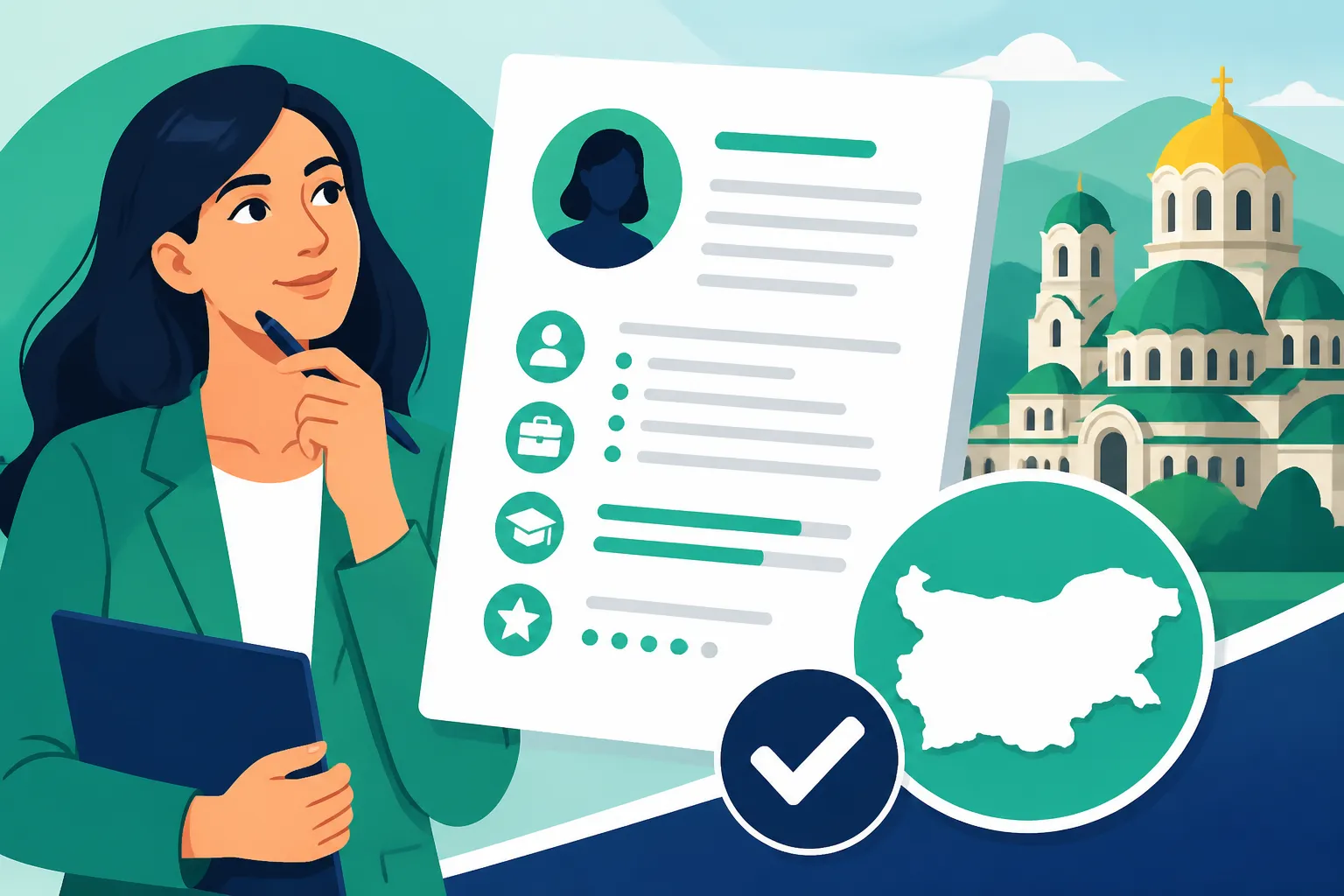
Here's a breakdown of what you'll usually find, from top to bottom:
- Personal Data: This is where you put your full name, date of birth, nationality, and often your marital status and number of children. Yes, really. As an expat, also clearly state your current residence status in Bulgaria if you have one, or that you require sponsorship.
- Contact Information: Your phone number (with international dialling code if it’s not a Bulgarian number), email address, and current residential address. Make sure your email sounds professional – no "partyanimal23@email.com" here, please!
- Summary/Objective (Optional but Recommended): A brief, impactful paragraph at the top outlining your career goals and what you bring to the table. For expats, this is a great place to highlight your international experience and unique perspective.
- Work Experience: This is your bread and butter. List your jobs in reverse chronological order, starting with the most recent. For each role, include your job title, the company name, location, and employment dates. Underneath, use bullet points to describe your responsibilities and, crucially, your achievements. Quantify these achievements whenever possible – "Increased sales by 15%," "Managed a team of 5," "Reduced project completion time by 10 days."
- Education: Again, in reverse chronological order. List your degrees, diplomas, and any relevant certifications. Include the name of the institution, location, and dates of attendance. If you have a foreign qualification, you might need to think about how to get your foreign qualification recognised in Bulgaria, which is a whole other topic but worth considering for long-term career goals.
- Skills: This section is vital. Break it down into categories like "Technical Skills" (software, programming languages), "Soft Skills" (communication, problem-solving, teamwork), and especially "Language Skills."
- Language Skills: This deserves its own special mention. Clearly state all languages you speak and your proficiency level (Beginner, Intermediate, Advanced, Native). Bulgarian, even at a basic level, is a massive advantage and should be prominently displayed. More on this later.
- References: Typically, you can state "Available upon request." Providing actual contact details for references upfront is less common unless specifically asked, but be prepared to provide them if requested during the interview process.
The overall length can be 2-3 pages, especially for more experienced professionals. Don't ramble, but don't shy away from providing detail where it adds value.
Crafting Your Bulgarian CV: Step-by-Step
Now that you have a sense of the landscape, let's roll up our sleeves and build that CV. This isn't just about translating words; it's about translating your professional narrative into a format that Bulgarian employers will understand and appreciate.
Personal Details and the Photo Dilemma
Okay, let's tackle the photo first. As mentioned, it's generally expected. This isn't a job application for a modeling agency, so keep it professional. Think passport photo quality, but with a friendly, approachable expression. Head and shoulders, plain background, appropriate attire. It’s meant to make you seem personable and trustworthy, not like you're trying to win an award.
Beyond the photo, the personal details section is where you lay out the basics. Your full legal name, your current residential address in Bulgaria (or soon to be, if you’re applying from abroad), a reliable phone number (again, with country code!), and a professional email. Your date of birth is standard. Nationality is also expected, and for expats, this often leads to questions about work eligibility, so being upfront is good. Things like marital status and children, while feeling intrusive to many Westerners, are often seen as providing a fuller picture of a stable individual in Bulgaria. You are not legally obliged to include them, especially if you feel uncomfortable, but be aware that their absence might be noted. For specific advice on navigating these cultural elements, consider referencing resources on How to Adapt Your CV for the Bulgarian Job Market.
Highlighting Relevant Experience and Skills
This is where your professional story truly shines. Your work experience should be presented in reverse chronological order. Start with your most recent role and work backwards. For each position, be sure to include:
- Job Title: Be clear and concise.
- Company Name: And the industry, if it's not obvious.
- Location: City and Country.
- Dates of Employment: Month and Year.
Under each role, instead of just listing duties, focus on achievements. What impact did you have? How did you contribute? For instance, instead of "Responsible for customer service," try "Improved customer satisfaction ratings by 20% through proactive problem-solving and training junior staff." Use action verbs. Think about what a Bulgarian employer would value: efficiency, results, loyalty, and often, a hands-on approach.
When it comes to skills, make sure you list everything relevant to the job you're applying for. Technical skills (software, specific tools, programming languages) are always important, especially in sectors like IT, which is a booming area for expats. Soft skills like communication, leadership, and adaptability are highly valued, too.
But the real game-changer for an expat is language proficiency. Seriously, highlight this. If you speak Bulgarian, even just a little, put it down. Even basic conversational skills demonstrate commitment and a willingness to integrate. Knowing a few phrases can make a huge difference in daily life, both professionally and personally. If you're looking to brush up on your Bulgarian, or start from scratch, platforms like iTalki can connect you with native speakers for lessons. Seriously, even a little goes a long way and shows you're invested in living here. Beyond Bulgarian, list any other languages. English is often a given for international roles, but German, French, or Russian can also be highly sought after in specific companies or industries.
Education, References, and Other Sections
Your education section should follow the same reverse chronological format. List your highest degree first, including the institution, location, and years of study. If you have multiple degrees or significant vocational training, include those too. Don't forget any relevant professional certifications, as these often carry significant weight.
For references, the standard practice in Bulgaria, much like in many other parts of the world, is to state "References available upon request." This keeps your CV concise and protects your references' contact information until it's genuinely needed. However, be prepared to provide at least two professional references if you progress to the interview stage. Ensure you have asked for permission from your references beforehand!
Any additional sections should be relevant and add value. This could include:
- Volunteer Work: Demonstrates initiative and community involvement.
- Projects: Especially relevant for technical roles, showcasing practical application of skills.
- Publications/Presentations: If applicable to your field.
- Awards/Recognitions: Don't be shy about achievements.
Remember, the goal is to create a comprehensive yet focused document. Every piece of information should contribute to painting a picture of you as an ideal candidate for the role. If you want to delve deeper into perfecting this for Bulgarian applications, check out this guide on How to Write a CV and Cover Letter for Jobs in Bulgaria.
Common Pitfalls and Pro Tips for Expats
Crafting a CV for a foreign market is rarely straightforward. There are specific hurdles expats face, from language challenges to simply understanding unspoken expectations. Here's how to navigate them.
Language Barriers and Translation Accuracy
This is a big one. If the job advertisement is in Bulgarian and the role requires communication in Bulgarian, your CV should absolutely be in Bulgarian. A poorly translated CV is worse than no translation at all. It screams "I didn't bother" or "I ran it through Google Translate and hoped for the best," which is not the impression you want to make.
If your Bulgarian isn't fluent, invest in a professional translation service. Seriously, it's worth the money. A native Bulgarian speaker who understands professional terminology will ensure your experience and skills are accurately and appropriately conveyed. If you're applying for roles in international companies, especially those in the tech or outsourcing sectors where English is the primary working language, an English CV is usually perfectly acceptable. However, even then, understanding the local context and including details like a photo or date of birth can still be a good idea.
One thing to keep in mind is that even if the role is primarily English-speaking, showing an effort to learn Bulgarian will always be seen positively. Even if you can only manage basic greetings and introductions, it reflects well on your adaptability and commitment to living in Bulgaria.
Tailoring for Specific Industries and Roles
Bulgaria has a diverse job market, and while the general CV structure holds, the emphasis can shift dramatically depending on the sector. For instance, if you're looking for opportunities in the booming IT sector, your technical skills, portfolio of projects, and adaptability to new technologies will take center stage. Companies like those in Sofia's business park are often very modern and globally oriented, so a slightly more "Western" style might be acceptable, but still, err on the side of providing thorough detail.
On the other hand, if you're aiming for a role in tourism, particularly in coastal areas like Varna or Burgas, or in traditional Bulgarian businesses, a more formal and detailed approach might be preferred, along with strong language skills, especially if dealing with diverse groups of tourists or local clients. The outsourcing sector, a significant employer of expats, often looks for strong communication skills, problem-solving abilities, and a willingness to work in multicultural teams. For those specifically targeting these areas, it's worth diving into resources like Working in Bulgaria's Tech, Outsourcing and Tourism Sectors: The Expat Guide (2027) to understand the nuances.
Always read the job description carefully and tailor your CV to match the specific requirements and keywords. Don't use a generic CV for every application. Each application should feel bespoke.
Beyond the CV: Cover Letters and Online Presence
While your CV is your main calling card, it's rarely enough on its own. A well-crafted cover letter is your chance to tell your story, express your enthusiasm for the specific role and company, and explain why you – an expat – are the ideal candidate. This is where you can articulate your motivations for moving to Bulgaria, your understanding of the local market, and how your international experience adds value. Don't just rehash your CV; elaborate on how your skills and experience directly address the job requirements.
In today's interconnected world, your online professional presence is also crucial. LinkedIn is widely used in Bulgaria, particularly in international and corporate sectors. Ensure your LinkedIn profile is up-to-date, professional, and consistent with your CV. Many recruiters will check it. Networking, even digitally, can also open doors. Engaging with Bulgarian professionals and industry groups online can give you insights and visibility. Platforms like JobTiger and Zaplata are popular local job boards, but don't underestimate LinkedIn for professional roles. For a deeper dive into finding opportunities, you might want to look into Understanding Job Boards and Finding Work in Bulgaria.
After Submission: What to Expect
Once you've meticulously crafted and submitted your CV, the waiting game begins. But understanding what typically comes next can help manage your expectations and prepare you for the interview process.
The Interview Process and Follow-up
If your CV makes the cut, you'll likely be invited for an interview. Initial interviews might be virtual, especially if you're applying from outside Bulgaria. Subsequent rounds might involve in-person meetings. Bulgarian professional culture tends to be a bit more formal than some Western counterparts. Punctuality is expected, and a smart, professional appearance is a must. Be prepared to discuss your experience in detail, and don't be surprised by questions that delve a bit more into your personal background or motivations for moving to Bulgaria. Your enthusiasm for the country and its culture can genuinely be a positive factor.
After an interview, a polite thank-you email is always a good idea. It reiterates your interest and professionalism. Don't expect immediate decisions; the hiring process can sometimes take a bit longer than you might be used to. Patience is a virtue, my friend.
Legality and Documentation for Foreigners
This is where the real-world complexities for expats often come into play. If you're a non-EU citizen, securing a job offer is often the first step towards obtaining a work permit and a long-stay visa. Your potential employer will typically need to sponsor your work permit application. This can be a complex and bureaucratic process involving various documents, translations, and visits to the Migration Directorate.
It's absolutely essential to understand how these processes work. Your right to work in Bulgaria is tied to your residence status. For non-EU citizens, the How a Work Permit and Single Permit Work for Non-EU Workers in Bulgaria guide is indispensable. For EU citizens, the process is much simpler, primarily involving registration of your address.
Once you start working, you'll also be subject to Bulgarian tax laws. Understanding your obligations, such as the flat 10% income tax, is crucial. Resources like Understanding Income Tax and the Flat 10% Rate in Bulgaria (2026) can help you get a grasp on the financial side of things. Some expats find it helpful to consult with specialists like Taxes for Expats to navigate the specifics of their situation, especially if they have income from multiple sources or prior tax obligations abroad. Ignorance is definitely not bliss when it comes to taxes!
Remember, the journey to finding a job in Bulgaria is multifaceted, extending far beyond just your CV. But getting that first impression right is half the battle.
Here's a quick comparison of CV elements you might encounter:
| Feature | Traditional Western CV (e.g., US/UK) | Bulgarian CV Expectations (General) |
|---|---|---|
| Length | 1-2 pages (often strict 1-page for junior roles) | 2-3 pages, more comprehensive |
| Photo | Generally omitted (discrimination concerns) | Often expected, professional passport-style |
| Personal Info | Name, contact details only | Name, contact, DOB, nationality, marital status, children (optional) |
| Summary/Objective | Common, concise | Common, concise, can highlight international background |
| Work Experience | Achievements-focused, quantifiable results | Achievements-focused, quantifiable results, often more detail on responsibilities |
| Education | Reverse chronological | Reverse chronological, all relevant degrees/certs |
| Skills | Categorized (technical, soft, languages) | Categorized, heavy emphasis on languages (Bulgarian a plus) |
| References | "Available upon request" | "Available upon request" |
| Language | Usually native tongue or English | Bulgarian (for local roles), English (for international roles) |
Disclaimer
Please remember that while this guide provides comprehensive advice based on common practices in Bulgaria, regulations and cultural norms can evolve. Always cross-reference information with official sources or consult with local legal and HR professionals, especially concerning visa, work permits, and employment law. This content is for informational purposes only and does not constitute professional advice.