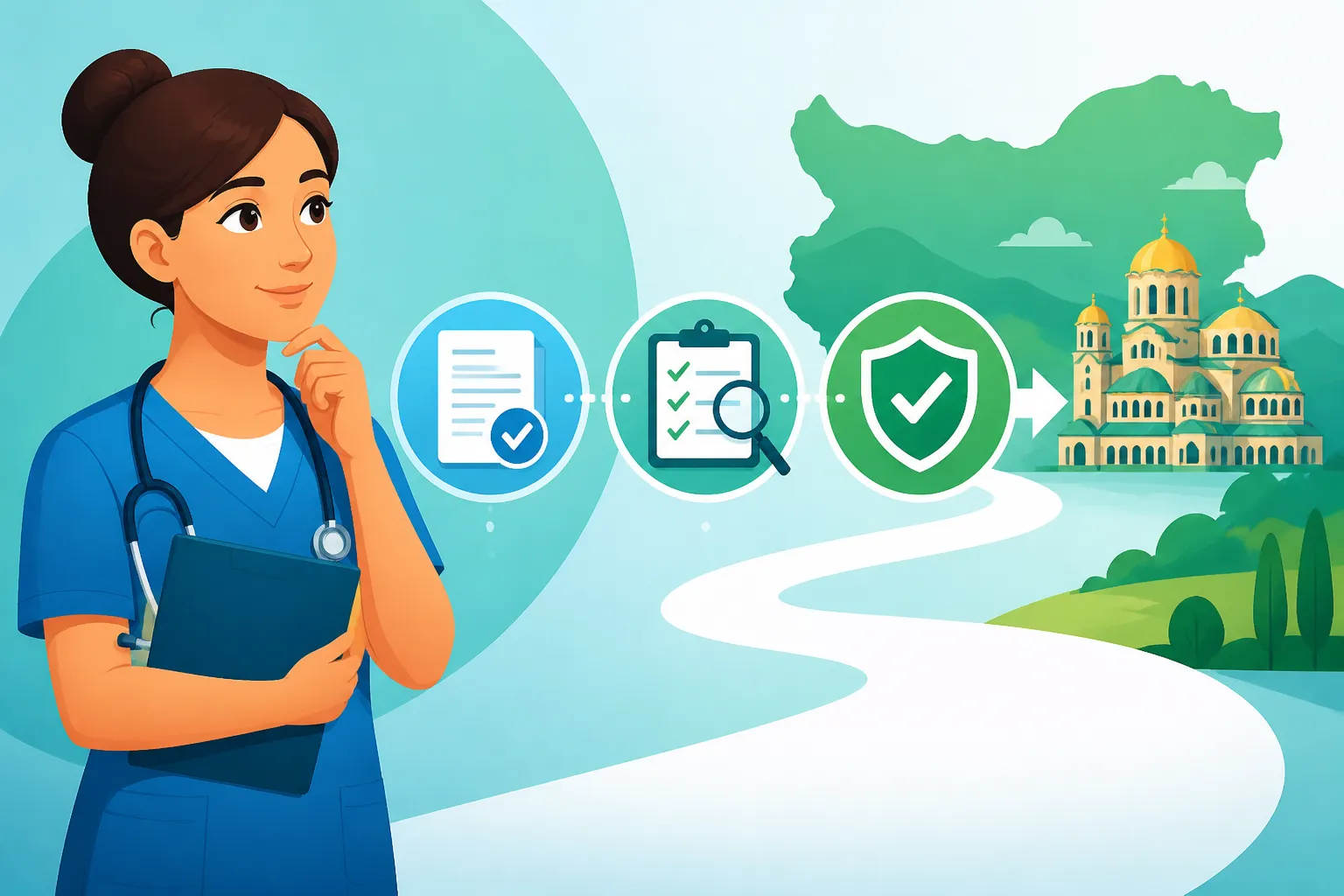
How Do I Get My Nursing Degree Recognised in Bulgaria?
So, you're a qualified nurse, passionate about your profession, and you've set your sights on Bulgaria. That's fantastic! But let's be real, the thought of getting your hard-earned nursing degree recognized in a new country can feel like trying to solve a Rubik's Cube blindfolded. It's a bureaucratic maze, often riddled with obscure requirements and language barriers that can make even the most seasoned expat want to pull their hair out. This guide is here to untangle that process, walking you through the specific steps, pitfalls, and necessary documents to get your nursing qualifications officially recognized here in Bulgaria.
Understanding the Landscape: Why Recognition Matters for Nurses in Bulgaria
Before we dive into the nitty-gritty, let's understand why this recognition process isn't just a formality, especially for a crucial profession like nursing. Bulgaria, like all EU member states, has strict regulations in place to ensure patient safety and maintain high standards of healthcare. This means that merely having a nursing degree from your home country, no matter how prestigious, isn't enough to start practicing here. Your qualifications must be officially recognized by the relevant Bulgarian authorities to confirm they meet the national standards and legal requirements. Without this, you simply won't be able to work as a nurse.
The Legal Framework for Professional Recognition
The legal basis for recognizing professional qualifications in Bulgaria primarily stems from European Union directives, specifically Directive 2005/36/EC on the recognition of professional qualifications. For nurses, this is particularly relevant. If you're a nurse from an EU/EEA member state or Switzerland, the process is generally streamlined due to mutual recognition agreements. Your qualifications are often assumed to be comparable, making the recognition process more straightforward, though not entirely without its paperwork. However, if your nursing degree is from a country outside the EU/EEA, the process becomes more complex. Bulgaria then applies its national legislation, which often involves a more detailed assessment of your education and training to ensure it aligns with Bulgarian standards. This isn't about questioning your competence, but rather ensuring regulatory alignment and patient safety across borders. It's the system, and while it can feel frustrating, understanding its foundation helps immensely.
The Role of Key Institutions
When it comes to the recognition of regulated professions like nursing, you'll primarily be dealing with the Ministry of Health (Министерство на здравеопазването) in Bulgaria. They are the overarching authority for healthcare professions. However, the direct assessment and processing of applications for professional recognition often fall under specific departments or councils within or closely related to the Ministry. For general higher education degrees, the National Centre for Information and Documentation (NACID – Национален център за информация и документация) handles academic recognition. Still, for regulated professions like nursing, the route often involves a more direct application to the Ministry of Health or the relevant professional body, which then makes recommendations to the Ministry. It's a good idea to check the official website of the Ministry of Health or the Bulgarian Association of Health Professionals in Nursing, Midwifery and Associated Health Professions (Българска асоциация на професионалистите по здравни грижи – БАПЗГ) for the most up-to-date specific guidelines for nurses. These institutions are the gatekeepers, and understanding their function is key to navigating the process successfully.
The Step-by-Step Journey: Documents, Applications, and Authorities
Alright, let's get into the actual heavy lifting – what you need to prepare and where you need to send it. This is where the paper trail begins, and patience becomes your best friend. Don't underestimate the importance of meticulous organization here; one missing document or incorrect translation can send you right back to square one.
Gathering Your Essential Documents
This is arguably the most critical stage. You’ll need a robust portfolio of documents to prove your qualifications and experience. Here's a breakdown of what's typically required:
- Identification Documents: A copy of your valid passport or national ID card. For non-EU citizens, often a copy of your valid Type D Long-Stay Visa for Bulgaria, if applicable, or your residence permit will also be needed.
- Proof of Nationality and Residence: Depending on your citizenship, you might need a birth certificate, marriage certificate (if names have changed), or proof of legal residence in Bulgaria.
- Original Nursing Diploma/Certificate: This is your core qualification. It must be the official degree awarded by your educational institution.
- Academic Transcripts and Syllabus: This document details all the courses you took, the hours of theoretical and practical training, and the grades you received. The syllabus (curriculum) is crucial as it allows the Bulgarian authorities to compare your specific training content and duration with their national standards. They need to see that your education covers the necessary competencies required for a nurse in Bulgaria. Sometimes, a detailed breakdown of clinical practice hours is specifically requested.
- Certificate of Good Standing: This is issued by the regulatory body for nurses in your home country (or the last country you practiced in). It confirms that you are registered, licensed, and that there are no disciplinary proceedings or restrictions on your practice. This document usually has a limited validity period (e.g., 3-6 months), so apply for it when you are closer to submitting your full application.
- Proof of Professional Experience: If you have practiced as a nurse, provide certificates from previous employers detailing your employment period, position, and scope of duties. This helps demonstrate practical competence.
- Language Proficiency: While not always an explicit requirement for the recognition process itself for EU citizens, to actually work in Bulgaria, you will need to demonstrate proficiency in Bulgarian. Many employers require a B2 level or higher, especially in medical terminology. Even if the Ministry doesn't demand it for recognition, you'll hit a wall when seeking employment without it. If you're starting from scratch, resources like iTalki can be incredibly helpful for finding Bulgarian tutors who can guide you through medical terminology and everyday language. Learning the language isn't just a professional necessity; it's also vital for your integration and daily life.
- Application Form: You'll need to complete the specific application form provided by the Ministry of Health or the relevant professional body.
The Crucial Step of Translation and Legalization
Once you've gathered your documents, this is where many expats encounter their first major hurdle: translation and legalization.
- Translations: All documents that are not originally in Bulgarian must be translated by a sworn translator (заклет преводач) approved by the Ministry of Foreign Affairs of Bulgaria. Do not get them translated by just any translator. The official seal and signature of a sworn translator are absolutely mandatory for these documents to be accepted by Bulgarian institutions. You can usually find a list of approved translators on the Ministry of Foreign Affairs website or through reputable translation agencies in Bulgaria.
- Apostille/Legalization: For documents issued in countries that are signatories to the Hague Apostille Convention, you'll need an Apostille stamp on the original document (or on a notarized copy if the original cannot be stamped). This international certification authenticates the origin of the public document. If your country is not a signatory to the Apostille Convention, then your documents will need to go through a full legalization process, which usually involves certification by the Ministry of Foreign Affairs in your home country, followed by certification by the Bulgarian embassy or consulate in your home country, and finally by the Consular Department of the Ministry of Foreign Affairs in Bulgaria. This process can be lengthy and complex, so start early. To learn more about this, you can look up "How to Get Your Documents Apostilled for Bulgaria Immigration".
Submitting Your Application
With all your documents translated, apostilled, and meticulously organized, you're ready to submit. The specific submission method can vary, but generally, you will:
- Pay the State Fees: There will be administrative fees associated with the application processing. These are non-refundable. Check the current fees on the Ministry of Health's website.
- Submit to the Ministry of Health: Your completed application form, along with all the supporting documents, will be submitted to the Ministry of Health. This can often be done in person at their administrative offices or sometimes via registered mail. For clarity, it's often better to submit in person if you can, allowing you to get a receipt and potentially clarify any immediate questions.
The Ministry will then review your qualifications against the Bulgarian educational and professional standards. This assessment includes comparing the duration, content, and practical components of your training.
Overcoming Hurdles: Language, Practicalities, and Next Steps
The recognition process is rarely a sprint; it's usually a marathon. Expect delays, requests for additional information, and moments of utter confusion. This is where resilience and a proactive approach truly pay off.
The Challenge of Potential Discrepancies
Sometimes, after reviewing your documentation, the Bulgarian authorities might identify significant differences or "substantial discrepancies" between your training and the required Bulgarian curriculum. This doesn't mean your degree is invalid, but rather that certain areas might not align. In such cases, they may propose "compensatory measures." These could include:
- An Adaptation Period: This involves a period of supervised practice in a Bulgarian healthcare institution. You'll work under the guidance of a registered Bulgarian nurse, and your performance will be assessed.
- An Aptitude Test: This is essentially an examination designed to assess your knowledge and skills in the areas where discrepancies were found. It could be written, oral, or practical.
If you face such a situation, don't despair. It's a common part of the process for non-EU qualifications. Seek clarification on exactly what is required and prepare thoroughly. This is where your commitment to learning Bulgarian, perhaps with the help of iTalki again, will truly be invaluable. Understanding instructions and communicating effectively during any adaptation period or test is paramount.
Dealing with Bureaucracy and Language Barriers
Let's be honest, Bulgarian bureaucracy can be tough. Information might not always be readily available in English, processes can seem opaque, and getting clear answers can sometimes require persistent effort.
- Seek Local Help: If you’re struggling with the language or the administrative nuances, consider hiring a local lawyer or consultant who specializes in professional qualification recognition. Their expertise can save you immense time and frustration.
- Be Persistent: Don't be afraid to follow up politely but regularly on your application status. Keep a detailed record of all communication, including dates, names of officials, and what was discussed.
- Learn Bulgarian: Seriously, this cannot be stressed enough. Even if you rely on a translator for official documents, a basic to intermediate grasp of Bulgarian will empower you to communicate directly, understand daily life, and ultimately make your professional integration smoother. Imagine trying to understand patient needs or doctor's orders without it.
What Happens After Recognition? Your Next Steps
Once your nursing degree is officially recognized by the Ministry of Health, you'll receive a formal decision. This is a huge milestone, but it's not the absolute end of the road to practicing.
- Registration with the Professional Body: You will then need to register with the Bulgarian Association of Health Professionals in Nursing, Midwifery and Associated Health Professions (БАПЗГ). This is the professional chamber that regulates the practice of nurses in Bulgaria. You cannot legally practice without being a registered member. They will likely require a copy of your recognition decision, your diploma, ID, and potentially proof of Bulgarian language proficiency.
- Job Search: With your degree recognized and your professional registration complete, you can now actively seek employment. While knowing Bulgarian is critical, some international clinics or specific departments might have roles for English-speaking nurses, but these are generally fewer. The "The Expat Guide to Finding a Job in Bulgaria" can provide broader strategies for your job search. You'll want to tailor your CV to Bulgarian standards, which often includes a photo and detailed personal information.
- Understanding Your Rights and Obligations: As a working professional in Bulgaria, you'll need to understand Bulgarian labour law and worker rights. This includes things like contracts, working hours, and social security contributions. And, of course, you’ll need to understand your tax obligations. For navigating the financial side of working here, services like Taxes for Expats can be incredibly valuable, helping you understand Bulgarian income tax (the flat 10% rate is lovely!) and how it applies to your specific situation, especially if you have foreign income sources. You can also dive into "Understanding Income Tax and Social Contributions for Employees in Bulgaria" for more detail.
- Continuous Professional Development: Like in any country, maintaining your professional registration will likely involve ongoing professional development requirements. Stay informed about what the БАПЗГ expects from its members.
The journey to getting your nursing degree recognized in Bulgaria is certainly a winding one, but with careful preparation, persistence, and a willingness to navigate the administrative landscape, it's absolutely achievable. The Bulgarian healthcare system, like anywhere, has its quirks, but it's a place where dedicated professionals are valued. Welcome to the adventure!
Disclaimer
Please remember that the information provided in this guide is for general informational purposes only and does not constitute legal or professional advice. Requirements and procedures for professional qualification recognition in Bulgaria can change, and individual circumstances may vary. It is highly recommended to consult directly with the Bulgarian Ministry of Health, the Bulgarian Association of Health Professionals in Nursing, Midwifery and Associated Health Professions, or a qualified legal professional specializing in immigration and professional recognition in Bulgaria for the most accurate and up-to-date information pertaining to your specific situation.