Can I Handle My Bulgaria Residence Permit Application Myself?
Ah, the Bulgarian residence permit application. If you’ve been living in Bulgaria for a while, you know that almost any interaction with the administration can feel like a labyrinth designed by Kafka himself. The good news is, for many, handling your residence permit application yourself is absolutely possible. The slightly less good news is, it's going to demand a healthy dose of patience, meticulous attention to detail, and a willingness to embrace the quirks of Bulgarian bureaucracy head-on. This guide will walk you through what it truly means to take on this challenge solo, and when it might be wiser to seek a helping hand.
The Initial Hurdle: Understanding the Bulgarian Bureaucracy
First things first: deep breaths. The administrative landscape in Bulgaria can feel incredibly opaque, especially when you're dealing with something as crucial as your legal right to reside here. Many of us expats have been there, standing in a queue, wondering if we have the right form, the right stamp, or if we're even in the right building. The residence permit process is no different, but with a clear understanding of what you're up against, you can prepare yourself for the journey.
The Language Barrier and Document Requirements
One of the biggest obstacles you'll face immediately is the language. While staff in major city Migration Directorate offices (often called "Миграция" – Migratsiya) might speak some English, it's far from guaranteed, especially outside Sofia. Most forms, official signs, and even the verbal instructions will be in Bulgarian. This isn't just about reading; it's about understanding nuance, specific legal terminology, and being able to communicate clearly when asked questions.
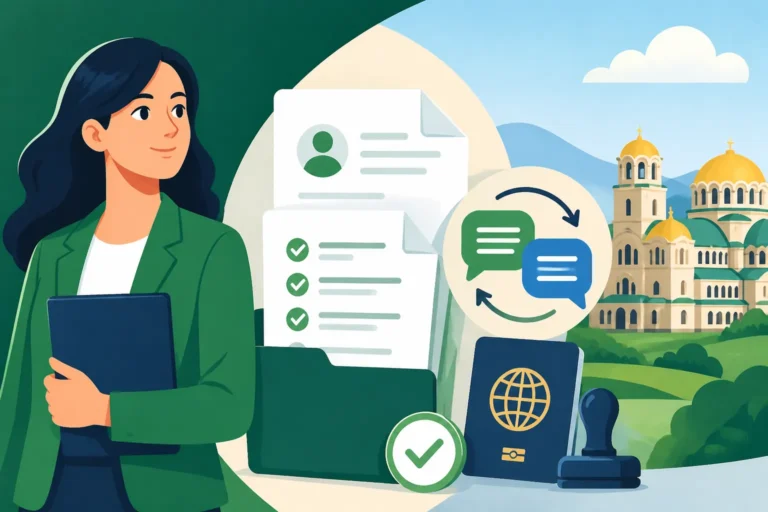
Then there are the documents. Oh, the documents! Bulgaria, like many European countries, loves paperwork, and your application will require a stack of them, often with very specific requirements. We're talking about everything from your passport and visa (if applicable) to proof of address, financial means, and health insurance. Many of these documents will need to be translated into Bulgarian by a sworn translator and, in some cases, apostilled. For instance, if you're coming from a country that isn't part of the Hague Apostille Convention, you might need a full legalisation, which adds another layer of complexity. Getting your original documents translated and legally authenticated can sometimes be a journey in itself, often requiring multiple visits to different offices or even embassies before you ever set foot in the Migration Directorate. You'll need to know exactly what documents are needed for a Bulgaria residence permit, which can differ depending on your specific situation.
Knowing Your Residence Permit Type
Before you even think about gathering documents, you need to be absolutely certain about which type of residence permit you're applying for. This isn't a "one size fits all" situation. Are you here for work? Study? Retirement? Family reunification? As a self-employed individual or an investor? Each category, from the standard temporary residence permit to more specific types like the EU Blue Card or a permit for an entrepreneur, has its own unique set of criteria and documentation.
Understanding the specific legal grounds for your stay is paramount. For example, if you're seeking a work permit, you'll generally need a valid job offer and for your employer to initiate much of the process. If you’re here to study, your university enrollment documents will be key. If you're coming on a Type D Long-Stay Visa for Bulgaria, you'll already have an idea of your grounds for residence, but the requirements for the permit itself might still differ slightly or require more in-depth proof. Many expats get stuck because they assumed one permit type would cover them, only to find they were on the wrong path entirely. Always confirm your status and the relevant permit category well in advance. You can read up on the nuances of different types in our guide, "Understanding Bulgarian Residence Permits: Work, Study and Investment (2027)".
DIY Application: What It Really Entails
So, you've decided to tackle it yourself. Good on you! It’s certainly a badge of honour for many expats who’ve successfully navigated the Bulgarian system. This path can be incredibly rewarding, offering a deeper understanding of your new home country, and it can save you a pretty penny in agent fees. But let’s be realistic about the practicalities.
Step-by-Step Document Gathering and Translation
This is where the real work begins. You'll need to create a checklist – a very, very detailed checklist – of every single document required for your specific permit type. Don't rely on old blog posts; search the official websites of the Migration Directorate or the Bulgarian Ministry of Interior (MVR). Even then, sometimes what's listed online isn't exhaustive, or an officer might ask for something additional on the day. It's a game of informed guesswork and being over-prepared.
Here’s a general idea of what you might need, depending on your situation:
- Passport: Original and copies of all processed pages.
- Type D Visa: If you’re a non-EU citizen.
- Proof of address: A notarized rental contract (or notarial akt if you own property). Sometimes a simple declaration from your landlord is enough, but a notarised contract is always safer.
- Financial means: Bank statements showing sufficient funds to support yourself (usually around the minimum wage for Bulgaria for a year).
- Health Insurance: This is mandatory. You’ll need valid health insurance for the entire duration of your requested permit. Many expats opt for private insurance, at least initially, such as policies from providers like Cigna Global, to ensure comprehensive coverage and ease of use. It's crucial that your health insurance specifically covers you in Bulgaria for the entire period of your stay and meets the minimum coverage requirements set by law.
- Criminal record certificate: Often required, and yes, it usually needs to be apostilled/legalised and translated. You’ll need to understand how to get your documents apostilled for Bulgaria immigration to ensure they're accepted.
- Specific purpose documents:
- Work: Employment contract, declaration from employer.
- Study: University acceptance letter, proof of tuition payment.
- Retirement: Proof of pension income.
- Family reunification: Marriage certificate, birth certificates for children (all legalised and translated, of course).
Once you have everything, get multiple copies. And I mean multiple. It is wise to keep at least three sets of copies of everything, just in case. Then comes the translation. Finding a sworn translator who is licensed to translate official documents for Bulgarian institutions is key. They often have specific formats they must adhere to. This part of the process alone can take a week or two, depending on the volume of documents and the translator's schedule.
Navigating the Migration Directorate (Миграция)
This is perhaps the most daunting part for many. The Migration Directorate offices, whether in Sofia, Plovdiv, Varna, or elsewhere, can be busy, confusing places. You’ll need to locate the correct department or window for residence permits, which isn’t always clearly signposted.
Here’s a typical scenario:
- Arrival and Queueing: Get there early. Seriously early. Doors open at 9 AM, but people start lining up much earlier, especially in big cities like Sofia.
- Information Gathering: Try to find an information desk if one exists, or observe which windows handle which types of applications. Don't be shy about asking someone in line (politely, in Bulgarian if possible) if you're in the right place.
- Submission: When it’s your turn, present your meticulously organised stack of documents. The officer will review them, often with a stern expression, looking for any missing pieces or errors. This is where the language barrier can hit hard. They might point to a specific line on a form or ask a question you don't fully grasp. Having a translation app on your phone, or better yet, a basic understanding of key phrases, is invaluable.
- Fingerprints and Photo: If your application is accepted, you’ll likely be sent to another window or room for fingerprinting and a photo for your new ID card.
- Payment: You’ll pay the state fee, usually at a cashier’s desk within the building or at a nearby bank. Keep that receipt!
- Timeline: You'll be given a slip with a date when you can expect your permit to be ready. This "expected" date is often just a suggestion, but it gives you a ballpark. Knowing "How Long Does It Take to Get a Residence Permit in Bulgaria?" can help manage expectations.
The key to navigating the Migration Directorate solo is an unwavering calm, a well-organised folder, and an attitude of polite persistence. Don't get discouraged if you're sent away for a missing stamp or a minor correction. It's part of the process for many of us.
When to Consider Professional Help
While a DIY approach is empowering, there are definitely situations where bringing in a professional can save you an immense amount of stress, time, and potentially even money in the long run.
Complex Cases and Specific Permit Types
Not all residence permit applications are straightforward. If your situation involves:
- Unusual circumstances: For example, you have a non-standard visa or a unique professional qualification.
- Investment permits: These are typically complex, requiring significant financial documentation, business plans, and legal expertise.
- Company registration: If your permit is tied to registering a company in Bulgaria, an agent or lawyer can help ensure all legal requirements are met for both the business and your residence.
- Health issues: If you have specific medical conditions that might complicate the health insurance aspect or require special declarations.
- Tight deadlines: If you're nearing the expiration of your visa or existing permit, the added efficiency of an agent can be crucial.
- Family reunification with non-standard relationships: While common for spouses and children, bringing in other family members can be much more nuanced.
In these scenarios, a legal professional or an immigration consultant who specialises in Bulgarian residence permits can be invaluable. They understand the intricacies of the law, are up-to-date with any changes (which happen more often than you'd think!), and often have established relationships that can streamline communication. They know the loopholes, the unwritten rules, and precisely what to say (and not say) in Bulgarian.
The Value of Time and Peace of Mind
Let's be honest, time is money, and your sanity is priceless. The process of gathering documents, getting translations, making appointments, and spending hours at government offices can eat up a significant amount of your precious time. For those with demanding jobs, young children, or simply a desire to avoid administrative headaches, outsourcing this task makes perfect sense.
A good agent will:
- Provide a precise, personalised document list.
- Manage translations and legalisations.
- Fill out all the forms correctly.
- Often accompany you to the Migration Directorate, acting as a translator and advocate.
- Track the application status and notify you.
Consider the mental load. If the thought of dealing with queues, language barriers, and potentially being turned away for a minor error fills you with dread, then paying for professional assistance is a worthwhile investment. It allows you to focus on settling into your new life in Bulgaria, finding your feet, and exploring all the wonderful things this country has to offer, rather than battling bureaucracy.
When looking for an agent, ensure they are reputable, ideally recommended by other expats, and have clear pricing. Websites like Sirelo, while primarily a moving service, sometimes offer directories or recommendations for other expat-focused services, including immigration assistance. Always do your due diligence, check reviews, and get a clear quote for services before committing.
Costs and Considerations for Both Approaches
Money is always a factor, and understanding the financial implications of handling your residence permit application yourself versus hiring a professional is crucial for planning your move.
Financial Outlays: DIY vs. Agent Fees
The raw state fees for residence permits in Bulgaria are generally quite reasonable. For example, a temporary residence permit typically involves a fee for the application processing and then a separate fee for the plastic ID card itself, often totaling around 100-200 BGN for a standard permit, plus the cost of postage for documents if applicable.
DIY Costs (Estimated):
- State Fees: ~100-200 BGN (depending on permit type and duration).
- Translations & Legalisation/Apostille: This is highly variable, but for a handful of documents (e.g., marriage certificate, birth certificate, criminal record), expect anywhere from 100-500 BGN, sometimes more if you have many documents or need urgent service.
- Notary Fees: For rental contracts or other declarations, typically 30-100 BGN.
- Health Insurance: This is a significant variable. A basic private health insurance policy for a year could range from 300 BGN to over 1000 BGN, depending on coverage and your age/health status.
- Transportation: Travel to offices, print shops, etc. (minor, but adds up).
- Opportunity Cost: The value of your time spent on the process.
Professional Help Costs (Estimated):
- Agent/Lawyer Fees: This is the big difference. Fees can range from 500 BGN for very simple, single-person applications to several thousand BGN for complex cases, investment permits, or family applications. This fee is on top of all the state fees, translation costs, and insurance costs mentioned above.
- All other DIY costs: You'll still be responsible for these, though the agent might handle the logistics of payment for translations and state fees.
When comparing, calculate the total potential cost. A good agent will clearly itemise their fees and outline what is included. Don't be afraid to ask for a full breakdown. Sometimes, for a few hundred lev extra, you might get a significantly smoother process. You can explore a broader financial perspective in "Understanding the Cost and Timeline of the Bulgaria Residence Permit Process".
Potential Pitfalls and Delays
Whether you go DIY or with professional help, delays and unexpected hurdles are par for the course in Bulgarian bureaucracy. However, the impact of these can differ significantly.
DIY Pitfalls:
- Mistakes on forms: A simple error can lead to rejection or significant delays, requiring you to restart parts of the process.
- Missing documents: The most common reason for rejection. One tiny missing paper, and you’re sent home.
- Incorrect translations/legalisation: If the translation isn't done by a sworn translator or the apostille isn't valid, your documents will be rejected.
- Communication breakdowns: Misunderstanding an officer's instructions due to language or cultural differences.
- Multiple trips: Expect to make several trips to the Migration Directorate, often taking a full day each time, especially if you encounter issues.
Professional Help Pitfalls (less common, but still possible):
- Unscrupulous agents: Unfortunately, some agents might overcharge or not provide the promised level of service. This is why vetting is crucial.
- Delays beyond their control: Even the best agent can't speed up the official processing times or prevent government holidays.
- Communication issues with the agent: Ensure your agent communicates clearly with you in a language you understand.
Ultimately, both paths carry risks. The DIY route places all the responsibility squarely on your shoulders, demanding a high level of proactivity and resilience. The professional route offloads much of that responsibility, but requires trust and a financial investment. Consider your own comfort level, your budget, and the complexity of your unique situation. For simple cases, like those coming to Bulgaria on a straightforward work contract where the employer assists, DIY is very manageable. For others, it's an absolute headache that is best avoided.
| Feature | DIY Application | Professional Help (Agent/Lawyer) |
|---|---|---|
| Cost | Lower (state fees, translations, insurance) | Higher (agent fees + all DIY costs) |
| Time Investment | High (research, gathering, multiple visits) | Low (agent handles much of the legwork) |
| Language Barrier | Significant challenge, reliant on personal skills | Managed by agent/translator |
| Document Accuracy | Your sole responsibility, high risk of error | Agent ensures accuracy and completeness |
| Stress Level | Potentially very high | Significantly reduced |
| Expertise | Relies on personal research and understanding | Access to up-to-date legal knowledge and experience |
| Process Control | You maintain full control over each step | Agent takes lead, you provide documents and decisions |
| Flexibility | Can adapt to changes yourself | Agent handles adaptations, might be less agile initially |
Disclaimer
Please remember that I am an expat blogger sharing my experiences and research, not a legal professional. The information provided here is for general informational purposes only and does not constitute legal advice. Immigration laws and procedures in Bulgaria can change frequently. Always consult with the official Bulgarian Migration Directorate (Миграция) or a qualified legal professional specializing in immigration law for the most current and accurate information pertaining to your specific situation.