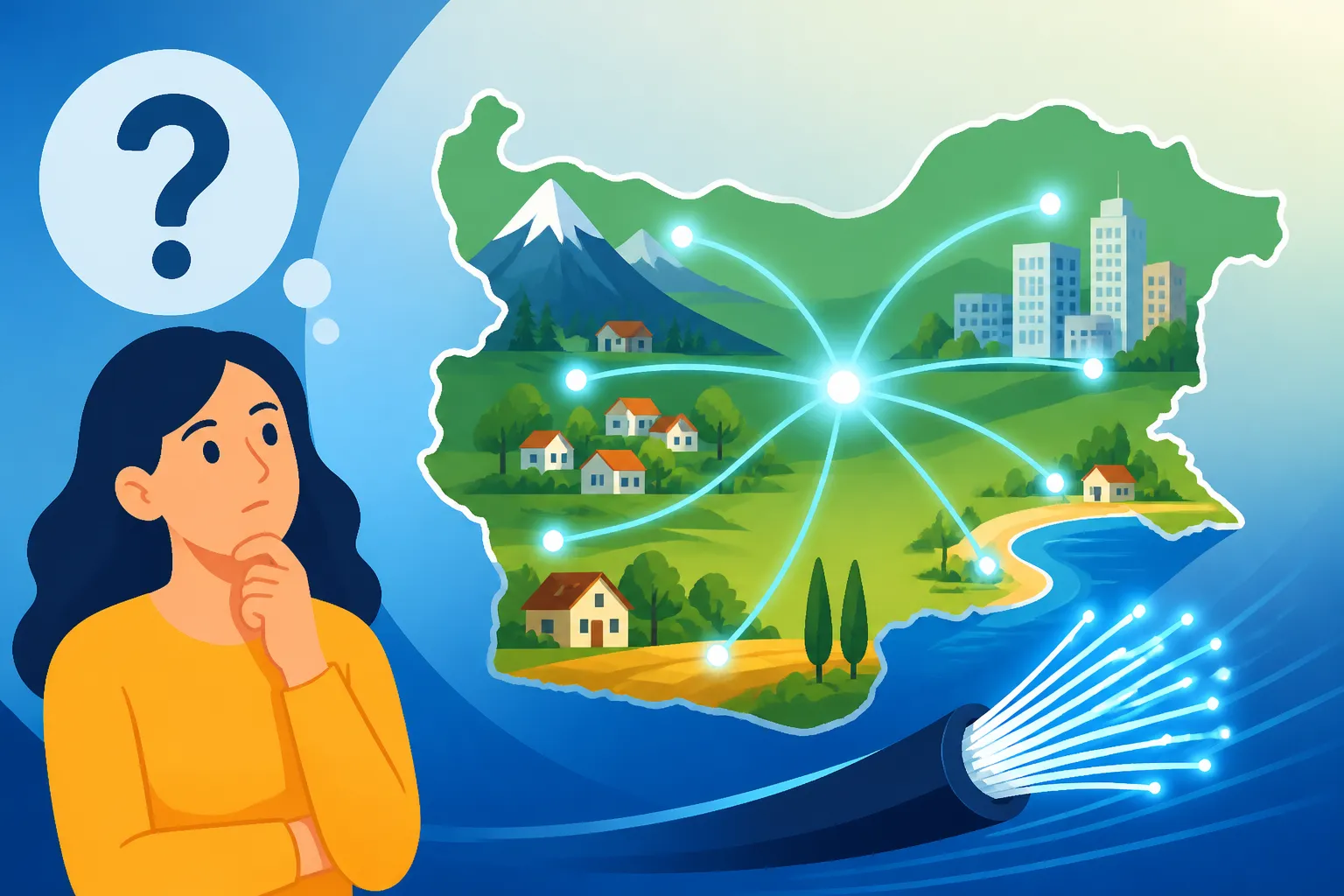
Can I Get Fibre Internet Anywhere in Bulgaria?
Oh, the eternal quest for decent internet, isn't it? Moving to a new country like Bulgaria, you dream of seamless streaming, crisp video calls with family, and speedy downloads without a hitch. But the reality can sometimes be a bit of a rude awakening, especially when you're trying to figure out if you can get that glorious fibre internet anywhere you choose to settle down. This guide is here to shed some light on the fibre optic landscape across Bulgaria, helping you manage expectations and understand your options, no matter where your Bulgarian adventure takes you.
Understanding Fibre Optic Internet in Bulgaria
Let's be honest, in this day and age, a fast, reliable internet connection isn't a luxury; it's practically a utility, right up there with electricity and water. As expats, many of us arrive from countries with highly developed digital infrastructures, and we naturally expect the same wherever we go. Bulgaria has made significant strides, but like anywhere, there's a difference between the ideal and the practical reality on the ground.
The Promise of Blazing Speeds
Fibre optic internet, with its light-speed data transmission, promises incredibly fast upload and download speeds, low latency, and rock-solid reliability. This means you can stream Netflix in 4K, hold flawless video conferences, game online without frustrating lag, and download large files in minutes, not hours. For anyone who works remotely or simply enjoys modern digital comforts, fibre is the gold standard. When you compare it to older technologies like ADSL, which relies on copper telephone lines and suffers from speed degradation over distance, or even older cable internet which can be prone to congestion during peak hours, fibre truly shines. It’s what many of us are used to and frankly, what we now consider essential for daily life. The dream is to plug in and just have it work, fast and consistently.
The Current Landscape of Providers
Bulgaria’s internet market is quite competitive, dominated by a few major players. The big names you'll hear most often are A1, Yettel (formerly Telenor), and Vivacom. These companies have invested heavily in expanding their networks, including fibre optic infrastructure, especially in urban areas. Each provider offers a range of packages, often bundled with TV and mobile services, which can sometimes be a good deal if you need all three. You'll find that their marketing often highlights the incredible fibre speeds they offer, and indeed, in areas where fibre is fully deployed, these providers deliver excellent service. However, their coverage maps, while helpful, don't always tell the full, nuanced story of exactly where that fibre reaches down to the individual building or street level, which is where the expat frustration often begins.
Where Fibre Internet is Widely Available
If you're eyeing a move to one of Bulgaria's major hubs, you're generally in luck. The urban centres have seen the bulk of the fibre optic investment, making high-speed internet accessible for most residents.
Sofia, Plovdiv, and Major Urban Centers
When you talk about fibre internet in Bulgaria, you're almost certainly talking about Sofia, the capital. Here, fibre optic coverage is exceptionally good, particularly in newer residential complexes and many of the more developed neighbourhoods. Areas like Mladost, Lozenets, and Studentski Grad, with their mix of modern apartment buildings and office spaces, are often blanketed in fibre. You'll find that the major providers like A1 and Vivacom have extensive networks here, offering speeds that can easily rival what you'd find in Western Europe or North America. Plovdiv, the second-largest city, also boasts excellent fibre infrastructure, especially in its central districts and new developments. The same goes for other significant cities like Varna, Burgas, and Ruse, though perhaps with slightly less pervasive coverage than Sofia.
If you’re moving to Sofia or Plovdiv, the chances of getting fibre internet are high. When looking for an apartment, it’s always worth asking the landlord or real estate agent about the internet situation in the building. Many property listings will even specify if a fibre connection is available. Providers typically have online tools where you can input a specific address to check for service availability. Don't just check the street; try to get the exact building number. This step can save you a lot of hassle later. Knowing How to Choose the Best City or Neighbourhood for Expats in Bulgaria often involves considering infrastructure like this.
Coastal and Popular Tourist Regions
Beyond the main cities, you'll also find surprisingly good fibre coverage in some of the more established coastal resorts and popular tourist destinations. Places like Sunny Beach, Golden Sands, and areas around Varna and Burgas have seen significant investment in infrastructure to cater to the demands of tourists and foreign property owners. These regions understand that reliable internet is crucial for visitor satisfaction and for those who choose to live there year-round.
For instance, in the urban centres of Varna and Burgas, you'll experience fibre availability comparable to Plovdiv. Even some of the larger, more developed holiday complexes outside these cities might have dedicated fibre connections, often managed by a local provider or the complex itself. However, venture too far out into smaller coastal villages, and the fibre dream can quickly fade. It's a bit of a mixed bag, driven by economic viability and population density, rather than a universal rollout. This is a common theme across Bulgaria – convenience often aligns with population density and economic drivers.
Challenges and Limitations of Fibre Rollout
While the bigger cities and some tourist hotspots are doing well, the narrative shifts quite dramatically as you move away from these areas. This is where the expat dream of ubiquitous high-speed internet can collide with Bulgarian reality.
The Reality of Rural Areas and Smaller Towns
Here's the rub: if you're envisioning a tranquil life in a charming Bulgarian village, surrounded by nature and quiet, you might have to adjust your internet expectations. Fibre optic rollout in rural areas and smaller towns is significantly less developed. The economics simply don't make as much sense for the major providers. Laying fibre optic cables is an expensive undertaking, and with lower population densities and fewer potential customers, the return on investment can be minimal for the big telecom companies.
This often means that villages and remote areas are still reliant on older, slower technologies. You might find ADSL or sometimes even a very basic cable connection, but speeds will be much lower and reliability can be patchy, especially during adverse weather conditions. For expats who have moved to renovate an old village house or enjoy a quieter life, this can be a major source of frustration, particularly if their work requires a stable, high-speed connection. It's a common dilemma, and one that requires creative solutions, which we'll get into shortly. When planning your move, consider this vital infrastructure point, especially if you're looking at The Best Places to Live in Bulgaria for Expats: A Complete Guide beyond the main cities.
Older Buildings and Infrastructure Hurdles
Even within urban areas, you might face unexpected challenges, especially if you're renting or buying in an older building. Many apartment blocks, particularly those built during the socialist era, were simply not designed with modern internet infrastructure in mind. Getting fibre into the building is one thing, but running it to individual apartments can be another. This often involves extensive internal wiring, which can be costly, require permission from building management or other residents, and be a logistical nightmare.
Some landlords in older buildings might be hesitant to invest in these upgrades, or perhaps the building community hasn't agreed on a collective solution. So, even if the "fibre map" shows availability on your street, the last few metres into your actual apartment can be the biggest hurdle. This is less of an issue in newer developments, which are typically built with modern wiring ready for fibre connections from the get-go. Always ask about the specific internet setup for your apartment, not just the building's street address. Understanding this can impact your decision when considering How to Find an Apartment to Rent in Plovdiv or any other city with a mix of old and new architecture.
Alternative Internet Solutions if Fibre Isn't Available
Don't despair if your dream location doesn't have fibre! While it might not be the holy grail, Bulgaria offers several viable alternatives that can provide a perfectly adequate internet experience for most users.
Reliable Cable and VDSL Options
In many areas where fibre hasn't quite reached, or in older buildings where installing fibre is problematic, you'll often find reliable cable internet or VDSL (Very High Bitrate Digital Subscriber Line) options. These technologies use a combination of coaxial cables (for cable internet) or upgraded copper telephone lines (for VDSL) to deliver speeds that are a significant step up from old-fashioned ADSL.
While they won't typically match the symmetrical upload and download speeds of pure fibre, cable and VDSL can still offer respectable speeds, often ranging from 50 Mbps to 200 Mbps, which is more than sufficient for streaming, browsing, and even remote work for many individuals. Providers like Vivacom and A1 continue to offer these services widely, often bundled with their TV packages. It's always worth checking what speeds are available through these older, but often upgraded, infrastructures. They're often cheaper too, which can be a bonus when calculating your Cost of Living in Bulgaria for Expats.
Mobile Internet and Hotspots
This is often the saving grace for expats in more remote locations or those who need internet on the go. Bulgaria's mobile networks (A1, Yettel, Vivacom) offer excellent 4G and increasingly widespread 5G coverage across the country. Data plans are generally affordable, and many providers offer truly unlimited data packages for mobile phones or dedicated mobile internet routers.
You can simply use your smartphone as a Wi-Fi hotspot, connecting your laptop or other devices. For a more robust home solution, especially if you don't have fibre or cable, a 4G/5G home router can be an excellent choice. These devices plug into a power outlet, take a SIM card, and broadcast a Wi-Fi signal, turning the mobile network into your home internet. Speeds can be surprisingly good, often exceeding 100 Mbps, depending on your location and network signal. For new arrivals, or those travelling between locations before finding a permanent spot, services like Airalo offer convenient eSIM options, ensuring you're connected from the moment you land without needing a local SIM immediately. This can be invaluable for navigating your first days and setting up essentials like How to Set Up Internet and Mobile Service in Bulgaria.
Satellite Internet as a Last Resort
If you find yourself in a truly off-grid location where even mobile internet struggles, satellite internet is an option. Services like Starlink, for example, offer high-speed, low-latency internet via satellite, providing coverage virtually anywhere with a clear view of the sky.
The main downsides are typically the higher upfront equipment cost, the monthly subscription fees, and sometimes increased latency compared to terrestrial options. However, for those who simply must have a strong internet connection in a place where no other technology reaches, it's a viable, albeit more expensive, solution. It's definitely a "last resort" for most, but the technology is improving rapidly and becoming more accessible.
Here’s a quick overview of your internet options in Bulgaria:
| Internet Type | Typical Speeds (Download/Upload) | Reliability | Cost (Monthly) | Availability | Best For |
|---|---|---|---|---|---|
| Fibre Optic | 100-1000 Mbps / 50-500 Mbps | Excellent | Moderate-High | Major cities, newer developments, some resorts | High demand users, remote workers, gamers, streamers |
| Cable Internet | 50-300 Mbps / 5-30 Mbps | Good | Low-Moderate | Cities, larger towns | General browsing, streaming, moderate remote work |
| VDSL | 30-100 Mbps / 5-20 Mbps | Good | Low-Moderate | Cities, towns | General browsing, streaming, lighter remote work |
| Mobile 4G/5G | 20-200 Mbps / 5-50 Mbps | Variable | Low-Moderate | Widespread, especially 4G | Rural areas, temporary setups, backup, on-the-go |
| Satellite (e.g., Starlink) | 100-250 Mbps / 10-30 Mbps | Good | High (equipment + monthly) | Anywhere with clear sky | Very remote locations with no other options |
When you're settling in, don't forget that internet is just one piece of the puzzle. You'll also need to figure out How to Set Up Your Mobile Phone Plan in Bulgaria and often How to Set Up Streaming and TV Service in Bulgaria as well. Planning your move, whether you're using services like Sirelo to compare moving companies or just doing your own research, means considering all these connections from the start.
In conclusion, while fibre internet isn't literally "anywhere" in Bulgaria, it's far more prevalent than you might expect, especially in the places where most expats tend to settle. For those venturing further afield, robust alternatives ensure you won't be left completely disconnected. The key is to do your homework on your specific location before committing, so you can choose an area that aligns with your connectivity needs and avoid any unpleasant surprises.
Disclaimer
The information provided in this article is for general informational purposes only and does not constitute professional advice. While we strive to keep the content up-to-date and accurate, the Bulgarian telecommunications landscape, regulations, and service offerings can change rapidly. Always consult with specific internet service providers for the most current information regarding availability, speeds, and pricing at your exact location. We recommend verifying all details with official sources and local experts before making any decisions based on this information.