How Much Does It Cost to Rent an Apartment in Sofia in 2026?
Moving to a new city, especially one as vibrant and dynamic as Sofia, can be thrilling, but let's be honest, the biggest question on everyone's mind is often: "How much is this going to cost me?" Trying to figure out rental prices, predict utility bills, and navigate local nuances can feel like trying to solve a Rubik's Cube blindfolded. This comprehensive guide will pull back the curtain on what you can realistically expect to pay for an apartment in Sofia in 2026, offering clear insights into average costs, neighborhood variations, and those often-overlooked expenses.
Understanding Sofia's Rental Market Dynamics for 2026
Alright, let's talk about the elephant in the room: predicting rental prices for 2026. As someone who’s seen the market ebb and flow over the years, I can tell you it’s never static. Sofia, being the capital and an increasingly popular expat destination, experiences constant shifts. While I don't have a crystal ball for exact future figures, we can extrapolate based on current trends, inflation, economic growth, and the city's ongoing development. Expect a steady, albeit moderate, increase compared to previous years.
Factors Influencing Rental Prices
Several key factors are always at play when it comes to how much you'll fork out for rent. It’s not just about the square footage, believe me!
Firstly, location, location, location – it’s a cliché for a reason. Apartments in the absolute city center (think areas around Vitosha Boulevard, Doktoraska Gradina, or the parts of Lozenets closest to the National Palace of Culture) will always command a premium. Why? Because you’re paying for convenience, prestige, and often, beautifully preserved older buildings with character. On the flip side, neighborhoods further out, like Lyulin or Mladost, offer more affordable options, trading a longer commute for significantly lower monthly costs. The accessibility to public transport, proximity to parks, and local amenities all play a huge role.
Secondly, the age and condition of the building are massive. You'll find a wide spectrum in Sofia. Brand-new, modern complexes with amenities like 24/7 security, underground parking, and gyms will naturally be more expensive. These are often in developing areas or slightly outside the immediate city center, but still with excellent connectivity. Then you have the older, charming (or sometimes, just old) Soviet-era blocks. These can range from beautifully renovated to quite dilapidated. A fully renovated apartment in an older building with new insulation, modern appliances, and a fresh interior will fetch a higher price than a similar-sized unit that hasn't seen an update since the 80s.
Lastly, the level of furnishing makes a difference. Most apartments in Sofia come at least partially furnished, often with a fitted kitchen and basic appliances. Fully furnished places, especially those designed with expats in mind (think IKEA everything, good internet, and a washing machine), will be more expensive than unfurnished ones, which are rarer but do exist if you prefer to bring your own furniture. For some excellent insights on signing a rental contract and securing your new place, you might want to read our guide on how to sign a rental contract and pay a deposit in Bulgaria.
Projected Market Trends for 2026
Looking ahead to 2026, we anticipate a continued, gradual upward trend in rental prices. Sofia's economy remains relatively robust, and the city continues to attract foreign investment and a growing expat community, particularly in the IT and outsourcing sectors. This sustained demand, coupled with slower new construction rates in prime locations, will likely keep prices on an upward trajectory. We’re also seeing more developers focus on higher-end apartments to meet the demand from both local professionals and international residents.
Inflation, while hopefully more stable than recent years, will also contribute to incremental increases. Landlords face rising costs for maintenance, property taxes, and sometimes, mortgage payments, which often translate into higher rents. Furthermore, the eventual adoption of the Euro could introduce some initial price adjustments, though the long-term effects are generally stabilizing. All these factors point to a rental market that will likely be slightly pricier than it is today, so budgeting with a bit of a buffer is always a smart move.
Average Rental Costs Across Sofia's Neighborhoods
Let's get down to the numbers. While these are projections for 2026 and subject to market fluctuations, they should give you a very realistic baseline to work with. Sofia's neighborhoods truly dictate the price tag, so choosing wisely can make a huge difference to your monthly budget.
Central and Upscale Neighborhoods
These are the areas where you'll find the highest prices, but also the most convenience, best amenities, and often, the most attractive architecture. Think about neighborhoods like Lozenets, Ivan Vazov, Doktoraska Gradina, Oborishte, and parts of Center. They're popular with expats for a reason – easy access to work, cultural sites, restaurants, and a generally higher standard of living.
- Studio/One-Bedroom Apartment: For a modern, well-located studio or a small one-bedroom apartment in these prime areas, you should budget anywhere from €500 to €800 per month in 2026. These typically range from 40-60 square meters. You might find something slightly cheaper if it's an older building that hasn't been recently renovated, but expect to pay closer to the higher end for comfort and modern facilities.
- Two-Bedroom Apartment: If you need more space, perhaps for a couple or a small family, a two-bedroom apartment in these central locations will likely set you back between €800 and €1,300 per month. These generally offer 70-100 square meters. The very top end of this range would be for truly luxurious, brand-new, or fully renovated apartments with premium finishes.
- Three-Bedroom Apartment or Larger: For larger families or those who simply crave expansive living, a three-bedroom or even larger apartment in a desirable central location could range from €1,300 to €2,000+ per month. This would typically be for 100+ square meters, often in more prestigious buildings or with unique features.
Mid-Range and Family-Friendly Neighborhoods
Moving a little further out from the absolute center, you'll find a sweet spot that balances affordability with good quality of life. Areas like Mladost (especially Mladost 1A, 3, 4 with metro access), Studentski Grad (though this area is predominantly student housing, family-friendly options exist), and parts of Geo Milev and Izgrev offer a great compromise. They tend to have good infrastructure, schools, and parks, making them popular with families and those seeking a slightly quieter pace.
- Studio/One-Bedroom Apartment: For a comfortable studio or one-bedroom in these mid-range areas, expect to pay between €400 and €650 per month. These are often in well-maintained older blocks or newer, but less central, developments.
- Two-Bedroom Apartment: A two-bedroom apartment here would likely fall between €650 and €1,000 per month. You'll get more space for your money here compared to the city center, often with good public transport links that make commuting manageable.
- Three-Bedroom Apartment or Larger: For a larger family home in these areas, budgeting between €1,000 and €1,500 per month would be a reasonable estimate. These might be in residential complexes or slightly older, more spacious buildings.
Outer Districts and More Affordable Options
If budget is your primary concern, or you don't mind a longer commute, Sofia's outer districts offer significantly lower rents. Neighborhoods like Lyulin, Obelya, and Nadezhda provide the most economical choices. While they might lack the immediate charm of the city center, they are well-connected by metro and bus lines and offer all necessary amenities, including supermarkets, markets, and local shops.
- Studio/One-Bedroom Apartment: You can find studios or one-bedroom apartments here for as low as €300 to €450 per month. These might be older units, but perfectly functional and spacious enough for a single person or a couple.
- Two-Bedroom Apartment: For a two-bedroom, expect to pay between €450 and €700 per month. This is where you really start seeing the benefit of going a bit further out, as you can get a decent amount of space for a very reasonable price.
- Three-Bedroom Apartment or Larger: Larger apartments in these areas would typically be in the €700 to €1,100 per month range, offering ample space for families without breaking the bank.
Here’s a quick summary table, keeping in mind these are approximate projections for 2026:
| Apartment Size | Central/Upscale (e.g., Lozenets, Doktoraska) | Mid-Range (e.g., Mladost, Geo Milev) | Outer Districts (e.g., Lyulin, Obelya) |
|---|---|---|---|
| Studio/1-bed | €500 – €800 | €400 – €650 | €300 – €450 |
| 2-bed | €800 – €1,300 | €650 – €1,000 | €450 – €700 |
| 3+-bed | €1,300 – €2,000+ | €1,000 – €1,500 | €700 – €1,100 |
Beyond Rent: Hidden Costs and Utilities to Budget For
When you're calculating your monthly housing costs, it's easy to just focus on the rent. But trust me, as an expat who’s learned the hard way, there are other financial dragons lurking that can significantly impact your budget. These "hidden" costs are often overlooked by newcomers but are crucial to factor in.
Initial Setup Costs
Before you even get your keys, you'll likely face a few one-off payments.
- Security Deposit: This is standard practice in Bulgaria, usually equivalent to one or two months' rent. It's held to cover any damages or unpaid utilities when you move out. Make sure this is clearly stipulated in your rental contract, along with the conditions for its return. For more details on the rental process, check out our guide on how to sign a rental contract and pay a deposit in Bulgaria.
- First Month's Rent in Advance: You'll almost certainly pay this upfront.
- Real Estate Agent Fees: If you use an agent to find your apartment (which is highly recommended, especially if you don't speak Bulgarian), you'll typically pay a fee. This is usually 50% of one month's rent, sometimes up to 100%, plus VAT. This fee is generally paid upon signing the contract. While it stings a bit, a good agent can save you a lot of headaches and potential scams.
- Notary Fees (Rare for Rentals): For simple rental agreements, notary fees are typically not required unless one party specifically requests it to notarize signatures. In those cases, it's usually a small fixed fee.
Monthly Utilities and Building Maintenance
These are the recurring costs that add up. They can vary wildly depending on your apartment size, insulation, consumption habits, and the time of year (winter vs. summer).
- Electricity (Ток – Tok): This is perhaps your biggest variable. For a one-bedroom apartment, expect anywhere from €40-€80 per month in summer, but this can easily jump to €100-€200+ in winter if you rely heavily on electric heaters or air conditioners for heating. Well-insulated apartments are your friend here. Want to know more? Our guide on how to set up electricity in your Bulgaria home can help.
- Water (Вода – Voda): Generally quite affordable. For a single person, expect €10-€20 per month. For a couple or small family, perhaps €20-€40.
- Heating (Парно – Parno / Отопление – Otoplenie): If your building has central heating, this is usually charged per square meter and can be substantial in winter. For a two-bedroom apartment, expect €80-€150 per month during the coldest months, but zero in summer. If you have individual electric heating, your electricity bill will be higher instead. Some newer buildings have gas heating, which can be more efficient.
- Internet and TV: Competition is fierce, so prices are reasonable. For a decent fiber optic internet connection and basic TV package, budget €20-€40 per month. Providers like Vivacom, A1, and Yettel are common. To avoid getting stuck without connectivity when you first arrive, consider getting an eSIM from a provider like Airalo, which offers instant mobile data. You can learn more about setting this up in our guide on how to set up Internet and mobile service in Bulgaria.
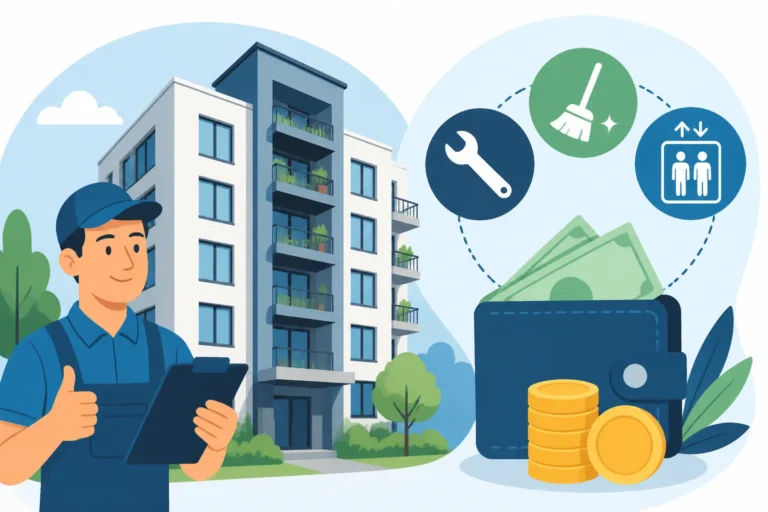
- Building Maintenance Fees (Такса поддръжка – Taksa poddrŭzhka): These cover communal areas, cleaning, elevator maintenance, and sometimes building repairs. For an older block, it might be €10-€20 per month. For a modern complex with amenities, it could be €30-€80 or even more. This is an essential, yet often forgotten, part of the equation, as detailed in our article on understanding building maintenance fees for apartments in Bulgaria.
- Garbage Collection (Такса Битови отпадъци – Taksa Bitovi Otpadatsi): This is usually paid annually, but sometimes split into installments. It's tied to the property, so ask your landlord how it's handled. It’s typically a relatively small amount, perhaps €30-€80 per year.
A Note on Transferring Your Belongings
If you're moving a substantial amount of items, don't forget the cost of international shipping. Services like Sirelo can help you compare quotes and manage the logistics, which is a huge stress reliever when you’re already swamped with administrative tasks.
Tips for Finding Your Ideal Apartment and Saving Money
Finding the right apartment in Sofia that fits your budget and lifestyle can feel like a quest, but with a few strategies, you can make the process much smoother and potentially save a significant amount of money.
Utilize Reputable Real Estate Agents
While there’s an agent fee, a good real estate agent is invaluable, especially if you’re not fluent in Bulgarian. They have access to listings not always available online, can navigate the local market nuances, negotiate on your behalf, and ensure your contract is fair. Crucially, they act as a buffer and interpreter between you and the landlord. Look for agents who specialize in expat rentals or have English-speaking staff. Ask for recommendations in expat Facebook groups – word of mouth is gold here. For comprehensive advice, take a look at our guide on how to find a reliable real estate agent in Bulgaria.
Be Flexible with Location and Amenities
Your flexibility is your superpower when it comes to saving money on rent.
- Consider Mid-Range Neighborhoods: As discussed, areas like Mladost, Geo Milev, and Izgrev offer significantly lower rents than the city center but still boast excellent infrastructure and public transport. A 15-20 minute metro ride might save you hundreds of euros a month.
- Older Buildings Can Be Gems: Don't dismiss older buildings outright. Many have been beautifully renovated inside, offering spacious layouts that are rare in newer constructions. While the exterior might not look as sleek, the interior could be a delightful surprise.
- Negotiate (Respectfully): In some cases, especially if an apartment has been on the market for a while, there might be a little wiggle room on the rent or the deposit. A polite, reasonable offer, perhaps mentioning a willingness to sign a longer contract, can sometimes work wonders.
Understand Your Contract and Rights
Before you sign anything, read the contract thoroughly. If it's in Bulgarian, insist on an official translation or have a trusted Bulgarian speaker go through it with you line by line. Pay close attention to:
- Duration of the lease: Most common is a one-year contract.
- Notice period for termination: Typically 1-3 months.
- Conditions for returning the deposit: What counts as "damage"? Are utilities required to be paid up before return?
- Who is responsible for repairs: Clarify who pays for minor wear and tear versus major structural issues.
- Utility arrangements: Who pays which bills and how? Does the rent include any utilities? (Often, it does not).
- Registration at the local municipality: As an expat, you’ll need proof of address for your residence permit. Make sure your landlord is willing to register your address.
Knowing your tenant and landlord rights in Bulgaria is paramount. A clear and comprehensive contract protects both parties and prevents misunderstandings down the line.
The cost of living in Bulgaria for expats is generally lower than in Western Europe, and while Sofia rents are rising, they still offer good value compared to other European capitals. By being informed, flexible, and thorough, you can find a wonderful apartment in Sofia that fits your budget and truly feels like home.
Disclaimer
Please remember that the information provided in this guide is based on general market trends and projections for 2026. Actual rental prices and costs can vary significantly due to economic fluctuations, specific property conditions, individual negotiation, and unforeseen market changes. It is always advisable to consult with local real estate professionals and financial advisors for the most current and personalized information.