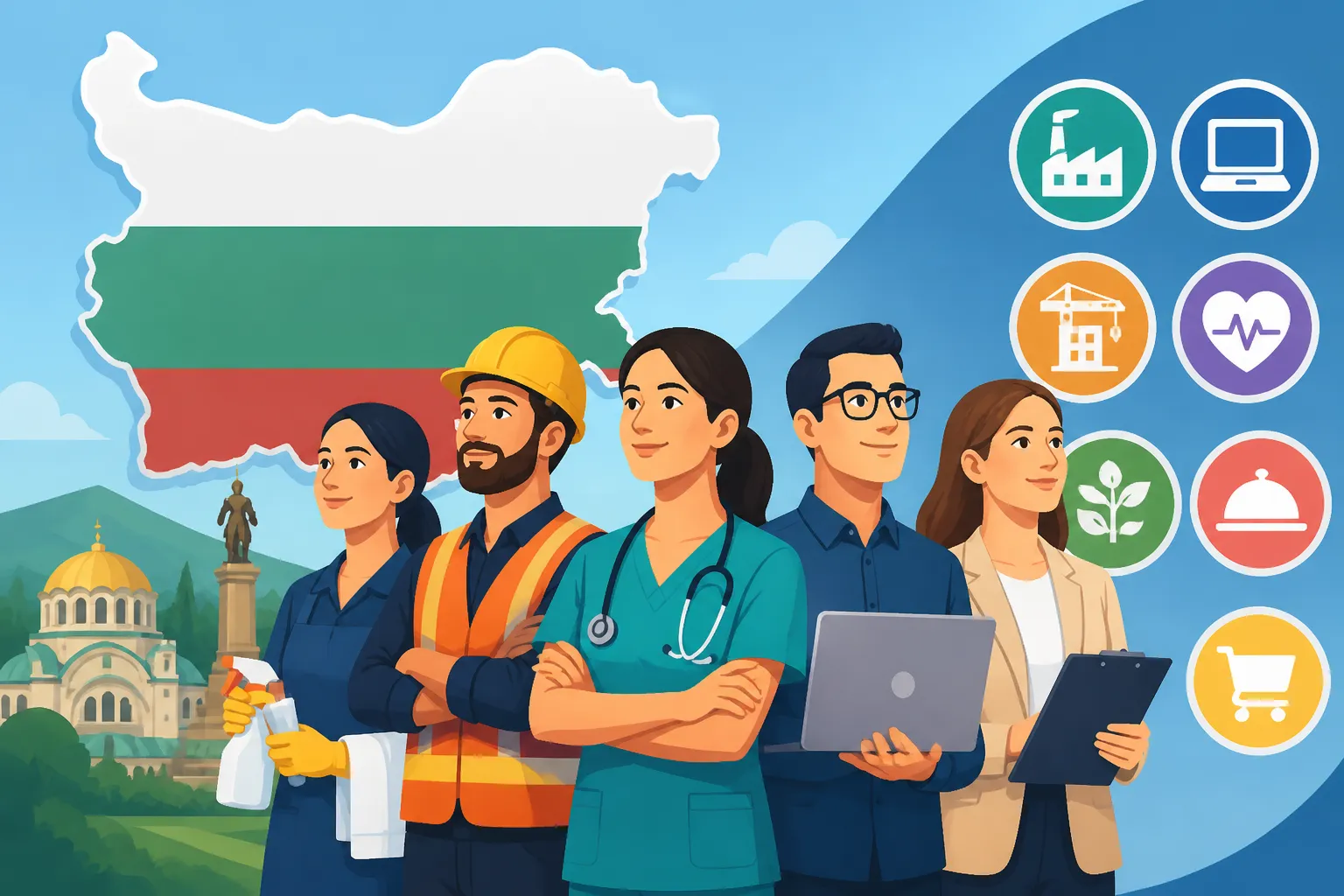
What Sectors Are Hiring Foreigners in Bulgaria in 2026?
One of the biggest head-scratchers when you first think about moving to Bulgaria for work is figuring out where you actually fit in. It's not always obvious from the outside, and let's be honest, the Bulgarian job market can feel like a bit of a labyrinth if you don't know which doors to push. This guide is here to shed some light on the specific sectors that are actively seeking foreign talent in 2026, helping you navigate the landscape and pinpoint opportunities.
The Thriving Technology and IT Ecosystem
If there's one sector in Bulgaria that consistently welcomes international talent with open arms, it's technology and IT. Sofia, in particular, has become a dynamic hub, often dubbed the "Silicon Valley of the Balkans," but you'll find significant pockets of activity in Plovdiv and Varna too. The growth here isn't just steady; it's explosive, driven by a highly skilled workforce, competitive operating costs, and a growing number of innovative startups alongside established international players.
Software Development and Engineering Roles
This is the bread and butter of Bulgaria's tech scene. Companies are constantly on the lookout for skilled software developers, engineers, and QA specialists across various platforms and programming languages. Think Java, Python, C#, JavaScript, PHP, and mobile development (iOS/Android). These roles often demand strong technical skills and relevant experience, but fluency in Bulgarian isn't always a prerequisite, especially within international teams. Many companies operate entirely in English.
You'll find opportunities in everything from enterprise software solutions to fintech, cybersecurity, and even gaming. For instance, companies like VMware, SAP, and Progress have significant operations here, alongside a vibrant local startup ecosystem. They’re usually looking for mid-to-senior level engineers, but graduate programs for foreign university students are also popping up. The demand is so high that even if you're specialized in a niche area, there's a good chance a company in Bulgaria could be looking for someone just like you. The pace can be fast, but the opportunities for professional growth are immense.
IT and Business Process Outsourcing BPO
Bulgaria has firmly established itself as a leading destination for IT Outsourcing (ITO) and Business Process Outsourcing (BPO) in Europe. This means numerous international companies set up their service centers here to handle various functions, from IT support and infrastructure management to customer service, finance, and human resources for their global operations. This is where a huge number of non-Bulgarian speakers find their footing.
These centers thrive on multilingual capabilities. If you speak English fluently, plus another European language like German, French, Spanish, Italian, or even Nordic languages, you are a hot commodity. Roles typically include IT support specialists, technical helpdesk agents, customer service representatives, back-office administrators, and financial analysts. While some roles might require a specific degree, many value language skills, problem-solving abilities, and a customer-centric attitude above all else. Giants like Concentrix, Telus International, and Sutherland have substantial operations in Bulgaria, creating thousands of jobs that are perfectly suited for expats seeking to immerse themselves in a new country while continuing their professional careers. This sector provides a great entry point, offering stability and the chance to work in an international environment from day one.
Tourism, Hospitality, and Leisure
Bulgaria’s stunning Black Sea coast, majestic Rila and Pirin mountains with their ski resorts, and rich historical heritage ensure a steady influx of tourists year-round. This naturally translates into a robust demand for skilled professionals in the tourism, hospitality, and leisure sectors. While some roles might be seasonal, there's a significant drive to professionalize and expand the sector, leading to more long-term opportunities.
Hotel Management and Operations
From luxury five-star resorts in Sunny Beach or Bansko to boutique hotels in Sofia or Plovdiv, the need for experienced hotel managers, assistant managers, and department heads is consistent. These roles often require prior experience in the hospitality industry, a keen understanding of international service standards, and, crucially, excellent English language skills. Knowledge of other European languages, especially German, Russian, or French, is a considerable advantage given the diverse origins of tourists.
Beyond management, there are openings for reception staff, guest relations officers, and concierge services. These positions are often the first point of contact for international visitors, so a friendly demeanor and strong communication skills are paramount. While local staff are abundant, foreign employees can bring a fresh perspective, native language proficiency for specific markets, and an understanding of international guest expectations that local hires might not always possess. If you've got a background in hospitality, this is a sector where your expertise will be valued.
Food and Beverage Services
Restaurants, bars, and cafes, especially those catering to tourists, are always in need of skilled staff. Chefs, particularly those with international culinary experience, can find demand in higher-end establishments and resort restaurants looking to diversify their menus. Bartenders, waiters, and waitresses who are fluent in English and can provide excellent service are also sought after. These roles often involve direct interaction with customers, so a professional attitude and strong interpersonal skills are key.
During peak seasons (summer on the coast, winter in the mountains), there's a surge in demand for all types of F&B staff. While seasonal work is common, many larger hotel chains and restaurant groups strive for year-round quality, often offering more stable employment. This sector can be a fantastic way to experience different parts of Bulgaria, from the bustling city life to serene mountain escapes or lively beach towns. You might even discover a passion for Bulgarian cuisine!
Shared Service Centres and Multilingual Roles
Bulgaria has cemented its reputation as a cost-effective and talent-rich location for Shared Service Centres (SSCs). These operations are where large multinational corporations centralize their non-core business functions, such as finance, accounting, HR, procurement, and customer support, often serving multiple markets across Europe and beyond. This is distinctly different from IT outsourcing, although there can be overlaps. The primary driver here is the availability of a highly educated, multilingual workforce.
Finance, Accounting, and HR Shared Services
Many global companies have established their European or even global SSCs in Bulgarian cities, predominantly Sofia. These centers require professionals with strong backgrounds in finance, accounting, and human resources. Roles can range from Accounts Payable/Receivable specialists, General Ledger accountants, financial analysts, payroll specialists, and HR administrators to more senior positions like team leads and process managers.
For expats, these roles are particularly attractive because the working language is almost exclusively English, and often a second or third European language is a significant bonus, sometimes even mandatory depending on the specific market being served. You’ll find opportunities with companies like Hewlett Packard Enterprise, Coca-Cola HBC, and Ingram Micro, among others. These are typically stable, corporate environments that offer excellent training, career development paths, and competitive benefits packages. If you're looking for a structured, international corporate experience, this is definitely a sector to explore. Make sure your CV is tailored to highlight your specific financial or HR certifications and experiences.
Customer Support and Language Specialists
Alongside the finance and HR functions, SSCs and BPOs extensively hire for customer support and technical support roles that require specific language proficiencies. Imagine being the first point of contact for customers calling from Germany, France, or Spain for a major tech company or airline. That’s precisely the kind of role that foreigners, with their native or near-native language skills, are uniquely positioned to fill.
Companies are actively recruiting individuals who speak English, German, French, Spanish, Italian, Dutch, Nordic languages, and even Eastern European languages. The demand for these language combinations is constant. Training is usually provided, so while experience is a plus, a genuine aptitude for customer service and strong communication skills are often what employers are truly looking for. Platforms like iTalki can be incredibly useful for brushing up on a second or third language before you even start applying, giving you a significant edge in a competitive market.
Education and Language Teaching
For those with a passion for teaching, Bulgaria offers various avenues, particularly within the expat community and for those keen to teach English. While the public school system can be harder to navigate without Bulgarian language proficiency and local certification, the private sector and language schools frequently hire foreign educators.
International Schools and Private Education
Sofia and other major cities boast a growing number of international schools that follow curricula like the International Baccalaureate (IB) or British/American systems. These schools primarily cater to the children of expats and affluent Bulgarian families, and they consistently recruit qualified teachers from abroad. Positions range from early years and primary teachers to secondary subject specialists (math, science, English literature, history, etc.).
Working in an international school often means being part of a diverse faculty, teaching in English, and receiving competitive salaries and benefits packages that are often aligned with international standards. However, the competition for these roles can be quite high, requiring recognized teaching qualifications, relevant experience, and sometimes specific certifications. Beyond classroom teaching, there are also opportunities for school administrators, counselors, and support staff who bring international experience.
English Language Teaching and Tutoring
The demand for English language proficiency in Bulgaria continues to rise, both for academic purposes and professional development. This creates a steady market for native English speakers to teach in private language academies, business English programs, or as private tutors. While a TEFL (Teaching English as a Foreign Language) certificate is usually a minimum requirement, relevant experience and a degree can open doors to more lucrative opportunities.
Many language schools in Sofia, Plovdiv, and Varna regularly hire foreign teachers. Some schools, like Wall Street English or Britannia Study Centre, have structured programs and provide teaching materials. If you’re considering going freelance, platforms like iTalki can help you connect with students for online tutoring. Additionally, if you're keen to teach your native language (e.g., German, French, Spanish) that is less common than English, opportunities exist, particularly in business settings or for specific academic needs.
Manufacturing and Logistics
Bulgaria has a strong industrial base, particularly in certain specialized manufacturing areas, and its strategic location makes it a key hub for logistics. While many operational roles in manufacturing are typically filled by locals, there are specific areas where foreign expertise is highly valued, especially in management, engineering, and quality control.
Automotive Parts and Electronics Manufacturing
The automotive industry, specifically the production of parts and components, has seen significant investment in Bulgaria. Companies like Sensata Technologies, Melexis, and Yazaki operate large production facilities, particularly in regions like Plovdiv, Stara Zagora, and Sofia. These companies often seek engineers, quality control specialists, supply chain managers, and R&D professionals who can bring international best practices and technical expertise.
These roles often require specialized technical degrees and experience in the automotive or electronics sectors. While a grasp of Bulgarian can be beneficial for day-to-day interactions, the working language in many of these international operations is English. The focus is on precision, efficiency, and adherence to global standards, making foreign professionals who are well-versed in these areas highly sought after. If you have a background in advanced manufacturing or engineering, particularly in high-tech components, this sector could hold promising prospects.
Logistics and Supply Chain Management
Given Bulgaria’s position at the crossroads of Europe and Asia, it serves as an important logistical hub. The expansion of e-commerce and global supply chains has fueled growth in the logistics and transportation sector. Companies involved in warehousing, freight forwarding, and distribution often look for professionals with experience in supply chain optimization, international logistics, and customs procedures.
Roles can include logistics managers, supply chain analysts, warehouse managers, and specialists in international trade compliance. A strong understanding of European logistics regulations, efficient inventory management systems, and a flair for problem-solving are highly valued. Proficiency in English is essential, and additional languages relevant to key trading partners (e.g., German, Turkish) can be a significant asset. This sector offers a dynamic work environment for those who thrive on efficiency and coordination on a global scale.
Other Emerging Opportunities and Considerations
Beyond the dominant sectors, Bulgaria’s economy is diversifying, creating new niches and opportunities for foreigners. These might require a bit more proactive searching or a specific skill set, but they are definitely worth considering.
Healthcare and Pharmaceuticals
While the public healthcare system can be complex for expats to navigate, the private healthcare sector in Bulgaria is growing. International clinics, medical tourism providers, and pharmaceutical companies occasionally seek foreign medical professionals or administrative staff. For example, if you're a doctor with specialized skills, or an administrative expert in medical tourism, you might find an opening. Understanding How to Find an English-Speaking Doctor in Bulgaria also highlights the demand for English language proficiency in this sensitive area.
For pharmaceutical companies, roles in clinical trials, research and development, and international sales often require multilingual capabilities and a deep understanding of global regulations. However, be prepared for stringent qualification recognition processes if you're a medical professional – getting your foreign qualification recognised in Bulgaria can be a journey.
Entrepreneurship and Remote Work
Many foreigners choose to move to Bulgaria not for a traditional job, but to start their own businesses or work remotely for companies outside Bulgaria. The low flat tax rate of 10% on personal and corporate income makes Bulgaria an attractive destination for entrepreneurs and freelancers. If you're considering this route, understanding How to Register as a Freelancer (Свободна Професия) in Bulgaria is a crucial first step.
The growing digital nomad community in Bulgaria also speaks to the ease with which one can set up an independent lifestyle here. Many people work in fields like digital marketing, graphic design, IT consulting, or online education, leveraging the country's affordable cost of living and good internet infrastructure. For those who choose this path, platforms like Taxes for Expats can provide invaluable assistance in understanding Bulgarian tax obligations for foreign-sourced income.
Understanding Your Earnings and Obligations
Regardless of the sector you choose, it's vital to understand the financial realities. While salaries in Bulgaria might be lower than in Western Europe or North America, the cost of living is also significantly lower. This often allows for a comfortable lifestyle. It’s important to research the average salaries for your specific role and industry. You can also explore our guide on Understanding the Minimum Wage and Average Salary in Bulgaria to get a broader picture.
Furthermore, remember that as a working foreigner, you’ll have tax and social security obligations. The flat tax rate is certainly attractive, but there are other contributions. Our guide, Understanding Mandatory Social and Health Contributions in Bulgaria, can give you the full picture, ensuring you're prepared for the financial aspects of working here.
Summary of Key Hiring Sectors
To give you a quick overview, here's a table summarizing the sectors most likely to be hiring foreigners in Bulgaria for 2026:
| Sector | Typical Roles for Foreigners | Key Skills/Languages Required | Primary Locations |
|---|---|---|---|
| Technology & IT | Software Engineer, QA Specialist, IT Support, DevOps Engineer | Strong technical skills, English (often sole working language) | Sofia, Plovdiv, Varna |
| BPO & Shared Services | Customer Service Rep, Technical Support, Finance/HR Specialist | English + other European languages (German, French, Spanish) | Sofia, Plovdiv, Varna |
| Tourism & Hospitality | Hotel Manager, Guest Relations, Chef, Waitstaff | Hospitality experience, English (+ German, Russian, French) | Black Sea Coast, Ski Resorts, Major Cities |
| Education | International School Teacher, English Language Teacher, Tutor | Teaching certs (TEFL/PGCE), Native English/other languages | Sofia, Plovdiv, Varna |
| Manufacturing & Logistics | Engineer, Quality Control, Supply Chain Manager | Specialized technical skills, English | Plovdiv, Stara Zagora, Sofia |
| Freelance/Entrepreneurship | Digital Marketer, Consultant, Programmer, Online Tutor | Specialized skills, self-motivation, English | Anywhere (especially Sofia, Varna, Bansko) |
Preparing for the Bulgarian Job Market
Once you’ve identified a sector, it's time to get your ducks in a row. Starting with your application materials, knowing How to Write a CV and Cover Letter for Jobs in Bulgaria is essential, as local formats and expectations can differ. Tailoring your documents to the Bulgarian market and highlighting your international experience can significantly improve your chances.
Networking is also key. While online job boards are a good starting point, attending industry events, using LinkedIn, and connecting with other expats can open doors to opportunities that aren't publicly advertised. Remember, patience is a virtue when job searching in a new country.
Finally, ensuring your legal status is in order is paramount. For non-EU citizens, understanding How to Apply for a Type D Long-Stay Visa for Bulgaria and subsequently obtaining a work residence permit are critical steps. This will allow you to live and work legally. For a broader perspective on the entire process, our comprehensive guide, The Complete Guide to Working in Bulgaria as a Foreigner (2027), covers everything you need to know.
Bulgaria offers a wealth of opportunities for foreigners willing to seek them out, especially in these booming sectors. With the right skills, preparation, and a dash of perseverance, you could soon be thriving in your new professional life here.
Disclaimer
Please remember that while we strive to provide accurate and up-to-date information, the job market and immigration policies in Bulgaria can change. This guide is for informational purposes only and does not constitute professional advice. Always consult with relevant government authorities, legal professionals, or career advisors for specific guidance tailored to your individual situation.