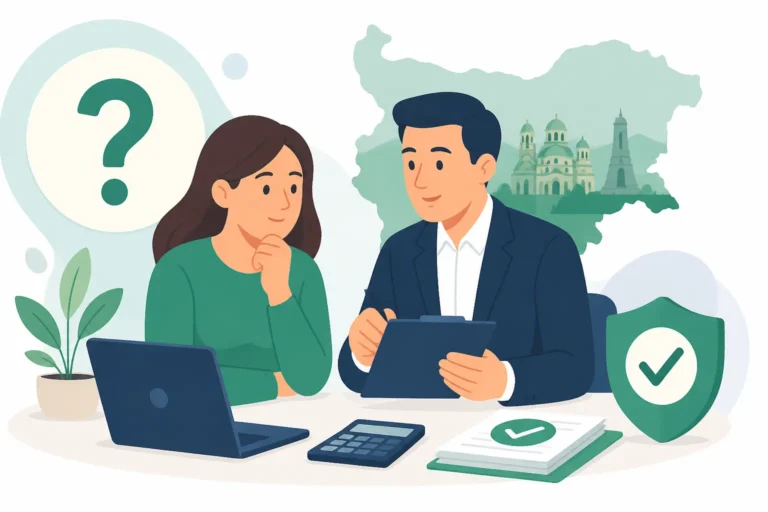
How Do I Open a Savings Account for My Child in Bulgaria?
Trying to set up your child for a financially secure future while living in Bulgaria can feel like trying to solve a Rubik's Cube blindfolded. The local banking system, coupled with the unique rules for minors and foreign nationals, often presents a labyrinth of questions. This guide will cut through the confusion, offering clear, actionable steps and insights into how to successfully open a savings account for your child here in Bulgaria, ensuring their future nest egg is well-tended.
Understanding the Landscape: Why Save for Your Child in Bulgaria?
As expats, we're always thinking about the future, especially for our children. Whether it's for their education, a down payment on their first car, or simply a safety net as they grow, putting money aside is a universal parental instinct. In Bulgaria, while the process might have its quirks, the underlying benefits are clear, and understanding the local banking environment is your first step.
The Bulgarian Banking Environment for Minors
The Bulgarian banking system, like many, has specific regulations when it comes to accounts for minors. Generally, children under 14 years old cannot manage their own accounts. These accounts are typically opened and managed by their legal guardians – usually the parents. For children between 14 and 18, they can often hold an account in their own name but still require parental consent and often a co-signature or oversight from a legal guardian for major transactions or opening the account itself. This structure is designed to protect minors and ensure responsible financial management until they reach adulthood. It's a common-sense approach, but for expats unfamiliar with the specifics, it can add another layer of complexity to an already complex administrative landscape.
The good news is that most major Bulgarian banks, such as UniCredit Bulbank, DSK Bank, and Raiffeisenbank, do offer specific products tailored for children and young people. These often come with lower fees or even fee-free options, sometimes attractive interest rates, and occasionally educational tools designed to teach financial literacy. While you might not find a dedicated "kids' bank" with cartoon characters on every brochure, the fundamental products are there, waiting for you to uncover them. It just requires a bit of digging and patience, something we expats become experts at, don't we? For a broader understanding of the financial ecosystem here, you might find our guide on Banking in Bulgaria: A Complete Guide for Foreigners (2027) useful.
Long-Term Financial Planning and Your Child's Future
Saving for your child's future is about more than just a bank account; it's a critical component of your overall long-term financial planning. Living in Bulgaria offers a unique advantage due to its relatively lower cost of living compared to Western Europe or North America, which can potentially free up more funds for saving. However, you also need to consider currency fluctuations, especially with Bulgaria not yet on the Euro (though it's coming!).
Thinking ahead involves considering what this money will be used for. Will it be for higher education, possibly abroad, which could mean future currency conversions? Will it be a down payment on property here in Bulgaria, where property ownership rules for foreigners can sometimes differ? Or simply a nest egg for them when they turn 18? Each of these scenarios might subtly influence your choice of account and how you structure the savings. It’s also wise to consider the tax implications for any significant gifts or contributions made to the account, both from your end as the parent and for the child in the future. Reputable services like Taxes for Expats can provide tailored advice on how best to structure your finances globally, ensuring you're compliant and efficient. Even though Bulgaria has a flat 10% income tax, understanding how your foreign income is treated, especially when it comes to funding these savings, is crucial, which is detailed in Understanding Income Tax and the Flat 10% Rate in Bulgaria (2026).
The Nuts and Bolts: Legal Requirements and Documentation
Alright, let's get down to brass tacks – the paperwork. This is where things can get a bit… well, Bulgarian. Don't be surprised if you're asked for documents you didn't even know existed, or if the requirements vary slightly from one bank branch to another. The key is to be overly prepared.
Who Can Open an Account for a Child? Parental Authority Explained
In Bulgaria, a savings account for a child must typically be opened by their legal guardian(s). For most expat families, this means the biological parents. Both parents usually need to be present at the bank when opening the account, especially if they share parental rights, or at least one parent with a notarised power of attorney from the absent parent. The bank needs to verify the identity of both parents and their legal relationship to the child. If you are a single parent or have sole custody, you will need to provide official documentation proving this status. This might be a court order, a birth certificate explicitly stating sole guardianship, or other relevant legal documents. Remember, the Bulgarian system is very particular about verifying legal relationships to protect the child's interests. This isn't just a suggestion; it's a legal requirement that banks adhere to strictly.
Essential Documents for the Child and Parents
This is where your patience will truly be tested, but having everything in order beforehand will save you countless headaches. Here's a general list, but always, always call the specific bank branch ahead of time to confirm their exact requirements.
For the Child:
- Original Birth Certificate: This is paramount. It proves the child's identity and their relationship to you.
- Proof of Identity (for the child): If your child has a passport or a Bulgarian ID card (лична карта), bring it. For very young children without an ID card, their passport is usually sufficient.
- Residence Permit (Лична карта за чужденец): If your child is a foreign national, they will need their valid Bulgarian residence permit. This is essentially their official ID in Bulgaria. If you're still navigating your own residency, you might want to read about Family and Dependent Residence Permits in Bulgaria: Bringing Your Loved Ones (2027).
- BULSTAT number (БУЛСТАТ): This is Bulgaria's unified identification code. While usually associated with businesses or freelancers, it's also used for individuals who don't have a personal ID number (ЕГН), such as foreign children. Some banks may require your child to have one, especially if they don't have a Bulgarian ID. You can find more about getting one in How Do I Get a Tax ID (BULSTAT) as a Foreigner in Bulgaria?.
For the Parent(s) opening the account:
- Valid Passport / National ID Card: Your primary form of identification.
- Bulgarian Residence Permit (Лична карта за чужденец): Essential for foreign nationals.
- Proof of Address: A recent utility bill (electricity, water, internet) in your name, or your rental contract.
- Proof of Income/Employment (sometimes requested): Banks might want to see where the funds for the savings are coming from, especially for larger initial deposits. Your employment contract, payslips, or a certificate from your employer might be necessary.
- Marriage Certificate (if applicable): To prove your legal relationship as spouses if both parents are opening the account.
It sounds like a lot, doesn't it? It is. But trust me, showing up with too many documents is always better than too few.
Navigating Translation and Legalisation for Foreign Documents
Here's another point where expats often stumble. Many of your original documents – birth certificates, marriage certificates, custody agreements – will likely be issued in a language other than Bulgarian. For these documents to be accepted by a Bulgarian bank, they must be translated into Bulgarian by a sworn translator (заклет преводач) and then, in many cases, legalised.
Legalisation typically involves an apostille stamp if your home country is a signatory to the Hague Apostille Convention. This certifies the authenticity of the document. If your country is not part of the convention, it might require consular legalisation, which is a more complex process involving your country's embassy in Bulgaria and the Bulgarian Ministry of Foreign Affairs.
The cost and time for translations and legalisation can add up, so factor this into your preparations. You'll typically need to find an accredited translation agency in Bulgaria, and they can guide you through the apostille process if needed. This step often causes the most frustration, but it's non-negotiable for official purposes here.
Choosing the Right Bank and Account Type
Once you’ve got your documents sorted, the next hurdle is selecting the right financial institution and the specific savings product. In Bulgaria, you have several solid options, each with its own nuances.
Major Bulgarian Banks Offering Child Savings Accounts
Bulgaria's banking sector is dominated by a few key players, most of which are branches of larger European groups. These are generally the safest and most reliable options for expats.
- UniCredit Bulbank: Often considered one of the largest and most internationally oriented banks in Bulgaria. They typically have a good range of products, including savings accounts, and their staff are often more accustomed to dealing with foreign clients. They usually offer decent online banking platforms, which is a huge plus for managing funds.
- DSK Bank: This is one of Bulgaria's oldest and most established banks, with an extensive network of branches, even in smaller towns. They have a variety of savings products, and you might find their rates competitive. However, English-speaking staff might be less common outside of major cities. If you're looking for general banking advice, our article How to Choose the Best Bank for Expats in Bulgaria could be really helpful here.
- Raiffeisenbank: Another strong contender with a significant presence. Like UniCredit, they tend to cater to a more international clientele, and their services often include robust online platforms.
- First Investment Bank (FIBank): A prominent Bulgarian-owned bank that also offers a range of services.
When choosing, consider factors like the proximity of a branch to your home, the availability of English-speaking staff, the quality of their online banking, and, of course, the specific features of their child savings products.
Exploring Different Savings Products
Banks don't just offer one type of savings account. For children, you might encounter a few variations:
- Standard Savings Accounts: These are flexible, allowing deposits and withdrawals (usually managed by the parent) without strict penalties. Interest rates might be modest.
- Term Deposits (Fixed Deposits): These lock your money away for a set period (e.g., 6 months, 1 year, 3 years) in exchange for a higher, fixed interest rate. While they offer better returns, they come with penalties if you need to access the money before the term ends. For long-term child savings, a longer-term deposit might be appealing, but consider the accessibility needs.
- Junior Accounts/Youth Accounts: Some banks have specific products named for children or young people. These often come with incentives like no monthly fees, a small debit card for older children (managed by parents), and sometimes loyalty programs. They are designed to encourage saving from a young age.
- Custodial Accounts: While less common as a standalone product in Bulgaria compared to some Western countries, the de facto management by parents for minors under 14 functions similarly to a custodial account where the parent is the account administrator until the child reaches a certain age.
It's crucial to compare the interest rates, any associated fees (monthly, withdrawal, inactivity), and the terms and conditions of each product. Some accounts might offer a slightly higher rate but require a minimum balance or have stricter withdrawal rules. Always read the fine print, or better yet, ask the bank representative to explain it clearly, in simple terms.
Practical Considerations: Access, Interest, and Fees
Beyond the official documents and bank names, think about the practicalities of managing this account for years to come.
- Accessibility: How easily can you, as the parent, deposit money? Can family members abroad contribute? If so, consider services like Wise for international transfers, which are often more cost-effective than traditional bank wires for sending funds to Bulgaria. This is particularly relevant if grandparents want to send birthday money directly to the child's savings.
- Interest Rates: While not always stellar in current low-interest environments, even a small interest rate compounds over years. Ask about how interest is calculated and paid (monthly, annually) and if it's fixed or variable. Remember, inflation can erode savings, so aim for the best rate you can find.
- Fees: Are there account maintenance fees? Fees for deposits or withdrawals? Inactivity fees? Over the long term, small fees can eat into your child's savings. Many child-specific accounts aim to be low or no-fee, but it's essential to confirm.
- Online Banking: A robust online banking platform will make managing the account much easier. You'll want to check balances, transfer funds, and review statements without needing to visit a branch every time. Our guide on How to Set Up Online Banking with a Bulgarian Bank covers the essentials.
Here's a simplified table comparing typical required documents for opening a child's savings account in Bulgaria:
| Document Category | For the Child (Minor) | For the Parent(s) (Legal Guardian) | Notes |
|---|---|---|---|
| Identity | Original Birth Certificate, Passport, Residence Permit (лична карта за чужденец) | Passport/National ID, Residence Permit (лична карта за чужденец) | All foreign documents require sworn translation & often apostille. |
| Relationship Proof | (Implicit via Birth Cert) | Marriage Certificate (if applicable) | To prove parental relationship to child, and spousal relationship if both parents. |
| Address Proof | (Usually not required for child) | Recent Utility Bill, Rental Contract | Must be in the parent's name. |
| Financial Standing | (Not applicable) | Proof of Income/Employment (e.g., payslips, contract) | May be requested for initial deposits or substantial contributions. |
| Tax ID | BULSTAT (if no ЕГН) | (Usually covered by ID/residence permit) | Necessary for all individuals with financial activity in Bulgaria. |
The Application Process: Step-by-Step Guide
You've gathered your formidable stack of documents, picked a bank, and eyed a savings product. Now, for the actual application. This is where your good preparation truly pays off.
Making the Appointment and What to Expect
Firstly, don't just walk in, especially in larger cities like Sofia or Plovdiv. It's almost always better to call ahead and schedule an appointment. When you call, explicitly state that you are a foreign national looking to open a child's savings account, and ask if they have an English-speaking representative available. This can save you from trying to explain complex legal terms in broken Bulgarian or relying on Google Translate in the moment.
During the appointment, be prepared for a thorough verification process. The bank representative will meticulously check all your documents, make copies, and likely ask you to fill out several forms in Bulgarian. Don't be shy about asking for clarification on anything you don't understand. They might even ask specific questions about the source of funds for the initial deposit, so have a clear answer ready. This is standard procedure for anti-money laundering regulations, so don't take it personally. They are just doing their job.
First Deposits and Ongoing Contributions
Once the account is opened, you'll typically be required to make an initial deposit. This can usually be done in cash at the counter or via an internal bank transfer if you already have an account with the same bank.
For ongoing contributions, you have several convenient options:
- Direct Bank Transfers: The easiest method if you have another Bulgarian bank account. You can set up recurring transfers for automated savings, which is fantastic for long-term planning.
- Cash Deposits: Still widely accepted at bank branches and often at ATMs that accept deposits.
- International Transfers: If family members abroad wish to contribute, they can use international money transfer services. As mentioned before, services like Wise are often preferred by expats for their transparency and competitive exchange rates, especially when dealing with Bulgarian leva (BGN) or future Euros. This helps ensure more of the gift actually makes it into your child's account, rather than being eaten by exorbitant bank fees.
Managing the Account as Your Child Grows
The way you manage the account will evolve as your child grows. For younger children, you, the parent, will have full control, making deposits, checking balances, and managing any withdrawals. Most banks will provide online banking access for the parent, which is invaluable.
As your child approaches their teenage years (typically 14 in Bulgaria), the dynamic shifts slightly. They might be able to get a debit card linked to the account, with spending limits set by you. They might also be able to perform basic transactions themselves, albeit still under your oversight or with your explicit consent for larger actions. This is a fantastic opportunity to start teaching them about budgeting, saving, and financial responsibility. You can turn this administrative necessity into a valuable life lesson. When they turn 18, the account will fully transition to their control, or you might need to convert it into an adult account, depending on the bank's policies.
Remember, this isn't just about setting up a financial tool; it's about laying a foundation for your child's future, giving them a head start, and teaching them vital money management skills in a country that's becoming their home. It might be a bureaucratic maze to get there, but the destination is well worth the journey.
Disclaimer
The information provided in this guide is for general informational purposes only and does not constitute financial, legal, or tax advice. While we strive to keep the content up-to-date and accurate, regulations and banking practices in Bulgaria can change without prior notice. Expats are strongly advised to consult with a qualified financial advisor, legal professional, or tax expert in Bulgaria for advice tailored to their specific circumstances. Always verify current requirements directly with the chosen bank and relevant government authorities before taking any action.