How Do I Apply for Long-Term Residence in Bulgaria?
Navigating the labyrinthine halls of Bulgarian bureaucracy for something as critical as long-term residence can feel like trying to solve a Rubik's Cube blindfolded. Many expats arrive here, secure their initial temporary permits, and then wonder what the next big hurdle is – often finding themselves confused by the nuances of what comes after. This guide is here to untangle the complexities, walking you through the precise steps and requirements for applying for long-term residence in Bulgaria, ensuring you understand exactly what to expect on this significant step towards making Bulgaria your permanent home.
Understanding Long-Term Residence in Bulgaria
Before you even think about submitting an application, it’s crucial to understand what "long-term residence" truly signifies in Bulgaria, how it differs from other statuses, and who is actually eligible to apply for it. It's not just a fancy name; it grants you a much more stable footing in the country.
What Exactly is "Long-Term Residence" (Продължително пребиваване)?
In Bulgaria, "long-term residence" (often translated as "продължително пребиваване" or sometimes just referred to by its legal article, like Article 24 of the Foreigners in the Republic of Bulgaria Act) is a status granted to non-EU/EEA citizens who have lived legally in Bulgaria for a continuous period. Think of it as the stepping stone between your initial temporary residence permit and a permanent one, or, in many cases, it functions as a near-permanent status in its own right, granting significant rights. Unlike temporary residence, which you have to renew annually, long-term residence, once granted, is generally indefinite, though your physical residence card will still have an expiry date and needs regular renewal every five years. This effectively means you won't need to re-prove your grounds for residence (like work contract, student status, etc.) every single year, offering immense peace of mind and administrative relief.
This status brings with it a host of benefits that make daily life far smoother. Holders of long-term residence permits have nearly the same rights as Bulgarian citizens, with a few key exceptions, such as the right to vote in national elections or hold certain public offices. You gain significantly improved access to the labour market, often no longer needing a separate work permit. Moreover, it strengthens your integration into the Bulgarian healthcare system and social security, potentially opening doors to better benefits. For many, the sense of security and belonging that comes with this status is invaluable. It’s also a critical prerequisite for anyone hoping to eventually achieve permanent residence in Bulgaria, and ultimately, Bulgarian citizenship.
Eligibility Criteria: Who Can Apply?
The golden rule for long-term residence in Bulgaria is the five-year continuous legal temporary residence requirement. This means you must have held a valid temporary residence permit in Bulgaria for at least five uninterrupted years immediately preceding your application for long-term residence. It’s not simply about being in Bulgaria for five years, but about having maintained a legal status through your temporary permits throughout that entire period. Each year, you need to have successfully renewed your temporary permit, ensuring there are no gaps in your legal stay.
The good news is that most common types of temporary residence count towards this five-year period. This includes residence based on employment (like the Single Permit for Work and Residence in Bulgaria), self-employment, family reunification, study, or even as a representative of a foreign company. However, there are nuances. For instance, half of the time spent as a student counts towards the five-year period, not the full duration. It’s crucial to check your specific temporary residence grounds with the Migration Directorate or a legal professional to confirm how your time will be calculated.
The term "continuous" is also vital. While brief absences from Bulgaria are generally permissible, prolonged periods outside the country can break this continuity. Specifically, you generally cannot have been absent from Bulgaria for more than 10 consecutive months, and the total duration of your absences over the five-year period should not exceed 18 months. These are critical thresholds, and exceeding them could reset your clock or invalidate your application. Therefore, if you travel frequently or for extended periods, you must meticulously track your entries and exits to ensure you meet this continuity requirement. It can be a real headache, I know, especially when dealing with unforeseen circumstances, so keeping a personal travel log can save you a lot of grief down the line.
The Application Process: Step-by-Step for Long-Term Residence
Once you’ve confirmed your eligibility, the next phase is navigating the actual application process. This is where patience, attention to detail, and a thick skin for bureaucracy truly come into play.
Gathering Your Documents: The Bureaucratic Gauntlet
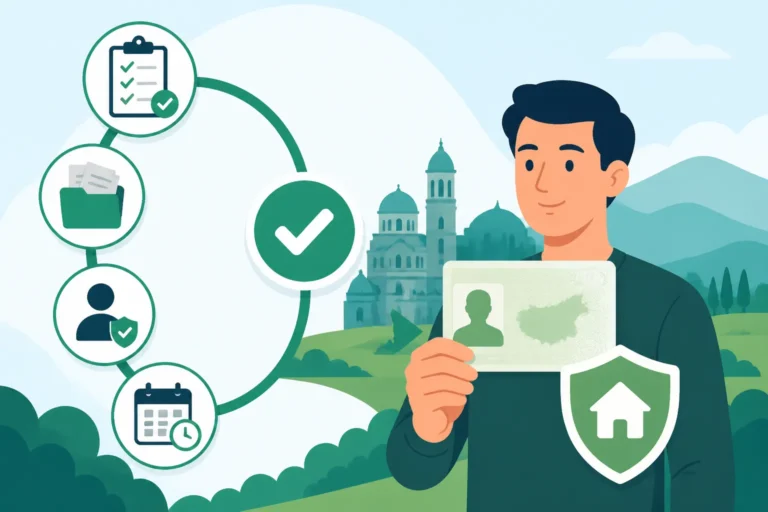
Ah, the document gathering! This is often the most anxiety-inducing part of any administrative process in Bulgaria. For your long-term residence application, you’ll need to assemble a comprehensive dossier. Missing even one seemingly small paper can lead to delays or outright rejection, sending you back to square one.
Here’s a breakdown of the essential documents you’ll typically need:
- Valid Passport: Your original passport, plus copies of all processed pages (identity, visas, entry/exit stamps).
- Previous Residence Permits: Your current and all previous temporary residence cards, proving your continuous legal stay.
- Proof of Accommodation: This could be a notarised rental contract, a title deed if you own property, or a declaration from the property owner stating you reside there, along with a copy of their ID. Make sure it's current and covers your period of residence.
- Proof of Financial Means: You need to demonstrate you have sufficient funds to support yourself and any dependents without relying on the Bulgarian social assistance system. This usually means a bank statement from a Bulgarian bank showing funds equivalent to at least the minimum monthly wage for several months, or proof of a stable income source (like a work contract and recent payslips). The amount required can vary, but generally, having a healthy balance that shows you can cover your living expenses for at least a year is advisable.
- Police Clearance Certificate: A certificate from your home country (and any other country you've resided in for more than a year in the last five years) proving you have no criminal record. This document needs to be apostilled and officially translated into Bulgarian. This alone can be a lengthy process depending on your country of origin, so start early!
- Health Insurance: You must have valid health insurance covering you in Bulgaria. If you're employed and contributing to the National Health Insurance Fund (NHIF), your NHIF contributions act as your proof. If you're self-employed, a student, or otherwise not covered by mandatory contributions, you’ll need private health insurance. Companies like Cigna Global offer comprehensive international health insurance plans that are often favoured by expats for their wide coverage and English-speaking services, satisfying this requirement. Make sure your policy clearly states coverage in Bulgaria and has adequate limits.
- Application Form: The standard application form provided by the Migration Directorate, filled out completely and accurately.
- Declaration of No Absences: A sworn declaration stating that you have not exceeded the allowed periods of absence from Bulgaria or the EU/Schengen area.
- Payment Receipts: Proof of payment for the application fee.
Remember, every single foreign document must be translated into Bulgarian by a licensed translator and, in most cases, apostilled to be legally recognised in Bulgaria. This is non-negotiable and one of the biggest bottlenecks. For a more detailed look into this, check out our guide on Understanding Document and Translation Requirements for Bulgaria Immigration. I cannot stress enough how important it is to start gathering these documents well in advance. Some, like the police clearance, can take weeks or even months to obtain and process.
Submitting Your Application to the Migration Directorate
Once your formidable stack of documents is ready, it's time for the main event: submitting your application to the local Migration Directorate office. This is the central authority for all immigration matters in Bulgaria. If you’re in Sofia, this will be the main office; in other cities, it will be the regional branch.
Typically, you'll need to schedule an appointment in advance, especially in larger cities like Sofia. Don't just show up hoping for the best; you'll likely be turned away. Check their website or call ahead to understand their current appointment system. When you go, be prepared for a wait, even with an appointment. Bulgarian administrative offices are not known for their speed or efficiency, so bring a book, some headphones, or a very patient friend.
During your appointment, a Migration Directorate officer will review your documents. This is where your meticulous preparation will either pay off or come back to haunt you. They will check each document against their requirements. It's common for them to ask questions about your stay in Bulgaria, your finances, and your reasons for applying for long-term residence. If you’re not fluent in Bulgarian, bringing a trusted translator is highly advisable. While some officers might speak English, you can’t count on it, and miscommunication can lead to serious problems. Your previous annual temporary residence renewals will have prepared you somewhat for this, but the long-term application is often under closer scrutiny.
What to Expect After Application
After you’ve submitted your application and paid the fees, it’s a waiting game. The official processing time for long-term residence applications is typically around 2-3 months, but in practice, this can vary wildly. Some people get a decision quicker, others wait longer. It often depends on the complexity of your case, the volume of applications, and sometimes, frankly, just luck.
During this period, the Migration Directorate might contact you for additional documents or clarifications. This is quite common, so don't panic if it happens. Respond promptly and provide exactly what they ask for. Ignoring these requests will almost certainly lead to a denial. They might also conduct checks on your declared address or other information.
If your application is approved, you’ll be notified to pick up your new long-term residence card. This card will have a validity of five years, after which you’ll need to renew the card itself, but not the underlying residence status. It’s a moment of immense relief and accomplishment when you finally hold that card in your hand! If, unfortunately, your application is denied, you will receive a written refusal detailing the reasons. You usually have the right to appeal this decision through the administrative court system, though this will require legal assistance.
Maintaining Your Long-Term Residence Status
Getting your long-term residence is a significant achievement, but it's not a "set it and forget it" situation. There are specific rules you need to follow to maintain this status and prepare for future steps.
Understanding Absences and Their Impact
One of the critical conditions for maintaining your long-term residence status is adhering to the rules regarding absences from Bulgaria and the wider European Union. As a general rule, you cannot be absent from Bulgarian territory for a continuous period exceeding 12 months. More importantly, you cannot be absent from the territory of the EU for a continuous period exceeding six months, or for a total of more than 10 months within any five-year period.
These rules are in place to ensure that Bulgaria remains your primary place of residence and interest. Exceeding these limits without a valid, exceptional reason (such as mandatory military service, a serious illness requiring treatment abroad, or study leave for children) can lead to the revocation of your long-term residence status. This is a big deal, as losing your status would mean having to start your entire residence journey over, potentially from outside the country. Always keep track of your travel dates, and if you foresee needing to be away for an extended period, consult with the Migration Directorate or an immigration lawyer beforehand to understand the potential implications. It's much better to be proactive than to face revocation.
Renewal and Moving to Permanent Residence
While long-term residence itself is often referred to as indefinite, the physical card you hold has a five-year validity period. You’ll need to apply for a renewal of this card before it expires. This process is generally much simpler than the initial application for long-term residence, as you won’t need to re-prove all your eligibility grounds. You’ll typically need your current expired card, passport, updated proof of address, and proof of health insurance (if not covered by NHIF contributions).
For many, long-term residence is a stepping stone to permanent residence. After two years of holding a long-term residence permit, you become eligible to apply for permanent residence in Bulgaria. This means an even stronger tie to the country, with virtually all the rights of a Bulgarian citizen, except for voting in national elections. The requirements for permanent residence are quite similar to long-term residence, but with an extended period of continuous stay. Once you've secured permanent residence, the path to Bulgarian citizenship by naturalisation becomes clearer, requiring several more years of continuous residency. You can delve deeper into this progression by reading our article on How to Get Permanent Residence in Bulgaria.
Thinking about moving out of Bulgaria, or even to another EU country? Keep in mind that your long-term residence status is primarily tied to Bulgaria. If you’re planning a big move, perhaps even using a reputable international moving company like Sirelo to help with your logistics, remember to check how this impacts your residence status. They can help you move your belongings, but they can't manage your immigration status!
Common Challenges and Tips for Expats
Dealing with any immigration process can be daunting, and Bulgaria is no exception. However, with the right approach and expectations, you can navigate it successfully.
Overcoming Language Barriers and Bureaucracy
Let’s be honest, Bulgarian bureaucracy can be a beast. Even for native speakers, understanding the specific legal jargon and navigating the processes can be tough. For expats, the language barrier adds another layer of complexity. Official communications are almost exclusively in Bulgarian, and while some forms might have English translations available unofficially online, the legal document itself will be in Bulgarian.
My best advice here is threefold:
- Learn some basic Bulgarian: Even a little bit goes a long way in showing respect and understanding.
- Find a good translator: For official appointments and document preparation, a certified translator is invaluable. They can bridge the communication gap and ensure you understand what’s being asked of you and what you’re signing.
- Cultivate patience: This is perhaps the most important. Things often move slowly. There will be multiple visits, unexpected requests, and moments of frustration. Take a deep breath, accept that this is part of the process, and persevere. Your mental well-being depends on it! Remember that almost every expat before you has felt these frustrations. You are not alone in thinking, "Why is this so complicated?"
Financial Planning and Legal Support
Having clear and verifiable financial proof is paramount. The Migration Directorate wants to be assured that you will not become a burden on the state. Ensure your bank statements are up-to-date and clearly show consistent funds. If your income comes from abroad, make sure you have solid documentation of regular transfers or salary payments. The more transparent and organised you are with your finances, the smoother this part of the process will be.
For complex cases, or if you simply feel overwhelmed, don't hesitate to seek professional legal support. An experienced immigration lawyer in Bulgaria can be a lifesaver. They understand the nuances of the law, the specific requirements of the Migration Directorate, and can help prepare your documents, communicate on your behalf, and even accompany you to appointments. While it’s an added expense, the peace of mind and the increased likelihood of a successful application can be well worth the investment, especially when dealing with something as vital as your long-term residency. They can clarify intricacies, for instance, surrounding "How Your Residence Status Affects NHIF Enrolment in Bulgaria" or "Understanding Mandatory Social and Health Contributions in Bulgaria," which are critical components of your financial stability in Bulgaria.
In summary, applying for long-term residence in Bulgaria is a marathon, not a sprint. It requires meticulous preparation, unwavering patience, and a solid understanding of the rules. But for those who make Bulgaria their chosen home, the stability and rights that come with this status are incredibly rewarding.
| Feature | Temporary Residence (Еднократно пребиваване) | Long-Term Residence (Продължително пребиваване) | Permanent Residence (Постоянно пребиваване) |
|---|---|---|---|
| Initial Validity | Up to 1 year | Indefinite | Indefinite |
| Card Renewal | Annually | Every 5 years | Every 10 years |
| Eligibility Timeline | Based on initial purpose (work, study, etc.) | 5 years of continuous temporary residence | 2 years of continuous long-term residence |
| Work Permit Needed | Often (unless Single Permit) | Generally not needed | Generally not needed |
| Absence Limit | Varies by permit type | 10 months continuous from EU, 6 months from BG | Similar to long-term |
| Rights Granted | Limited, specific to permit purpose | Near-equal to citizens (except political) | Near-equal to citizens (except political) |
| Path to Citizenship | Via Temporary -> Long-Term -> Permanent | Via Long-Term -> Permanent | Direct path via Permanent |
Disclaimer
The information provided in this guide is for general informational purposes only and does not constitute legal advice. While we strive to keep the information accurate and up-to-date, immigration laws and procedures in Bulgaria can change without notice. It is essential to consult with the Bulgarian Migration Directorate or a qualified immigration lawyer for advice tailored to your specific situation before making any decisions related to your residence status.