Can I Pay My Bulgarian Taxes from Abroad?
Ah, the joys of navigating taxes from afar! It’s a common expat headache, isn't it? You've moved on, built a new life, but that little piece of Bulgaria still holds onto a slice of your financial obligations, and the thought of figuring out how to pay your taxes when you're no longer physically there can feel like a monumental task. This guide is here to unravel that mystery, offering practical, real-world advice on how you can indeed settle your Bulgarian tax bill even when you're living abroad.
Understanding Your Bulgarian Tax Obligations While Abroad
First things first, let's cut through the bureaucracy a bit. Just because you've packed your bags and left Bulgaria doesn't automatically mean you're off the hook for all tax liabilities. Bulgaria, like many countries, has rules about tax residency and sources of income. Understanding these is absolutely critical before you even think about hitting that "pay" button.
Determining Your Tax Residency Status
The big question here is whether Bulgaria still considers you a tax resident. This isn't always as straightforward as it seems. Typically, if you spend more than 183 days in Bulgaria within any 12-month period, you're considered a tax resident. However, it’s not just about physical presence. Bulgaria also considers your "centre of vital interests" – basically, where your family, economic, and social ties are strongest. If your primary home, your spouse and children, or your main business interests are still in Bulgaria, even if you’re physically elsewhere for a good chunk of the year, the National Revenue Agency (NRA) might still consider you a resident.
This matters because tax residents are generally taxed on their worldwide income, whereas non-residents are only taxed on income sourced from Bulgaria. Imagine you own an apartment in Sofia that you rent out. Even if you now live in Spain, the rental income from that property is undeniably Bulgarian-sourced income and will likely be subject to Bulgarian tax. This also applies to capital gains from selling Bulgarian property or shares in a Bulgarian company. It’s a complex area, and one where getting professional advice, perhaps from specialists like Taxes for Expats, can save you a world of future headaches.
Types of Income Subject to Bulgarian Tax from Abroad
So, what kind of income are we typically talking about when you’re living outside Bulgaria? The most common culprits are:
- Rental Income: If you own property in Bulgaria and rent it out, the income generated is taxable. This is probably the number one reason expats find themselves still dealing with Bulgarian taxes after they’ve left.
- Capital Gains from Property Sales: If you sell a property in Bulgaria, any profit (capital gain) made might be subject to tax, depending on how long you owned it and if it was your primary residence.
- Dividends from Bulgarian Companies: If you still hold shares in a Bulgarian company and receive dividends, these will be taxed at source.
- Interest from Bulgarian Bank Accounts: While often small, any interest earned on Bulgarian bank deposits is also taxable.
- Income from Bulgarian-sourced Business Activities: If you have a business registered in Bulgaria, or provide services to Bulgarian clients while abroad, that income will almost certainly fall under the Bulgarian tax net.
It's vital to remember that Bulgaria has Double Taxation Agreements (DTAs) with many countries. These agreements are designed to prevent you from being taxed twice on the same income – once in Bulgaria and once in your new country of residence. However, the DTA specifies which country has the right to tax which type of income, and it often still requires you to declare the income in both places, even if tax is only paid in one. Understanding the specifics of How Bulgaria's Tax System Works: The Flat 10% Tax Explained is crucial here.
Practical Ways to Pay Bulgarian Taxes from Outside the Country
Alright, once you’ve figured out what you need to pay, the next challenge is how to actually get that money into the NRA’s coffers. Thankfully, there are several methods, some easier than others, that cater to the realities of expat life.
Online Payment via the NRA Portal with an Electronic Signature
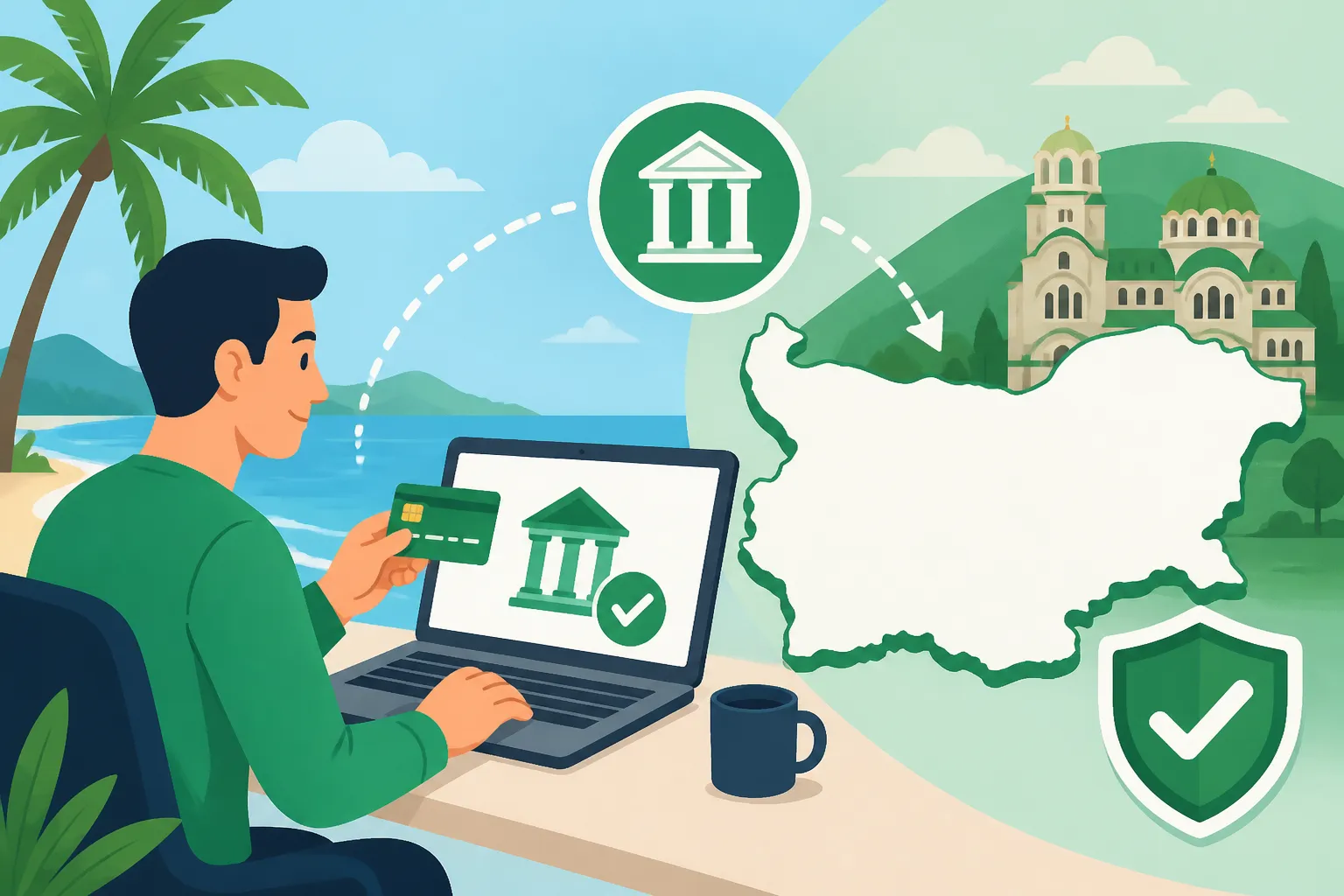
This is, hands down, the most efficient and recommended way to pay your Bulgarian taxes from abroad, assuming you have everything set up. The National Revenue Agency (NRA) has an online portal that allows you for Filing Your Tax Return with the National Revenue Agency in Bulgaria: The Complete Walkthrough and crucially, to make payments.
To use this, you absolutely need a Qualified Electronic Signature (QES), known in Bulgarian as a Kvalificiran Elektronenen Podpis (КЕП). Getting a QES can be a bit of a bureaucratic hurdle, as it typically requires an in-person visit to a certification service provider in Bulgaria (like B-Trust or InfoNotary) or, in some cases, through a proxy with a power of attorney. Once you have it, it's a digital key that unlocks a whole world of online services with Bulgarian institutions, including the NRA. You link your QES to your personal ID number (PIN) or BULSTAT number (if you're self-employed) and then you can access your tax account, view your obligations, and initiate payments. The payment itself is usually made by direct bank transfer, which you can set up through the portal or by taking the payment details to your bank.
The main frustration here often lies in obtaining and maintaining the QES, especially if you’re not physically in Bulgaria. But once you've conquered that, it genuinely makes managing your Bulgarian taxes much simpler.
International Bank Transfers
If the online portal with a QES feels like too much of a mountain to climb, or if you only have an occasional payment, an international bank transfer is a viable alternative. You'll need the exact payment details for the National Revenue Agency, including their IBAN (International Bank Account Number), SWIFT/BIC code, and the specific reason for payment (often a reference code tied to your tax obligation). These details are usually provided on your tax assessment or can be obtained from the NRA directly or through a Bulgarian accountant.
You can initiate these transfers from your bank account in your country of residence. Most major banks offer international wire transfers. However, be mindful of the fees and exchange rates. Traditional banks can charge a hefty sum for international transfers, and their exchange rates aren’t always the most favourable. This is where services like Wise (formerly TransferWise) come in incredibly handy. They specialize in international money transfers with significantly lower fees and better exchange rates than most traditional banks, ensuring more of your money actually goes towards your tax bill rather than bank charges. When transferring money into and out of Bulgaria as an Expat, using such services can save you a lot.
Just a heads-up: always double-check all the payment details – the recipient's name (NRA, of course), IBAN, BIC, and especially the payment reference. A single wrong digit could mean your payment doesn't get allocated correctly, leading to a whole new set of headaches.
Appointing a Tax Representative or Proxy
For those who prefer a hands-off approach or find the language and bureaucratic hurdles too daunting, appointing a local tax representative or proxy is a common and effective solution. This person or firm, often a Bulgarian accountant or lawyer, can handle your tax affairs on your behalf, including filing your returns and making payments. You grant them a Power of Attorney (Pravnomoshtno) that specifically outlines what they are authorized to do.
This option is particularly useful if your tax situation is complex, if you frequently have Bulgarian tax obligations, or if you simply cannot or will not engage with the online system. A good tax representative will understand the nuances of Bulgarian tax law, ensure your payments are made correctly and on time, and can communicate with the NRA in Bulgarian, taking the burden off your shoulders. They can also help you with How to File Taxes If You Have Both Foreign and Bulgarian Income, ensuring compliance with both Bulgarian and international regulations.
Of course, this service comes with a fee, but for many expats, the peace of mind and convenience are well worth the cost. Companies specializing in expat taxes, such as Taxes for Expats, can often connect you with reliable local professionals for this purpose.
Navigating Payment Challenges and Getting Help
Let's be realistic: even with the best intentions, dealing with any country's tax system from abroad can throw up unexpected challenges. Bulgaria is no exception. Knowing what to look out for and where to turn for help can make all the difference.
Common Frustrations and Pitfalls
One of the biggest hurdles for many expats is the language barrier. While the NRA website has some English sections, many of the detailed instructions, forms, and certainly any direct communication will be in Bulgarian. This can lead to misunderstandings and errors.
Another common pitfall is underestimating the time it takes. Setting up a QES, getting a power of attorney notarized (often requiring an Apostille if done abroad), or simply coordinating international bank transfers can take days or even weeks. Missing a tax deadline in Bulgaria can result in fines and interest, so always start the process well in advance.
Then there are the technical woes of online portals. Sometimes, specific browsers are required, or the interface can be less intuitive than one might hope. This isn't unique to Bulgaria, but it can be particularly frustrating when you're thousands of miles away and can't just pop into a local office for assistance.
When to Seek Professional Assistance
While paying a simple, one-off tax bill might be manageable on your own with careful instructions, there are clear signs you should probably bring in the professionals.
- Complex Tax Situations: If you have multiple income sources in Bulgaria, own several properties, or your new country of residence has complex tax laws that interact with Bulgarian ones, an accountant is invaluable. They can advise on Double Taxation Agreements and ensure you're compliant everywhere.
- Time Constraints or Language Difficulties: If you’re too busy, or simply find the Bulgarian language an insurmountable barrier, a tax representative is a lifesaver.
- Need for a QES or BULSTAT: If you need to obtain a QES or register for a BULSTAT number (a tax identification number for self-employed individuals and companies), a local proxy can handle the administrative legwork.
- Unfamiliarity with Local Procedures: Bulgarian tax procedures, like those anywhere, have their quirks. A local expert will know the ins and outs, saving you from making costly mistakes.
Reputable accounting firms in Bulgaria, especially those accustomed to working with foreigners, can provide invaluable support. Many offer English-speaking services and are well-versed in expat tax scenarios. Services like Taxes for Expats specifically cater to individuals with cross-border tax needs and can be a fantastic resource for guidance and professional connections. They are experts in understanding the nuances of how to set up payroll for your business in Bulgaria, for example, or dealing with complex investment income.
Important Considerations for Cross-Border Tax Management
Managing your tax affairs across borders requires foresight and meticulous record-keeping. It's not just about hitting the payment button; it's about building a robust system that protects you from potential future issues.
Keeping Meticulous Records
This cannot be stressed enough: keep every single document related to your Bulgarian tax obligations and payments. This includes:
- Tax Returns: Copies of all filed tax declarations.
- Payment Confirmations: Receipts, bank transfer confirmations, or screenshots of successful online payments.
- Correspondence with the NRA: Any letters, emails, or official documents from the tax authority.
- Income Documentation: Rental contracts, property sale documents, dividend statements, etc.
- Professional Advice: Records of advice received from accountants or lawyers.
These records are your proof. In the unlikely event of an audit or a query from the NRA, having a complete paper trail (or digital trail) will save you immense stress and potentially significant financial penalties. It's a bit like having your passport – you don't need it every day, but when you do, you really need it.
Currency Exchange and Banking Considerations
When paying from abroad, you're dealing with currency conversion. The Bulgarian Lev (BGN) is pegged to the Euro (€), so the exchange rate between EUR and BGN is fixed. However, if you're paying from a different currency (e.g., USD, GBP), the exchange rate can fluctuate daily.
It's a good idea to monitor exchange rates and choose a service that offers competitive rates, like Wise, to ensure you're getting the most out of your money. Remember that some banks might hold your payment for a few days for processing, which means the exchange rate applied might be slightly different from the one you saw when you initiated the transfer. Factor in a small buffer if you're transferring the exact amount on the deadline day. Also, understanding How to Transfer Money Into and Out of Bulgaria as an Expat can help you navigate these choices more effectively.
Here's a quick comparison of common payment methods for clarity:
| Payment Method | Pros | Cons | Ideal Scenario |
|---|---|---|---|
| NRA Online Portal with QES | Highly efficient, secure, direct control, lower transaction costs. | Requires QES (can be tricky to obtain remotely), initial setup hassle. | Regular tax obligations, comfort with online systems. |
| International Bank Transfer (via Bank) | Relatively straightforward for one-off payments. | High fees, less favorable exchange rates, slower processing. | Infrequent payments, high value transfers where speed isn't key. |
| International Bank Transfer (via Wise) | Lower fees, better exchange rates, faster than traditional banks. | Still requires manual input of NRA details, relies on online platform. | Regular or one-off payments, cost-conscious, tech-savvy. |
| Tax Representative/Proxy | Hands-off, expert handling, language barrier overcome, ensures compliance. | Involves service fees, requires trust and a valid Power of Attorney. | Complex tax situations, frequent obligations, prefer professional management. |
Staying Updated on Bulgarian Tax Law
Tax laws are not static; they evolve. What was true last year might not be true today. This is especially pertinent if you're a non-resident, as changes in legislation could alter what income is taxable or how it's reported. Staying informed, perhaps by subscribing to newsletters from Bulgarian accounting firms or expat tax services, is a smart move.
While you don't need to pore over every single amendment to the Bulgarian Tax Procedure Code, being aware of major changes, particularly those affecting non-residents or specific income types, is crucial. If you rely on a tax representative, they will naturally keep you informed, reinforcing the value of professional help. You might also want to keep an eye on resources that explain Understanding Income Tax and the Flat 10% Rate in Bulgaria or Understanding Property Tax and Garbage Fees for Homeowners in Bulgaria.
In conclusion, paying your Bulgarian taxes from abroad is absolutely possible, but it requires preparation, attention to detail, and sometimes, a little help from the experts. Don't let the distance deter you; with the right approach, you can keep your Bulgarian tax affairs in order, no matter where in the world you've landed.
Disclaimer
The information provided in this guide is intended for general informational purposes only and does not constitute professional tax or legal advice. Tax laws and regulations in Bulgaria are subject to change and may vary based on individual circumstances and residency status. It is strongly recommended to consult with a qualified Bulgarian tax advisor or legal professional for advice tailored to your specific situation before making any decisions related to your tax obligations.