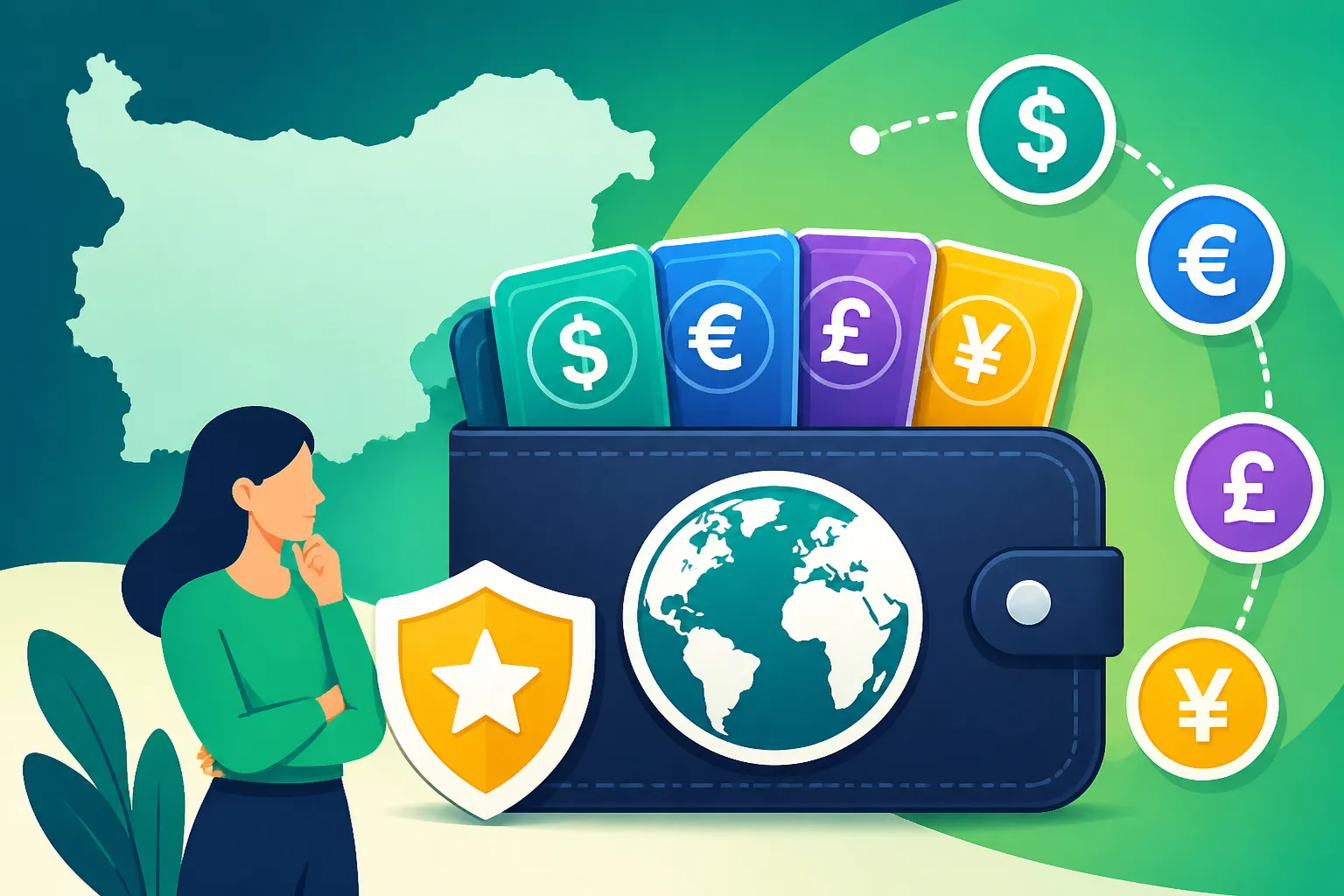
What Is the Best Multi-Currency Account in Bulgaria?
Living in Bulgaria as an expat often means you’re juggling more than just a few languages – you’re probably juggling currencies too. Whether you’re getting paid in Euros, receiving remittances in US dollars, or just trying to manage your travel budget in various currencies while living day-to-day in Bulgarian lev, the traditional banking system can feel like it’s fighting against you. This guide will walk you through the world of multi-currency accounts, helping you understand your options and choose what works best for your unique expat financial life in Bulgaria.
The Juggling Act: Why Multi-Currency Accounts are a Lifesaver for Expats in Bulgaria
Let’s be honest, one of the biggest initial frustrations for many of us moving to Bulgaria is the financial headache. You arrive, you’re trying to set up your life, and suddenly you realize your home currency bank account isn't quite cutting it for daily life here. If you’re anything like me, you’ve probably experienced the pain of transferring money from your old bank account, only to see a chunk disappear in exchange rate markups and hefty international transfer fees. It’s like watching your hard-earned cash evaporate into thin air, and frankly, it's infuriating when you’re already trying to make ends meet in a new country.
Many expats find themselves in a constant dance with different currencies. Perhaps you’re a freelancer, paid in USD or EUR by clients abroad, but all your rent and utility bills are in BGN. Maybe you have family back home sending you support, or you travel frequently across the EU and beyond. For tourists, it can be just as confusing trying to figure out if you should exchange cash or rely on your bank card, only to find you've been hit with terrible exchange rates. Traditional banking systems, while robust for local transactions, often fall short when it comes to seamless international money management. They might offer foreign currency accounts, but often these come with their own set of limitations, high fees for conversions, and less-than-favorable exchange rates that just don't make sense in today's interconnected world. This is where multi-currency accounts step in, acting as a crucial bridge between your international income and your Bulgarian expenses, designed specifically to reduce those painful currency conversion losses and simplify your financial life.
Navigating Your Options: Traditional Bulgarian Banks Versus Digital Disruptors
When it comes to managing multiple currencies while living in Bulgaria, you essentially have two main avenues: the traditional banking sector and the newer, more agile digital fintech platforms. Both have their pros and cons, and understanding these differences is key to finding your financial sweet spot.
The Familiar Path: Foreign Currency Accounts with Bulgarian Banks
For many, the first thought is to go with a local Bulgarian bank. Banks like DSK Bank, UniCredit Bulbank, or Postbank are household names here, and they do offer foreign currency accounts, primarily in Euros (EUR) and sometimes US Dollars (USD). The process for opening one of these accounts typically involves a visit to a branch, providing your Bulgarian ID (like your residence permit), proof of address, and sometimes a declaration of origin of funds, which can be a bit of a bureaucratic hurdle, as anyone who has tried to open a bank account at a Bulgarian bank as a foreigner can attest.
The major advantage of having a foreign currency account with a traditional Bulgarian bank is, of course, their physical presence. You can walk into a branch, speak to a person (though perhaps not always in fluent English, which can be a fun challenge!), and know that your money is within a well-established local system. These accounts are fully integrated into the local banking infrastructure, meaning direct debits for utilities or rent in BGN from a linked BGN account are straightforward. If you're primarily receiving Euros and spending mostly in Euros within the EU, this might seem like a comfortable option.
However, the downsides can be significant. Firstly, the number of supported foreign currencies is often limited to EUR and USD, sometimes GBP, but rarely anything more exotic. If you’re dealing with Canadian Dollars, Australian Dollars, or Swiss Francs, you’re out of luck. Secondly, the exchange rates offered when converting between currencies (e.g., EUR to BGN) are typically not the best. Banks often apply a spread over the interbank exchange rate, which is essentially a hidden fee. You might not see a "conversion fee" explicitly, but you’ll certainly feel it in the less favorable rate you receive. International transfers can also incur SWIFT fees, which eat into your money, especially when you're trying to transfer money into and out of Bulgaria as an expat. Plus, monthly maintenance fees can sometimes add up, especially if your account balance is low. Comparing the offerings from various institutions, and really understanding the difference between DSK, UniCredit and other banks in Bulgaria, is crucial to avoid unpleasant surprises.
Embracing the Digital Age: Fintech Multi-Currency Platforms
This is where the game changes for many of us. Digital multi-currency platforms like Wise (formerly TransferWise), Revolut, and N26 have revolutionized how expats manage their money across borders. These companies operate almost entirely online or through mobile apps, cutting out much of the physical infrastructure and bureaucratic overhead of traditional banks.
Wise is a particularly popular choice among the expat community for good reason. It offers borderless accounts that come with local bank details in multiple currencies – think a UK sort code and account number, a European IBAN, a US account number, and more, all linked to one account. This means you can receive payments in these currencies as if you were a local, often avoiding international transfer fees entirely. When you do need to convert currencies, Wise is renowned for using the real mid-market exchange rate and charging a small, transparent fee upfront. You see exactly what you’re paying, which is a breath of fresh air after years of guessing with traditional banks. They also provide a debit card that automatically converts your money at the best available rate when you spend abroad, often with a generous limit for ATM withdrawals without fees.
Other platforms like Revolut offer similar features, often with a slick user interface and additional benefits like budgeting tools, cryptocurrency trading, and travel insurance bundled into premium plans. N26, while primarily a European digital bank, also offers multi-currency features and a robust banking experience focused on mobile-first users.
The benefits of these digital solutions are numerous: significantly better exchange rates, transparent and often lower fees, support for a wide array of currencies, and incredibly easy-to-use mobile apps that put your finances at your fingertips. For someone like me, who often gets paid in GBP or EUR but spends in BGN, these platforms make managing funds a breeze. I can receive my salary, convert it to BGN at a competitive rate, and then transfer it to my local Bulgarian bank for rent and utilities with minimal fuss and cost. They are designed for the truly international lifestyle, allowing you to pay, get paid, and hold money in different currencies seamlessly.
The main drawback for some might be the lack of a physical branch. If you’re someone who prefers face-to-face interaction or deals primarily in cash, this might feel like a leap. Also, while regulated, these platforms sometimes face higher scrutiny from traditional banks, and very large transactions might require more verification. However, for everyday international money management, they are often a superior, more cost-effective choice.
Making the Smart Choice: What to Consider for Your Bulgarian Multi-Currency Needs
Choosing the "best" multi-currency account isn’t a one-size-fits-all situation, especially when living in a place like Bulgaria where local banking still has its quirks. What's perfect for a digital nomad might be different from what a retiree needs. Here’s what you should really dig into when making your decision.
Fees, Exchange Rates, and Transparency: The True Cost of Your Money
This is arguably the most critical factor. Banks and financial services make their money somewhere, and it’s usually in the fees and exchange rates.
- Exchange Rates: Always look for services that offer the "mid-market rate" – this is the rate you see on Google or Reuters, without any markup. Digital platforms like Wise are known for this. Traditional banks, on the other hand, often add a percentage on top of the mid-market rate, which can significantly reduce the amount of local currency you receive when converting from EUR or USD to BGN. Over time, these small percentage differences add up to a substantial loss.
- Transfer Fees: How much does it cost to send money into the account, out of it, or between different currencies within the account? SWIFT transfers, common with traditional banks for international payments, can be expensive, sometimes €20-€50 per transfer, both for sending and receiving. Digital platforms typically have much lower, fixed fees or percentage-based fees that are clearly stated.
- Maintenance Fees: Some accounts, especially foreign currency accounts with traditional banks, might charge a monthly or annual fee just for having the account. Digital platforms often have free standard accounts, with optional premium tiers that come with extra benefits at a monthly cost.
- ATM Withdrawal Fees: If you plan to use a debit card linked to your multi-currency account to withdraw BGN cash, check the fees. Many digital accounts offer a certain amount of fee-free ATM withdrawals per month globally, while traditional banks might charge both their own fee and a foreign ATM fee.
- Inactivity Fees: Believe it or not, some accounts will charge you if you don't use them for a certain period. Check the fine print.
The key here is transparency. You want to know exactly what you’re paying for every transaction, every conversion. No one likes hidden fees, especially when you’re already navigating the financial landscape of a new country.
Supported Currencies, Features, and Accessibility
Think about which currencies you actually use regularly. Do you primarily receive income in USD and spend in BGN? Do you need to send money to family in Canada?
- Currency Range: While most major currencies (EUR, USD, GBP) are generally supported everywhere, if you deal with more niche currencies, digital platforms will almost always offer a wider selection.
- Local Bank Details: This is a huge benefit of platforms like Wise. Getting local bank details for countries like the UK, USA, or Eurozone means people can pay you as if you have a local account in their country, often avoiding international transfer fees for both sender and receiver.
- Debit Cards: A linked debit card that works globally and automatically converts currency at the point of sale is incredibly convenient. Many digital providers offer these, and they are perfect for travel or online shopping in different currencies. How to Set Up Online Banking with a Bulgarian Bank is one thing, but having a card that works seamlessly across borders is another level of convenience.
- Mobile App and Online Banking: How intuitive is the platform? Can you easily manage transfers, check balances, and open new currency wallets on your phone? Most digital solutions excel here, offering sleek, user-friendly apps, while some traditional bank interfaces can feel a bit clunky and outdated.
- Integration with Payment Systems: Consider how well the account integrates with local payment systems, if at all. For daily expenses in Bulgaria, you'll still likely need a local BGN bank account for things like utility payments or direct debits.
Security, Regulation, and Customer Support
Putting your money into a new financial service requires trust.
- Regulation: Ensure that the service you choose is properly regulated in the jurisdictions it operates in. Reputable digital platforms are licensed financial institutions, often regulated by bodies like the FCA in the UK or relevant financial authorities in Europe.
- Security Measures: Look for features like two-factor authentication, biometric logins, and fraud protection. No financial service is entirely risk-free, but robust security is non-negotiable.
- Customer Support: This is a big one. When things go wrong, or you have a question, how easy is it to get help? Is support available in English? Are there multiple channels (phone, email, chat)? Some traditional Bulgarian banks might struggle with English-speaking support, which can be incredibly frustrating during a financial hiccup. Digital platforms generally offer multilingual support, though it's often entirely online.
The Bulgarian Tax Angle: Reporting Foreign Accounts and Income
Alright, let's talk about the less glamorous but absolutely crucial part: taxes. As an expat living in Bulgaria, having multi-currency accounts, especially with digital platforms, adds a layer of responsibility when it comes to your tax obligations. The Bulgarian National Revenue Agency (NRA) is very clear that tax residents need to declare all their worldwide income and assets.
If you're a tax resident in Bulgaria, you are generally subject to the flat 10% personal income tax on your worldwide income. This means any income you earn in any currency, no matter where it's held (be it a Wise account, a Revolut wallet, or an old bank account back home), needs to be reported. It's not just about the money you transfer into Bulgaria; it's about the income itself. So, if you're getting paid in USD into your Wise account, that USD income needs to be declared on your annual tax return here. Understanding the flat 10% personal income tax in Bulgaria is fundamental to avoid any trouble down the line.
The good news is that Bulgaria has a fairly straightforward tax system with its flat rate. However, the complexities arise when you have income from different sources, in different currencies, and held in various accounts globally. You need to declare all foreign bank accounts, including those with digital providers, to the NRA. Failing to do so can lead to penalties. If you're wondering is my foreign income taxed in Bulgaria?, the short answer is usually "yes" if you are a tax resident.
This is where specialized services come in handy. Companies like Taxes for Expats can be an absolute lifesaver. They understand the nuances of international tax laws and how they intersect with Bulgarian regulations, helping you ensure that your multi-currency activities are fully compliant. They can guide you through the process of correctly declaring your income and foreign accounts, which can be particularly tricky if you're a freelancer and need to understand how to register as a freelancer for tax purposes in Bulgaria and then report your diverse income streams.
It’s not just about income. Capital gains from selling assets held abroad in foreign currency, or even interest earned on foreign currency savings, can also be taxable. The process involves converting everything into Bulgarian Lev at the official exchange rate on the date of the transaction or year-end, which can be an administrative headache. Knowing how to file taxes if you have both foreign and Bulgarian income is crucial. Remember that registering with the NRA is one of your primary duties as a resident, and understanding how to register with the National Revenue Agency (NRA) in Bulgaria is the first step. You'll also likely need to get a tax ID, or BULSTAT number, as a foreigner, which is covered in guides like how do I get a tax ID (BULSTAT) as a foreigner in Bulgaria.
In essence, while multi-currency accounts simplify your financial life day-to-day, they don't exempt you from your tax responsibilities in Bulgaria. Always keep meticulous records of all transactions, income, and account balances across all your platforms. When it comes to how do I file my taxes online in Bulgaria?, having everything documented will make the process much smoother. Consulting with an expert who specializes in expat taxation, like those at Taxes for Expats, can provide invaluable peace of mind and help you navigate these obligations correctly, preventing any future headaches.
Here's a quick comparison of general features for multi-currency accounts:
| Feature | Traditional Bulgarian Bank (Foreign Currency Account) | Digital Multi-Currency Platform (e.g., Wise, Revolut) |
|---|---|---|
| Supported Currencies | Limited (mainly EUR, USD, sometimes GBP) | Wide range (50+ currencies) |
| Exchange Rates | Bank's own rate (often with markup) | Mid-market rate (transparent, low fee) |
| Transfer Fees | Often high SWIFT fees for international transfers | Low, transparent fees; often free for local details |
| Monthly Fees | Possible, varies by bank and account type | Often free standard accounts; premium tiers available |
| Local Bank Details | Only for BGN and sometimes EUR (IBAN) | Local details for multiple countries (e.g., US, UK, EU) |
| Debit Card | Available, but international spending rates can vary | Standard, works globally with smart conversion |
| Ease of Use (App/Web) | Varies, can be less intuitive for international use | Generally highly intuitive and mobile-first |
| Physical Branches | Yes | No |
| Customer Support | In-person possible, English support varies | Online-focused (chat, email), often multilingual |
| Tax Reporting | Same as digital: must be declared to NRA | Same as traditional: must be declared to NRA |
Ultimately, for most expats and tourists in Bulgaria, especially those with international income or frequent travel, a digital multi-currency platform like Wise or Revolut offers unparalleled flexibility, transparency, and cost-effectiveness compared to traditional Bulgarian bank foreign currency accounts. While a local Bulgarian bank account is essential for daily life here, a digital multi-currency account complements it perfectly by handling your international finances efficiently.
Disclaimer
The information provided in this guide is for general informational purposes only and does not constitute financial, legal, or tax advice. While we strive to provide accurate and up-to-date information, regulations and services can change. Always consult with a qualified financial advisor, tax professional, or legal expert for advice tailored to your specific situation. We recommend doing your own thorough research before making any financial decisions.