Do I Need a Work Permit to Work in Bulgaria?
Trying to figure out the maze of paperwork and regulations for working in a new country can feel like you're constantly hitting bureaucratic brick walls, and Bulgaria is certainly no exception. The question of whether you need a work permit, what kind, and how on earth to get one is often one of the first and most frustrating hurdles expats face. This guide is here to untangle that knot, walking you through the ins and outs of work permits in Bulgaria, who needs one, and how to navigate the system without losing your mind.
The Basics: Understanding Work Permits in Bulgaria
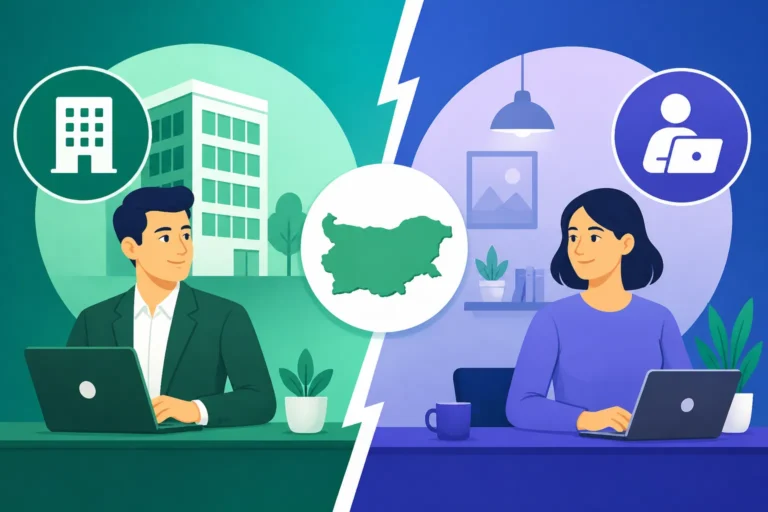
Alright, let's get down to brass tacks. The fundamental thing to grasp about working legally in Bulgaria is that it largely depends on where you're from. Bulgaria, being a member of the European Union, has different rules for EU/EEA/Swiss citizens compared to those from outside this bloc, often referred to as "Third-Country Nationals." This distinction is absolutely crucial and will dictate your entire process.
Who Needs a Work Permit and Who Doesn't
For my fellow EU, EEA, and Swiss citizens, I've got some good news: you generally do not need a separate work permit to work in Bulgaria. This is thanks to the principle of free movement of workers within the EU. You have the same rights as Bulgarian citizens when it comes to seeking and taking up employment. However, don't let that fool you into thinking it's entirely paperwork-free. You'll still need to register your residence with the Migration Directorate if you plan to stay for more than three months, and get a Bulgarian personal identification number (EGN) and a BULSTAT number if you're working. It's not a work permit, but it's still an administrative hurdle you'll need to jump. You can dive deeper into this process by reading about how to register as an EU Citizen Living in Bulgaria.
Now, for Third-Country Nationals – that's anyone from outside the EU/EEA/Switzerland – the situation is quite different. You absolutely do need a specific type of authorization to work legally in Bulgaria. For most, this comes in the form of a "single permit" for residence and work. This permit combines your right to live and work in Bulgaria into one document, simplifying (in theory, at least!) what used to be a two-step process. Exceptions do exist, such as for diplomatic personnel, certain researchers, or those under specific international agreements, but for the vast majority of regular employment, a single permit is your golden ticket. It's a significant process, and understanding the nuances of how a work permit and single permit work for non-EU workers in Bulgaria is vital.
The Legal Framework: What Bulgarian Law Says
The primary piece of legislation governing foreign workers in Bulgaria is the Labour Migration and Labour Mobility Act. This law sets out the conditions and procedures for both EU and non-EU citizens to work here. What's often frustrating for foreigners is that the onus of obtaining the work authorization for Third-Country Nationals largely falls on the employer. This isn't like some countries where you arrive, find a job, and then apply for your own permit. Here, your prospective employer in Bulgaria must initiate the process, proving to the Bulgarian authorities that they need to hire you over a Bulgarian or other EU citizen.
The key players in this legal dance are the National Employment Agency (Агенция по заетостта) and the Ministry of Interior's Migration Directorate (Дирекция "Миграция" към МВР). The Employment Agency reviews the labour market aspect, ensuring no qualified Bulgarians are overlooked. The Migration Directorate then handles the residence part, granting you the right to live here once the work aspect is approved. It's a complex, multi-layered system, and understanding it can feel like trying to solve a Rubik's Cube blindfolded.
Navigating the "Single Permit" for Third-Country Nationals
If you're a Third-Country National looking to work in Bulgaria, the single permit is your primary route. But be warned, it's not a straightforward stroll in the park. It's a process that requires patience, meticulous document preparation, and a very proactive employer.
The Employer's Crucial Role in the Application Process
I cannot stress this enough: your Bulgarian employer is your absolute linchpin in this whole process. Without them, you literally cannot begin. They are the ones who must prove to the Bulgarian authorities that there's no suitable local candidate for the job you've been offered. This is typically done through what's called a "market test" or labour market analysis, where the job opening is advertised for a certain period, usually at the Employment Agency, to see if any Bulgarian or EU citizens apply and are suitable.
Here's a simplified (but still complex) breakdown of what your employer generally needs to do:
- Job Advertisement and Market Test: The employer must advertise the position in Bulgaria for a specified period (often 15 working days). This is to demonstrate that no Bulgarian or EU/EEA/Swiss citizen could fill the role.
- Document Gathering: Your employer will collect a mountain of documents from you and their own company. This includes your detailed CV, proof of your qualifications (often requiring official legalisation or apostille), a copy of your passport, and the job contract itself. They'll also need company registration documents, proof of financial stability, and a detailed justification for why they need you.
- Application to the Employment Agency: Once the market test period is over and assuming no suitable local candidates were found, the employer submits the comprehensive application package to the National Employment Agency. This is where the work authorization part of the single permit is reviewed.
- Positive Conclusion and Migration Directorate: If the Employment Agency gives a positive conclusion, this is then forwarded to the Migration Directorate. Only then can the Migration Directorate proceed with the residence permit aspect of your single permit.
This entire process can take several months, and it's not uncommon for employers to be unfamiliar with the precise steps, leading to delays. It's essential to communicate constantly with your prospective employer and encourage them to work with an immigration lawyer or a specialist firm like Taxes for Expats to ensure everything is done correctly the first time.
Key Documents You'll Need to Prepare
While your employer handles the bulk of the submission, you, as the applicant, have a significant role in providing the correct documents. And let me tell you, Bulgarian bureaucracy loves documents. Here’s a general list of what you can expect to be asked for:
- Valid Passport: With at least six months validity beyond your intended stay.
- Educational Diplomas and Certificates: These often need to be legalized with an apostille (if your home country is part of the Hague Apostille Convention) or full legalisation through the Bulgarian embassy/consulate in your country and the Ministry of Foreign Affairs in Bulgaria. You might also need to get your foreign qualification recognised in Bulgaria. This step alone can be a major headache.
- Detailed CV: Often matching the format preferred in Bulgaria, highlighting relevant experience.
- Proof of Sufficient Funds: While your employer is offering you a salary, you might need to show you have funds for your initial period in Bulgaria until you receive your first salary.
- Proof of Accommodation: A rental contract or a declaration from your employer about provided housing.
- Clean Criminal Record Certificate: Issued by your home country, and again, often requiring apostille/legalisation.
- Medical Certificate: Confirming you don't suffer from certain infectious diseases.
- Job Offer/Contract: A signed employment contract with your Bulgarian employer.
- Passport-Sized Photos: Usually specific dimensions.
All foreign language documents will need to be translated into Bulgarian by a sworn translator and certified, typically by a notary public. Don't underestimate the time and cost involved in getting all these documents in order!
The Timeline and Potential Hurdles
Honestly, predicting the exact timeline for a single permit application is like trying to guess the Bulgarian weather – it can be wildly unpredictable. While official guidelines might suggest a certain processing time (e.g., within 2-3 months after submission), real-world experience often sees it stretching longer. Factors like the completeness of the application, the workload of the agencies, and any national holidays can all affect the speed.
Common hurdles include:
- Incomplete Documentation: Even a minor omission can send your application back to square one.
- Market Test Issues: If a Bulgarian or EU citizen is deemed qualified and available, your application might be rejected, and your employer would need to restart the process or look for a different justification.
- Quotas: Bulgaria, like other EU countries, can have quotas for foreign workers in certain sectors or overall.
- Employer Inexperience: As mentioned, if your employer hasn't done this before, they might make mistakes that cause delays.
- Visa D Requirements: Remember, after your single permit is approved, you'll still need to apply for a Type D (long-stay) visa at a Bulgarian embassy or consulate in your home country before you can actually enter Bulgaria to collect your permit. This is another waiting period. The complete visa and immigration guide for relocating to Bulgaria explains this in detail.
My advice? Start early, prepare thoroughly, and develop a strong working relationship with your employer. Patience isn't just a virtue here; it's a necessity.
Special Cases and Exceptions
While the single permit covers most Third-Country Nationals, there are other scenarios that come with their own set of rules and nuances. It’s important to understand these as they might apply to your specific situation.
EU/EEA/Swiss Citizens: Freedom of Movement (Mostly)
As I mentioned earlier, if you're an EU, EEA, or Swiss citizen, you have the fundamental right to work in Bulgaria without a separate work permit. This is one of the core tenets of the European Union. However, this doesn't mean you just waltz in and start working without any administrative steps. If you plan to stay in Bulgaria for more than three months, you must register your residence with the Migration Directorate. This involves presenting your passport or ID card, proof of sufficient funds (or an employment contract), and proof of accommodation.
Once you have your registration certificate (often called a "blue card" or "certificate of residence"), you'll also need to obtain a Bulgarian personal identification number (EGN), which is crucial for everything from opening a bank account to accessing healthcare. If you're employed, your employer will register you with the National Revenue Agency (NRA) and ensure you start making social security and health contributions. While not a "work permit," these steps are essential for ensuring your legal status as a working resident in Bulgaria. You can learn more about the overall process of working in Bulgaria as a foreigner in our comprehensive guide.
Highly Qualified Specialists and the EU Blue Card
For those with higher education qualifications and a job offer meeting a specific, higher salary threshold (at least 1.5 times the average gross salary in Bulgaria), the EU Blue Card offers a potentially more streamlined route. This is a residence and work permit for highly qualified non-EU nationals. The benefits include easier family reunification, simplified procedures for changing employers, and recognition across most EU member states.
The application process for an EU Blue Card still largely involves your employer, similar to the single permit, but it’s geared towards attracting and retaining skilled professionals. The key difference lies in the educational and salary requirements. If you believe you fit this profile, it’s worth discussing with your prospective employer, as it can offer some advantages over the standard single permit. For a deeper dive, check out how to apply for the EU Blue Card in Bulgaria.
Self-Employment, Freelancing, and Digital Nomads
This is where things can get a bit more complex, as traditional "work permits" are usually tied to an employment contract with a Bulgarian company.
-
Self-Employed/Freelancer: If you intend to work for yourself, offering services to multiple clients (Bulgarian or international), you'll typically need to register as a sole trader (ЕТ – Едноличен търговец) or as a freelancer (свободна професия). This isn't a "work permit" in the traditional sense, but rather a business registration that grants you the right to operate and earn income. The immigration route for this category generally falls under a different type of residence permit, often requiring proof of business activity, a solid business plan, and sufficient funds. You can find detailed information on how to register as a freelancer (Свободна Професия) in Bulgaria. When you're self-employed, managing your tax obligations becomes even more critical; services like Taxes for Expats can be incredibly helpful here.
-
Digital Nomads: Bulgaria has made strides in attracting digital nomads, offering a dedicated visa and residence permit. If you work remotely for a company outside Bulgaria or run your own online business with no Bulgarian clients, this might be your best bet. The requirements typically include proof of stable income from abroad, comprehensive health insurance, and a clean criminal record. This is distinct from a work permit for traditional employment, acknowledging the evolving nature of global work.
Life Beyond the Permit: What Comes Next
Getting your work permit or residence certificate is a huge milestone, but it's just the beginning of your journey as a working expat in Bulgaria. There's a whole new world of administrative and cultural norms to navigate.
The Importance of Social Security and Taxes
Once you start working legally in Bulgaria, whether as an employee or self-employed, you'll be integrated into the national social security and tax system. This means mandatory contributions to the National Health Insurance Fund (NHIF) and various social security funds (pension, unemployment, etc.). These contributions are crucial as they grant you access to public healthcare and contribute to your future pension entitlements. Understanding mandatory health insurance contributions in Bulgaria is a non-negotiable part of settling in.
Bulgaria is famous for its flat 10% personal income tax rate, which is relatively low compared to many other European countries. However, understanding how this flat tax applies to your specific income, especially if you have foreign income, is paramount. Your employer will usually handle income tax and social security deductions from your salary directly. If you're self-employed, you'll be responsible for calculating and paying these yourself. This is another area where specialized services, perhaps through an expat-focused financial advisor or a platform like Taxes for Expats, can be invaluable to ensure compliance with the Bulgarian National Revenue Agency. Our complete guide to taxes in Bulgaria for expats delves into all the details, especially regarding income tax and the flat 10% rate.
Adapting to the Bulgarian Workplace Culture
Moving to a new country isn't just about documents; it's about embracing a new way of life, and that extends significantly to the workplace. Bulgarian workplace culture, while increasingly modern, still retains certain characteristics that might differ from what you're used to. You might find a more hierarchical structure, with decisions often coming from the top. Communication styles can sometimes be more direct, but also value subtlety and personal relationships.
Learning even basic Bulgarian phrases can make a huge difference in your daily interactions and can be incredibly valuable in the workplace, fostering better relationships with colleagues. Platforms like iTalki can be a great resource for finding Bulgarian language tutors. Beyond language, understanding local customs, holiday traditions, and even the subtle art of coffee breaks can help you integrate more smoothly. Take the time to observe, ask questions, and be open to different ways of doing things. Our post on how to adapt to the Bulgarian workplace culture is a useful read for preparing yourself.
Key Takeaways for Working in Bulgaria
| Category | EU/EEA/Swiss Citizens | Third-Country Nationals |
|---|---|---|
| Work Permit Required? | No, free movement of workers. | Yes, typically a "Single Permit" or EU Blue Card. |
| Residence Registration | Mandatory if staying over 3 months (Migration Directorate). | Mandatory for all, part of the Single Permit application. |
| Who Initiates Process? | You (for residence registration). | Your employer (for work authorization). |
| Key Documents | Passport/ID, proof of funds/employment, accommodation. | Passport, education, CV, criminal record, job offer, etc. |
| Main Challenge | Administrative registration (EGN, BULSTAT). | Lengthy employer-led application, document legalisation. |
| Post-Approval | Enjoy work rights, register for social security. | Apply for Type D visa, then pick up permit, register. |
Disclaimer
Please note that while I strive to provide accurate and up-to-date information, immigration laws and procedures in Bulgaria can change. This guide is for informational purposes only and does not constitute legal advice. It is always recommended to consult with a qualified immigration lawyer or the official Bulgarian authorities (e.g., the National Employment Agency or Migration Directorate) for advice tailored to your specific situation.