How a Work Permit and Single Permit Work for Non-EU Workers in Bulgaria
Navigating the labyrinthine world of Bulgarian immigration and work regulations can feel like a full-time job in itself for non-EU citizens. The journey to legally work in Bulgaria often starts with a single, often confusing, question: Do I need a work permit or a single permit? This guide aims to demystify the process, offering a clear, empathetic roadmap for third-country nationals looking to establish their professional life in this beautiful, yet bureaucratically challenging, country.
Understanding the Basics: Work Permits vs. Single Permits
For those of us who've been through the Bulgarian immigration system, we know that rules and terminology can change, often without much fanfare or clear explanation. It's easy to get lost in the jargon, but understanding the fundamental difference between a "work permit" and a "single permit" is crucial for any non-EU national looking to work here.
The Evolution of Work Authorisation
Once upon a time, non-EU nationals often had to navigate a two-step process: first, secure a separate work permit from the National Employment Agency (now part of the Employment Agency), and then use that permit as a basis to apply for a long-stay D visa and subsequently a residence permit. It was a fragmented system, often leading to delays, duplicated efforts, and more than a few frustrated sighs. Employers would apply on behalf of the foreigner for the work permit, which, once granted, would then allow the individual to proceed with their visa application in their home country. This created a situation where you had a work authorisation, but not yet the legal right to reside and therefore actually use that authorisation in Bulgaria. It was a classic "chicken or egg" scenario that many of us expats recall with a slight shudder.
This older system meant a lot of back-and-forth between different institutions and often lengthy processing times, making it incredibly difficult for both employers and prospective employees to plan effectively. Imagine getting the green light for a job, only to be told you then have another multi-month process just to get permission to live here. It was certainly not designed for efficiency, and it certainly didn't make Bulgaria feel like the most welcoming place for international talent, despite its competitive business environment.
The Unified Approach: The Single Permit
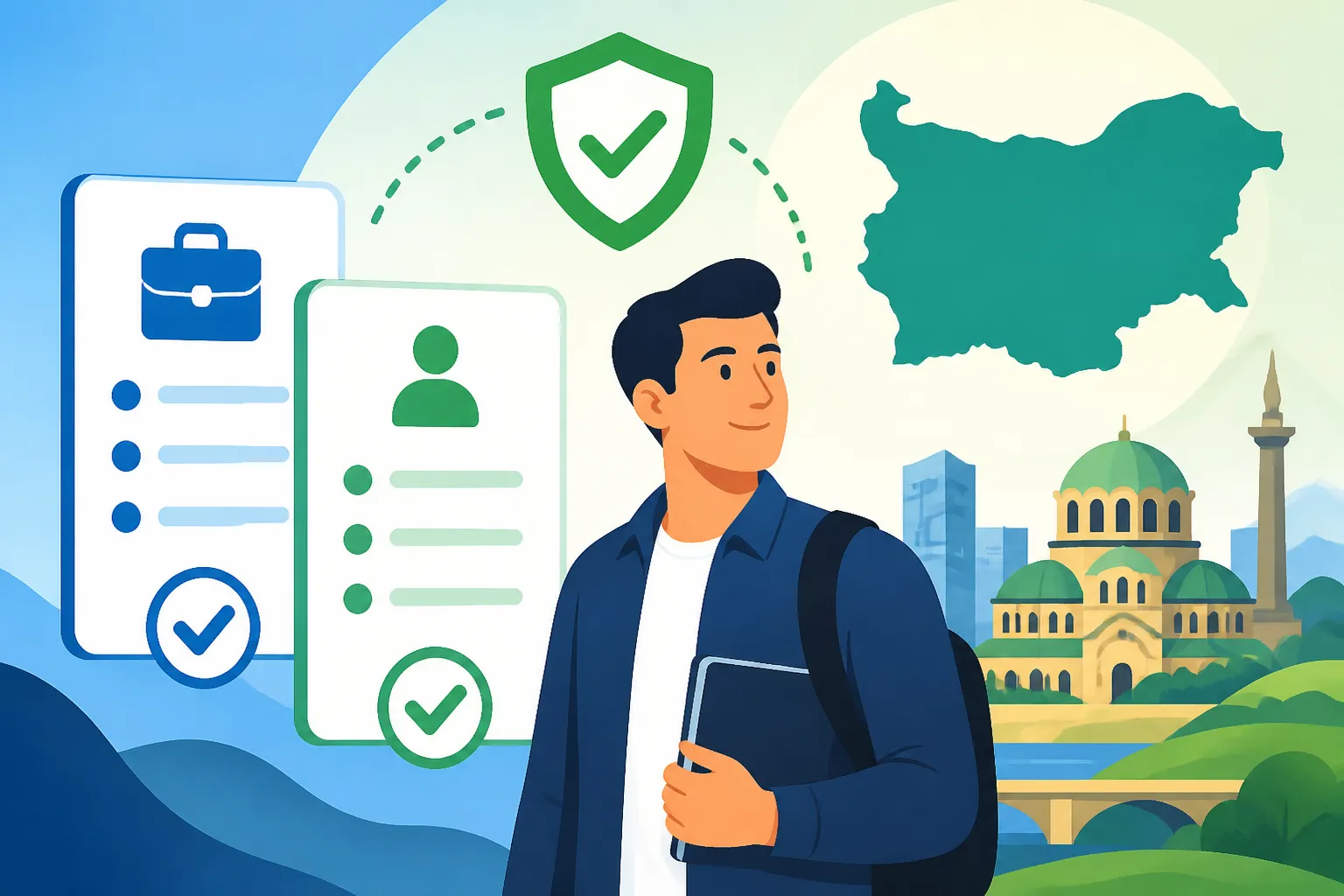
Thankfully, for most non-EU workers today, the system has largely shifted to the "Single Permit" (Единно разрешение за пребиваване и работа). This was introduced to simplify and streamline the process, combining the work authorisation and the residence permit into one single document. Essentially, it allows third-country nationals to legally reside and work in Bulgaria for a specific employer in a specific role, all under one umbrella approval. This change aligns Bulgaria with broader EU directives aiming to make it easier for skilled workers from outside the EU to contribute to member state economies.
The Single Permit is applied for at the Migration Directorate, usually after your employer has initiated the process by submitting the necessary documentation to the Employment Agency. Once approved by the Migration Directorate, it then forms the basis for you to apply for your long-stay D visa from your country of origin. This means you only need one core approval that covers both your right to live and your right to work, drastically cutting down on the bureaucratic hurdles compared to the old dual-permit system. It’s a huge step forward, though it still requires meticulous attention to detail and patience, as anyone who has dealt with Bulgarian administration can attest.
Eligibility and Requirements for Non-EU Citizens
So, who exactly needs a Single Permit, and what hoops do you need to jump through to get one? The process is specifically designed for "third-country nationals"—that’s anyone who isn't a citizen of an EU member state, the European Economic Area (Iceland, Liechtenstein, Norway), or Switzerland. If you're from the UK, USA, Canada, Australia, India, South Africa, or pretty much anywhere outside the EU bloc, this section is for you.
General Criteria for Applicants
Before you even start thinking about paperwork, there are some fundamental criteria you'll need to meet. First and foremost, you need a bona fide job offer from a Bulgarian employer. This isn't a visa for job-hunting once you arrive; it's contingent on secured employment. The employer plays a pivotal role, as they are largely responsible for initiating the application process on the Bulgarian side. They need to prove that the position couldn't be filled by a Bulgarian or EU/EEA/Swiss citizen after a thorough search, which often involves advertising the role publicly. This "labour market test" is a standard requirement, ensuring that the local workforce is prioritised.
Beyond the job offer, you'll need to demonstrate you have suitable qualifications for the role, a clean criminal record (usually requiring an apostilled police certificate from your home country), and sufficient financial means to support yourself, although your salary from the Bulgarian employer will usually satisfy this. You’ll also need to prove you have secure accommodation in Bulgaria, which can be a rental contract or a declaration from your employer if they are providing housing. It's a comprehensive check, ensuring that only those with legitimate reasons and resources are granted permits. For more general guidance on the big move, check out our piece on how to apply for a temporary residence permit in Bulgaria.
Specific Requirements for Different Roles
While the general framework applies, the specifics can vary depending on the type of work you'll be doing. Bulgaria, like many EU countries, has specific pathways for highly skilled workers, often under the EU Blue Card scheme, which offers advantages like easier family reunification and potential fast-tracking. These roles typically require a university degree or equivalent professional experience, and a salary that is at least 1.5 times the average gross annual salary in Bulgaria, as determined by the National Statistical Institute. If you’re a highly-skilled professional, this might be your best bet.
Conversely, there are also provisions for seasonal workers, ICT (Intra-Corporate Transfer) transferees, and even certain categories of students. Each of these categories will have slightly different evidentiary requirements concerning qualifications, salary thresholds, and the duration of the permit. For example, seasonal work permits are, by their nature, short-term and tied to specific industries like agriculture or tourism. It's vital to clearly understand which category your employment falls into, as this will dictate the precise list of documents and specific forms you and your employer will need to prepare. Make sure your employer is well-versed in these distinctions, or consider consulting an immigration lawyer in Bulgaria.
The Application Process: Step-by-Step Guide
The journey to your Single Permit and D visa can feel like a marathon, but breaking it down into manageable steps makes it less daunting. Remember, patience is your best friend here.
Gathering Your Documents: The Paper Chase
This is where the real fun begins – the document collection! Both you and your employer will have a substantial list of items to compile. For you, this typically includes your passport (valid for at least 6 months beyond your intended stay), a detailed CV, copies of your educational diplomas and professional qualifications (often requiring official translations into Bulgarian and an Apostille stamp for international legalisation). You'll also need a police clearance certificate from your country of origin, again, usually needing translation and apostille. Proof of accommodation, like a rental agreement, and evidence of sufficient financial means, if not covered by your salary, are also crucial. Don't forget passport-style photos meeting specific Bulgarian requirements – they're surprisingly particular about these!
Your employer’s responsibilities are equally significant. They must provide copies of their company registration documents, a detailed job description, and proof that they’ve conducted the labour market test (i.e., advertised the position and found no suitable Bulgarian or EU candidates). They’ll also need to prepare a draft employment contract and a declaration stating their commitment to employing you. Getting all these documents in order can be a lengthy process, often taking several weeks or even months, especially when translations and apostilles are involved. This is also a good time to consider how your earnings here will affect your tax obligations, and resources like Taxes for Expats can provide invaluable guidance for understanding your specific situation.
Initial Employer Application to the Employment Agency
Before you can even apply for your D visa, your employer needs to kick things off in Bulgaria. They submit a comprehensive application package to the Employment Agency, detailing the job, your qualifications, and justifying why a non-EU national is needed. This is the stage where the "labour market test" mentioned earlier is reviewed. The agency assesses whether the position genuinely requires your unique skills or if it could be filled locally. This phase is critical, as a positive decision from the Employment Agency is a prerequisite for proceeding with the Single Permit application at the Migration Directorate.
This step alone can take anywhere from a few weeks to over a month. The Employment Agency might request additional documents or clarifications, adding to the timeline. It's a review of necessity and suitability, ensuring that foreign workers are brought in to fill genuine skill gaps rather than displace local labour. Once the Employment Agency gives its approval (often a positive statement or decision), your employer can then proceed to the next stage with the Migration Directorate.
Applying for the Single Permit and D Visa
Once your employer has the green light from the Employment Agency, they then submit a full Single Permit application to the regional Migration Directorate in Bulgaria. This application includes all the documents you’ve gathered, along with their company paperwork. The Migration Directorate reviews everything, and if all is in order, they issue a positive decision for the Single Permit. This decision is then forwarded to you.
With the Single Permit approval in hand, you can finally apply for your Type D long-stay visa at the Bulgarian embassy or consulate in your home country. This visa is what allows you to enter Bulgaria with the intention of taking up residence and work. You'll typically need to submit your passport, the Single Permit approval, proof of financial means (usually your future salary), health insurance for the entire duration of your visa, and proof of accommodation. The Type D visa processing can also take several weeks, so factor that into your planning. Once issued, you can travel to Bulgaria, and upon arrival, you have a short window (usually seven days) to register your address with the local police and then apply for your actual residence card at the Migration Directorate office. For more specifics on the visa application, you can check out our article on How to Apply for a Type D Long-Stay Visa for Bulgaria.
Common Challenges and How to Overcome Them
No expat journey to Bulgaria is entirely smooth, and the permit process is often where the first real test of patience occurs. It’s important to anticipate potential hurdles so you can navigate them with a clear head.
The Bureaucracy and Language Barrier
Let's be real, Bulgarian bureaucracy can be… an experience. Forms often need to be filled out meticulously in Bulgarian, and even when you think you've got everything right, a small detail can lead to delays. Many officials might not speak English, and even if they do, the official communication will always be in Bulgarian. This can lead to misunderstandings, especially when dealing with nuanced legal requirements. This is where an English-speaking intermediary or a trusted Bulgarian colleague becomes invaluable. Having someone who can read, understand, and communicate effectively in Bulgarian on your behalf can save immense stress and time.
Don't underestimate the power of a good translator or a language exchange partner. Even learning a few key phrases can significantly improve your interactions. Services like iTalki can be incredibly useful for picking up some basic Bulgarian or even getting quick translation help for specific documents or phrases. Remember, while it can be frustrating, the officials are simply following established procedures, and approaching them with politeness and clearly presented information (even if translated) will always yield better results.
Document Issues and Delays
Ah, the documents. This is often the biggest bottleneck. Common issues include incorrect translations, missing apostilles (that official stamp that legalises foreign documents for use in Bulgaria), expired certificates, or even just submitting photocopies when originals are required. Each minor error can send you back to the beginning of a particular step, adding weeks or even months to the overall timeline. For example, a police certificate might need to be less than three or six months old, and if it expires during the process, you'll need a new one.
To mitigate this, create a checklist and double-check everything before submission. When commissioning translations, always use certified translators who are registered with the Bulgarian Ministry of Foreign Affairs. For apostilles, ensure they are applied correctly by the issuing authority in your home country. Proactive communication with your employer or legal representative is crucial to stay ahead of potential expiry dates or new document requirements. It's not uncommon for the Migration Directorate to request further documents even after an initial submission, so be prepared for some back-and-forth. You can find more comprehensive details on how to get your documents apostilled for Bulgaria immigration.
Employer Cooperation and Support
Your employer's role in this process cannot be overstated. They are your primary link to the Bulgarian system and bear a significant administrative burden. Unfortunately, some employers might be unfamiliar with the process, or lack the internal resources to handle it efficiently. This can lead to delays, errors, and a general feeling of being unsupported. If your employer is new to hiring non-EU nationals, they might require more hand-holding or even external legal counsel.
It's vital to have open and honest communication with your prospective employer from the outset. Clarify who will be responsible for which parts of the application, who will cover the costs (visa fees, translations, legal fees), and what the expected timeline is. If possible, seek an employer with a proven track record of successfully bringing in foreign talent. If issues arise, a collaborative approach is always best. Remember, they want you to work for them, so they have an incentive to see the process through, but sometimes they just need a nudge or some clear instructions on what you need from them.
Life After Approval: Rights and Responsibilities
Congratulations, you've made it! You have your Single Permit and your shiny new residence card. But what exactly does that mean for your life in Bulgaria? It's important to understand your rights and the responsibilities that come with your new status.
Your Rights as a Single Permit Holder
As a Single Permit holder, you have the right to legally reside in Bulgaria for the duration of your permit (usually one year, renewable) and to work for the specific employer and in the specific role for which the permit was issued. This is a crucial point: your permit is typically tied to your employer and job title. You are also entitled to access public services, including healthcare, provided you make the mandatory contributions to the National Health Insurance Fund (NHIF). This means you can register with a GP and access treatment under the public system, just like Bulgarian citizens. Understanding mandatory health insurance contributions in Bulgaria is essential for planning your finances and healthcare access.
Beyond that, you have the right to move freely within the Schengen Area for short stays (up to 90 days in any 180-day period) without needing an additional visa, as Bulgaria is part of the Schengen area. This is a huge perk for weekend trips or holidays to neighbouring countries. You also have the same labour rights as Bulgarian citizens, including protections regarding working hours, minimum wage, annual leave, and safe working conditions under Bulgarian labour law. It's empowering to know you have these fundamental rights, ensuring you're not exploited or disadvantaged simply because you're a foreigner.
Mandatory Contributions and Tax Obligations
One of your primary responsibilities as a legal worker in Bulgaria is to contribute to the social security and health insurance systems. If you are employed under a standard labour contract, your employer will automatically deduct these contributions from your gross salary. These include contributions for pension, general illness and maternity, unemployment, and health insurance. The rates are fixed by law and are a significant part of your overall cost of employment, although they are mostly covered by employer contributions.
Regarding income tax, Bulgaria famously boasts a flat 10% personal income tax rate, which is one of the lowest in the EU. Your employer will also deduct this directly from your salary through the PAYE (Pay As You Earn) system. At the end of the tax year, you might need to file an annual tax return with the National Revenue Agency (NRA), especially if you have other sources of income or wish to claim any specific deductions. Understanding income tax and the flat 10% rate in Bulgaria (2026) is vital for managing your finances. For many expats, especially those with international assets or income, navigating these tax obligations can be complex. Consulting with specialists like Taxes for Expats can help ensure you remain compliant with both Bulgarian and your home country's tax laws.
Renewals, Changes, and Pathways to Long-Term Stay
Your initial Single Permit is generally valid for one year, but life is rarely static. You might want to stay longer, change jobs, or even bring your family over. Understanding the processes for renewal, making changes, and pursuing longer-term residency is key to a stable life in Bulgaria.
Renewing Your Single Permit
The good news is that Single Permits are renewable, provided you still meet the initial conditions. You should start the renewal process well in advance of your permit’s expiry date – typically at least two to three months before. The application for renewal is submitted to the Migration Directorate, and it essentially mirrors the initial application, requiring updated documents from both you and your employer. You'll need an updated employment contract, proof of continued employment, valid health insurance, and proof of ongoing accommodation.
The Migration Directorate will review your file to ensure you've been compliant with the terms of your previous permit and that your employment situation remains stable. It’s crucial not to let your permit expire before applying for renewal, as this can lead to legal complications, including fines and even a requirement to leave the country. Keep a meticulous record of all your documents and their expiry dates. Staying on top of this ensures a smooth transition from one permit period to the next. For more details on the renewal process, consult our guide on How to Renew Your Residence Permit in Bulgaria.
Changing Jobs or Employers
This is one of the trickiest aspects. Since your Single Permit is typically tied to a specific employer and job role, changing jobs usually means undergoing a new application process. You can't simply resign from one company and start at another on the same permit. If you wish to change employers, your new prospective employer will need to initiate a fresh Single Permit application on your behalf, starting with the Employment Agency, just as they would for a new applicant from outside Bulgaria. This can be frustrating, as it means another period of waiting and paperwork.
In some cases, if the job role is very similar, and the change is within the same sector, the process might be slightly expedited, but generally, expect to go through the full application again. There are limited exceptions, such as highly-skilled workers on an EU Blue Card, who might have more flexibility after a certain period. Always consult with the Migration Directorate or an immigration lawyer before making any job changes to understand the specific implications for your permit status. This is not a step to take lightly without proper planning.
Pathways to Long-Term Residence and Citizenship
After residing legally in Bulgaria for a continuous period, non-EU citizens can become eligible for more stable residency statuses, specifically Long-Term Residence and eventually Permanent Residence. Generally, after five years of continuous legal residence on a temporary permit (like the Single Permit), you can apply for Long-Term Residence. This status offers more rights, similar to EU citizens, including greater flexibility in the labour market and enhanced social benefits. Once you have held Long-Term Residence for five years, or after a total of ten years of continuous legal residence, you might then be eligible to apply for Permanent Residence, which is the closest status to citizenship without actually naturalising.
Permanent Residence in Bulgaria grants you almost all the same rights as a Bulgarian citizen, except for voting in national elections and holding a Bulgarian passport. The path to Bulgarian citizenship typically requires holding Permanent Residence for at least five years, along with demonstrating sufficient knowledge of the Bulgarian language, culture, and history, and having a clean criminal record. This entire journey is a significant commitment, but it offers a secure and stable future in Bulgaria for those who choose to make it their long-term home. You can learn more about this by reading The Complete Guide to Long-Term and Permanent Residence in Bulgaria (2026).
Disclaimer
The information provided in this guide is for general informational purposes only and does not constitute legal or professional advice. Immigration laws and regulations in Bulgaria can be complex and are subject to change. While we strive to keep our information accurate and up-to-date, we cannot guarantee its completeness or applicability to your specific situation. It is highly recommended to consult with a qualified immigration lawyer or the official Bulgarian Migration Directorate for personalised advice regarding your individual circumstances.