How Do I Get Medication Delivered to My Home in Bulgaria?
You've been in Bulgaria for a while, perhaps settled, or maybe you're new here, and then it hits: you're under the weather, running a fever, or dealing with a nasty flu. The last thing you want to do is drag yourself out of bed, brave the bustling streets, or navigate public transport just to get a box of paracetamol or that urgent prescription filled. It’s in these moments that the simple convenience of medication delivered right to your door becomes an absolute godsend. But, as with many things here, the path to home medication delivery in Bulgaria isn't always as straightforward as you might hope from your home country. This guide will help you understand the current landscape, your options, and how to navigate getting your essential meds without leaving your comfort zone.
The Bulgarian Pharmacy Landscape and the Shift to Home Delivery
Bulgaria has a well-established network of pharmacies, known locally as аптеки (apteka). For generations, the model has been very much brick-and-mortar. You go to your local pharmacy, hand over your prescription (or ask for over-the-counter meds), and often chat with the pharmacist. It's a personal, community-focused approach. However, for expats, especially those not fluent in Bulgarian or those living in more remote areas, this traditional setup can be challenging when you're feeling unwell.
Historically, home delivery for medication, particularly prescription drugs, wasn't a standard practice in Bulgaria. Regulations around dispensing prescription medicines are quite strict, and for good reason – patient safety is paramount. The idea of simply ordering your antibiotics online and having them dropped off wasn't really a thing for a long time. This is where many expats often hit a wall, expecting the same seamless service they might have been used to in Western Europe or North America. The good news is, like much of the world, Bulgaria is slowly adapting. The COVID-19 pandemic certainly pushed things forward, highlighting the need for remote services and reducing physical contact. Some pharmacies, particularly larger chains and those in bigger cities like Sofia or Plovdiv, have started to explore and offer limited delivery options.
But it’s not a universal service yet. Don't expect every apteka on every corner to have a delivery person on standby. It often requires a bit of digging, asking the right questions, and sometimes leveraging technology or local connections. Understanding the nuances of the local system, which is covered in detail in our guide on Prescription Medications and Pharmacies in Bulgaria: The Complete Guide, is your first step.
Navigating Your Options for Medication Delivery
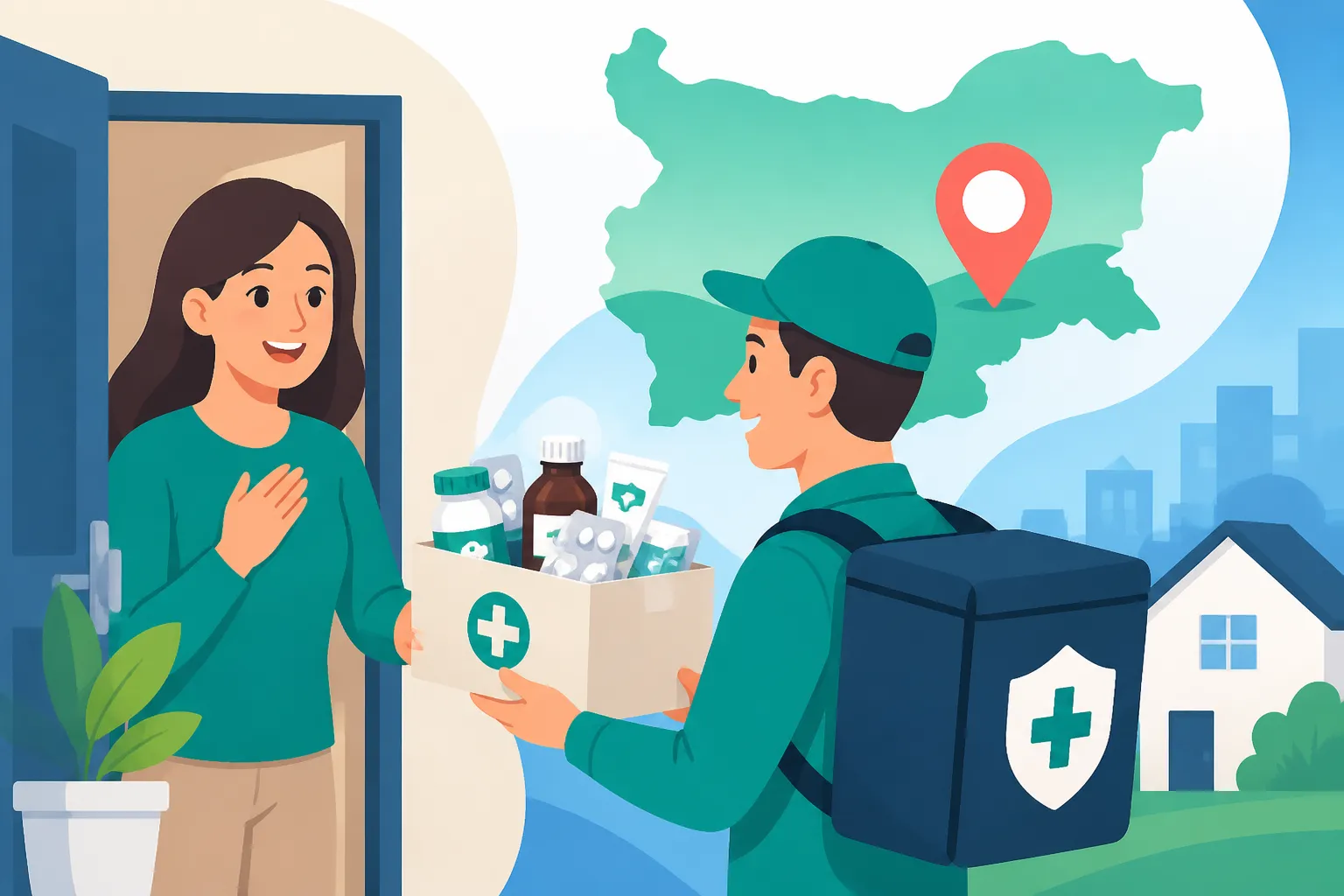
While not as widespread as in some other countries, several avenues are opening up for getting your medication delivered to your home in Bulgaria. It's about knowing where to look and what to ask.
Local Pharmacy Delivery Initiatives
Some individual pharmacies, particularly smaller, independent ones in residential neighborhoods, might offer an informal delivery service, especially to their regular customers or the elderly. This is less about a formal system and more about community spirit. If you have a trusted local pharmacy where you regularly fill prescriptions, it's worth asking them directly.
For instance, if you live in a smaller town or a specific kvartal (neighborhood) in a big city, pop into your nearest apteka when you're well and ask, "Имате ли доставка до дома?" (Do you have home delivery?) or "Мога ли да поръчам лекарства с доставка?" (Can I order medicines with delivery?). Even if they don't have a dedicated service, they might be willing to help out in a pinch, especially if you're a familiar face. This is particularly true for non-prescription items. For prescription medications, they will still need a valid prescription, and you’ll likely need to pre-arrange how they receive it.
Online Pharmacies with Delivery Services
This is where the biggest shift is happening. While comprehensive online pharmacies that deliver all types of prescription medications nationwide are still somewhat rare due to regulatory hurdles, some larger chains and dedicated online platforms are starting to offer more. You’ll typically find it easier to order over-the-counter medications, health supplements, cosmetics, and certain medical devices this way.
Companies like ePharmacy.bg or Subra.bg (the online presence of the large Subra pharmacy chain) often allow you to browse a vast catalog and place orders for non-prescription items. They typically use standard courier services for delivery, meaning you can get everything from vitamins to bandages delivered. For prescription items, the process is trickier. Some might allow you to upload an electronic prescription (e-prescription), but then require verification upon delivery, or mandate that you physically present the original paper prescription to the courier. This defeats some of the convenience, but it's a necessary step to ensure legal compliance. Always check their specific policies before assuming you can get your prescribed antibiotics delivered with just a click.
It’s crucial to remember that buying prescription medication without a valid prescription, even online, is illegal in Bulgaria and for good reason. Always ensure you have a legitimate prescription from a registered Bulgarian doctor, whether it's a paper one or an electronic one. If you're struggling to get to a doctor, our guide on How to Find an English-Speaking Doctor in Bulgaria can be incredibly helpful.
Third-Party Courier Services and Personal Shoppers
If a specific pharmacy doesn't offer delivery, but you have a prescription and know exactly what you need, you might be able to leverage a third-party courier or personal shopper service. Apps like Glovo or Foodpanda, which are popular for food delivery, have sometimes expanded into pharmacy runs in bigger cities.
How this usually works:
- Get your prescription: Obtain a valid prescription from your doctor. Increasingly, many GPs in Bulgaria use electronic prescriptions (електронна рецепта), which can be sent directly to pharmacies or accessed via a personal health portal. This makes it easier to share with a third party.
- Contact the service: Use the app or call a local concierge/delivery service. Explain that you need medication picked up from a specific pharmacy (providing the address) and delivered to your home.
- Provide prescription details: You’ll need to figure out how to transmit your prescription details to the courier. If it’s an e-prescription, you can usually give them your ЕГН (EGN – Bulgarian personal identification number) and the special prescription code. If it’s a paper prescription, the courier might need to physically collect it from you first, or you might need to arrange for it to be dropped off at the pharmacy beforehand.
- Payment: Be prepared to pay for the medication (and the delivery fee) either through the app, with cash upon delivery, or by transferring funds to the courier.
This method often works best for non-urgent situations and in larger urban centers where these services are readily available. It's a workaround, but a viable one when you're truly stuck. Remember that the courier is essentially acting as your agent, so ensure you trust the service.
Leveraging Friends, Family, or Expat Networks
Let's be real, sometimes the most reliable delivery service in Bulgaria is a good friend or a kind neighbor. The expat community here is incredibly supportive, and it's not uncommon for people to offer help when someone is unwell. If you're new and don't have a strong network yet, consider reaching out in expat Facebook groups for your city (e.g., "Expats in Sofia," "Plovdiv Expats"). While you should always exercise caution, many people are genuinely happy to lend a hand. This is especially useful if you're dealing with a sudden illness and don't have time to navigate the more formal delivery options.
Practicalities: Prescriptions, Payments, and Insurance for Delivery
Getting your medication delivered is one thing, but making sure you have the right prescription, can pay for it, and understand your insurance coverage adds another layer of complexity.
The Bulgarian Prescription Process
As an expat, you'll primarily interact with two types of prescriptions:
- Paper Prescriptions: These are the traditional slips of paper signed and stamped by your doctor. You present this to the pharmacist. For home delivery via a courier, you'd need to arrange for the courier to take this physical paper to the pharmacy, which can be logistically challenging.
- Electronic Prescriptions (Електронна Рецепта): These are becoming increasingly common. Your doctor generates a digital prescription, which is then uploaded to the national health information system. You receive a unique code (or the pharmacist can access it using your EGN). This is a game-changer for delivery, as you only need to provide your EGN and the prescription code to the courier or pharmacy. To learn more about how to access your doctor and prescriptions, check out How to Choose and Register with a GP (Личен Лекар) in Bulgaria.
Always clarify with your doctor whether you’re getting a paper or electronic prescription. For delivery, the electronic version is significantly easier to manage.
Payment Methods
When ordering medication for delivery, payment methods can vary:
- Cash on Delivery (COD): This is very common in Bulgaria. The courier or delivery person collects payment in cash when they drop off the medication. Make sure you have the exact amount, as they might not always carry change.
- Online Payment: If you're ordering from a formal online pharmacy, you'll likely have the option to pay by debit or credit card through their website.
- Bank Transfer: For informal arrangements or private couriers, you might transfer the money to them beforehand.
Always confirm the payment method when arranging delivery to avoid any surprises.
Insurance and Reimbursement
Whether you’re covered by the National Health Insurance Fund (NHIF) or have private health insurance, it's important to understand how medication costs and delivery fees factor in.
If you are registered with the NHIF and have a valid GP, your prescription medications might be partially or fully covered, depending on the drug and its classification. You'd typically only pay a co-payment (потребителска такса) or a reduced price. However, the delivery fee itself is almost certainly not covered by the NHIF. That's an out-of-pocket expense. Our comprehensive guide, How Bulgaria's Health System Works: The NHIF and Private Care Explained (2027), offers more details on this.
For those with private health insurance, like some expat-focused plans such as SafetyWing, the situation is similar. Your policy might cover the cost of the medication itself, often requiring you to pay upfront and then submit a claim for reimbursement. Read your policy documents carefully to understand what is covered. It’s highly unlikely that private insurance will cover the delivery fee for medication. The key is to keep all receipts for both the medication and any delivery service, as you'll need these if you plan to claim reimbursement. This applies whether you're using an international plan like SafetyWing or a local Bulgarian private insurer. Understanding Private Health Insurance Plans in Bulgaria can clarify your options.
Table: Comparison of Medication Delivery Options in Bulgaria
| Feature | Local Pharmacy Delivery (Informal) | Online Pharmacies (e.g., ePharmacy.bg, Subra.bg) | Third-Party Couriers (e.g., Glovo, Foodpanda) | Friend/Family/Expat Network |
|---|---|---|---|---|
| Availability | Limited; based on individual pharmacy willingness and location | Growing, especially in larger cities; mostly non-prescription | Major cities; app-based | Varies greatly by personal connections and location |
| Prescription Meds | Possible, often requires physical prescription or e-code | Possible with e-prescriptions or physical verification | Possible, often requires e-prescription code | Easy if they have the physical prescription or e-code |
| Non-Prescription | Possible, easier to arrange | Widely available | Possible | Very easy |
| Cost (Delivery) | Often free or low cost | Standard courier fees (varies) | App-specific delivery fees (can be higher) | Often free, or you reimburse for petrol |
| Payment Options | Cash, sometimes card | Online card payment, sometimes COD | App payment, sometimes COD | Flexible (cash, bank transfer) |
| Speed | Varies (same-day possible) | 1-3 business days | Often same-day (hours) | Highly variable, depends on availability |
| Language Barrier | Direct interaction with pharmacist (can be challenging) | Website in Bulgarian, often English support | App interface often multilingual, driver interaction minimal | Native language often possible |
| Insurance Coverage | Meds potentially covered, delivery not | Meds potentially covered, delivery not | Meds potentially covered, delivery not | Meds potentially covered, delivery not |
| Pros | Personal service, community feel | Convenience of browsing, larger selection of non-Rx | Fastest option for urgent needs in cities | Most empathetic, reliable in a pinch |
| Cons | Not guaranteed, limited reach, language | Prescription process still tricky, delivery time | Can be expensive, requires clear instructions | Relies on goodwill, can feel burdensome |
Tips for Expats Seeking Home Medication Delivery in Bulgaria
Living in a foreign country means constantly adapting. Here are a few seasoned expat tips for when you need meds delivered:
- Establish a Relationship with a Local Pharmacy: If you can, find a pharmacy near your home where you regularly go. Over time, the pharmacists will get to know you, and you might find them more willing to help with an informal delivery arrangement during an emergency.
- Prioritize Electronic Prescriptions: When you visit your GP (and I highly recommend getting one registered, as covered in How to Register with the NHIF and a GP in Bulgaria (2027)), always ask for an електронна рецепта (electronic prescription). This streamlines the process significantly for any form of remote ordering or delivery.
- Have Essential Over-the-Counter Meds on Hand: For common ailments like headaches, colds, or minor stomach issues, keep a basic stock of paracetamol, ibuprofen, anti-diarrhea meds, and oral rehydration salts at home. You can easily buy these online without a prescription.
- Use Translation Apps Wisely: If you're calling a pharmacy or a courier service, have Google Translate or a similar app ready with key phrases. Knowing words like "лекарство" (medication), "доставка" (delivery), "рецепта" (prescription), and "болна съм" (I am sick) can make a huge difference.
- Be Clear and Specific: When explaining your needs, whether to a pharmacist, a courier, or a friend, be as clear and specific as possible about the medication name, dosage, and the pharmacy's address. Write it down if necessary.
- Plan Ahead for Chronic Conditions: If you have a chronic condition that requires regular medication, don't wait until you're down to your last pill. Plan refills well in advance and explore delivery options when you're feeling well, so you're not scrambling when you need it most. This also applies to ensuring your insurance, whether NHIF or a private plan like SafetyWing, is always up to date for routine and unexpected needs.
- Understand Emergency Options: In a true emergency, your priority is medical attention, not home delivery. Know the emergency numbers and protocols, as outlined in Emergency Medical Care in Bulgaria: What Every Expat Needs to Know. For life-threatening situations, call 112 immediately.
Getting medication delivered to your home in Bulgaria might not be as seamless as in some other countries, but it's far from impossible. With a little bit of planning, understanding of the local systems, and perhaps a friendly face to help out, you can ensure you have access to the medicines you need, even when you're feeling your worst. Don't let a minor illness turn into a major headache because you couldn't get your meds. The Bulgarian healthcare system has its quirks, but once you learn to navigate them, it can be quite effective, and affordable too, as highlighted in The Complete Guide to Healthcare in Bulgaria for Expats (2027).
Disclaimer
The information provided in this guide is for general informational purposes only and does not constitute medical, legal, or professional advice. While we strive to provide accurate and up-to-date information, regulations and services in Bulgaria can change rapidly. Always consult with a qualified medical professional, legal expert, or relevant government authority for advice specific to your situation.