How Do I Avoid Losing My Residence by Leaving Bulgaria?
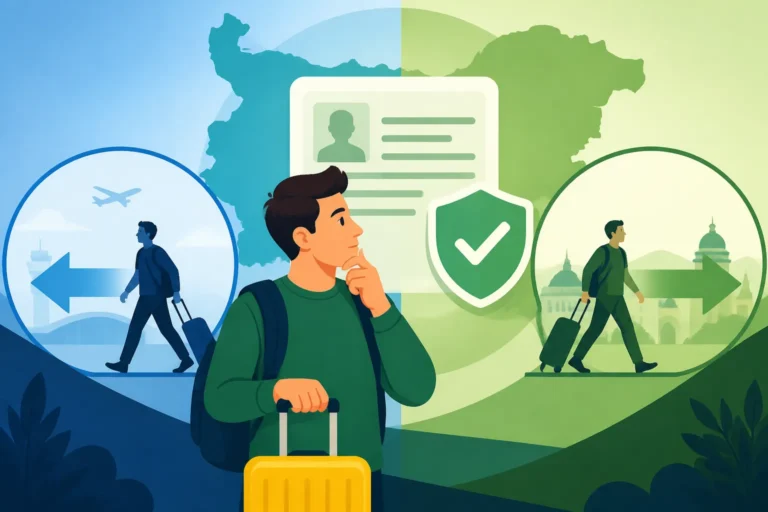
Oh, the expat dilemma! You’ve finally secured your residence permit in Bulgaria, settled in, and maybe even started to feel like you belong. But then life calls – a family emergency back home, a fantastic work opportunity abroad, or simply a desire for a long holiday. Suddenly, you're faced with a nagging worry: "Will I lose my Bulgarian residence if I leave for too long?" This is a perfectly valid and incredibly common concern, and navigating the nuances of absence rules can feel like deciphering an ancient scroll. This guide is here to untangle those rules for you, making sure you understand exactly what you need to do to keep your hard-earned residence status secure, even when you're physically away from the beautiful Bulgarian shores.
Understanding Your Residence Status in Bulgaria
First things first, let’s get a clear picture of what kind of residence you actually hold. Bulgaria, like many countries, has different rules for different types of permits, and confusing them can lead to some truly unwelcome surprises. Knowing the specifics of your permit is your first line of defense against unintentionally jeopardizing your status.
Temporary vs. Permanent Residence: The Key Differences
When you first arrive in Bulgaria and secure your initial long-stay visa (Type D), you’re typically aiming for a temporary residence permit. This is often issued for one year, sometimes less, and needs regular renewal. It's the stepping stone for many expats, whether you're here for work, study, or retirement. The rules for how long you can be absent from Bulgaria on a temporary permit are quite strict, as the authorities expect you to be genuinely residing in the country. The whole point of a temporary permit is to show you’re actively establishing your life here.
On the other hand, if you’ve been living here consistently for five years, you might have applied for a permanent residence permit. This is a much more robust status, granting you similar rights to Bulgarian citizens, with the exception of voting in national elections or holding certain public offices. It’s a huge milestone, a true sign you’ve made Bulgaria your long-term home. Naturally, with greater stability comes a bit more leeway, but even permanent residence has limits on how long you can be absent. It’s not a free pass to disappear for years on end; the country still expects you to maintain a genuine link and presence.
The Importance of Your Residence Document
Your physical residence card – the little plastic card issued by the Migration Directorate – is more than just an ID. It's proof of your status and your right to reside in Bulgaria. Every time you enter or exit the country, border officials will check this document. They record your entry and exit dates, which are crucial for tracking your absences. Losing this card, or letting it expire while you’re abroad, can create an absolute nightmare of bureaucracy upon your return.
Imagine you're trying to re-enter Bulgaria, and your temporary residence card has expired because you miscalculated your absence. Suddenly, you're trying to explain yourself to a border guard who only sees an expired document. This is why it’s paramount to keep track of your card’s validity and understand the implications of your travel patterns on its ongoing status. It’s not just about what’s allowed, it’s about what’s verifiable. We’ve heard countless stories of expats caught in this exact situation, often leading to stressful delays or even refusal of re-entry until the situation is resolved. For a deeper dive into the different types, check out our guide on Understanding Bulgarian Residence Permits: Work, Study and Investment (2027).
Navigating Absences for Temporary Residence Holders
This is where many expats, especially those new to Bulgaria, can easily get tripped up. The rules for temporary residence are designed to ensure you’re truly living in Bulgaria, not just using it as a convenient base while spending most of your time elsewhere.
The "Up to 6 Months" Rule
For most temporary residence permits, the general rule is that you cannot be absent from Bulgaria for more than 6 consecutive months within any 12-month period. This isn't just a suggestion; it's a hard limit. The 12-month period usually refers to the validity period of your current residence permit, or a rolling 12-month window. It means that if your permit is valid from January 1st, 2026, to December 31st, 2026, you cannot be outside Bulgaria for more than 183 days in total during that year.
Let’s break this down with an example. Suppose you have a temporary residence permit valid for one year. You leave Bulgaria in January for a three-month trip. You return in April, stay for a month, then leave again in May for another four months. When you attempt to re-enter in September, the border officials will tally up your absences: three months (Jan-Apr) + four months (May-Sept) = seven months. Uh oh, that’s over the six-month limit. In this scenario, your permit could be revoked, or you could be denied re-entry, leading to serious complications. They are very particular about these calculations, so it’s something you absolutely need to track yourself.
When Extended Absences are Permitted and How to Document Them
There are, thankfully, certain exceptional circumstances where longer absences might be permitted, but these are not automatic. You cannot just assume they will understand. These typically involve situations beyond your control or specific purposes that align with Bulgarian interests, such as:
- Serious illness or medical treatment: If you or a close family member requires long-term medical care outside Bulgaria, you might be granted an exception. You would need to provide comprehensive medical documentation, hospital records, and doctor's notes, all officially translated and legalized, explaining the necessity of your absence.
- Study or professional development: If you're undertaking a course of study or a specialized training program abroad that is relevant to your work or personal development and is approved by the Bulgarian authorities, this could be considered. You would need official letters of acceptance, enrollment, and attendance from the educational institution.
- Work assignment: If your Bulgarian employer sends you on an official assignment to another country for a period exceeding the usual limits, you would need official letters from your company clearly stating the purpose, duration, and necessity of your assignment.
In all these cases, the burden of proof is entirely on you. You need to apply to the Migration Directorate before you leave, or at least as soon as the situation arises, to request a special dispensation. Simply showing up at the border with your documents after the fact is usually too late. Always consult with a local immigration lawyer or the Migration Directorate directly if you anticipate needing an extended absence. Trying to navigate this yourself based on hearsay is a recipe for disaster. This is crucial for anyone wondering, "How long Does a Residence Permit Last in Bulgaria?" The answer isn't just the expiry date on the card, but also about your physical presence.
Maintaining Permanent Residence Status While Abroad
Congratulations, you've reached permanent residence! This offers significantly more stability, but it’s not an "anything goes" situation. There are still limits to how long you can be absent from Bulgaria, designed to ensure you maintain a genuine link to the country.
The 12-Month Consecutive Absence Rule
For permanent residents, the most straightforward rule is that you cannot be absent from Bulgaria for a continuous period of 12 months or more. This means if you leave on January 1st, 2026, and don't return by January 1st, 2027, you risk losing your permanent residence status. This is a crucial distinction from temporary permits; it’s about consecutive absence, not cumulative within a shorter period.
This rule is often less forgiving because permanent residence implies a settled life. If you're gone for over a year, it suggests your centre of vital interests might no longer be in Bulgaria. Many expats use this knowledge to strategically plan short trips back to Bulgaria to "break" the 12-month consecutive absence, effectively resetting the clock. A simple weekend trip, crossing the border and returning, can be enough to demonstrate continued presence. However, don't play fast and loose with this. Border stamps are your evidence.
The Total 30-Month Absence Over Five Years
Beyond the consecutive 12-month rule, there's another, more cumulative restriction for permanent residents. You cannot be absent from Bulgaria for more than a total of 30 months within a five-year period. This means all your shorter trips and absences over any five-year span are added up. If that total exceeds 30 months (or two and a half years), your permanent residence status can be revoked.
This rule catches out many expats who might be frequently travelling for work or who split their time between Bulgaria and another country over a longer period. It requires diligent record-keeping on your part. You might return to Bulgaria every 11 months to avoid the consecutive absence rule, but if you do that consistently for five years, you could still hit the 30-month cumulative limit. This is especially relevant for those who live the "digital nomad" lifestyle or have extensive business travel. It’s a subtle but powerful rule that ensures a real long-term commitment to living in Bulgaria. For clarity on how to initially obtain this status, read our guide on How Do I Get Permanent Residence in Bulgaria?.
Exceptional Circumstances and How to Apply for Derogation
Just like with temporary residence, there are specific, highly limited circumstances where longer absences for permanent residents might be allowed, often referred to as 'derogation' or 'exemption.' These are usually tied to compelling humanitarian reasons, compulsory military service, or specific educational programs. Examples include:
- Mandatory military service: If you are required to perform military service in your home country, this absence can be exempted. You'll need official documentation from your national military.
- Academic studies: Enrollment in a long-term university program outside Bulgaria might be considered, provided you can prove the necessity and duration of the study.
- Serious long-term illness of a close family member: Similar to temporary residence, compelling medical reasons can be a basis, again requiring exhaustive documentation.
To benefit from such an exception, you must apply to the Migration Directorate with all supporting documents, translated and legalized, before your planned absence or as soon as the situation becomes clear. They will assess each case individually. It is not guaranteed. Never assume that your personal situation automatically grants you an exemption; always get official confirmation. It might be wise to consult with an immigration specialist beforehand. Understanding how to navigate these situations is key to Understanding How to Maintain Your Permanent Residence in Bulgaria.
Practical Tips and Proactive Steps for Expats
Knowing the rules is one thing, but actively managing your residence status requires diligence and a proactive approach. Don't wait until you're at the border to realize you've made a mistake.
Keeping Records and Documentation
This cannot be stressed enough: keep meticulous records of your travel dates. This includes:
- Copies of all entry and exit stamps in your passport: If you have an e-gate entry, ensure you can get a record or hold onto your boarding pass.
- Airline tickets or boarding passes: These can serve as supplementary evidence of your travel dates.
- Official letters: If you have any official correspondence from the Migration Directorate, your employer, or educational institutions regarding your absences, keep these safe.
You might even want to create a simple spreadsheet to track your days outside Bulgaria, especially if you travel frequently. Calculate both consecutive and cumulative absences if you're a permanent resident. This way, you’ll always have a clear picture of where you stand. When dealing with Bulgarian bureaucracy, having your own records often helps in clarifying any discrepancies.
The Role of Health Insurance and Social Contributions
Your residence permit often comes with the obligation to maintain health insurance and, if applicable, pay social security contributions. If you're an employed expat, your employer typically handles your social and health contributions through the National Health Insurance Fund (NHIF). If you’re self-employed or retired, you’re responsible for making these contributions yourself. For more on this, check out Understanding Mandatory Health Insurance Contributions in Bulgaria.
Discontinuing these contributions while holding a residence permit can be seen as a breach of your residency conditions. Even if you're abroad, if your permit is valid, you're generally expected to continue these payments. If you let your health insurance lapse, for example, it could flag your residency status when you try to renew or when the authorities review your file. Many expats opt for international health insurance like Cigna Global to ensure continuous coverage, especially if they travel frequently. This not only keeps you compliant but also provides peace of mind that you're covered no matter where you are.
Seeking Professional Advice and Official Channels
When in doubt, always seek professional advice. The Bulgarian Migration Directorate (Дирекция „Миграция“) is the ultimate authority on residence matters. Their website and offices can provide official information, but navigating the language barrier and specific case nuances can be challenging.
Therefore, consulting with an immigration lawyer in Bulgaria is often the best course of action. They are familiar with the latest laws, interpretations, and procedures, and can advise you on your specific situation, help prepare necessary applications for derogation, and even represent you. While it might seem like an extra expense, it's a worthwhile investment to protect your valuable residence status. Don't rely solely on expat forums or anecdotal advice, as rules can change, and every case is unique. For guidance on official registration, our post How to Register with the National Revenue Agency (NRA) in Bulgaria may also be helpful in understanding other obligations.
Planning Your Return and Relocation
Thinking about extended periods away from Bulgaria also means considering your return. If you've been away for a long time and successfully maintained your permit, coming back still requires some logistical planning. If you’ve stored your belongings or plan to bring new ones, services like Sirelo can help you find reliable international moving companies to facilitate your relocation back to Bulgaria. They can take some of the stress out of the practical side, allowing you to focus on the bureaucratic aspects of maintaining your legal status. This comprehensive planning ensures that even when you're away, your ties to Bulgaria remain strong and your return smooth.
| Residence Type | Maximum Consecutive Absence | Maximum Cumulative Absence (within a 5-year period for PR) | Notes |
|---|---|---|---|
| Temporary Residence | 6 months | N/A (within the permit's validity period) | If absent for more than 6 months consecutively (or 183 days total within the 12-month period for which your permit is valid), your permit can be revoked or renewal denied. Requires application for special derogation before departure in exceptional cases (e.g., severe illness, specific studies, work assignment), with comprehensive documentation. This is generally within your permit's 1-year validity period. |
| Permanent Residence | 12 months | 30 months | If absent for more than 12 months consecutively, your status can be revoked. If total absences exceed 30 months over any continuous 5-year period, your status can be revoked. Short trips back to Bulgaria (even a few days) can "break" the consecutive 12-month period. Special derogation is possible for compelling reasons (e.g., military service, long-term illness, specific studies), requiring prior application and documentation. |
Disclaimer
The information provided in this guide is for general informational purposes only and does not constitute legal advice. Immigration laws and regulations in Bulgaria can change, and individual circumstances vary significantly. Always consult with a qualified Bulgarian immigration lawyer or the official Migration Directorate (Дирекция „Миграция“) for advice tailored to your specific situation before making any decisions related to your residence status or travel plans.