Can I Change from a Student Permit to a Work Permit in Bulgaria?
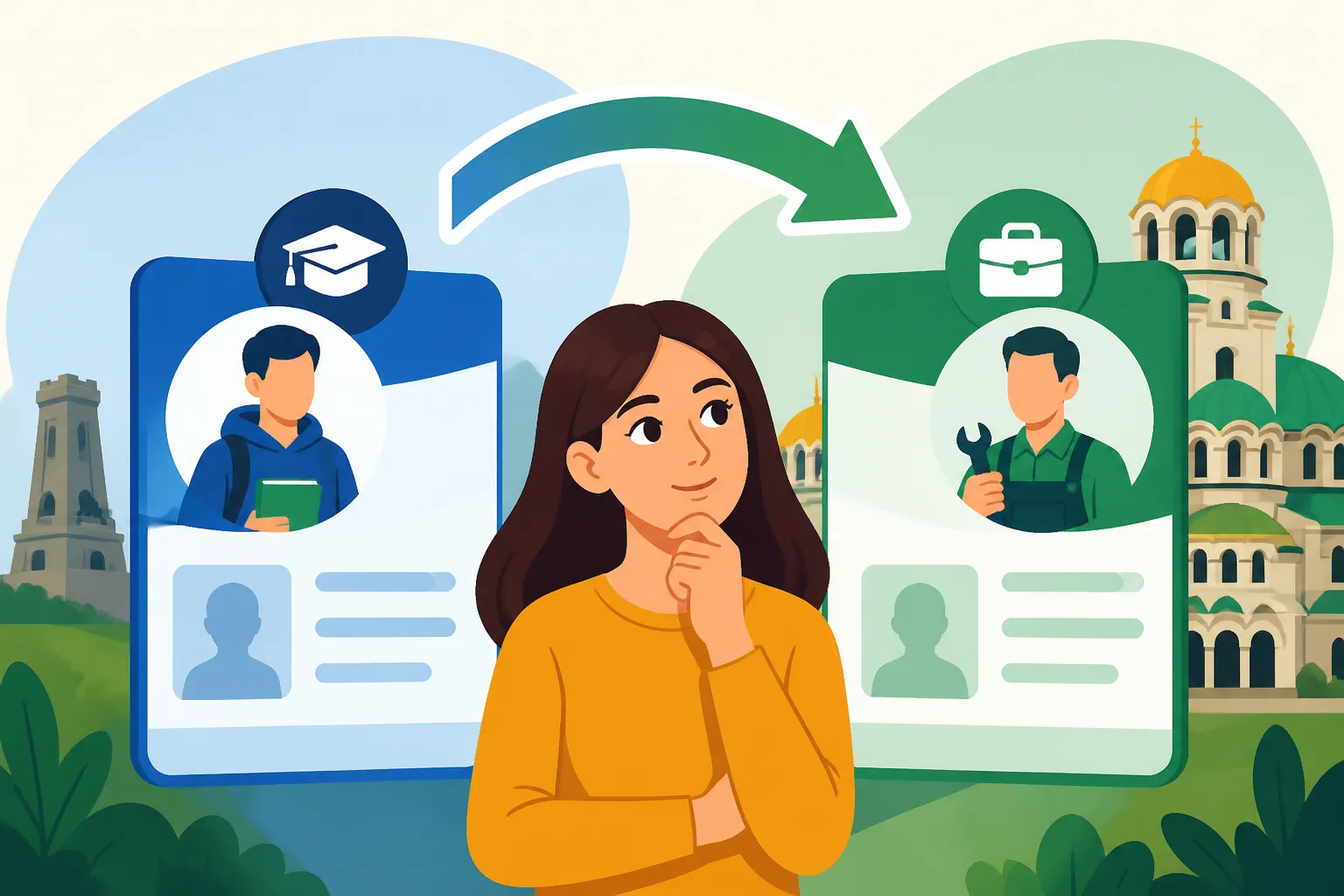
It's a common dilemma, isn't it? You arrive in Bulgaria, full of anticipation for your studies, settling into the rhythm of university life, exploring Sofia's vibrant streets or the ancient charm of Plovdiv. Then, as graduation looms or perhaps even mid-way through your program, a fantastic job opportunity crops up. Suddenly, that student permit, which felt like your golden ticket, looks more like a bureaucratic hurdle. The burning question becomes: "Can I just switch this student permit to a work permit and stay?" This guide is here to walk you through the realistic, and sometimes frustrating, process of transitioning from student to working professional in Bulgaria.
Understanding Your Current Student Permit in Bulgaria
Let's be honest, when you first apply for your student visa and subsequent residence permit, you're focused on getting in. The long-term implications of working often don't fully sink in until you're already here. It’s important to understand what your current student status actually entails.
The Nature of Student Residence Permits
Your student permit in Bulgaria, granted after you've successfully obtained your Type D long-stay visa and registered with the Migration Directorate, is a temporary residence permit specifically tied to your educational purpose. It allows you to reside in Bulgaria for the duration of your studies, typically renewed annually based on your continued enrolment. Think of it as a specific-purpose pass, not a general allowance to live and work as you please.
The application for this permit is quite distinct. When you applied for your Type D Long-Stay Visa for Bulgaria, you provided documents proving your enrolment, financial means for living (without relying on local employment), and accommodation. The entire basis of that permit hinges on you being a student. This means that if your primary purpose for being in Bulgaria changes from "student" to "worker," your permit status usually needs to change too. It's not like you can just wave a magic wand and update it.
Restrictions and Limitations of a Student Permit
This is where the reality often hits home for many expats. A standard student residence permit in Bulgaria generally comes with significant restrictions on employment. For non-EU/EEA citizens, you are typically not allowed to work full-time. There might be provisions for part-time work, often limited to a certain number of hours per week (e.g., 20 hours) during term time and potentially full-time during holidays, but this is usually specified and still requires an employment contract and possibly registration with the Labour Agency. Even if you do find part-time work, it doesn't give you the same rights or status as a full work permit holder.
The key takeaway here is that your student permit is designed to facilitate your education, not your career. Trying to work full-time on a student permit without proper authorization can lead to serious legal issues, including fines, permit revocation, and even deportation. You certainly don't want to jeopardize your future in Bulgaria by cutting corners.
The Transition Process: From Student to Worker Status
So, you've got that job offer – fantastic news! But now comes the actual process of changing your status. It’s not a simple amendment to your existing document; it’s usually a whole new application, almost as if you’re starting fresh, but with the advantage of already being in the country.
Key Requirements for a Work Permit in Bulgaria
For non-EU/EEA citizens, getting a work permit in Bulgaria isn't solely dependent on your qualifications or the employer's desire to hire you. The Bulgarian government has specific regulations designed to protect the local labour market. This means your prospective employer plays a pivotal role, and they face their own set of hurdles.
Here’s the gist: your employer usually needs to demonstrate that there isn't a suitable Bulgarian or EU/EEA citizen available for the position they're offering you. This often involves advertising the position for a certain period and proving that no qualified local candidates applied or were suitable. This "labour market test" is a significant step and can sometimes deter smaller or less experienced companies from hiring non-EU foreigners.
The employer will be the one initiating most of the paperwork on their side, dealing with the National Employment Agency and the Ministry of Labour and Social Policy. They’ll need to submit detailed information about your job, your qualifications, and the reasons why they want to hire you over a local candidate. Your diploma and any professional qualifications will be scrutinised, so make sure they are properly recognized in Bulgaria. If you have a foreign university degree, you might need to go through a process to have your foreign qualification recognised in Bulgaria, which can add time to the process.
Navigating the 'Single Permit' Application
For most non-EU/EEA nationals seeking to transition from student to worker, the primary route is applying for a Single Permit for Work and Residence. This isn't just a work permit; it's a combined document that allows you to both reside and work legally in Bulgaria. It essentially replaces your student residence permit, establishing a new legal basis for your stay.
The Single Permit application process usually involves several steps, largely driven by your employer:
- Employer's Application to the Employment Agency: Your employer will submit an application to the Bulgarian Employment Agency, detailing the job offer, your qualifications, and their justification for hiring you. This is where the labour market test comes in.
- Approval from the Employment Agency: If the Employment Agency approves, they will issue a positive opinion.
- Application to the Migration Directorate: With the Employment Agency's approval in hand, you (or often your employer or a legal representative) will then submit an application to the Migration Directorate for the Single Permit. This is where your personal documents, criminal record checks, and proof of accommodation will be crucial. This phase is much like applying for any other long-term residence permit, but now backed by the work approval.
It's a comprehensive process, and patience is definitely a virtue. It’s generally advisable to have a job offer that is aligned with your academic background to strengthen your case. For highly qualified professionals, there is also the option of the EU Blue Card in Bulgaria, which is a specific type of Single Permit with potentially different requirements and benefits, but still follows a similar dual-agency approval process.
Practical Steps and Common Hurdles
Let's talk about the nitty-gritty – the documents, the delays, and how to stay sane through it all. This is where the real expat grit comes in.
Required Documents and Translations
Bulgarian bureaucracy loves documents, and it loves them perfectly prepared. When applying for your Single Permit, expect to gather a substantial pile of paperwork. Here’s a typical list:
- Valid Passport: Of course, with at least six months validity beyond your intended stay.
- Job Contract: A legitimate, signed employment contract with your Bulgarian employer.
- Company Registration Documents: Your employer will need to provide copies of their company registration, showing they are a legitimate entity in Bulgaria.
- Proof of Qualifications: Your university diploma, transcripts, and any other relevant certificates. These often need to be legalized with an apostille (if your home country is part of the Hague Convention) and then translated into Bulgarian by a sworn translator. If your country isn't part of the convention, you'll need the full consular legalization process. Trust me, getting documents apostilled for Bulgaria immigration can be a bit of a dance.
- Proof of Accommodation: A rental agreement or declaration from your landlord.
- Clean Criminal Record Certificate: Issued from your home country and potentially from Bulgaria, also legalized and translated.
- Proof of Sufficient Funds: Even with a salary, you might need to show you have enough money to support yourself during the initial period, though your employment contract often serves as primary evidence here.
- Health Insurance: While your employer will likely register you with the National Health Insurance Fund (NHIF) once you start working, you may need to provide proof of private health insurance for the period of your application processing, or until your NHIF coverage kicks in. This is where something like Cigna Global might be a practical choice, offering comprehensive coverage during uncertain transition periods.
- Application Forms: Duly completed forms from both the Employment Agency and the Migration Directorate.
Remember, every single document not originally in Bulgarian usually needs a certified translation. Don't underestimate this step; poorly translated or uncertified documents are a common reason for delays or rejections. Understanding document and translation requirements for Bulgaria immigration is crucial.
The Waiting Game and Temporary Solutions
The application process for a Single Permit can be lengthy. From the initial employer submission to the Employment Agency to the final decision from the Migration Directorate, it can take anywhere from a few weeks to several months. This waiting period is arguably one of the most stressful parts for many expats.
The critical point here: You cannot legally start working full-time on a student permit while your Single Permit application is pending. Doing so would be a violation of your student permit conditions and Bulgarian law. This means there will likely be a period where you have a job offer but cannot actually start earning money, which can be financially straining.
What do you do during this time?
- Maintain Student Status: If your student permit is still valid, you must continue to abide by its terms. If your studies are ongoing, continue attending.
- Extend Student Permit (if possible): If your student permit is nearing expiration, you might be able to apply for an extension based on continued studies, if that's still relevant. This could buy you more time while your work permit application is processed. However, be aware that the Migration Directorate might question your intent if you're applying for a work permit at the same time. This is a tricky area, and it's best to consult with a legal professional specializing in immigration.
- Consider Leaving and Re-entering: In some complicated cases, if your student permit expires and your work permit isn't ready, you might be advised to leave Bulgaria and apply for a new Type D work visa from your home country or country of legal residence. This is usually a last resort, as it's expensive and disruptive, but sometimes necessary to maintain legal status.
This waiting period often feels like being in limbo. My advice? Be prepared for delays, keep all communication with your employer clear, and try to have a financial buffer.
Important Considerations for Your Career in Bulgaria
Successfully transitioning to a work permit is a huge step, but it also brings new responsibilities and benefits you should be aware of.
Health Insurance and Social Contributions
Once you secure your Single Permit and begin working under an employment contract, a significant burden is lifted from your shoulders regarding healthcare. Your employer is legally obliged to register you with the National Health Insurance Fund (NHIF). This means your mandatory health insurance contributions in Bulgaria will be deducted directly from your salary, along with social security contributions.
Being part of the NHIF system grants you access to public healthcare services in Bulgaria, usually free at the point of service (though co-payments might apply for certain treatments or doctor visits). This is a stark contrast to being a student, where you likely had to arrange private health insurance. Understanding the complete guide to healthcare in Bulgaria for expats (2026) will be very helpful now that you're a working resident.
While the NHIF provides a good baseline, many expats still opt for supplementary private health insurance, especially if they prefer access to specific private clinics, faster appointments, or broader English-speaking services. Brands like Cigna Global are popular choices for those who want that extra layer of comfort and flexibility, particularly for larger cities like Sofia or Plovdiv where private options are plentiful.
Understanding Employer Responsibilities
Your employer is your biggest ally in this transition. Their commitment to sponsoring your work permit is not a small matter; it involves significant administrative effort and legal responsibility on their part. They are responsible for:
- Initial Application: Filing the necessary documentation with the Employment Agency.
- Compliance: Ensuring that the job offer meets all legal requirements for foreign employment.
- Information Provision: Supplying you with all the necessary documents and information for your application to the Migration Directorate.
- NHIF and Social Security: Registering you and making mandatory contributions once you start work.
- Record Keeping: Maintaining accurate records of your employment as required by Bulgarian law.
Because of this, companies, particularly smaller ones, can sometimes be hesitant to hire non-EU citizens due to the perceived bureaucratic burden. If your employer is new to this, be patient, but also be proactive in offering any support you can, such as gathering your own documents promptly. Some employers might even hire a legal firm to handle the immigration process, which can streamline things significantly.
Here's a quick overview of the differences between your student and potential work status:
| Feature | Student Residence Permit (Non-EU/EEA) | Single Permit for Work and Residence (Non-EU/EEA) |
|---|---|---|
| Primary Purpose | Study and education | Full-time employment and residence |
| Work Allowance | Generally restricted (e.g., max 20 hrs/week part-time), or none | Full-time employment with specific employer |
| Who Applies | You (after getting Type D visa) | Your employer (initiates), then you (for residence) |
| Key Authority | Migration Directorate | Employment Agency (first), then Migration Directorate |
| Health Insurance | Private health insurance usually required | Employer registers you with NHIF (mandatory contributions) |
| Social Contributions | Not applicable (unless doing legal part-time work) | Mandatory contributions to social security funds deducted from salary |
| Path to PR/Citizenship | Counts towards residency period, but needs conversion to work permit | Counts towards residency period, stronger basis for long-term stay |
| Dependents | Possible, but more complex, often need their own student status | Easier to apply for family reunification permits for spouse/children |
The journey from a student permit to a work permit in Bulgaria is certainly doable, but it demands meticulous planning, patience, and a clear understanding of the bureaucratic process. Don't be discouraged; many expats have successfully navigated these waters. Just be prepared for the realities of the system, lean on local expertise where possible, and always aim to stay within the bounds of Bulgarian law. Whether you choose to enlist the help of a relocation company like Sirelo for future moves or simply need to find The Expat Guide to Finding a Job in Bulgaria (2027), there are resources available to help you make your transition as smooth as possible.
Disclaimer
The information provided in this guide is for general informational purposes only and does not constitute legal, financial, or immigration advice. While every effort has been made to ensure accuracy, laws and regulations in Bulgaria can change rapidly. It is highly recommended to consult with a qualified Bulgarian immigration lawyer or the official Migration Directorate for personalized advice regarding your specific situation.