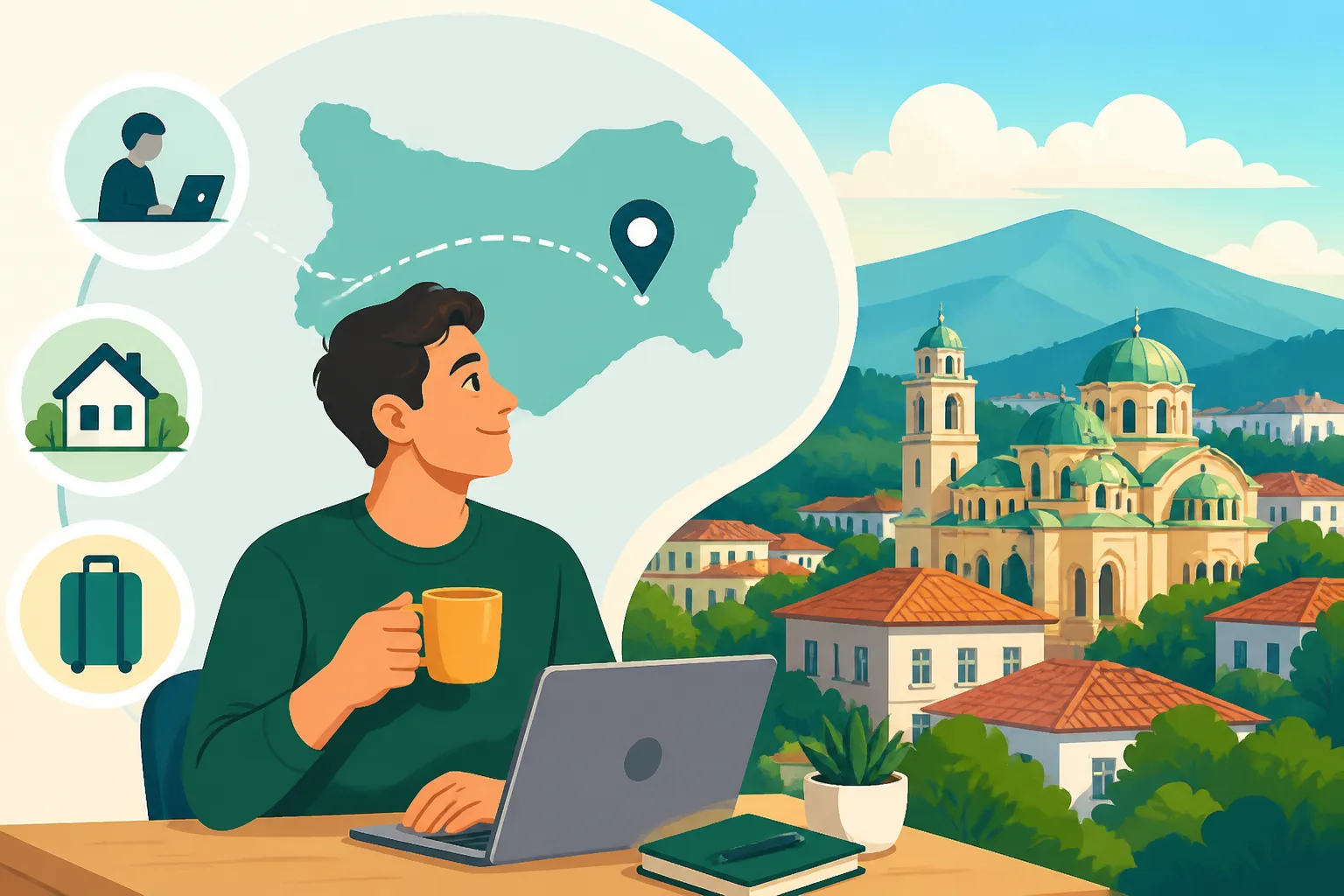
How Do I Move to Bulgaria as a Self-Employed Person?
Thinking of taking the leap and moving to Bulgaria to work for yourself? It's a fantastic dream many expats share – the allure of a lower cost of living, beautiful nature, and a relaxed pace. However, turning that dream into a reality as a self-employed individual can feel like navigating a maze blindfolded. The administrative hurdles, particularly around visas and residence permits for self-employment, are notoriously complex and often poorly explained in English. This comprehensive guide is here to cut through the confusion, offering a realistic, step-by-step roadmap to help you establish your self-employed life in Bulgaria without losing your sanity.
Understanding the Self-Employed Visa and Residence Permit Options
Okay, let's get straight to it. If you're not an EU citizen, your journey to self-employment in Bulgaria starts with a Type D long-stay visa, and that's just the prelude to your actual residence permit. Many hopeful expats mistakenly believe they can arrive on a tourist visa and simply switch their status. Trust me, you absolutely cannot. The Type D visa must be obtained from your home country or country of long-term residence.
Bulgaria's immigration laws have specific categories for self-employed individuals, but they aren't always as straightforward as "digital nomad visa" schemes you might find elsewhere. Generally, you'll be looking at pathways related to either registering as a 'free profession' (Свободна професия) or a sole trader (ЕТ – едноличен търгоговец). Each has its nuances, and understanding which one best fits your profession is crucial for a smooth application process.
The 'Freelancer' Свободна Професия Route vs. Sole Trader ЕТ
When you're looking to work for yourself in Bulgaria, you essentially have a couple of main legal avenues, and choosing the right one from the start is paramount. The most common for many expats in service-based or intellectual professions is the 'free profession' (Свободна професия) status. This category is typically for individuals like IT specialists, graphic designers, consultants, translators, artists, lawyers, doctors, or anyone offering professional services independently.
To register as a 'free profession,' you typically need to visit the Registry Agency (Агенция по вписванията) and the National Revenue Agency (NRA). It involves obtaining a BULSTAT code – essentially your unified identification number – and then registering for tax and social security purposes. The process can feel a bit like a scavenger hunt for documents, requiring various forms, proof of your professional qualifications, and sometimes even a certificate from a professional chamber if your profession is regulated. For instance, an IT consultant might just need to prove their expertise, while a physiotherapist would need to show accredited diplomas. Once registered, you operate as an individual, invoicing clients and paying taxes and social contributions based on your income. It's often seen as simpler administratively than setting up a full company, especially for those with lower initial incomes.
On the other hand, a Sole Trader (ЕТ – едноличен търгоговец) is another option. This is more akin to a small business owner. While a 'free profession' is often tied to your personal skills and expertise, a sole trader can encompass a broader range of commercial activities. Registration as an ET also goes through the Registry Agency but involves a slightly more complex legal structure, though it’s still relatively straightforward compared to an OOD (Limited Liability Company). The key difference is often in liability and how profits are taxed. For many self-employed expats, especially in the early stages, the 'free profession' route proves less burdensome. You'll need to think carefully about the nature of your work and your long-term plans to decide which is best. It’s a good idea to chat with a local accountant or legal professional who understands expat cases, as they can illuminate the subtle differences and potential benefits of each for your specific situation. This initial decision lays the groundwork for your entire self-employed journey in Bulgaria.
Financial Requirements and Proof of Sustenance
Ah, the eternal question: "How much money do I need?" For any long-stay visa or residence permit in Bulgaria, demonstrating sufficient financial means is non-negotiable. The Bulgarian authorities want to ensure you won't become a burden on the state, which is perfectly reasonable, if not a bit nerve-wracking to prove.
For self-employed individuals, this typically means showing you have funds equivalent to at least the Bulgarian minimum monthly salary for the duration of your visa (usually 12 months for the first residence permit application). The minimum wage is subject to change, but as of late 2024, it hovers around 933 BGN per month (about €477). So, for a year, you'd need to show roughly 11,196 BGN (around €5,700) in a Bulgarian bank account. However, and this is important, always aim higher. Immigration officials prefer to see a comfortable buffer, not just the bare minimum. I'd personally recommend having at least 1.5 to 2 times that amount as a safety net to demonstrate serious intent and stability.
This proof of funds usually takes the form of bank statements from a Bulgarian bank account, opened in your name. For the initial Type D visa application at the embassy, they might accept bank statements from your home country, but a Bulgarian account will be essential for your residence permit application once you arrive. You’ll also need to provide documents that substantiate your self-employment activity – this could be a detailed business plan outlining your services, target clients, and projected income, or contracts with existing clients, or evidence of your professional qualifications if you're registering as a 'free profession'. The more concrete evidence you can provide that you have a viable means of generating income, the stronger your application will be. Remember, the goal is to show stability and independence, so any documentation that paints that picture will be invaluable.
| Requirement Category | Type D Visa Application (Abroad) | Residence Permit Application (Bulgaria) |
|---|---|---|
| Proof of Funds | Bank statements (home country/Bulgarian) covering minimum 12 months' living expenses | Bulgarian bank statements covering minimum 12 months' living expenses |
| Self-Employment Proof | Business plan, professional qualifications, letters of intent, client contracts | Registration documents (BULSTAT, NRA), professional qualifications, client contracts, invoices |
| Accommodation | Notarised rental agreement/property deed | Notarised rental agreement/property deed |
| Health Insurance | Mandatory comprehensive private health insurance | Mandatory comprehensive private health insurance, or NHIF registration if applicable |
| Criminal Record | Apostilled certificate from home country | May be required if requested by Migration Directorate |
| Passport/Photos | Valid passport, recent passport-sized photos | Valid passport, recent passport-sized photos |
| Fees | Visa application fee | Residence permit fee, card issuance fee |
| Other | Marriage/birth certificates (if applicable), medical certificate (if requested) | Medical certificate (often required), marriage/birth certificates (if applicable) |
The Application Gauntlet: Step-by-Step for Type D Visa and Residence Permit
Now that we’ve covered the fundamental requirements, let's break down the actual process, because it’s a two-stage rocket. First, the Type D visa from your current country of residence, and then the actual residence permit once you're on Bulgarian soil. Don't underestimate either stage; each has its own set of trials and tribulations.
Securing Your Type D Visa from Abroad
This is your crucial first step for non-EU citizens. You must apply for a Type D long-stay visa at the Bulgarian embassy or consulate in your home country or the country where you have legal long-term residency. Trying to apply from within Bulgaria on a short-stay visa will lead to immediate rejection and a lot of wasted time and money.
The list of documents for a Type D visa as a self-employed person (under the "free profession" or "sole trader" categories) is extensive, and often requires official translations into Bulgarian by a sworn translator, as well as an Apostille stamp if your country is a signatory to The Hague Convention. This isn't just a suggestion; it’s a hard rule. You'll need your valid passport (with at least 6 months validity beyond your intended stay), a completed visa application form, recent passport-sized photos, and, critically, proof of your intended self-employment. This could be your detailed business plan, professional diplomas, proof of registration with a professional body, or even letters from potential clients in Bulgaria or abroad.
Then there’s the accommodation proof: a notarised rental agreement or a property deed in Bulgaria is usually required. If you don't have this sorted yet, you might need a notarised declaration from a property owner stating they will accommodate you. And let's not forget the financial proof we just discussed – bank statements showing sufficient funds. Perhaps one of the most consistently frustrating requirements is the criminal record check. This certificate must be recent, and almost always requires an Apostille or super-legalisation, depending on your home country's specific agreements with Bulgaria. Start this process early, as obtaining Apostilles can take weeks, if not months, in some countries.
Finally, you’ll need comprehensive health insurance. This isn't just travel insurance; it needs to cover you for the entire duration of your Type D visa (usually 90 days, enough to get you into Bulgaria and apply for your residence permit) and meet the minimum coverage requirements for Bulgaria. This is where options like Cigna Global come in handy, as they specifically cater to expats and understand the local requirements for visa applications. You'll attend an interview at the embassy, where an officer will review your documents and ask about your intentions. Be prepared, be polite, and have all your papers in order. Expect processing times to vary, often between 15 to 30 working days, but sometimes longer, especially during peak seasons.
Applying for Your Residence Permit (Разрешение за пребиваване) in Bulgaria
Congratulations! You've navigated the Type D visa process and have arrived in Bulgaria. The clock, however, has started ticking. You typically have 90 days from your arrival to apply for your actual residence permit at the local Migration Directorate (Миграция) office. Do not delay. This is where the real administrative fun begins, and the queues can be long.
The documents needed for the residence permit mirror many of those for the Type D visa, but with an added layer of Bulgarian specifics. You’ll again need your passport, a copy of your Type D visa, and passport photos. You'll definitely need a Bulgarian bank account statement showing your funds. This is a critical point; simply having money in an international account often won't cut it for the Migration Directorate. You'll also need proof of your Bulgarian address, typically a notarised rental contract or property deed. If you’ve registered as a 'free profession' or sole trader, you'll need all the registration documents, including your BULSTAT code and confirmation from the National Revenue Agency that you are registered for tax and social security. This could involve showing your first few invoices or proof of professional activity.
One document that often catches people off guard is the medical certificate. While not always explicitly listed, the Migration Directorate often requests a general health certificate from a Bulgarian doctor stating you are fit and don't carry any infectious diseases. You'll also need confirmation of health insurance. If your initial private health insurance (like the one you got through Cigna Global for your Type D visa) covers you for the full year of your intended residence permit, great! Otherwise, you'll need to update it or register with the National Health Insurance Fund (NHIF) if your status allows and you've started making contributions. Understanding Mandatory Health Insurance Contributions in Bulgaria is vital here.
The application itself involves filling out a form in Bulgarian, paying state fees for the application and for the issuance of your residence permit card. You'll then submit your meticulously prepared stack of documents. Be prepared for potential questions, clarifying interviews, and the possibility of being asked for additional documents. Patience is not just a virtue here; it’s a survival skill. The processing time for the residence permit can range from two weeks to two months, sometimes longer. Once approved, you’ll receive your shiny new Bulgarian residence permit card, granting you legal residency for one year, renewable annually. It means you are now well on your way to making Bulgaria your home. Don't forget, you'll need to renew your permit well in advance of its expiry date each year. You can find more detail on this in resources like How to Renew Your Residence Permit in Bulgaria.
Setting Up Your Self-Employed Life: Practicalities and Pitfalls
Getting your visa and residence permit is a huge win, but it's just the start of truly settling into your self-employed life in Bulgaria. Now comes the nitty-gritty of making your business functional and compliant within the Bulgarian system. This stage involves a blend of financial prudence, administrative diligence, and a healthy dose of patience.
Bulgarian Tax and Social Security Obligations
As a self-employed individual in Bulgaria, you’re enjoying that famous flat 10% personal income tax rate – it's definitely one of the country's major draws for entrepreneurs and freelancers. Sounds simple, right? Well, it is, compared to many other European countries, but the complexities often arise with social security and health contributions.
Once you’re registered as a 'free profession' or sole trader, you’ll be obligated to make monthly social and health insurance contributions. These aren't tied directly to your income initially but are based on a minimum monthly insurable income set by the state. This amount changes annually, so always check the latest figures. For instance, in 2024, the minimum monthly insurable income for self-employed individuals is around 780 BGN. Your contributions for pension, health, and other social funds will be a percentage of this amount, usually adding up to roughly 25-30% of this base. This means you’ll have a fixed minimum amount to pay each month, regardless of whether you had a stellar month or a quiet one.
Registering with the National Revenue Agency (NRA) is one of your first tasks. This is where you'll file your annual tax return. Understanding Income Tax and the Flat 10% Rate in Bulgaria (2026) can shed more light on the specifics. For many expats, particularly those running their own businesses, engaging a local accountant is not just a luxury, it's a necessity. Bulgarian tax law, while boasting a low flat rate, has its own intricacies, deductions, and reporting requirements that can be challenging to navigate in a foreign language. A good accountant will ensure you're compliant, advise on allowable expenses, and keep you updated on any changes. They'll also handle the monthly submission of your social security declarations and annual tax filing, saving you a tremendous amount of stress. It’s an investment that truly pays off in peace of mind.
Banking, Business, and Staying Compliant
Beyond taxes, there are other crucial practicalities to iron out to ensure your self-employed venture runs smoothly. One of the very first things you'll need to do, if you haven't already, is open a Bulgarian bank account. For your residence permit, and for managing your business finances, a local account is essential. Banks like DSK, UniCredit Bulbank, and Raiffeisen are popular choices, and they are generally expat-friendly, although the process can still involve a fair amount of paperwork and a sometimes-puzzling array of questions. Expect to provide your passport, residence permit, and possibly your BULSTAT code. The Expat Guide to Opening a Bank Account in Bulgaria offers a detailed walkthrough.
Obtaining your BULSTAT code is another foundational step if you're registering as a freelancer or sole trader. This unique identification number is used across various state institutions and is critical for your tax and social security registrations. The process is generally handled at the Registry Agency. Think of it as your business's social security number. You can learn more about this in How to Get a Tax ID (BULSTAT) as a Foreigner in Bulgaria.
When it comes to your daily business operations, understanding Bulgarian invoicing requirements is vital. Invoices need to be issued in Bulgarian (or bilingual, with Bulgarian as one of the languages) and conform to specific formats. Keeping accurate records of all your income and expenses is paramount, not just for tax season but for demonstrating the viability of your business during residence permit renewals.
Finally, brace yourself for the administrative language barrier. While many younger Bulgarians in cities speak English, government offices and some banking staff may not. Having a Bulgarian friend, a local lawyer, or an accountant who can accompany you to appointments or translate documents will be incredibly helpful. Navigating bureaucratic processes in a new language is a challenge almost every expat faces, and it's okay to ask for help. Think of this as part of the adventure of moving abroad; it truly builds character!
Integrating and Thriving as a Self-Employed Expat
You’ve conquered the visa, secured your permit, and set up your business – fantastic! Now comes the exciting part: integrating into Bulgarian life and making your self-employed venture truly flourish. This stage is less about paperwork and more about connection, adaptation, and embracing the unique rhythm of the country.
Building Your Network and Client Base
As a self-employed individual, your network is your net worth, especially in a new country. Building connections, both professional and personal, is crucial for both your business and your well-being. Look for expat groups online, join local meetups, or explore co-working spaces in cities like Sofia, Plovdiv, or Varna. These spaces are fantastic for networking with other remote workers and entrepreneurs, offering a sense of community and potential collaborations. Platforms like Meetup.com often list events for various interests, which can lead to unexpected professional opportunities.
If your services are targeted at the local Bulgarian market, learning some basic Bulgarian phrases will go a long way in establishing rapport and trust. Even if your work is entirely online for international clients, connecting with local businesses can still provide valuable insights into the market and lifestyle. Attend industry events if they align with your field, and don’t underestimate the power of simply striking up conversations in cafes or local markets. Bulgaria is a country where personal connections often open doors, so invest time in building genuine relationships. Consider seeking out specific advice on How to Find English Teaching Jobs in Bulgaria if that's your field, or generally looking for opportunities that align with your skills.
Managing Expectations and Embracing the Bulgarian Way
One of the biggest lessons you'll learn as an expat in Bulgaria, particularly when dealing with officialdom, is the art of managing expectations and cultivating immense patience. Things move at their own pace here, and what might seem like an inefficient process back home is simply 'the way it's done' in Bulgaria. Delays are common, unexpected requests for additional documents are not unheard of, and sometimes, you might feel like you’re explaining the same thing multiple times to different people. This is not a personal affront; it’s just the system. Take a deep breath, keep copies of everything, and adopt a flexible mindset.
However, this slower pace often translates into a higher quality of life. The lower cost of living means your self-employed income, especially if earned from international clients, can stretch much further, allowing for a comfortable lifestyle. You can afford a nicer apartment, enjoy delicious local food, and explore the country’s stunning mountains and Black Sea coast without breaking the bank. This affordability is often why expats endure the initial administrative headaches. For advice on settling in, "The Complete Guide to Moving to Bulgaria: Your First 90 Days (2026)" is a great resource.
Embracing the Bulgarian way also means appreciating the culture, the hospitality, and the sheer resilience of the people. Learning a few words of Bulgarian, trying local dishes, and participating in local festivities will enrich your experience immensely. While there will be moments of frustration, the beauty of the country, the warmth of its people, and the freedom of being your own boss in a new land often make it all worthwhile. Remember to keep important contacts handy, like How Do I Find an English-Speaking Doctor in Bulgaria should you need medical assistance.
And when it comes to the logistics of moving your life and business, don't forget that help is available. Planning your move with services like Sirelo can simplify the process of getting your belongings over, allowing you to focus on the exciting challenge of setting up your self-employed life here. After all, the goal is to build a life you love, one day and one successfully processed document at a time!
Disclaimer
Please remember that immigration laws and administrative procedures in Bulgaria are subject to change. While every effort has been made to provide accurate and up-to-date information, this guide serves as general advice based on current understanding and expat experiences. It is always recommended to verify specific requirements with the official Bulgarian authorities (e.g., Ministry of Interior, Migration Directorate, Ministry of Foreign Affairs) or consult with a qualified legal professional specialising in immigration law in Bulgaria for personalised advice regarding your individual circumstances.